
Al-Baqara - The Cow
Arabic Name: الْبَقَرَة
Urdu Name: گائے
Type: Madani
Serial Number: 2
Revelation Order: 87
Total Verses: 286
Parah: 1,2,3
Rukus: 40
Sajda: None
Share Verse Art
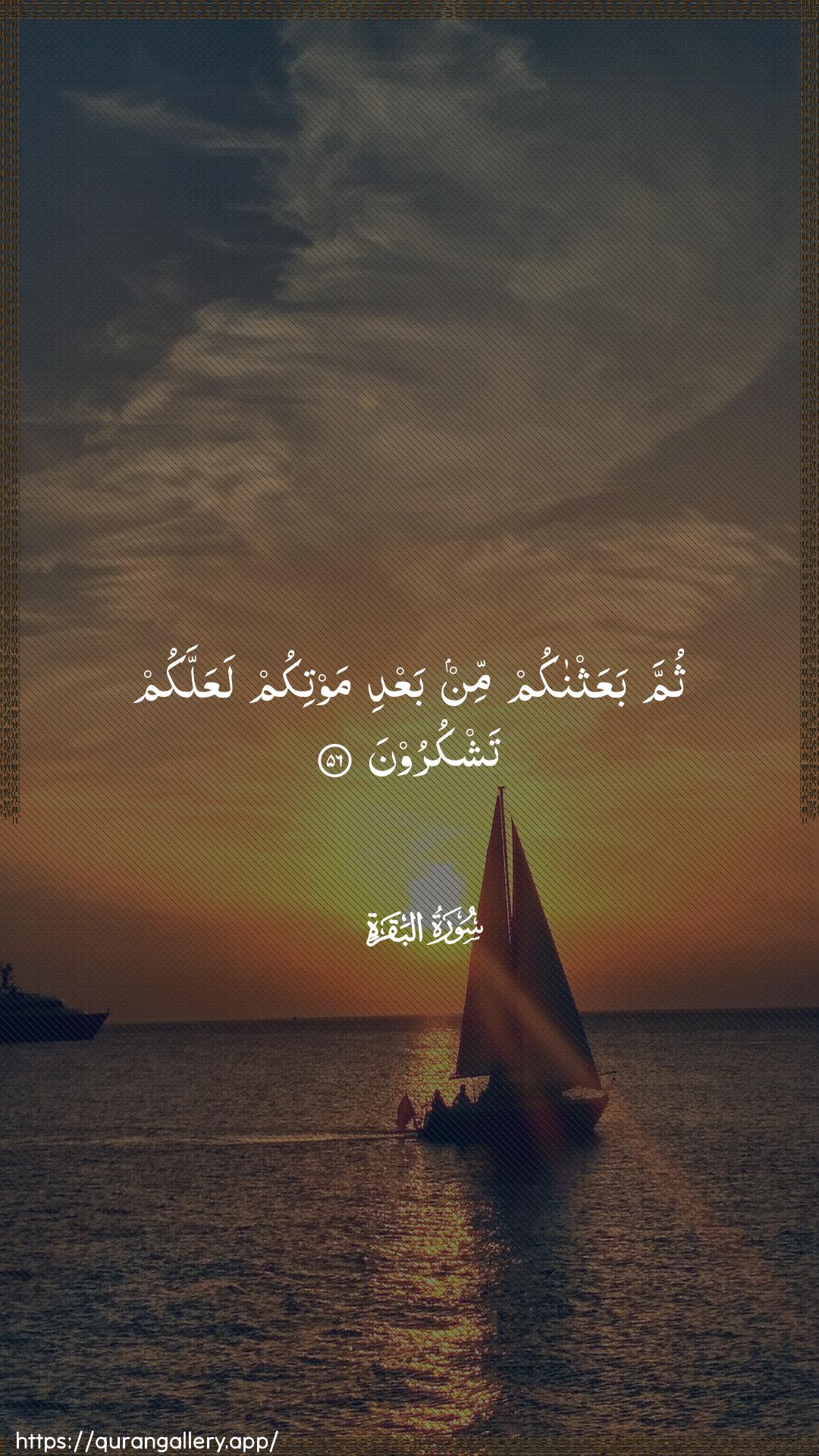
Arabic
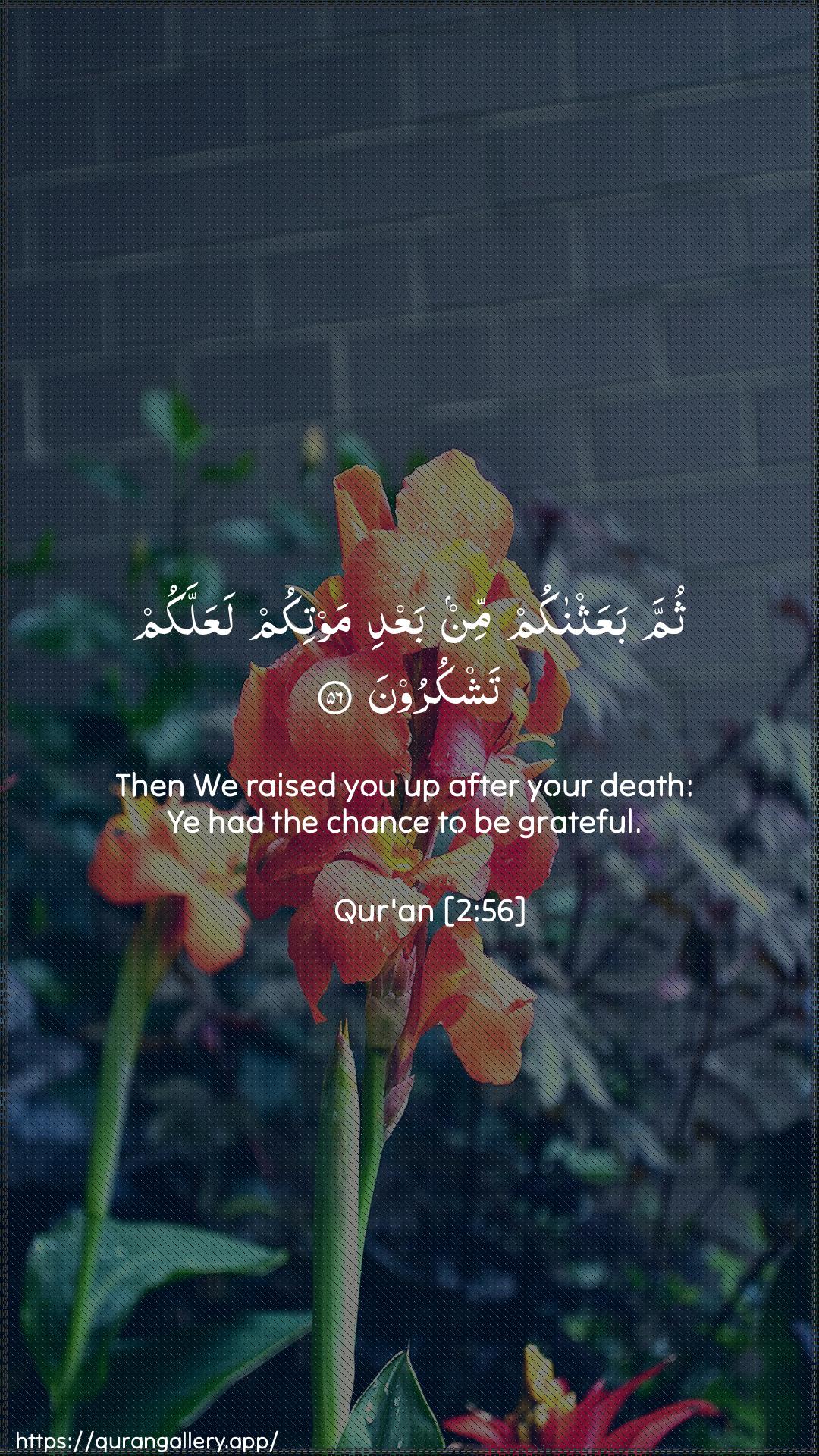
Arabic + English
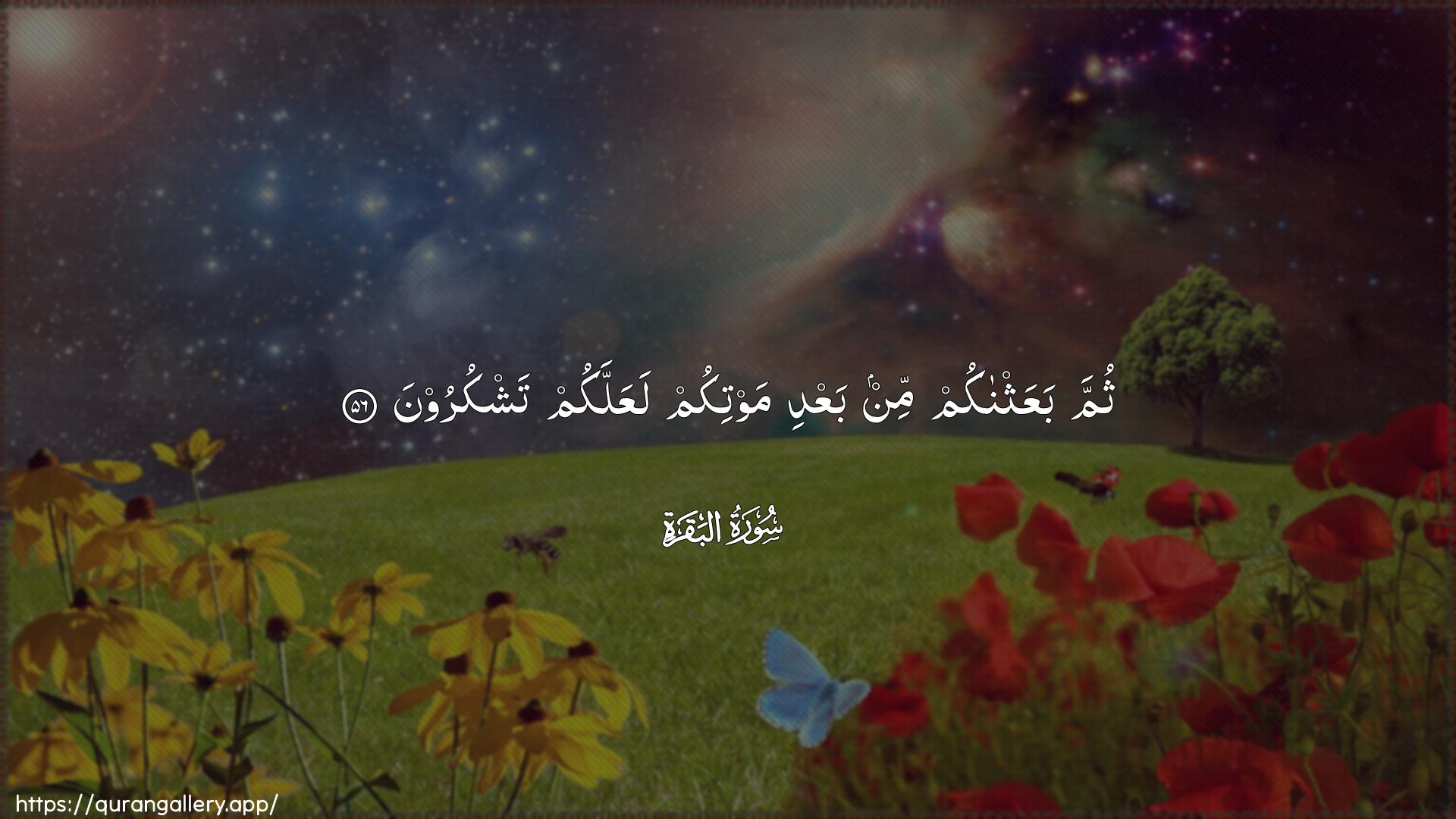
Arabic (Wide)
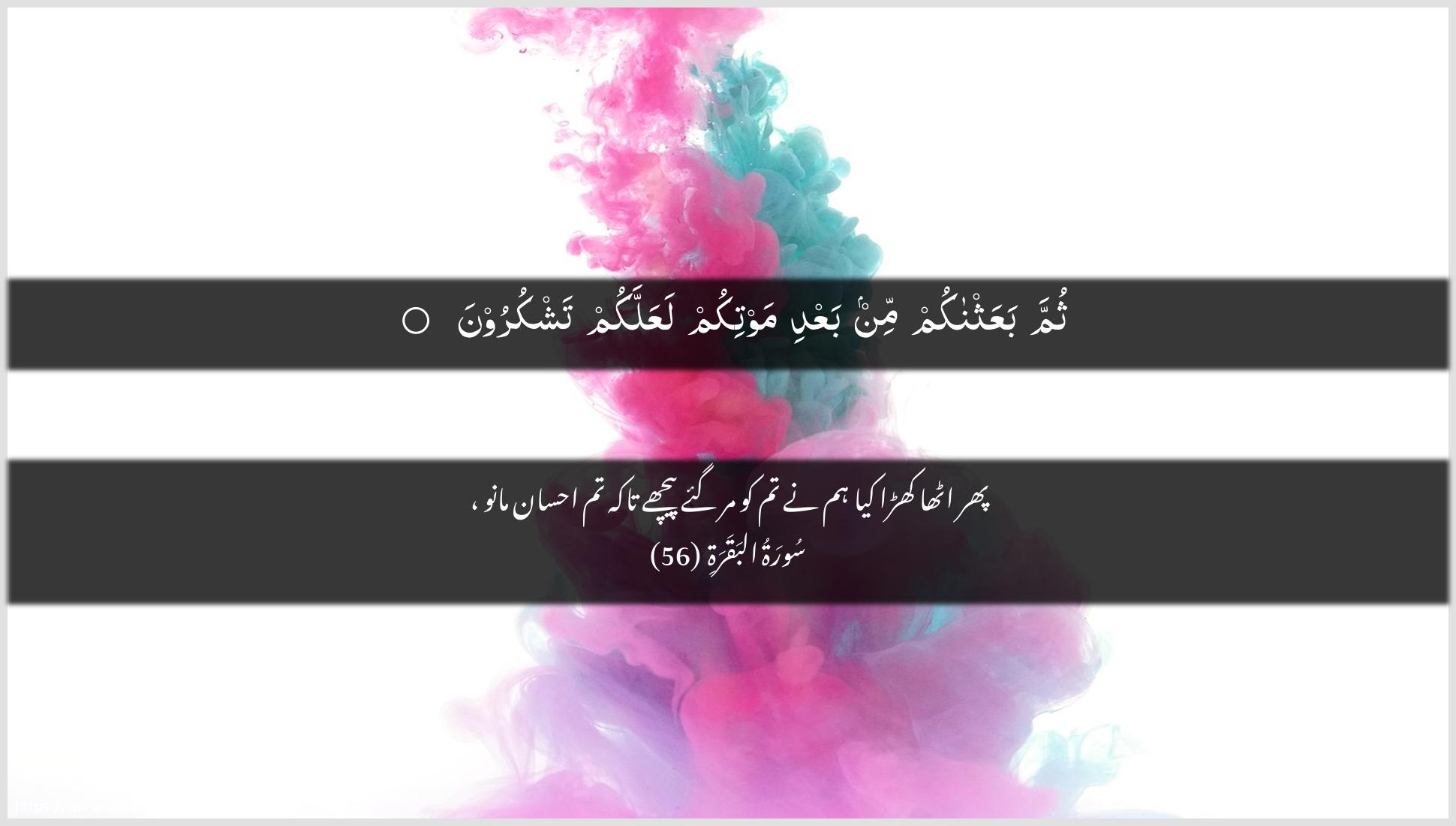
Arabic + Urdu
Free for personal & educational use with attribution
Quick Facts about this Verse
Surah
Al-Baqara
Revealed
Madani
Position
Juz 1,2,3
Explore this Verse
Verse Meaning
According to the classical exegete Ibn Kathir, Quran 2:56 describes the miraculous revival of the seventy elders from the Children of Israel who were chosen by Prophet Musa. After their audacious demand to see Allah plainly (mentioned in the preceding verse), a thunderbolt—a divine punishment—struck them dead. Synthesizing the accounts of Al-Tabari and As-Suddi, this was not a mere swoon but a literal death. The profound 'wow factor' of this verse lies in the immediate juxtaposition of severe justice with immense mercy. While their transgression was met with a swift and fatal consequence, Prophet Musa's desperate plea to Allah transformed the situation. Allah then demonstrated His ultimate power by resurrecting them, one by one, before each other's eyes. This revival was not for their sake alone, but as a sign for all of Bani Israel and a lesson for humanity, granted 'so that you might be grateful' (la'allakum tashkurun). It underscored that even after a punishment born of divine wrath, Allah's mercy can provide a second chance to live out one's appointed term and show gratitude.
Questions for Reflection
Personal
The seventy elders experienced a literal death and revival. Reflect on the 'metaphorical deaths' in your own life—moments of despair, failure, or spiritual numbness. How has Allah revived you from those states, and was your primary response one of true, transformative gratitude (shukr)?
Theological
Prophet Musa witnessed his companions die and then be resurrected. Contemplate the immense trust (tawakkul) and desperation in his prayer. How does this event shape your understanding of Allah's attributes of Al-Mumit (The Giver of Death) and Al-Muhyi (The Giver of Life), and the power of sincere intercession?
Communal
Al-Qurtubi affirms that even after this astounding miracle, the Israelites remained obligated (mukallaf). Contemplate the nature of responsibility. Why does witnessing miracles not remove our duty to obey and be grateful? How does this apply to the 'miracles' or great blessings in our own communities today?
Practical Applications
When you receive a second chance after a major failure (in career, relationships, or faith), consciously reframe it not as luck but as a divine revival meant for you to show gratitude through improved action.
Applicable after recovering from a severe illness, surviving an accident, or being forgiven for a major personal mistake.
Cultivate the practice of interceding for others. When you see someone in your community making a grave error, pray for their revival and guidance instead of merely condemning them.
When a community leader or family member makes a public mistake, this teaches a response of prayer over public shaming.
Hidden Gem
The synthesis of the tafsirs reveals a profound spiritual lesson: The purpose of their revival was not just to restore life, but to manufacture gratitude. Contemplate this: Allah engineered an extreme event of loss and restoration for the sole purpose of teaching thankfulness. It suggests that gratitude is not merely a polite response, but a core objective of the human experience, so vital that Allah would display His ultimate power to instill it.
Scroll to see more verses or use the dropdown in the breadcrumb to jump to any verse