
Al-Baqara - The Cow
Arabic Name: الْبَقَرَة
Urdu Name: گائے
Type: Madani
Serial Number: 2
Revelation Order: 87
Total Verses: 286
Parah: 1,2,3
Rukus: 40
Sajda: None
Share Verse Art
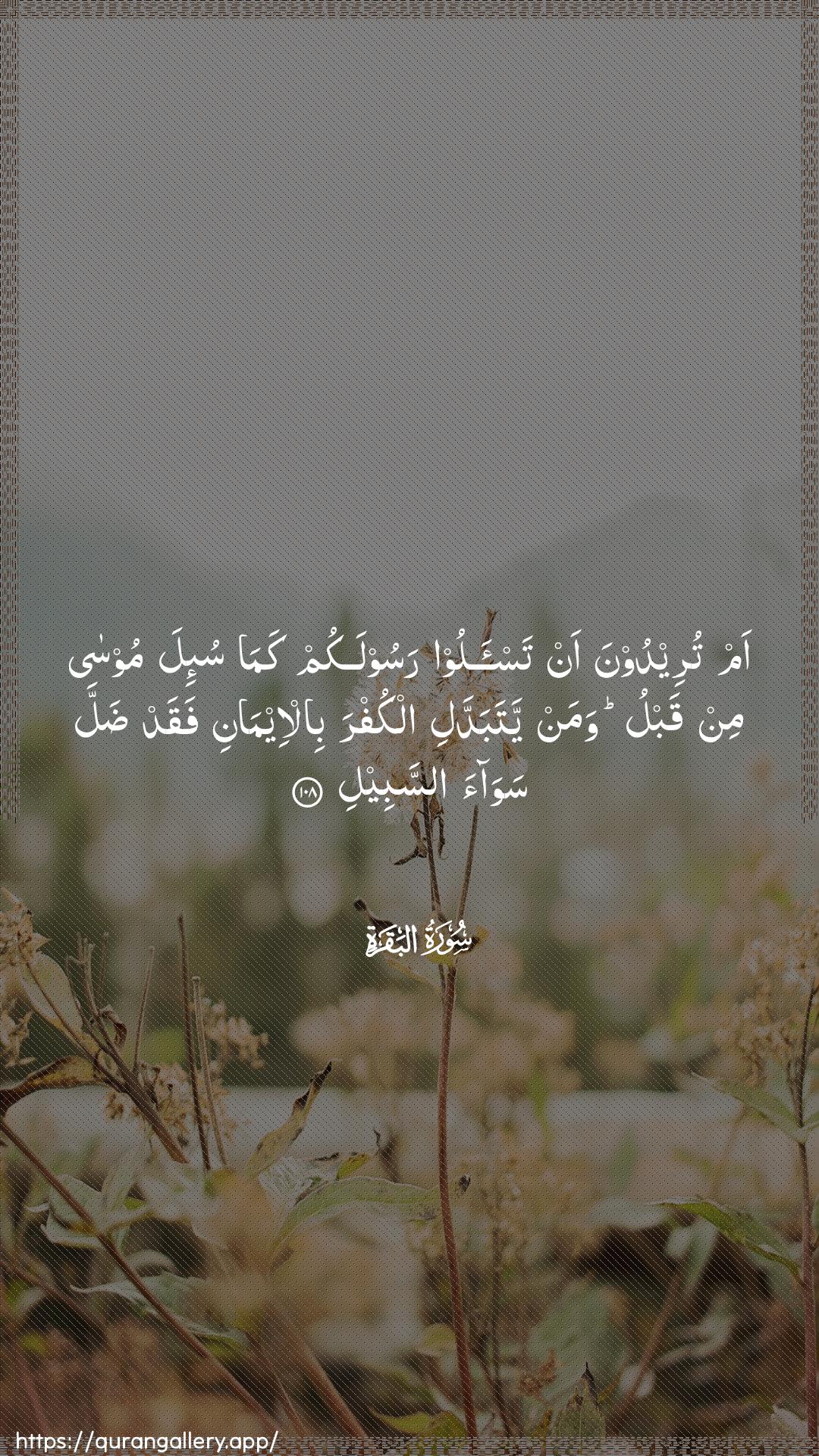
Arabic
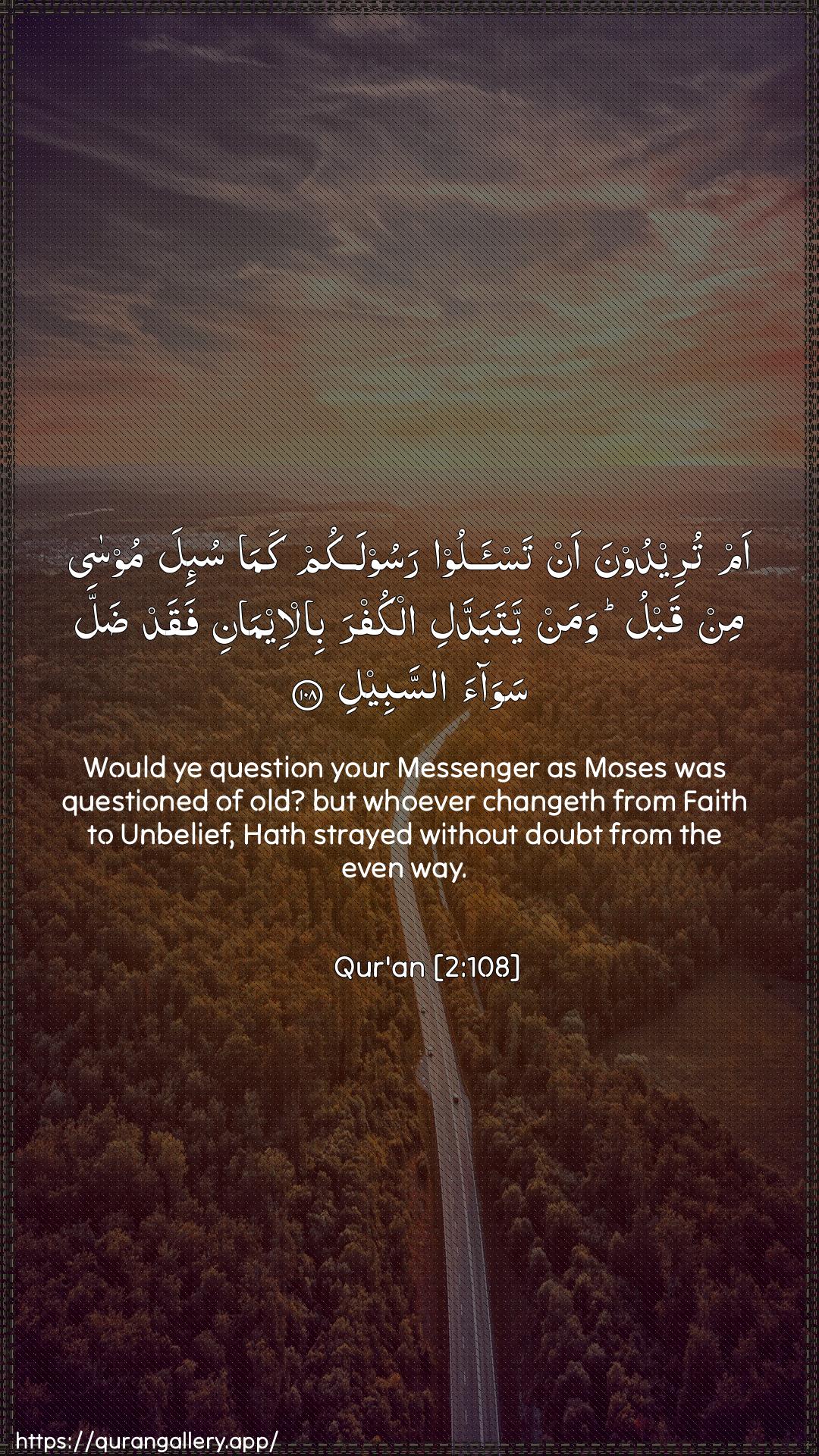
Arabic + English
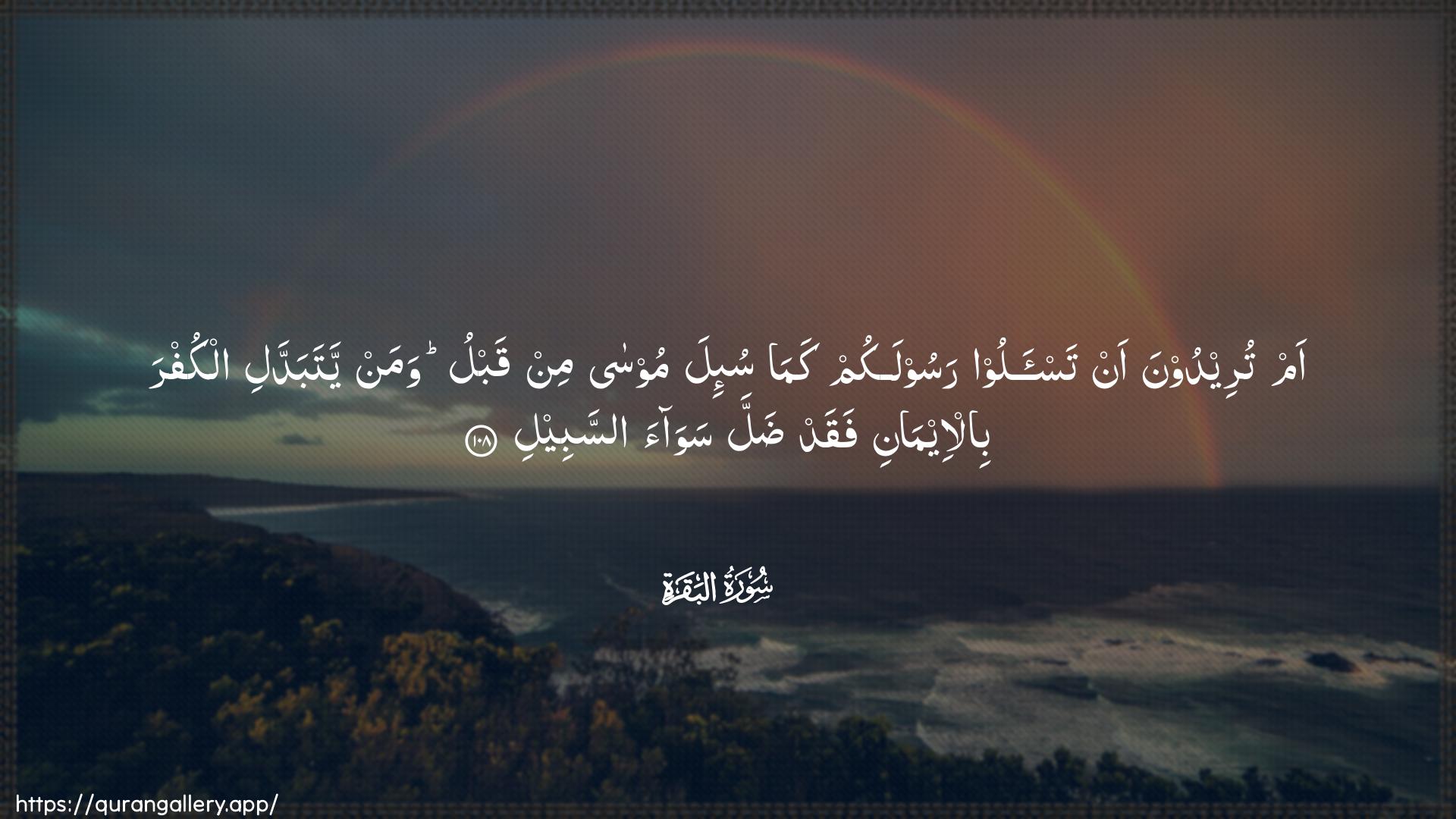
Arabic (Wide)
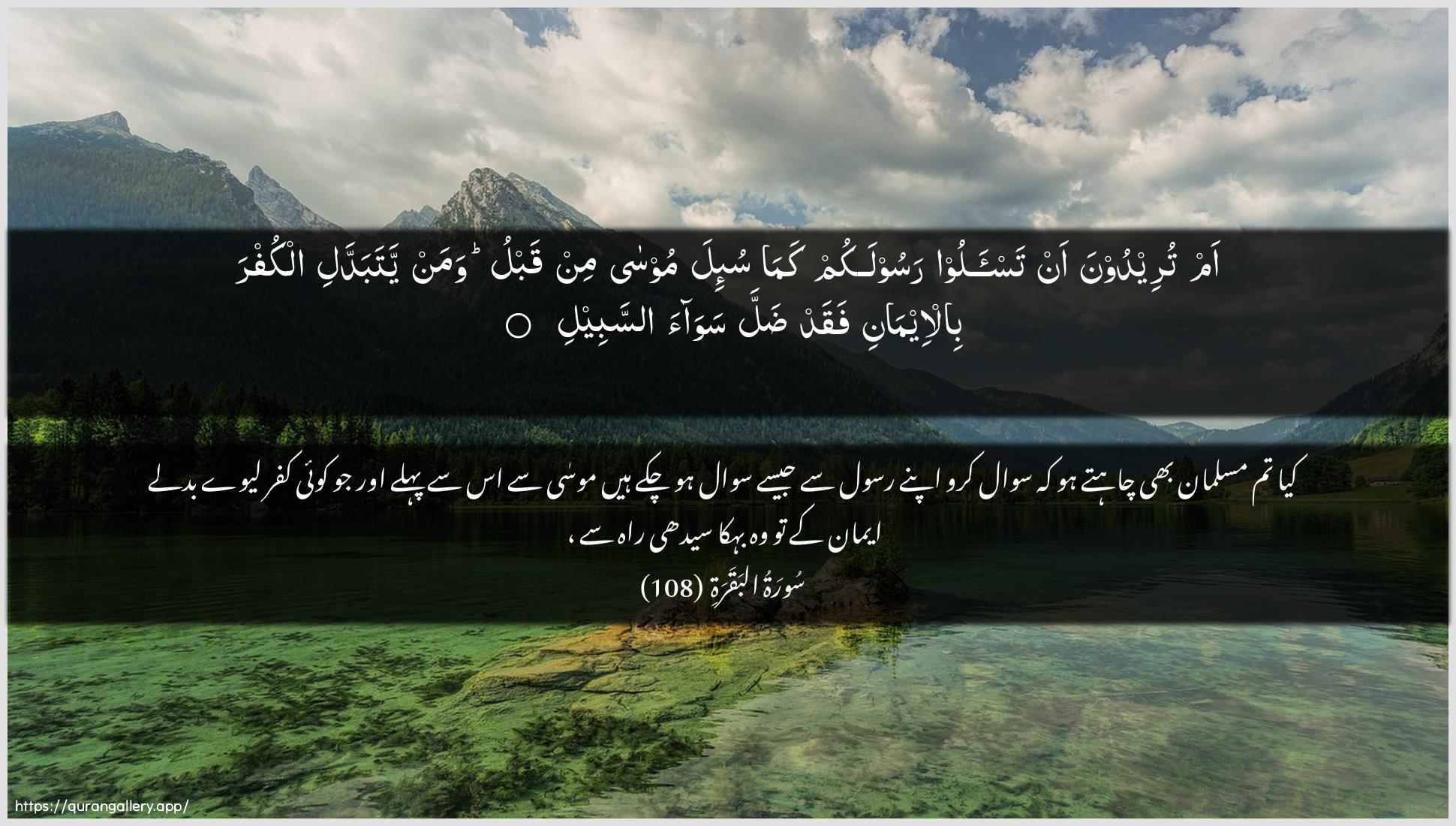
Arabic + Urdu
Free for personal & educational use with attribution
Quick Facts about this Verse
Surah
Al-Baqara
Revealed
Madani
Position
Juz 1,2,3
Explore this Verse
Verse Meaning
According to the classical exegete Ibn Kathir, verse 2:108 of Surah Al-Baqarah serves as a profound warning to the believers against adopting the defiant and challenging attitude of previous nations towards their prophets. It directly admonishes against asking for signs and proofs out of obstinacy, drawing a stark parallel to how the Children of Israel questioned Moses with demands such as to see Allah openly. Synthesizing narrations from Ibn Abbas and Mujahid, scholars explain this verse was revealed in response to various impertinent requests made to Prophet Muhammad (ﷺ), such as the demand by Quraysh to turn the hill of Safa into gold or from certain Jews asking for a book to be sent down from heaven. The core of the verse is not a prohibition on sincere questions for understanding, but a condemnation of questions designed to test, challenge, or mock the messenger. The hidden gem revealed through a cross-tafsir analysis is that such questioning is not a sign of intellectual curiosity, but a symptom of a spiritual disease: the desire to 'exchange' (yatabaddal) the certainty of faith for the arrogance of disbelief. This act of spiritual trade-off is a conscious choice that leads one astray from the 'sawaa' as-sabeel'—the balanced, even, and straight path of submission—into the wilderness of doubt and ultimate loss.
Questions for Reflection
historical
Al-Tabari and Ibn Kathir detail the demands of Bani Israel, such as seeing Allah openly. Contemplate the state of their hearts. They had witnessed miracles like the parting of the sea, yet their faith was so fragile. What does this teach you about the nature of faith not being solely dependent on physical miracles, but on the willingness of the heart to submit?
personal
The verse warns against a 'trade' or 'exchange' (yatabaddal) of faith for disbelief. Reflect on your own life. Are there areas where you subtly trade the peace of trusting Allah (Iman) for the anxiety of needing to have all your specific demands met (a form of Kufr in His wisdom)? Where do you seek control instead of practicing submission?
theological
The verse connects impertinent questioning with straying from the 'sawaa' as-sabeel' (the even/straight path). Contemplate why this specific act is so destabilizing. How does challenging the wisdom of the Messenger and the message lead to losing one's entire spiritual equilibrium and direction, rather than just being a single mistake?
Practical Applications
Before asking a question about faith, examine your intention: Is it for genuine understanding or to find fault and create debate?
Crucial for navigating online discussions and debates, where argumentation often overshadows sincere learning.
Focus on understanding and applying the clear guidance you already have, rather than delving into excessive hypothetical or obscure matters.
A remedy for 'analysis paralysis' in faith, encouraging action over endless theoretical exploration.
When faced with doubt, instead of demanding a sign from Allah, increase your study of the established proofs of the Quran and the life of the Prophet (ﷺ).
A powerful strategy for addressing modern skepticism by engaging with the robust intellectual and spiritual tradition of Islam.
Hidden Gem
The synthesis of tafsirs reveals a subtle spiritual insight: the questions of Bani Israel were not just about seeing, but about control. They wanted to subject the divine to their own terms and senses. The hidden gem of contemplation is realizing that faith is the liberation from this need for personal control, allowing one to find peace in a wisdom far greater than one's own.
Scroll to see more verses or use the dropdown in the breadcrumb to jump to any verse