
Al-Baqara - The Cow
Arabic Name: الْبَقَرَة
Urdu Name: گائے
Type: Madani
Serial Number: 2
Revelation Order: 87
Total Verses: 286
Parah: 1,2,3
Rukus: 40
Sajda: None
Share Verse Art

Arabic
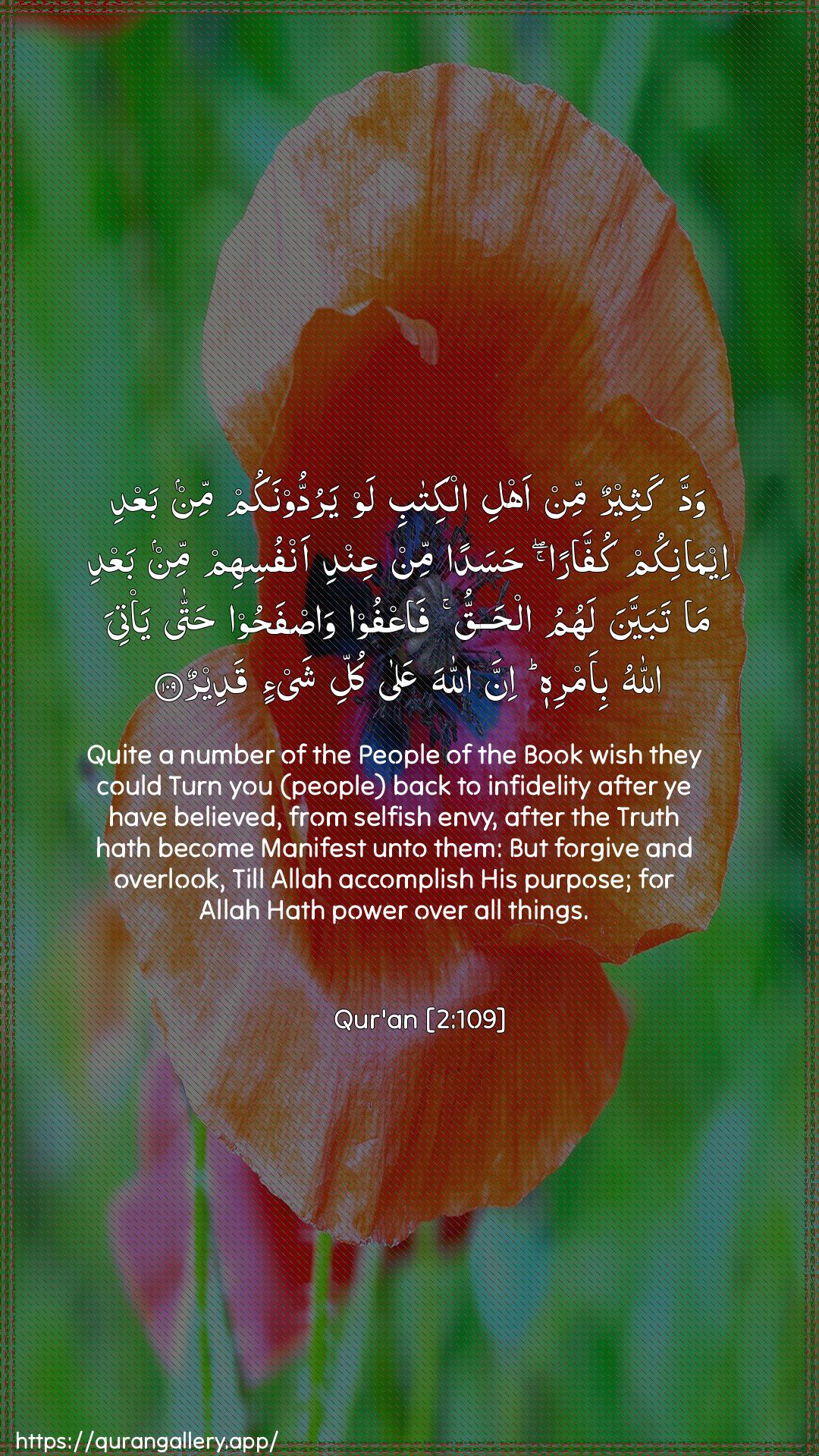
Arabic + English
Arabic (Wide)
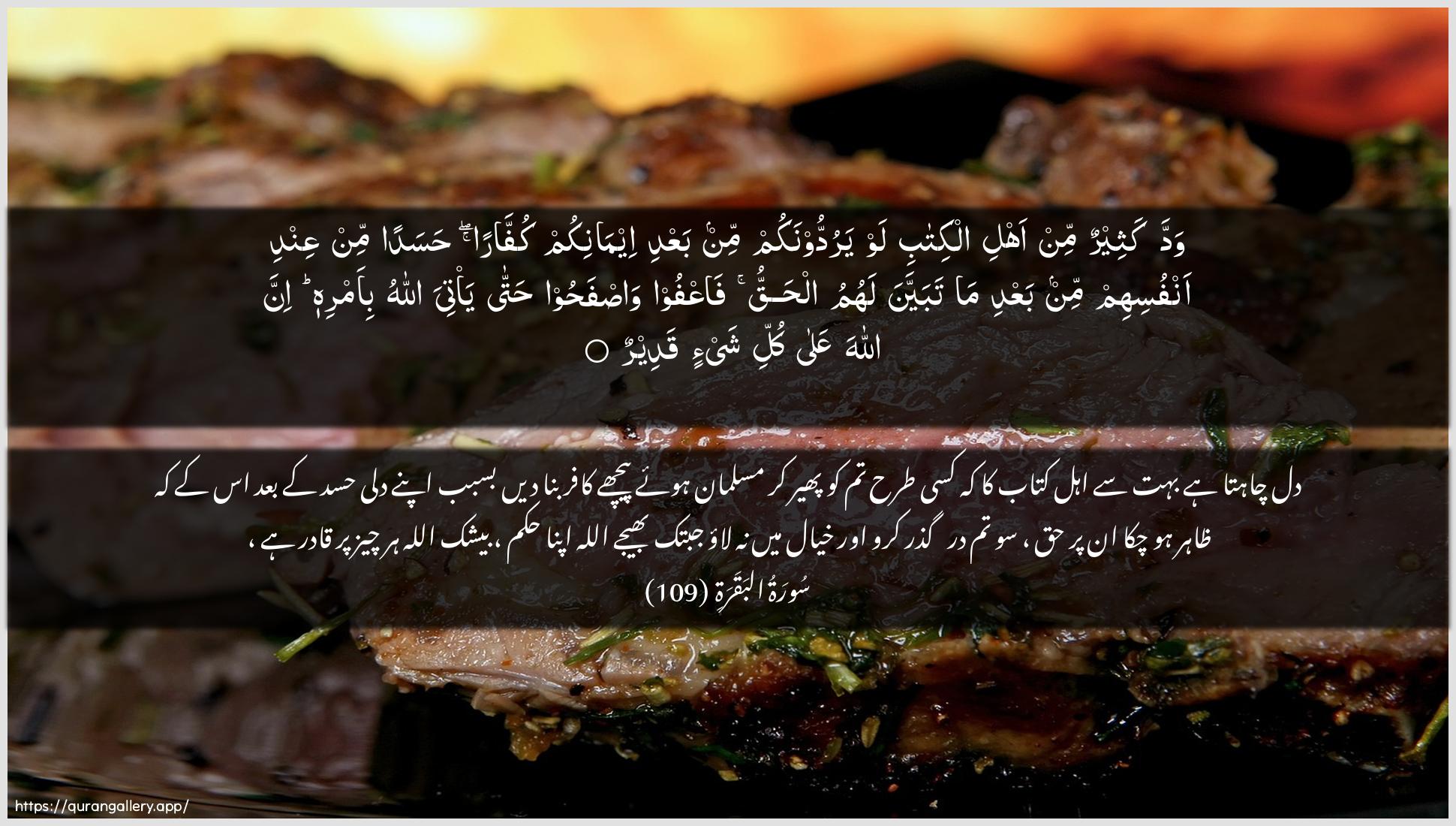
Arabic + Urdu
Free for personal & educational use with attribution
Quick Facts about this Verse
Surah
Al-Baqara
Revealed
Madani
Position
Juz 1,2,3
Explore this Verse
Verse Meaning
According to the classical tafsir of Ibn Kathir, Quran 2:109 serves as a critical warning to the Muslim community about the hidden enmity from many among the People of the Book (Jews and Christians). A comprehensive synthesis of scholarly works, including those of Al-Tabari and Al-Qurtubi, reveals that this is not a matter of simple disagreement, but a deep-seated envy (`hasad`) stemming from their own souls, wishing to turn the believers back to disbelief. This desire persisted even after the truth of Prophet Muhammad's prophethood became clear to them through their own scriptures. The verse then prescribes a powerful, yet temporary, spiritual and strategic response: 'Forgive and overlook (`fa'fu wasfahu`) until Allah brings His command.' This command was an instruction for patience and forbearance in the early Madinan period, a phase that was later concluded by the divine permission to engage in defensive fighting. The verse concludes by affirming Allah's absolute power (`ala kulli shay'in qadir`), reassuring the believers that the final command and victory are in His hands alone.
Questions for Reflection
personal
The verse states their envy comes 'from their own selves' after the truth was made clear. Contemplate a time you felt envy. Was it based on logic, or an internal feeling of lack? How does recognizing envy as a purely internal, emotional disease—as Al-Tabari points out—change how you view the hostility of others and how you guard your own heart?
communal
The command to 'forgive and overlook' was given to a small, vulnerable community. Reflect on the strength required for a group to collectively absorb insults and hostility without retaliating. How does this command, as Ibn Kathir contextualizes it in early Madinah, build internal resilience and unity in a community, preparing it for greater future responsibilities?
strategic
Contemplate the profound wisdom in the phrase 'until Allah brings His command.' It implies that patience is not passive waiting, but an active state of trust and preparation. How does this concept, which Al-Qurtubi links to divine legislative wisdom (naskh), teach us that our responses to situations should be adaptable and aligned with a greater divine plan, rather than based on a single, rigid principle for all time?
Practical Applications
Identify and spiritually shield yourself from the envy of others who wish to weaken your faith or commitment.
Applicable when facing criticism from family or friends who disapprove of your increased religious practice or adherence to Islamic principles.
Practice strategic patience (`sabr`) and forbearance (`safh`) when you are in a position of weakness or when direct confrontation is unwise.
Useful in professional environments or social situations where responding to every micro-aggression or criticism would be counterproductive and draining.
Strengthen your conviction by understanding that even clear evidence doesn't sway the envious, whose rejection is emotional, not intellectual.
Helps in debates or discussions with those who are not arguing in good faith, allowing you to disengage peacefully instead of getting trapped in fruitless arguments.
Hidden Gem
The synthesis of tafsirs reveals a profound spiritual insight: the command to forgive was not just for self-preservation, but a form of Da'wah (invitation to Islam). By responding to envy with grace, the Muslims demonstrated the superior moral character produced by their faith, which in itself is a powerful testament to the truth, even if the envious themselves do not accept it.
Scroll to see more verses or use the dropdown in the breadcrumb to jump to any verse