
Al-Baqara - The Cow
Arabic Name: الْبَقَرَة
Urdu Name: گائے
Type: Madani
Serial Number: 2
Revelation Order: 87
Total Verses: 286
Parah: 1,2,3
Rukus: 40
Sajda: None
Share Verse Art
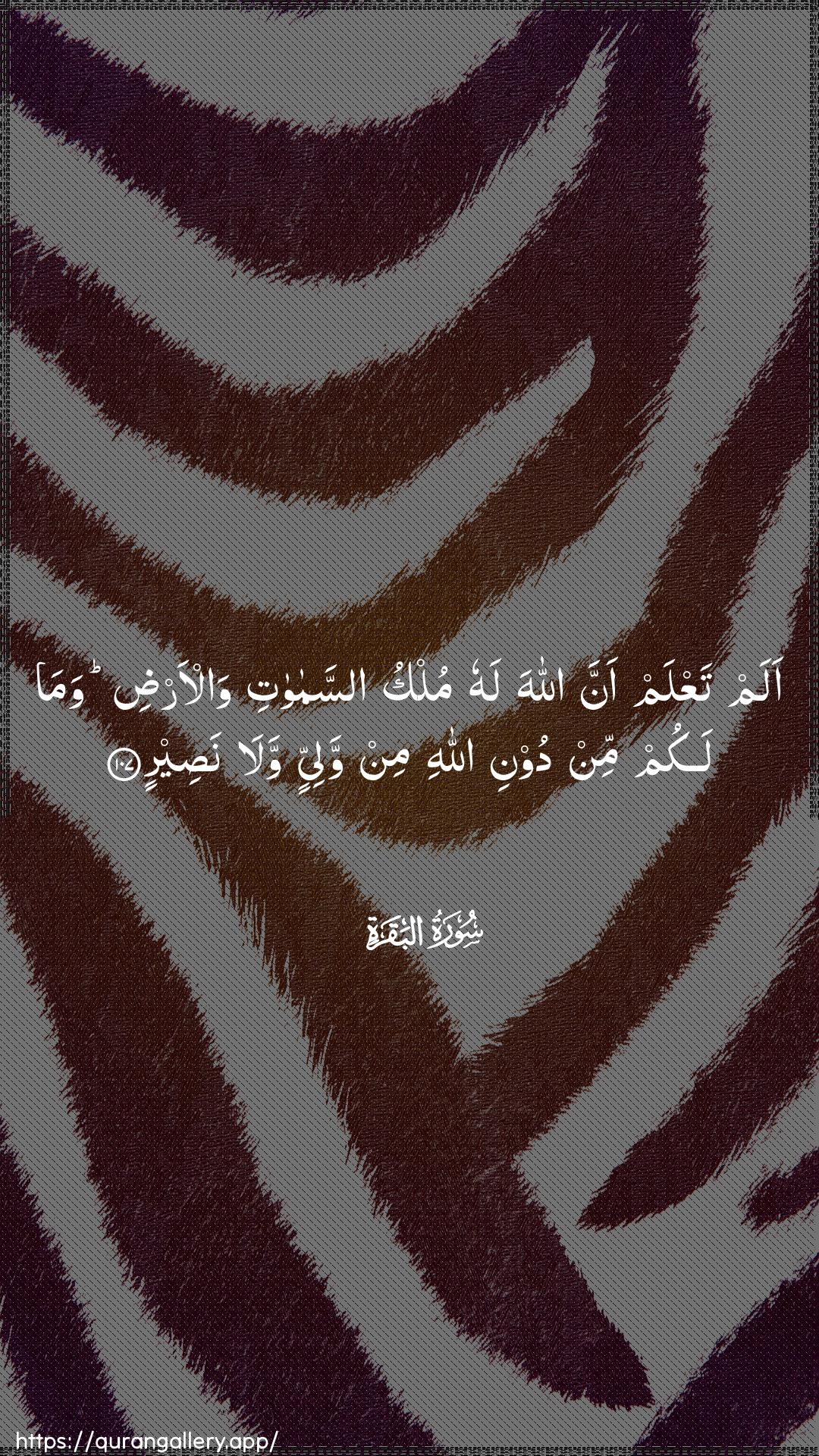
Arabic
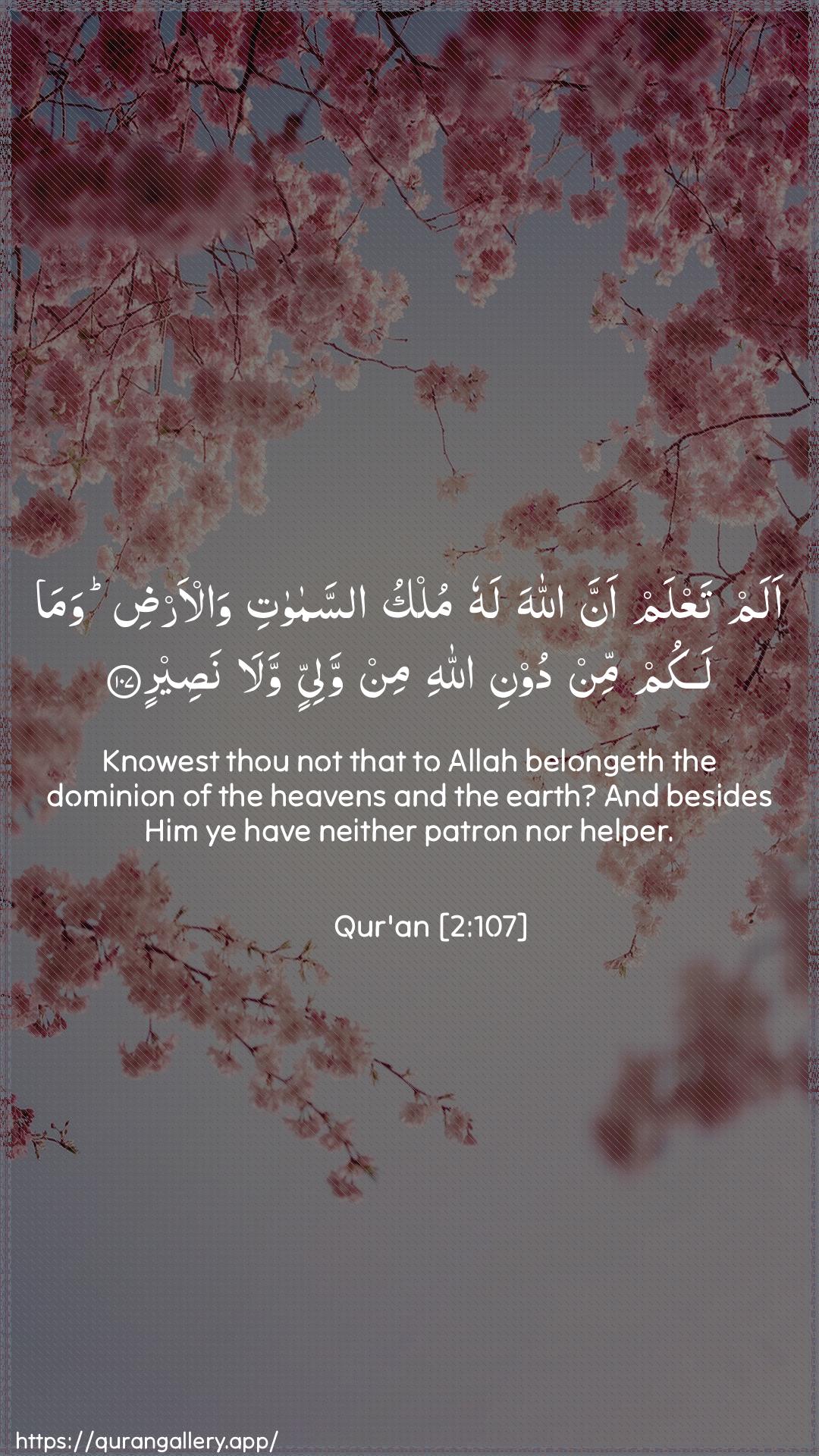
Arabic + English
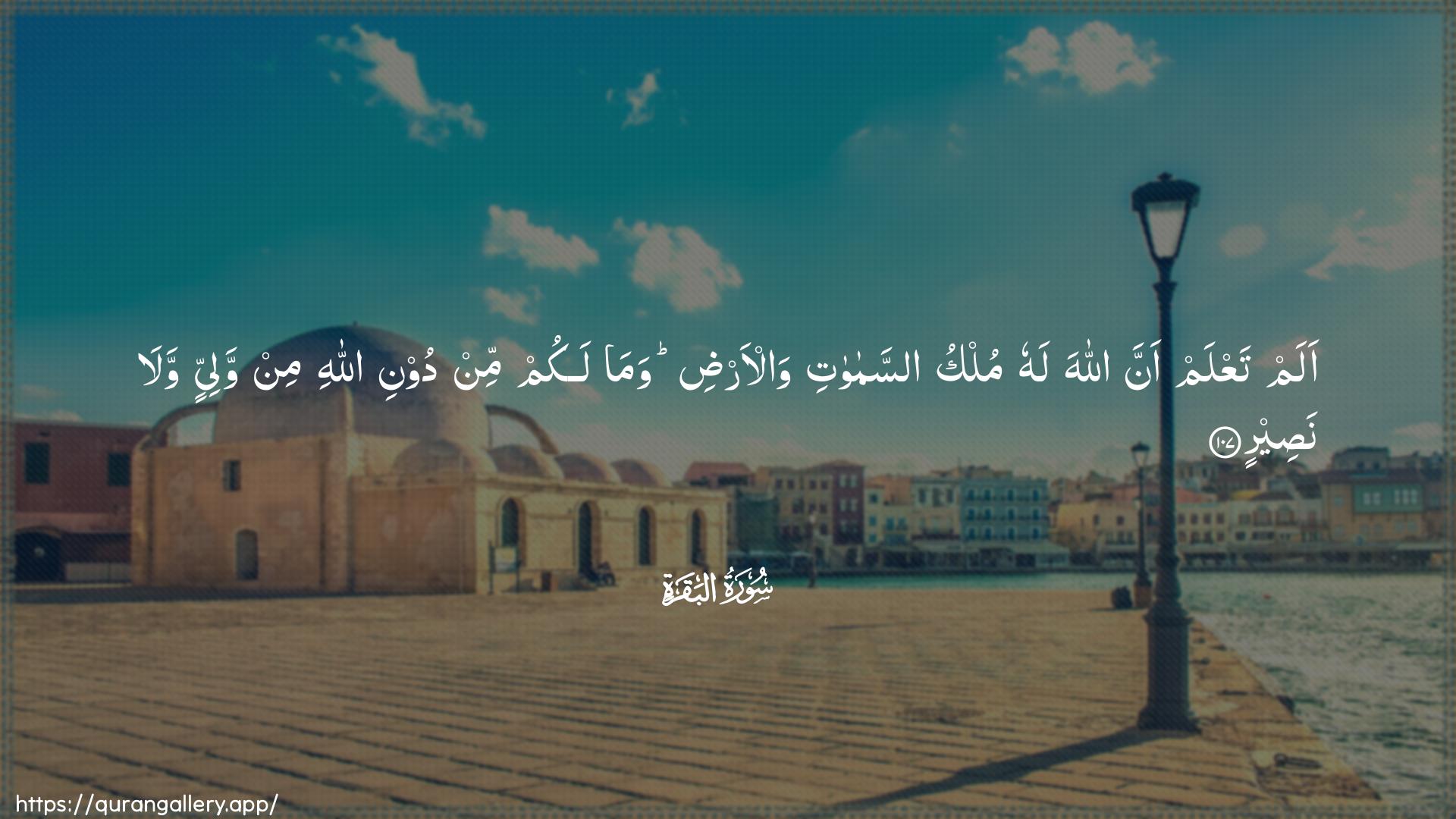
Arabic (Wide)
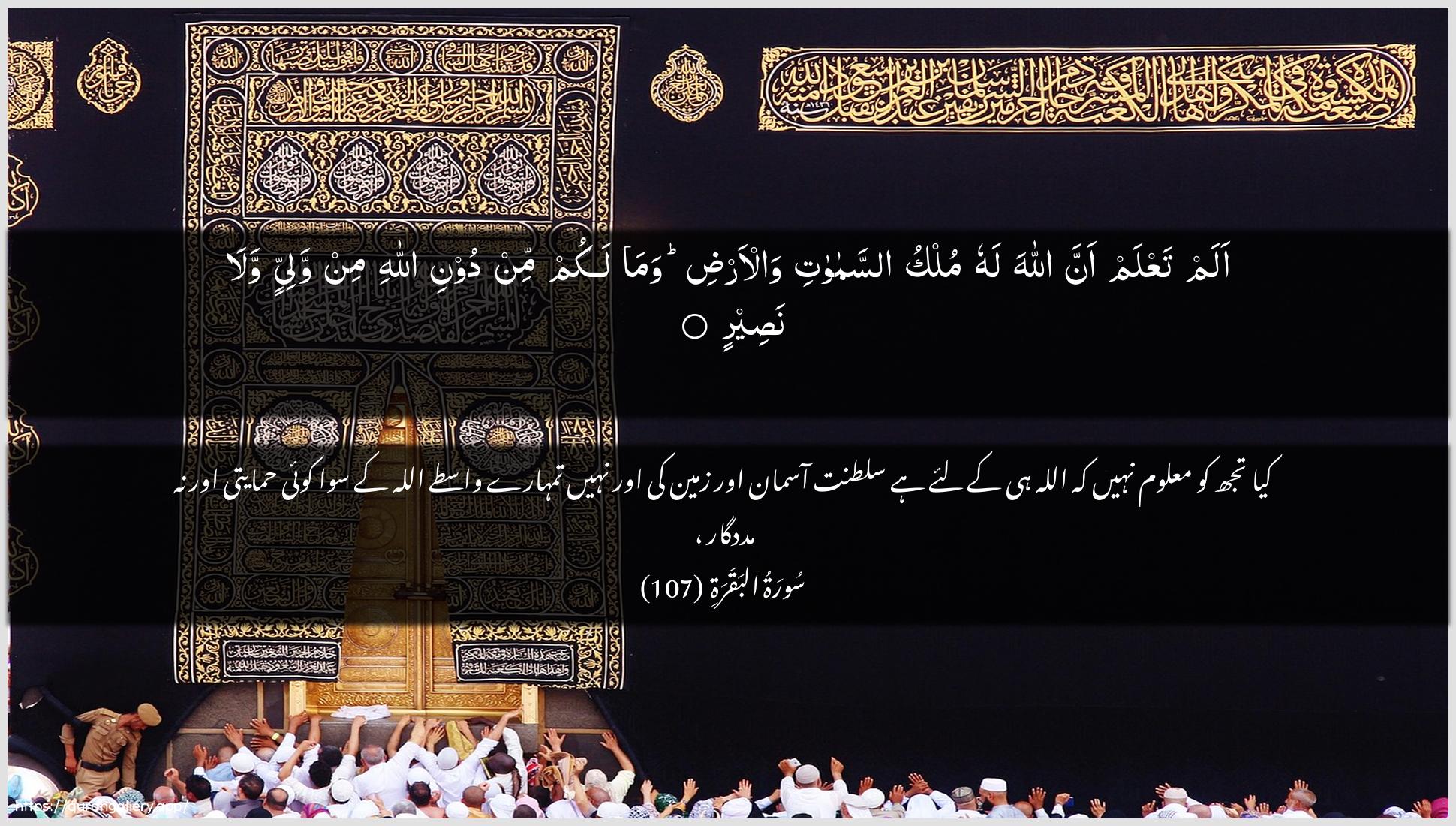
Arabic + Urdu
Free for personal & educational use with attribution
Quick Facts about this Verse
Surah
Al-Baqara
Revealed
Madani
Position
Juz 1,2,3
Explore this Verse
Verse Meaning
According to the classical scholar Al-Tabari, Quran 2:107 serves as a profound declaration of Allah's absolute sovereignty and a direct refutation of those who questioned the divine authority to abrogate previous religious laws. The verse unequivocally states that the dominion of the heavens and the earth belongs to Allah alone, granting Him the ultimate right to command, forbid, abrogate, and legislate as He wills. Ibn Kathir connects this declaration directly to the preceding discussion on abrogation, explaining that the One who owns everything has the right to manage His creation as He sees fit. This comprehensive authority is complemented by a crucial message of solace for believers: 'and you have not, besides Allah, any guardian (Wali) or helper (Naseer).' Al-Qurtubi clarifies that a 'Wali' is a guardian or protector who manages one's affairs, while a 'Naseer' is one who defends against harm. The synthesis of these scholarly insights reveals a powerful dual concept: Allah's omnipotence is not a source of fear for the faithful, but the very foundation of their security, as the Ultimate King is also their exclusive Guardian and Helper.
Questions for Reflection
Theological Contemplation
Al-Tabari explains that Allah's 'Mulk' (dominion) means He has the absolute right to command and legislate. Reflect on an area of your life where you resist one of Allah's commands. How does internalizing His complete ownership of 'the heavens and the earth'—including you—challenge this resistance?
Personal Reliance
The verse negates any 'Wali' (protector) or 'Naseer' (helper) besides Allah. Identify your 'go-to' sources of security and help in this world—be it a person, your job, or your wealth. Contemplate the temporary and limited nature of these worldly supports versus the absolute and eternal nature of Allah's guardianship. Where is your heart truly placing its trust?
Relational Freedom
Ibn Kathir ties this verse to freeing oneself from reliance on anything other than Allah. Consider your relationships. How would your interactions with others change if you truly believed that no person could be your ultimate protector or grant you ultimate success? Would it free you from the fear of disappointing others or the desperation for their approval?
Practical Applications
In moments of fear or anxiety, consciously remind yourself: 'The One who owns the heavens and earth is my Wali.'
Use this as a mantra during stressful work situations, financial uncertainty, or when worried about family safety.
When facing an overwhelming challenge, actively turn away from seeking ultimate help from people and make dua directly to Allah as your 'Naseer' (Helper).
Applicable when dealing with difficult projects, personal conflicts, or when striving to overcome a bad habit.
Accept changes in life's circumstances, whether positive or negative, as a decree from the Owner of all things.
Helps in coping with job loss, unexpected changes, or shifts in relationships with a mindset of divine wisdom.
Hidden Gem
The synthesis of scholarly thought reveals that the verse is a cure for two of the heart's greatest diseases: arrogance and despair. Acknowledging Allah's dominion cures the arrogance of feeling self-sufficient. Acknowledging Him as the sole Wali and Naseer cures the despair of feeling helpless and abandoned. It is a perfect spiritual equilibrium.
Scroll to see more verses or use the dropdown in the breadcrumb to jump to any verse