
Al-Baqara - The Cow
Arabic Name: الْبَقَرَة
Urdu Name: گائے
Type: Madani
Serial Number: 2
Revelation Order: 87
Total Verses: 286
Parah: 1,2,3
Rukus: 40
Sajda: None
Share Verse Art
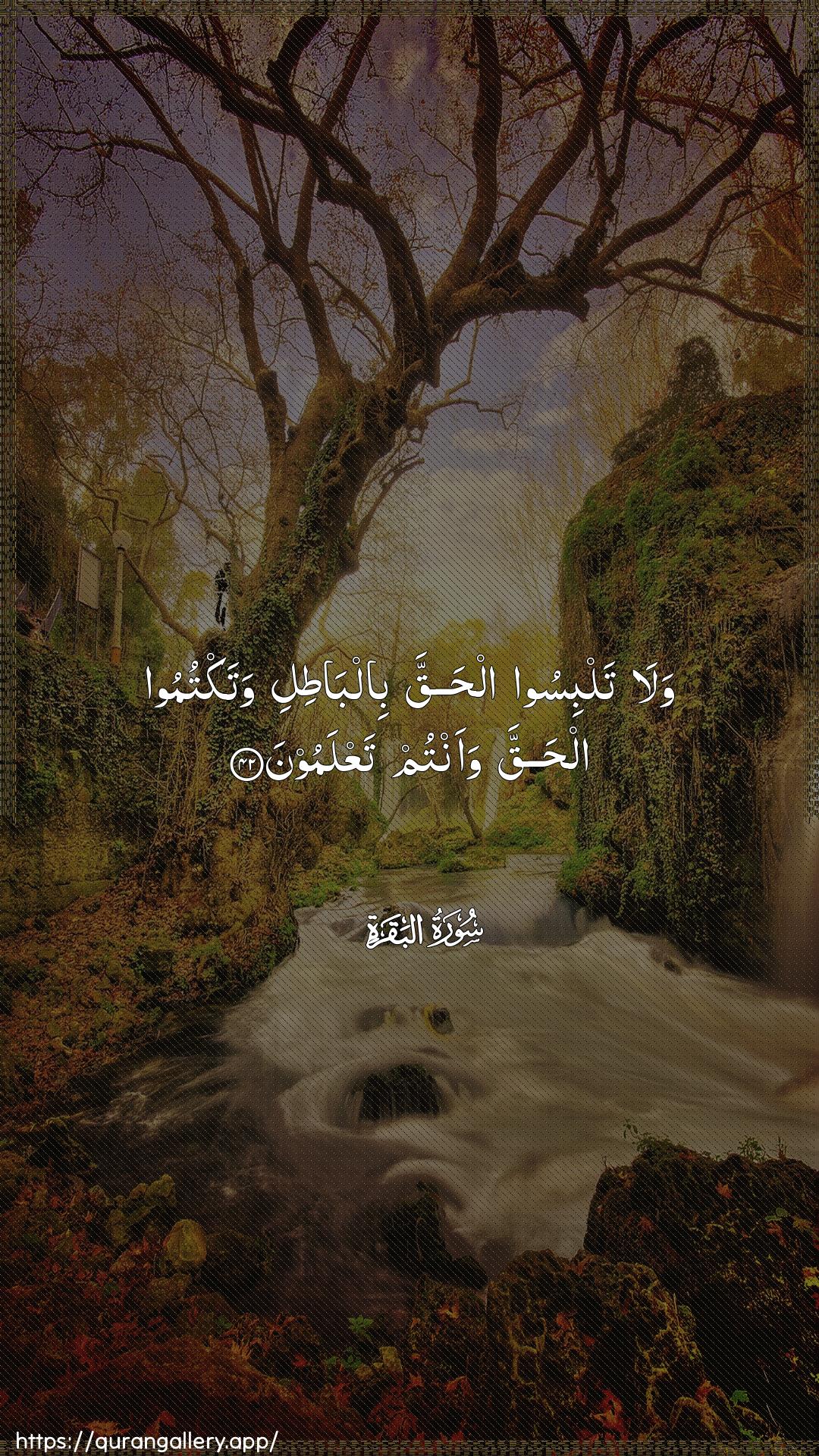
Arabic
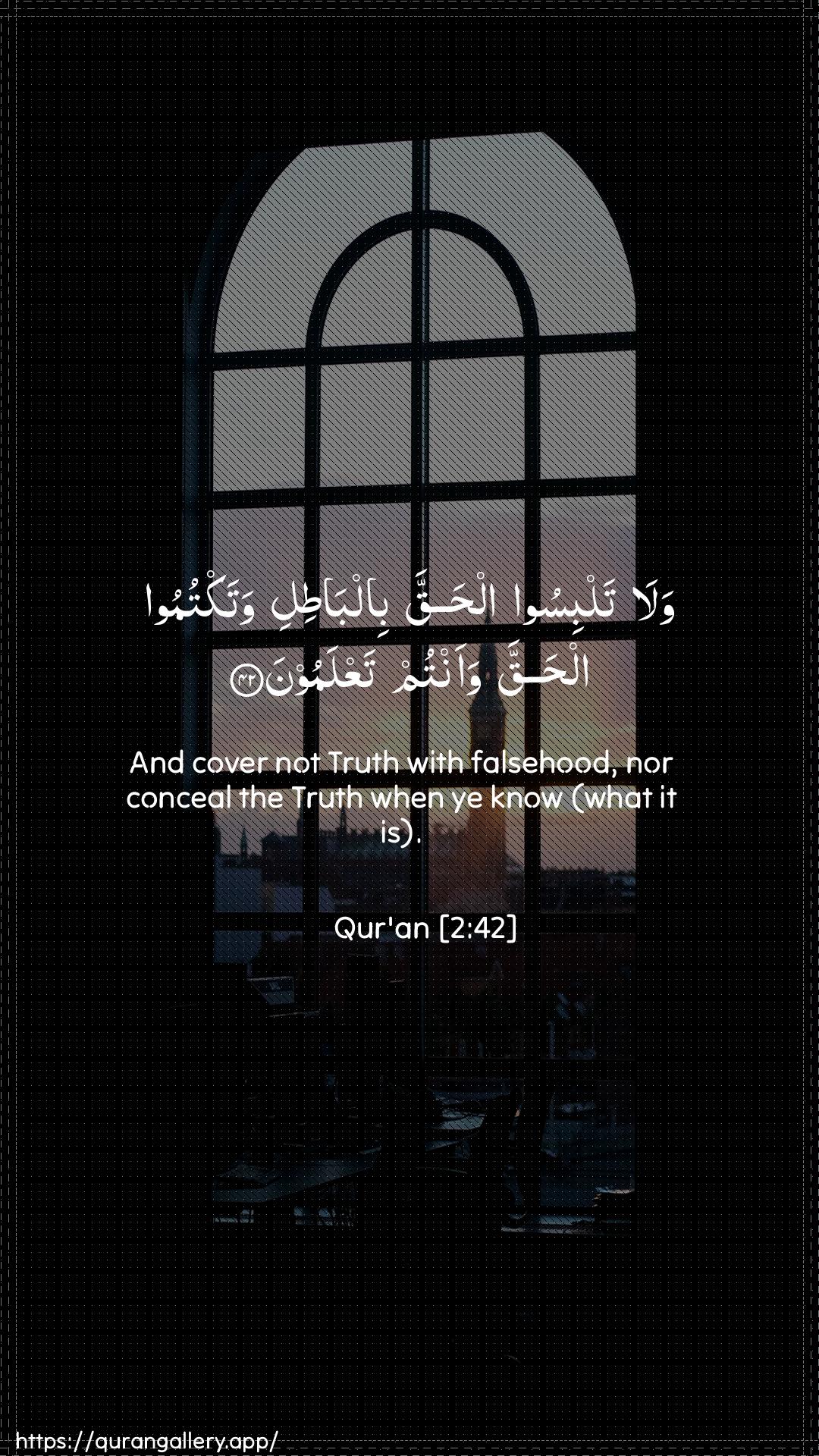
Arabic + English
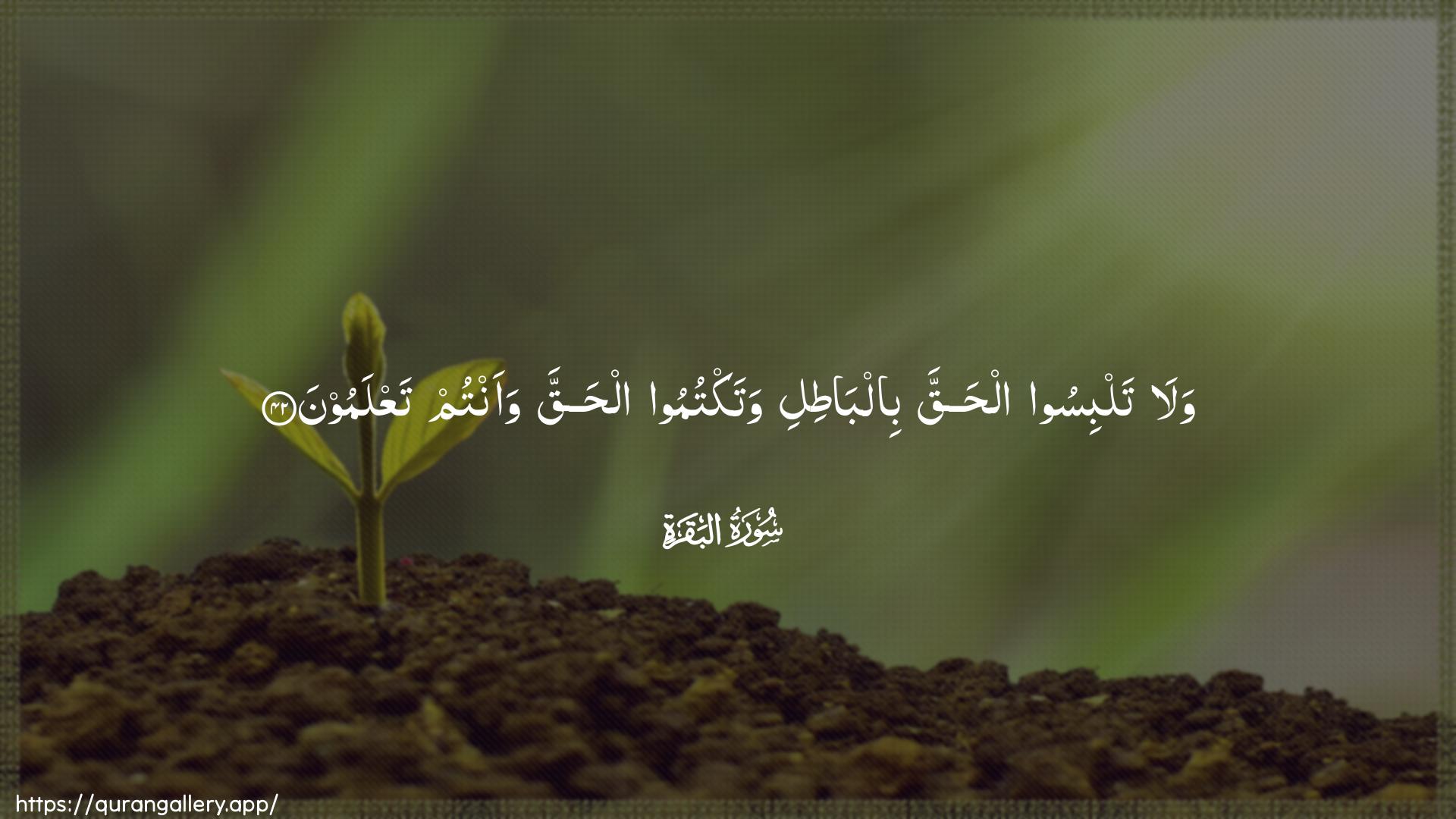
Arabic (Wide)
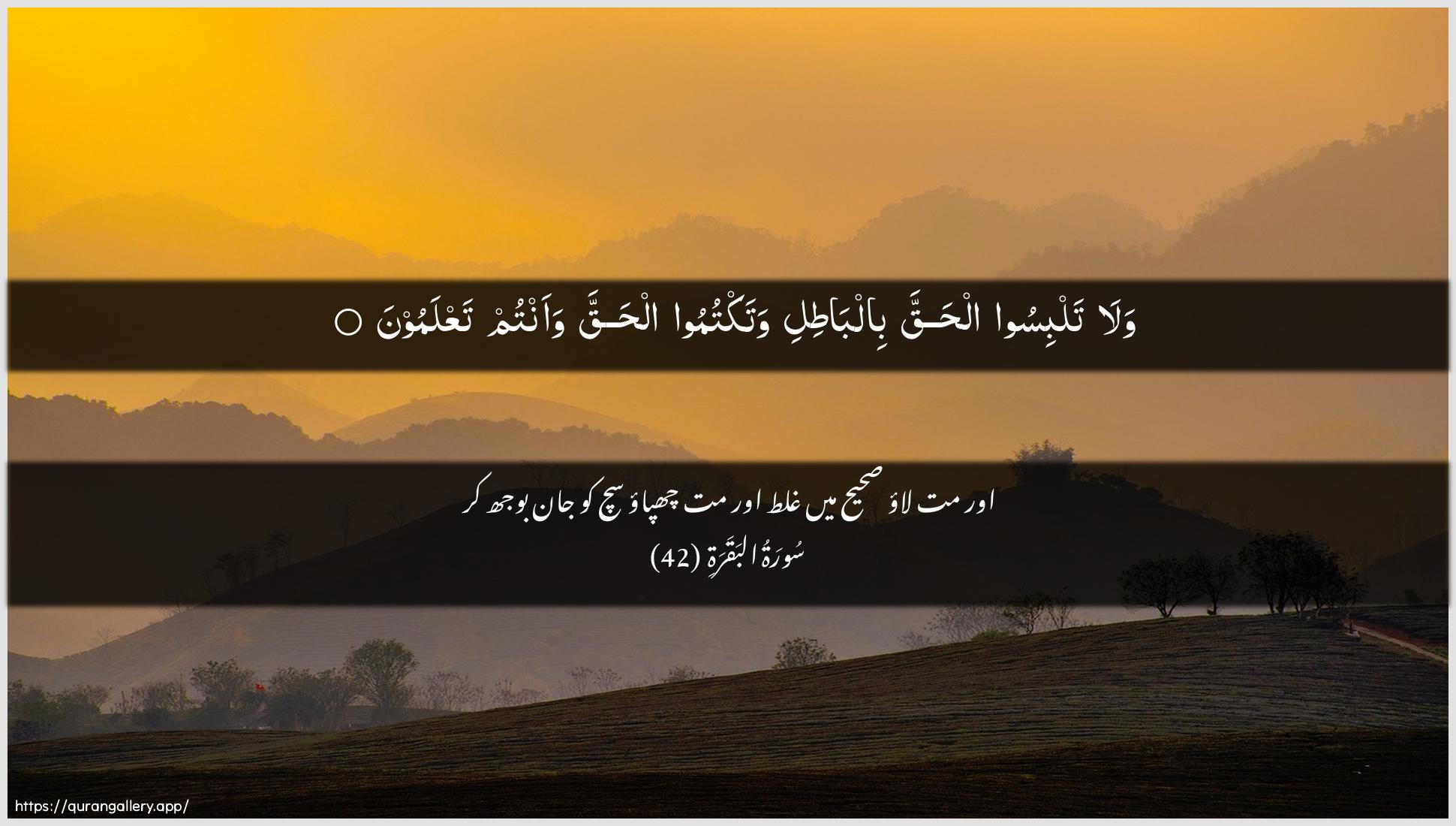
Arabic + Urdu
Free for personal & educational use with attribution
Quick Facts about this Verse
Surah
Al-Baqara
Revealed
Madani
Position
Juz 1,2,3
Explore this Verse
Verse Meaning
According to the classical scholar Ibn Kathir, verse 2:42 of Surah Al-Baqarah delivers a direct and powerful prohibition against two forms of intellectual and spiritual dishonesty: mixing truth with falsehood and knowingly concealing the truth. This divine command was primarily addressed to the scholars of the Children of Israel, who possessed knowledge from their scriptures about the coming of Prophet Muhammad (peace be upon him). Al-Tabari's comprehensive analysis explains that 'mixing' (talbisū) involves deliberately confusing people by presenting falsehood dressed in the garb of truth, such as acknowledging the concept of a final prophet but altering his descriptions to mislead others. The second prohibition, 'concealing' (taktumū), as explained by scholars like Qatadah, refers to the outright hiding of specific knowledge, particularly the clear descriptions of the Prophet found in the Torah. The verse culminates with the poignant phrase 'while you know' (wa antum ta'lamūn), which underscores the gravity of the offense. It is not an act of ignorance, but a conscious decision to suppress guidance for worldly gain or tribal pride, making it a severe betrayal of the scholarly trust (amanah) bestowed upon them by Allah.
Questions for Reflection
Personal Integrity
Al-Tabari explains 'talbis' as 'mixing' or 'confusing' truth. Reflect on your recent conversations. Have there been times when you mixed a difficult truth with a convenient falsehood to make it more palatable or to avoid conflict? What did you fear would happen if you presented the unvarnished truth?
Communal Responsibility
Ibn Kathir emphasizes that the Children of Israel concealed the truth about the Prophet's description. In our community or professional life, is there a 'truth' that is inconvenient to speak about—a systemic issue, an ethical breach, or a needed reform? What role does silence or 'concealment' play in allowing this falsehood to persist?
Spiritual Sincerity
The verse ends with 'while you know.' This points to a conscious act, not a mistake. Contemplate the state of your own heart. In which area of your life are you knowingly not living up to a truth you have learned? What 'falsehood' (e.g., excuse, justification, self-deception) are you using to cover this truth from yourself?
Practical Applications
In discussions, present information transparently, clearly distinguishing between established facts and personal opinions or interpretations.
Crucial for navigating social media, academic discourse, and even family conversations where opinions can be mistaken for facts.
When you possess beneficial knowledge that others need, share it honestly and do not withhold it for personal gain or fear of negative reactions.
Applies to professional advice, mentoring, sharing religious knowledge, or even correcting a public falsehood.
Before speaking or writing on an important matter, consciously verify your knowledge and acknowledge what you do not know, acting on the principle of 'wa antum ta'lamun' (while you know).
Essential in an age of 'fake news,' for anyone in a position of teaching, leadership, or public influence.
Hidden Gem
The synthesis of scholarly thought reveals that the verse condemns two steps of deception. First, you 'mix' truth with falsehood to confuse the public. But for the discerning few who see through the mix, you then 'conceal' the pure truth altogether. This shows a sophisticated, multi-layered strategy of deceit, not a simple lie.
Scroll to see more verses or use the dropdown in the breadcrumb to jump to any verse