
Al-Baqara - The Cow
Arabic Name: الْبَقَرَة
Urdu Name: گائے
Type: Madani
Serial Number: 2
Revelation Order: 87
Total Verses: 286
Parah: 1,2,3
Rukus: 40
Sajda: None
Share Verse Art

Arabic
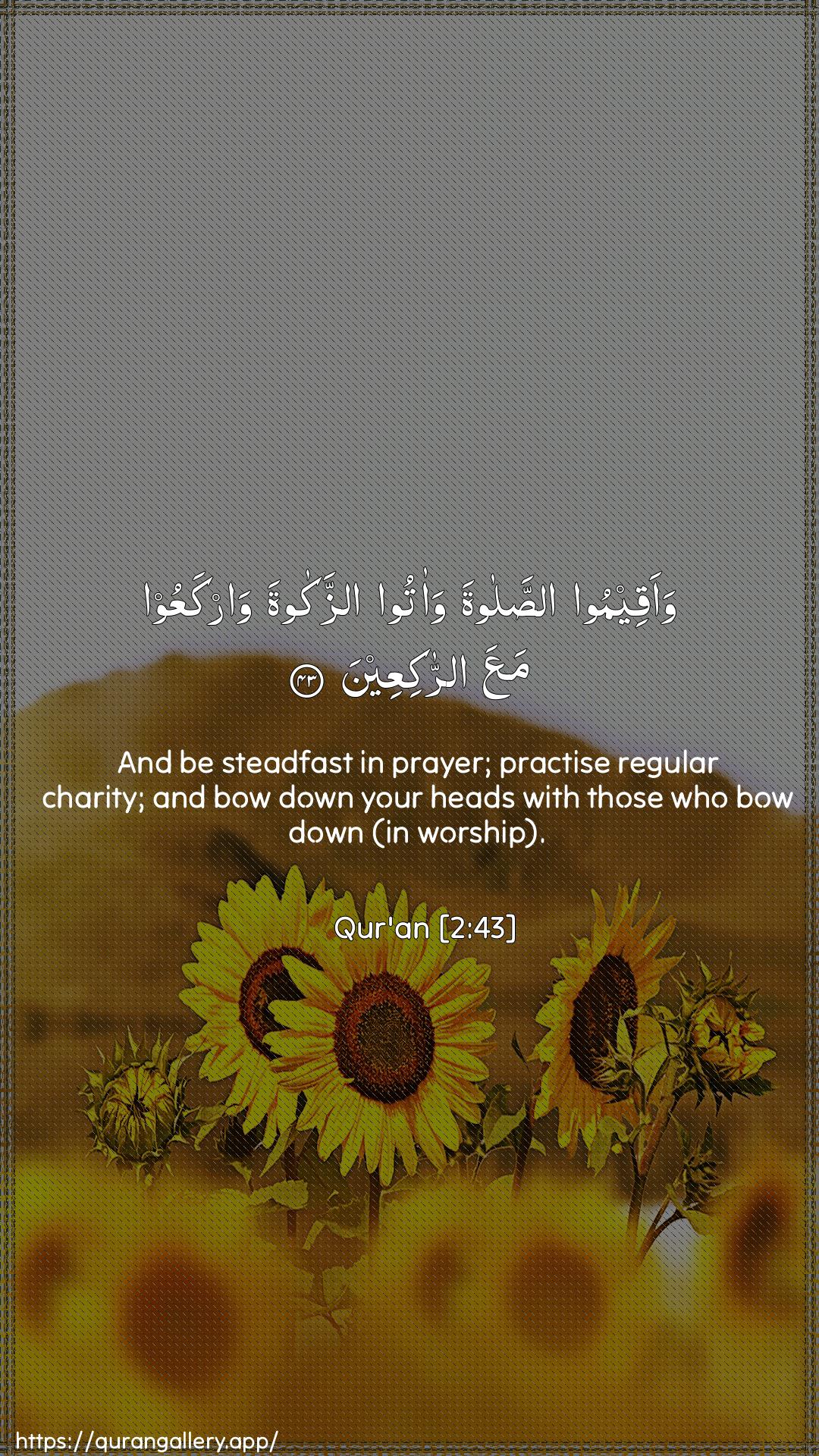
Arabic + English
Arabic (Wide)
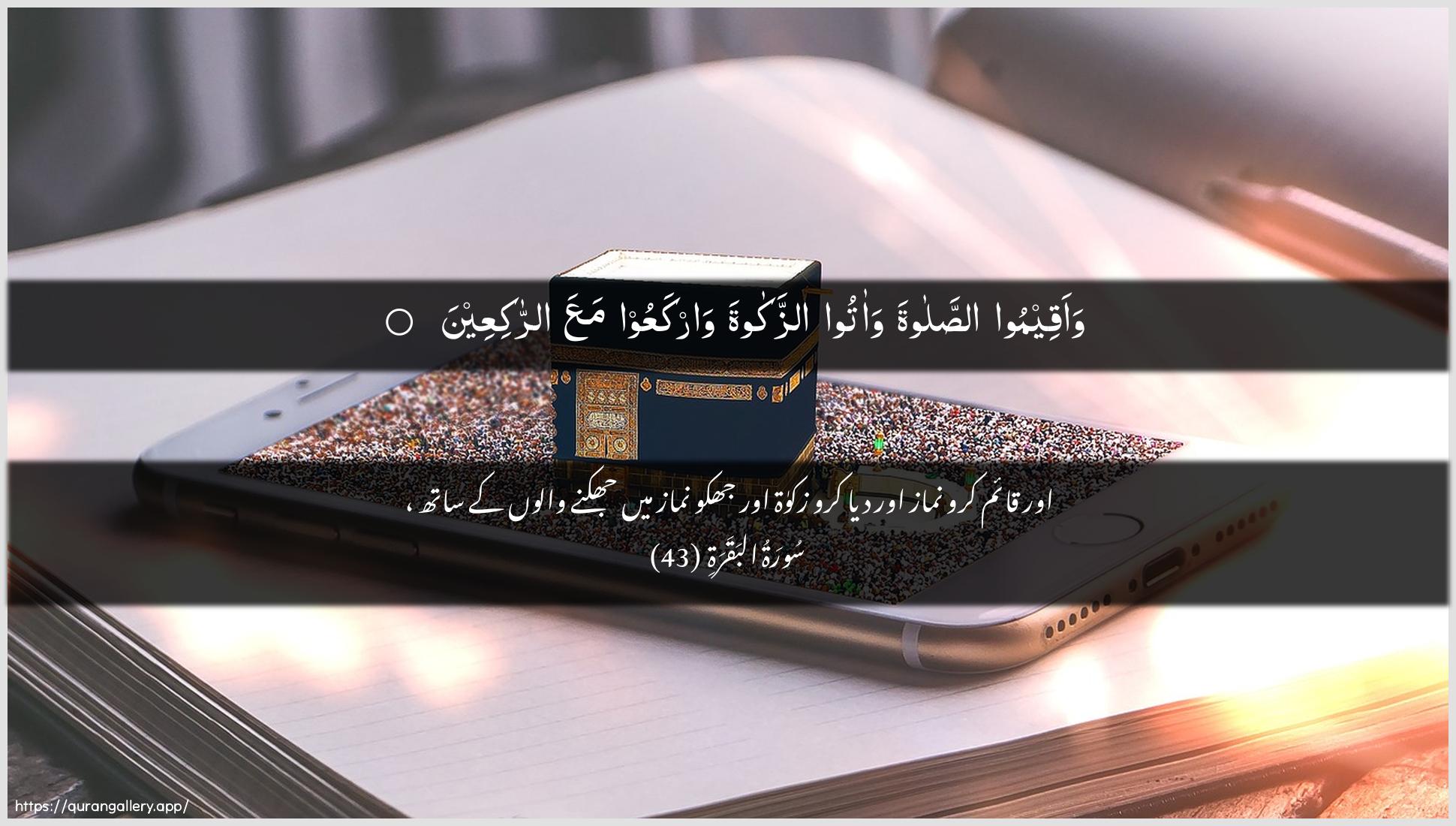
Arabic + Urdu
Free for personal & educational use with attribution
Quick Facts about this Verse
Surah
Al-Baqara
Revealed
Madani
Position
Juz 1,2,3
Explore this Verse
Verse Meaning
According to the classical scholar Ibn Kathir, Quran 2:43 serves as a direct command to the Children of Israel to enter into the fold of Islam by adopting its core practices: establishing the prayer (Salah), giving the obligatory charity (Zakat), and bowing with those who bow (participating in congregational worship). This comprehensive directive synthesizes the vertical relationship with God (Salah), the horizontal relationship with society (Zakat), and the communal identity of the believers (congregation). Al-Tabari's linguistic analysis highlights that 'establishing' the prayer means performing it perfectly with all its conditions, while 'Zakat' purifies and increases wealth. A profound insight emerges from the command 'bow with those who bow'; as Al-Qurtubi explains, this not only mandates congregational prayer but specifically invites a people whose previous prayer form may not have included bowing (Ruku') to join the specific liturgical practice of Prophet Muhammad's community. This synthesis reveals the verse as a complete framework for integration: spiritual, social, and physical assimilation into the Muslim Ummah, marking a transition from an old covenant to the new.
Questions for Reflection
Personal Devotion (Salah)
Al-Tabari explains that 'establishing' prayer means performing it perfectly. Contemplate one aspect of your Salah—be it punctuality, focus (khushu), or understanding—that you can improve. How does perfecting this personal act of worship prepare you for your communal and financial duties?
Communal Connection (Jama'ah)
Ibn Kathir highlights that 'bow with those who bow' is a command to be *with* the believers. Reflect on your connection to your local Muslim community. Is it merely a physical presence, or is there a genuine sense of belonging, support, and shared identity that this verse calls for?
Financial Purification (Zakat)
The verse links the spiritual act of Salah with the material act of Zakat. Contemplate your relationship with wealth. Do you see it as purely your own, or as a trust from Allah with a designated portion for the needy? How does giving Zakat purify not just your money, but your heart?
Practical Applications
Prioritize congregational prayer (Jama'ah) to build community bonds and earn greater rewards.
Make an effort to attend a local mosque for daily prayers, especially for men, to connect with fellow Muslims.
Treat Zakat not as a tax, but as a purification of wealth and a right of the poor.
Calculate and pay Zakat annually with a conscious intention of purifying your wealth and supporting the needy.
Focus on the quality ('establishing' prayer) over the quantity, ensuring all conditions and concentration are met.
Learn the proper conditions of prayer and find a quiet space to minimize distractions and improve focus (khushu).
Hidden Gem
Al-Qurtubi's extensive discussion on this verse reveals a profound link: جماعة (congregation) comes from the root meaning 'to gather'. Both Zakat and congregational Salah gather people—one physically, the other economically—preventing the fragmentation of the Muslim community. Contemplate how these pillars are designed to actively combat isolation in society.
Scroll to see more verses or use the dropdown in the breadcrumb to jump to any verse