
Al-Baqara - The Cow
Arabic Name: الْبَقَرَة
Urdu Name: گائے
Type: Madani
Serial Number: 2
Revelation Order: 87
Total Verses: 286
Parah: 1,2,3
Rukus: 40
Sajda: None
Share Verse Art
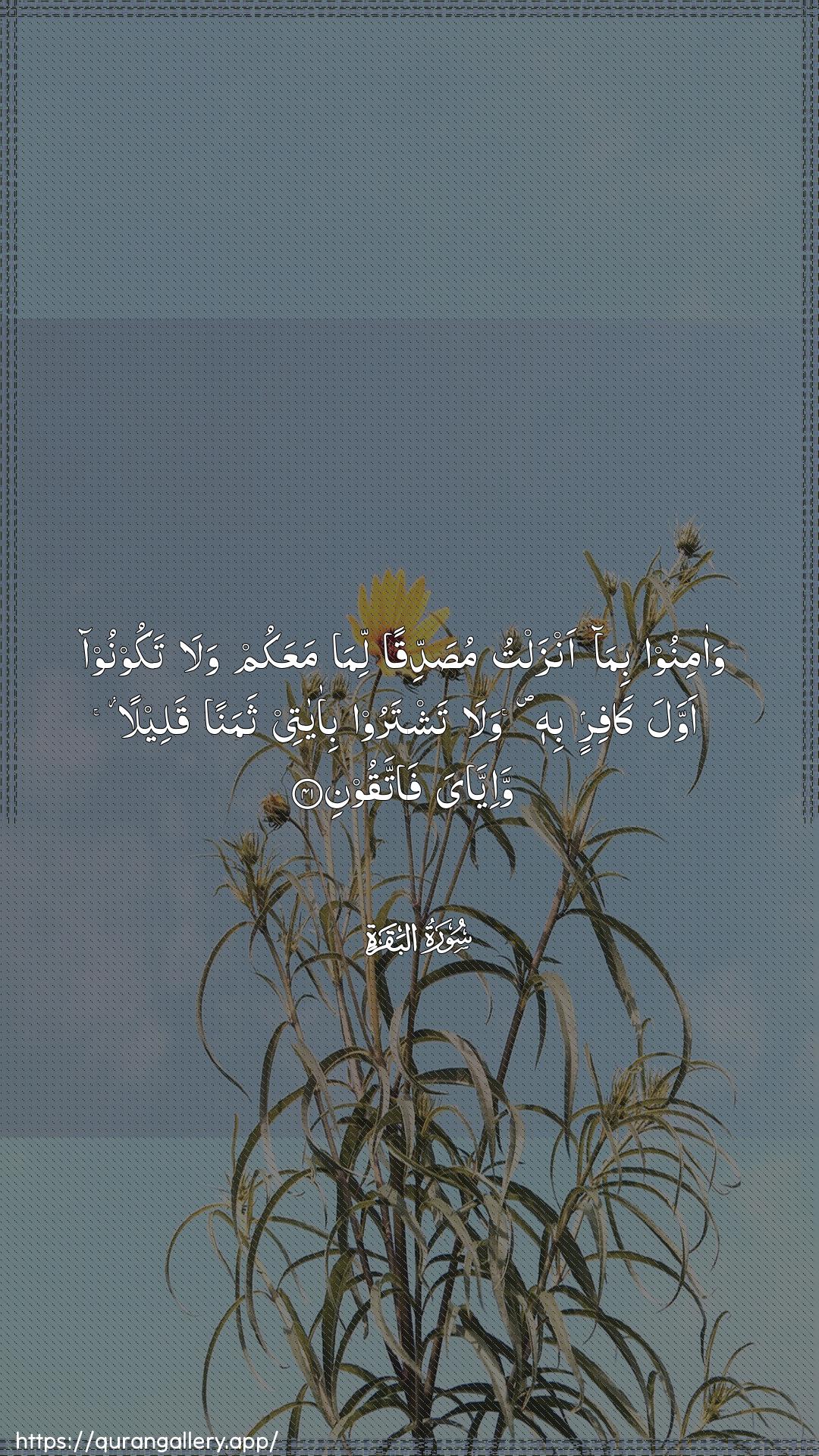
Arabic
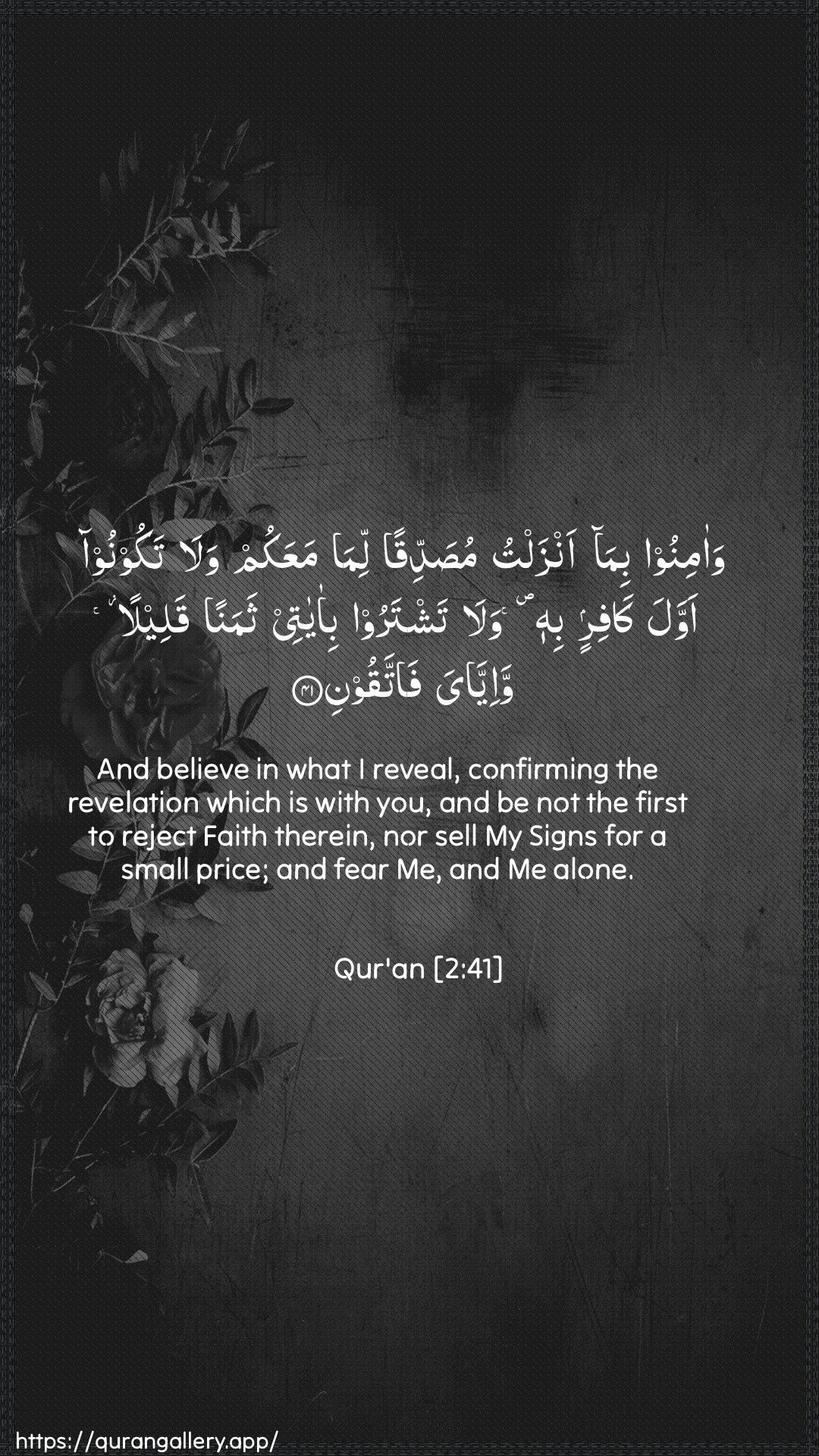
Arabic + English
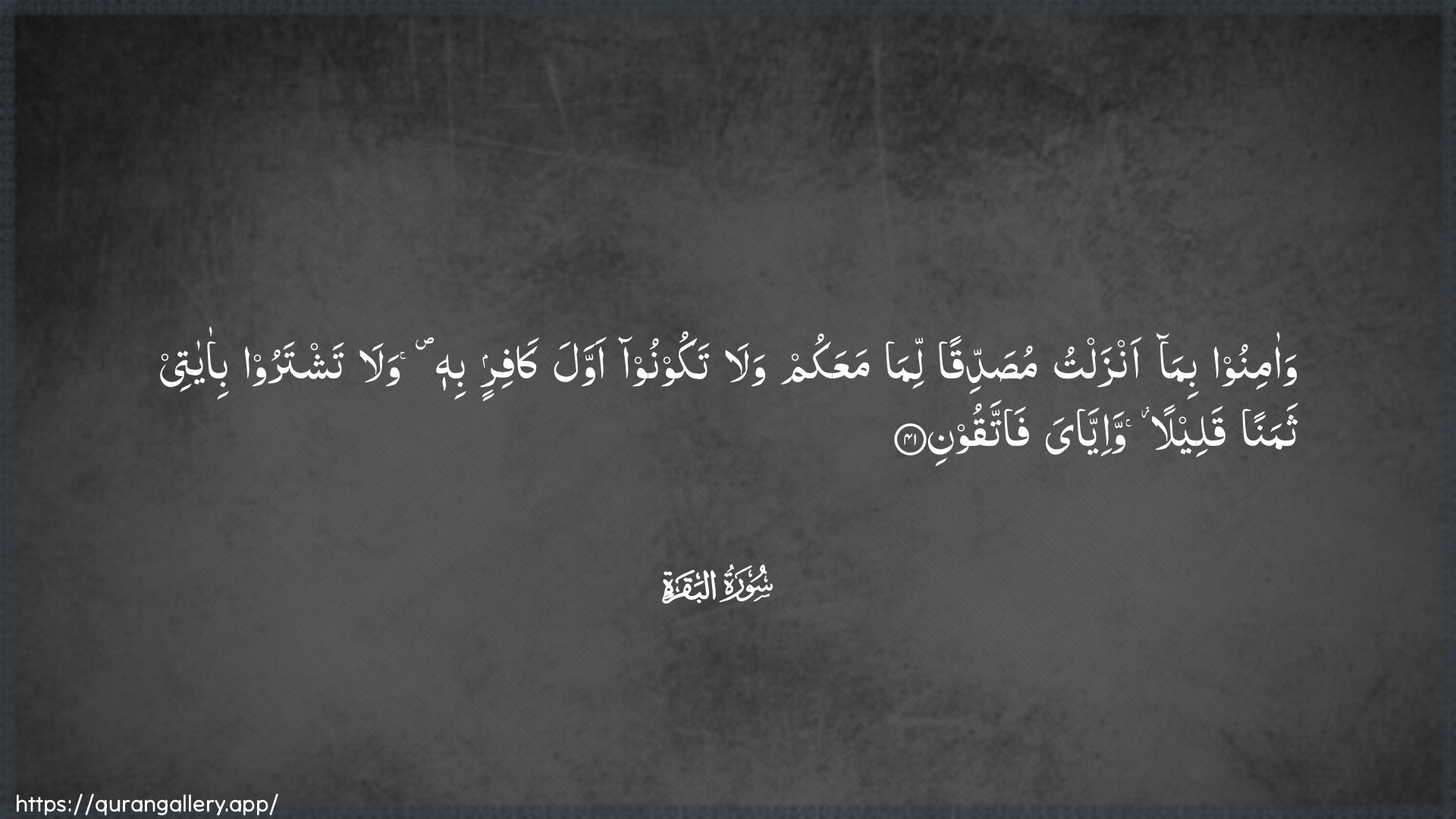
Arabic (Wide)
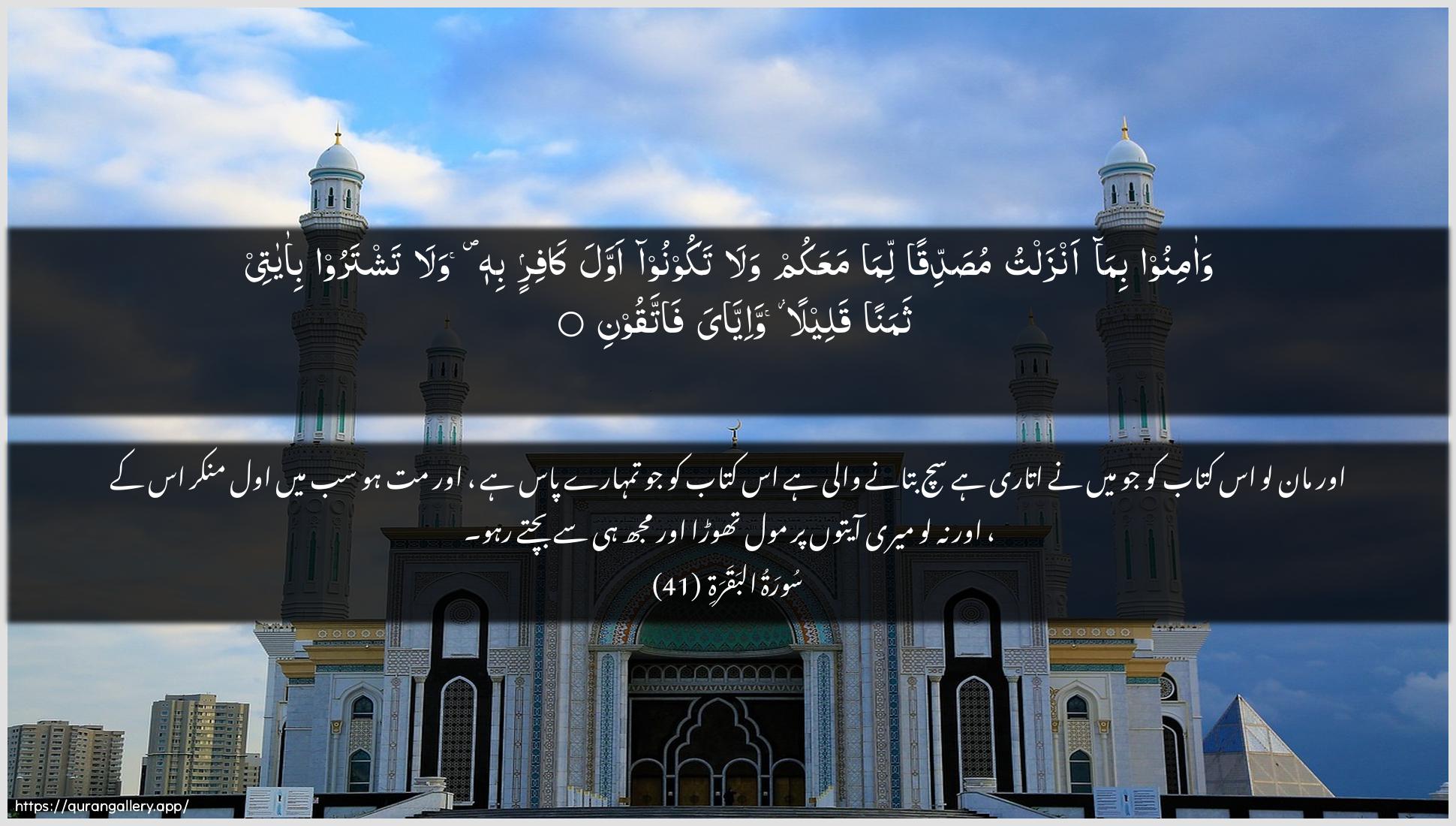
Arabic + Urdu
Free for personal & educational use with attribution
Quick Facts about this Verse
Surah
Al-Baqara
Revealed
Madani
Position
Juz 1,2,3
Explore this Verse
Verse Meaning
According to the classical exegete Ibn Kathir, Quran 2:41 is a direct command to the Children of Israel, particularly their scholars in Madinah, to believe in the Quran. This revelation is described as 'musaddiqan lima ma'akum'—a confirmation of the truth they already possessed in the Torah regarding the prophecies of Prophet Muhammad ﷺ. Al-Tabari emphasizes that belief in the Quran is thus an affirmation of their own scriptures. The verse issues a stark warning, 'do not be the first to disbelieve in it,' holding them to a higher standard due to their prior knowledge. The prohibition, 'do not exchange My signs for a small price,' is interpreted by scholars like As-Sa'di as a condemnation of concealing or distorting religious truth for worldly benefits, such as leadership, status, or wealth. This synthesis of scholarly views reveals the verse as a powerful call for intellectual honesty and spiritual integrity, demanding that revealed knowledge be a means of recognizing truth, not a commodity to be traded for transient gains, and culminating in the ultimate directive: 'and of Me you shall be aware' (wa iyyaya fattaqun), making God-consciousness the foundation of true faith.
Questions for Reflection
Personal Integrity
The verse addresses those who had knowledge ('what is with you'). Reflect on an area in your life where you have clear knowledge of what is right. What is the 'small price' (social acceptance, convenience, financial gain) that might tempt you to act contrary to that knowledge? How does the command 'fear Me alone' recalibrate your priorities?
Theological Confirmation
Allah presents the Quran as 'confirming what is with you.' This establishes a principle of continuity in divine revelation. Contemplate the beauty of a single, consistent truth revealed throughout history. How does this understanding of the Quran as a confirmation, rather than a complete break from the past, strengthen your faith in the divine source of all scripture?
Communal Responsibility
The verse warns against being the 'first to disbelieve,' implying a leadership role. In your family, workplace, or community, where do you hold a position of influence or knowledge? Contemplate how your acceptance or rejection of truth can set a precedent for others. How does this verse transform personal belief into a communal responsibility?
Practical Applications
When presented with new information that aligns with established truths you hold, embrace it with intellectual honesty rather than rejecting it out of loyalty to tradition or fear of change.
Applicable in interfaith dialogue, academic research, or personal study when encountering perspectives that challenge but also confirm one's core beliefs.
Identify any 'small price'—be it social status, career advancement, or financial gain—that might tempt you to remain silent or distort the truth you know.
Relevant for professionals, academics, and community leaders who face pressure to compromise ethical principles or scholarly integrity for personal advantage.
Hidden Gem
The synthesis of scholarly thought reveals a subtle psychological insight: the verse implies that the greatest barrier to accepting new truth is often the corruption of old knowledge. The command isn't just 'Believe'; it's 'Believe in this which confirms what you already have.' The act of 'selling signs for a small price' had already weakened their ability to recognize the very truth their own scriptures foretold. The gem is that spiritual blindness is often a result of prior compromises with truth.
Scroll to see more verses or use the dropdown in the breadcrumb to jump to any verse