
Al-Baqara - The Cow
Arabic Name: الْبَقَرَة
Urdu Name: گائے
Type: Madani
Serial Number: 2
Revelation Order: 87
Total Verses: 286
Parah: 1,2,3
Rukus: 40
Sajda: None
Share Verse Art

Arabic
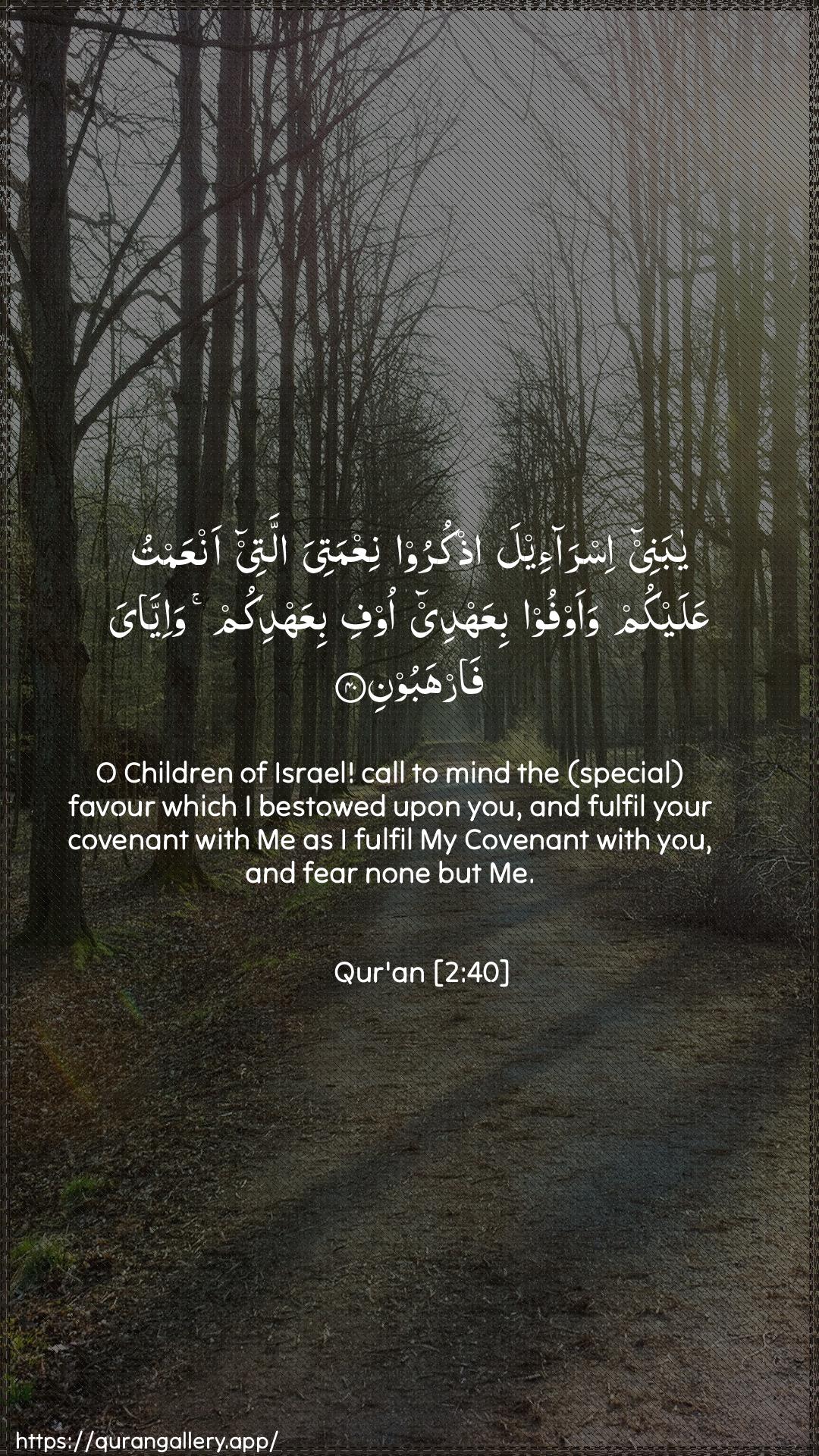
Arabic + English
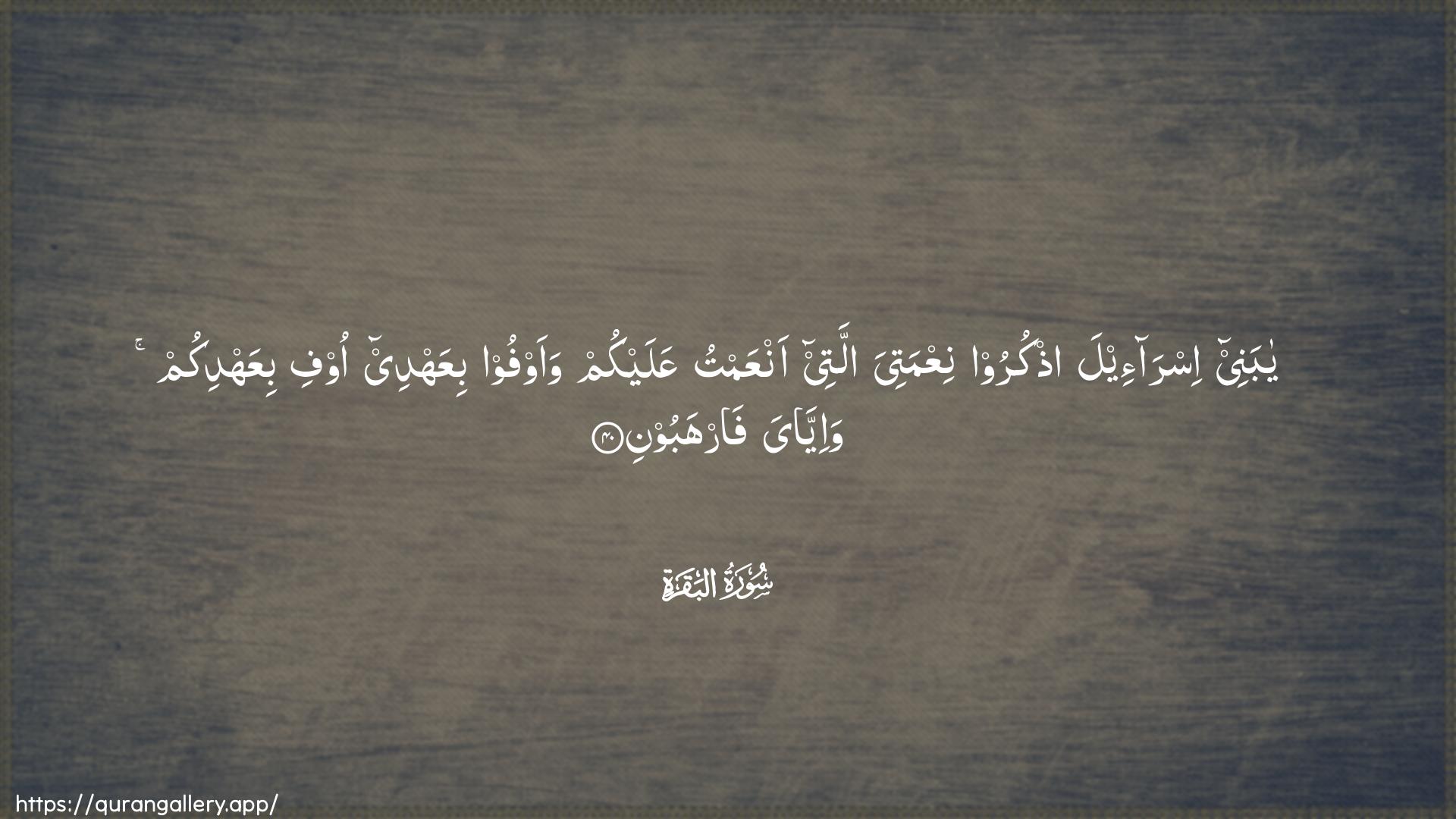
Arabic (Wide)
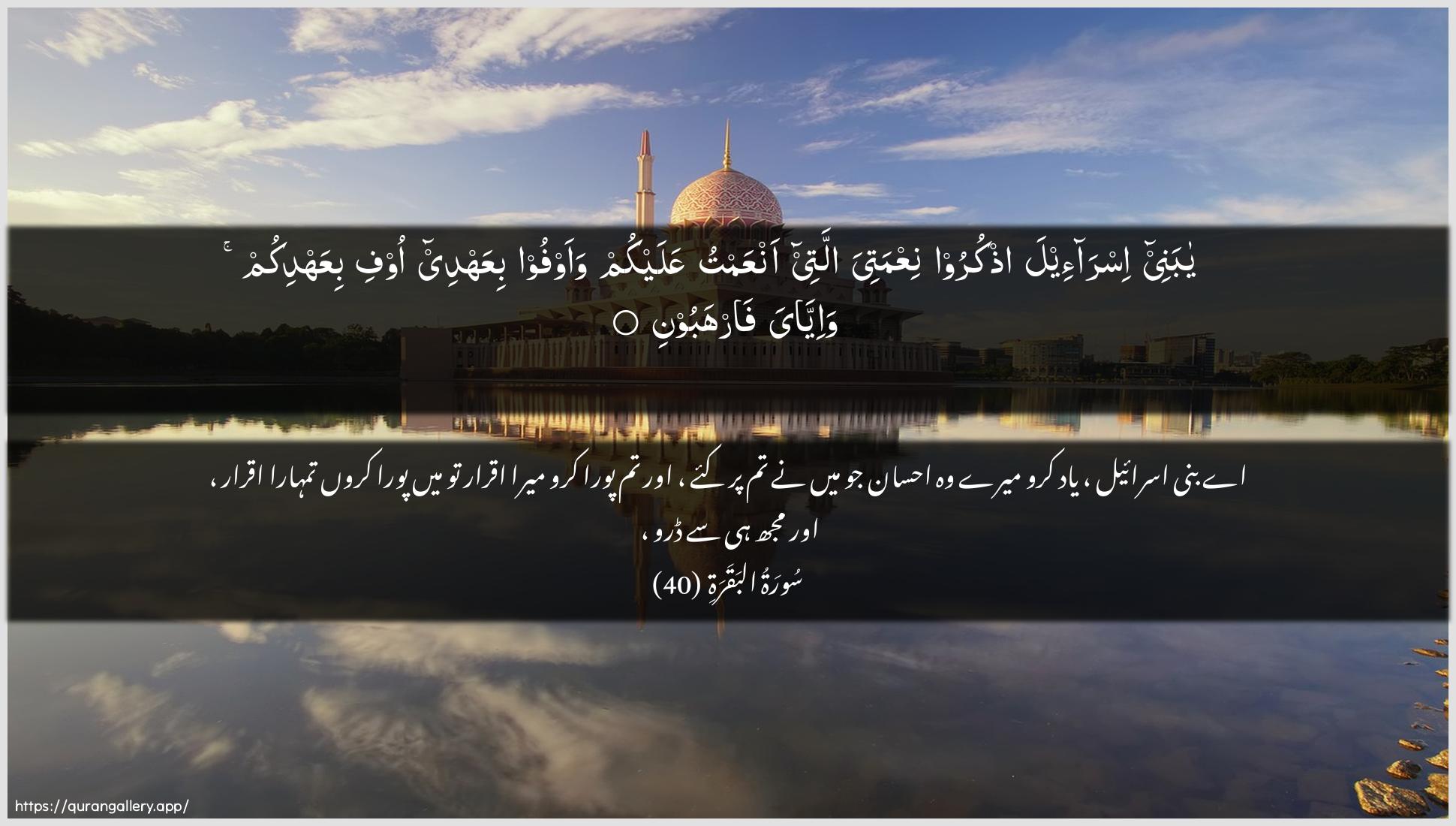
Arabic + Urdu
Free for personal & educational use with attribution
Quick Facts about this Verse
Surah
Al-Baqara
Revealed
Madani
Position
Juz 1,2,3
Explore this Verse
Verse Meaning
According to the comprehensive tafsir of Al-Tabari, Quran 2:40 is a pivotal address to the Children of Israel, the descendants of Prophet Ya'qub (Israel), who was known as the 'servant of Allah.' This call is not merely a historical recount but a direct invitation to the Jewish community of Madinah to honor their noble lineage. While Ibn Kathir emphasizes the specific blessings they received—such as salvation from Pharaoh, the parting of the sea, and the provision of Manna and Salwa—the synthesis with Al-Tabari's analysis reveals a deeper purpose. Allah reminds them of this esteemed spiritual heritage to motivate them to fulfill the ultimate covenant: to recognize and follow the final Prophet, Muhammad ﷺ, whose coming was foretold in their own scriptures. The hidden gem emerging from this synthesis is that the address 'O Children of Israel' functions as a powerful call to honor. It is akin to saying, 'O son of a noble man, act nobly.' Allah reminds them of their righteous forefather to inspire them to emulate his submission to God. The covenant mentioned is reciprocal: their fulfillment of the pledge to believe in the final Messenger would be met by Allah's fulfillment of His promise to relieve them of their burdens and restore their honor. Thus, the verse masterfully combines a reminder of past glory with the path to future salvation, urging them to transition from a legacy of past blessings to the active embrace of present guidance.
Questions for Reflection
Personal Gratitude and Legacy
Al-Tabari explains that addressing 'Bani Israel' is a call to honor a noble legacy. Contemplate the spiritual 'favors' (ni'mah) in your own heritage—be it family, knowledge, or community. How does remembering this legacy as a gift from Allah, rather than a personal achievement, change your sense of responsibility towards Him?
The Reciprocal Covenant
Ibn Kathir and others interpret the covenant as accepting the Prophet Muhammad ﷺ and the religion of Islam. The verse promises, 'fulfill your covenant, I will fulfill Mine.' Contemplate your relationship with Allah not as one of unidirectional pleas, but as a reciprocal bond. In what areas of your life are you fulfilling your end of the covenant, and where do you feel Allah fulfilling His?
The Nature of Divine Awe
The verse concludes with a command shifting from inducement to intimidation: 'And of Me alone be in awe' (wa iyyaya farhabun). Ibn Abbas connects this to fearing the consequences of disobedience. Contemplate the difference between a crippling fear ('khawf') and a reverential awe ('rahbah'). How can cultivating a profound awe of Allah's majesty and justice liberate you from the fear of worldly powers, opinions, and outcomes?
Practical Applications
Conduct a 'Blessing Inventory' to counteract spiritual heedlessness. List specific favors—health, family, knowledge, guidance—that you often overlook.
Use a daily journal or a phone app to log three specific blessings each day, moving beyond generic gratitude to detailed recognition.
Define and renew your personal covenant with Allah. Identify your core duties (Salah, integrity, seeking knowledge) and commit to fulfilling them with excellence.
Set clear, achievable spiritual goals for the week or month, treating them as your part of the covenant you are fulfilling.
Cultivate 'Rahbah' (awe-inspired fear) by reflecting on Allah's power in creation and His justice in history, rather than fearing worldly consequences.
When faced with a difficult ethical choice, consciously ask, 'Whose disapproval do I fear more: society's or my Creator's?'
Hidden Gem
The synthesis of scholarly thought reveals that the three commands in the verse—Remember, Fulfill, Fear—are not separate but form a single, integrated spiritual engine. Remembering favors (Gratitude) provides the fuel. Fulfilling the covenant (Action) is the engine's work. Awe of Allah (Reverence) is the essential oil that keeps the engine from overheating with arrogance or seizing with despair. Contemplating them together transforms them from a list of rules into a dynamic system for a thriving spiritual life.
Scroll to see more verses or use the dropdown in the breadcrumb to jump to any verse
Common Questions
3 more questions available in the full page