
Al-Baqara - The Cow
Arabic Name: الْبَقَرَة
Urdu Name: گائے
Type: Madani
Serial Number: 2
Revelation Order: 87
Total Verses: 286
Parah: 1,2,3
Rukus: 40
Sajda: None
Related Hadith
"The signs of a hypocrite are three: whenever he speaks, he tells a lie; whenever he promises, he breaks his promise; and whenever he is entrusted, he proves to be dishonest."
Thematically illuminates the character of those described in the verse. Their claim to be 'reformers' is the ultimate manifestation of their falsehood and dishonesty.
Share Verse Art
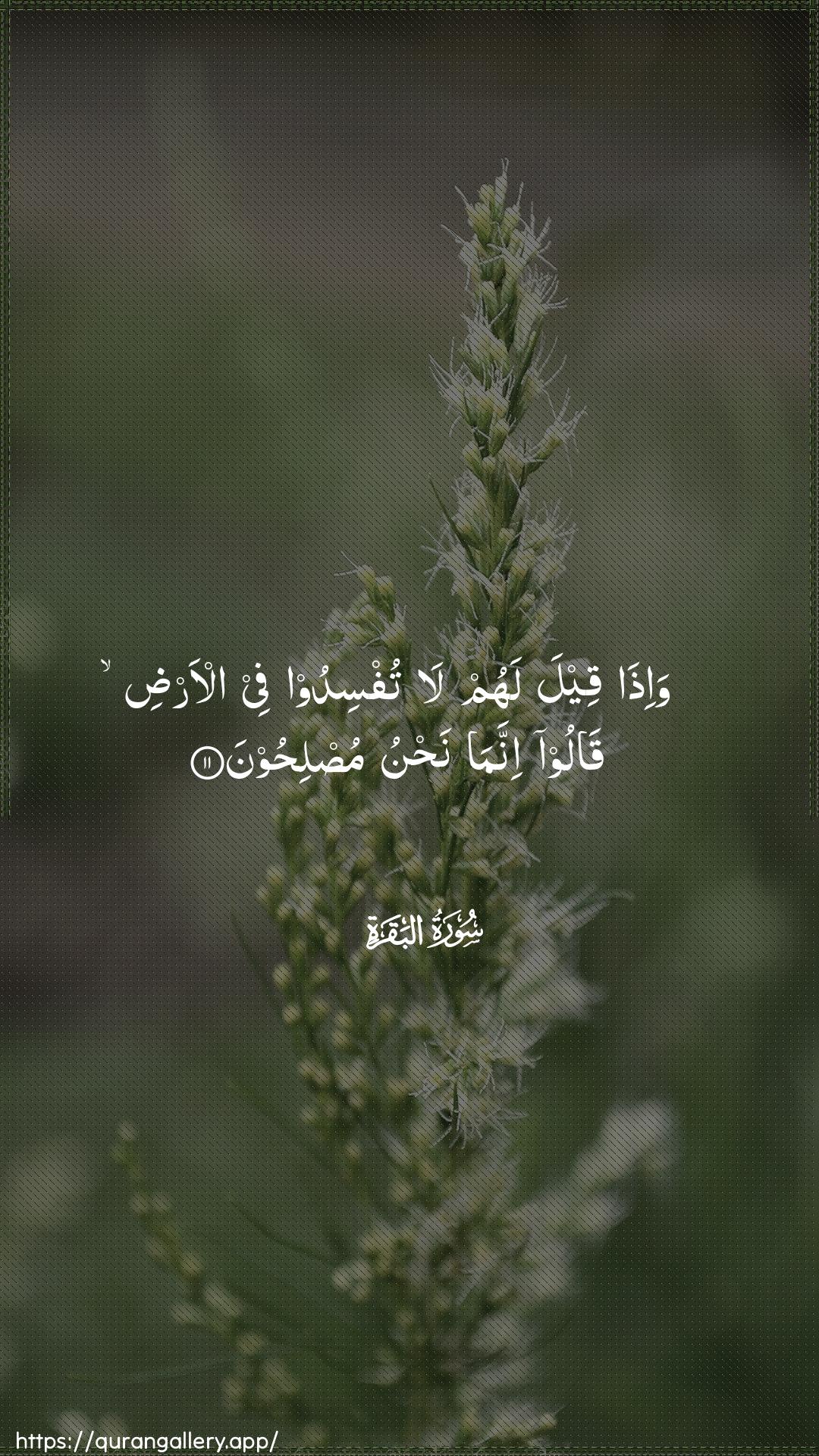
Arabic
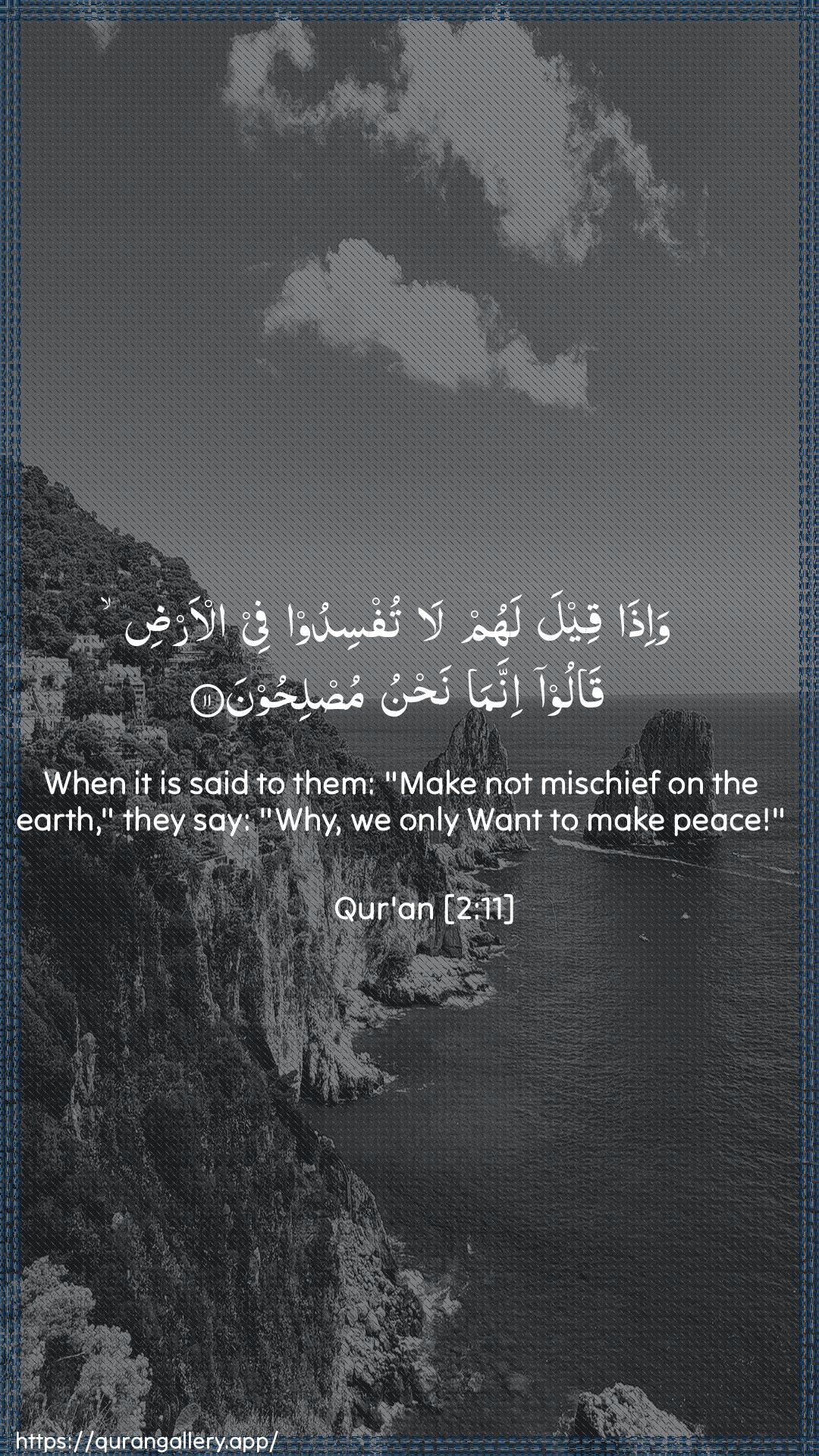
Arabic + English
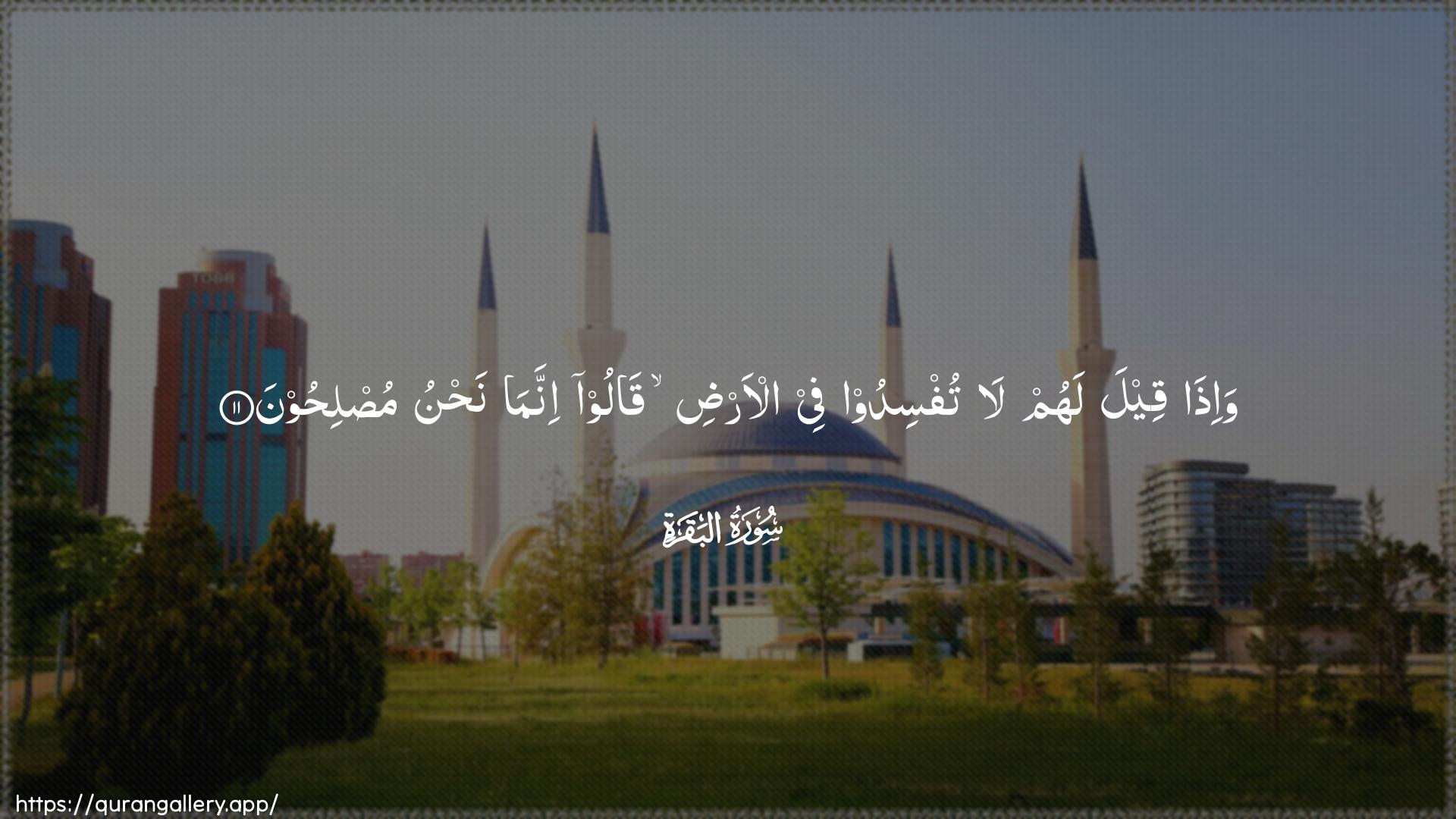
Arabic (Wide)
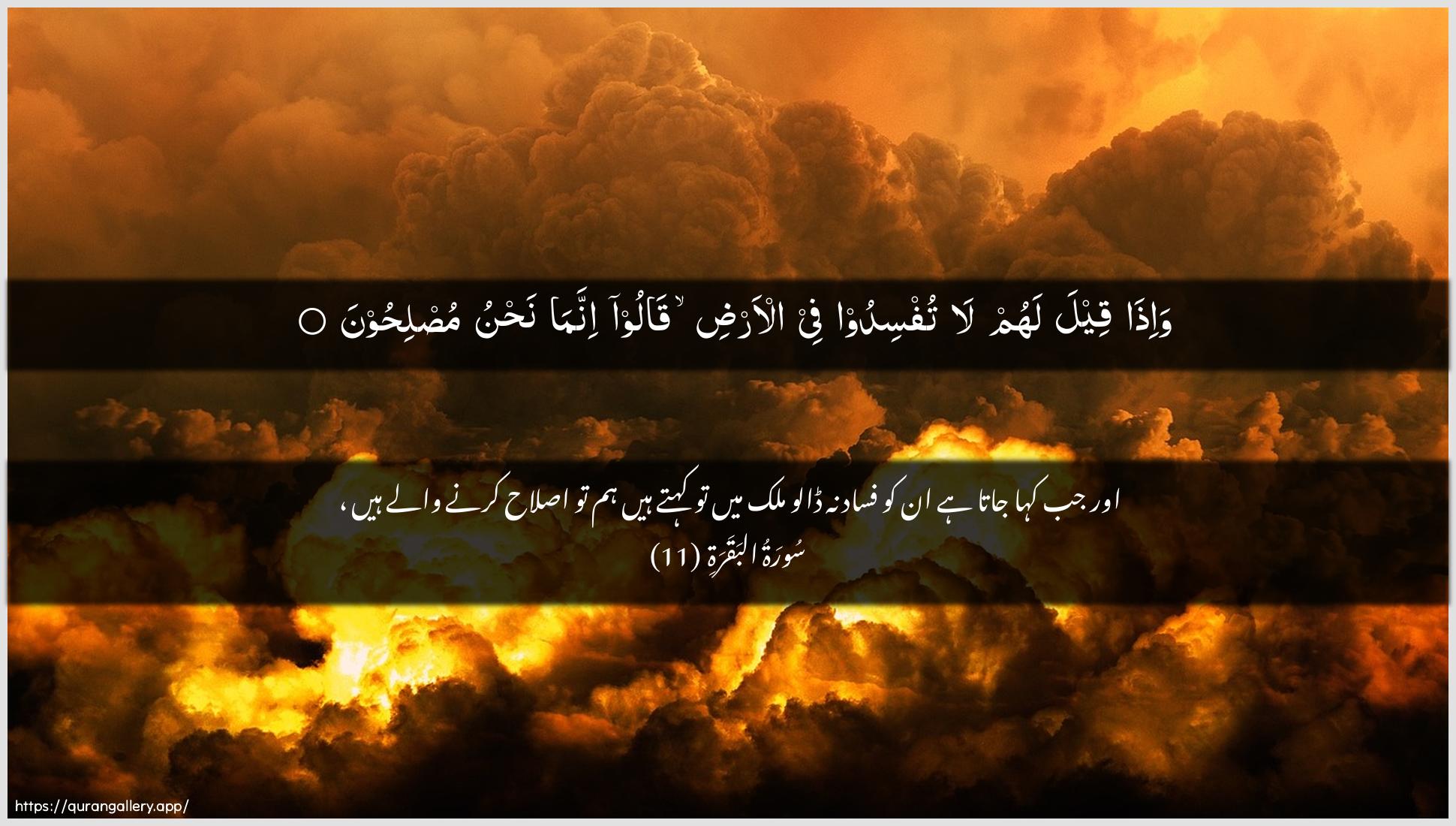
Arabic + Urdu
Free for personal & educational use with attribution
Quick Facts about this Verse
Surah
Al-Baqara
Revealed
Madani
Position
Juz 1,2,3
Explore this Verse
Verse Meaning
According to the consensus of classical scholars like Al-Tabari, Quran 2:11 unmasks the profound self-deception of the hypocrites in Madinah. When advised, "Do not cause corruption on the earth," they retort, "We are only reformers." A comprehensive synthesis of tafsirs reveals that the "corruption" (fasad) mentioned here is not merely social mischief, but fundamentally, as Ibn Kathir and others clarify, disbelief (kufr) and acts of disobedience. Their greatest corruption was their treacherous alliance with the enemies of Islam while pretending to be part of the Muslim community. The hidden gem emerging from this scholarly analysis is the hypocrites' psychological state. Their claim, "We are only reformers (muslihun)," was not just a lie to deceive believers, but a delusion to deceive themselves. Ibn Abbas, as narrated by Ibn Ishaq, specified their supposed "reform" was an attempt to treacherously mediate between the believers and the People of the Book. This verse, therefore, exposes a universal spiritual pathology where the heart, afflicted by the disease of hypocrisy (mentioned in verse 2:10), loses the ability to distinguish right from wrong. They mistake the gravest corruption for the highest form of reform, a warning that highlights the danger of insincerity corrupting one's entire perception of reality.
Questions for Reflection
Personal Sincerity
Al-Tabari emphasizes the hypocrites' delusion in 'they suppose that by their action they are reformers.' In which area of my life am I absolutely convinced I am 'doing good,' and have I ever sincerely asked Allah if this action, in His sight, is a form of 'fasad' (corruption) disguised by my ego?
Defining Corruption
Abu Al-Aliyah stated, 'Peace on both the earth and in the heavens is ensured through obedience.' Reflect on a recent global or community crisis. How does viewing this event through the lens that all 'fasad' is ultimately rooted in disobedience to Allah change my understanding of its cause and potential solution?
The Language of Deception
The hypocrites said, 'We are *only* reformers.' Al-Qurtubi would analyze the certainty and exclusivity in their claim. In my own speech, when do I use absolute terms like 'only,' 'just,' or 'simply' to defend my actions? Could this be a sign of shutting down counsel, similar to the hypocrites?
Practical Applications
Conduct a 'Sincerity Audit' on your actions of 'reform' or 'peacemaking' by asking if the action is rooted in obedience to Allah's commands or in seeking the approval of creation.
Apply this before engaging in interfaith dialogue, community projects, or any activism to ensure the foundation is sincere obedience, not compromising core principles for perceived peace.
Define 'corruption' (fasad) in your life not by societal standards, but by the Quranic standard: any act of disobedience to Allah or anything that weakens the unity and principles of the Ummah.
Use this definition to evaluate business practices, social interactions, and personal habits that may be socially acceptable but constitute 'fasad' by weakening one's faith or community.
When seeking to reconcile conflicts, ensure the 'peace' you broker does not come at the cost of compromising Islamic truth, a practice Ibn Abbas identified as the hypocrites' false 'reform'.
Relevant in family disputes, workplace conflicts, and public discourse, where there is pressure to create a superficial peace by ignoring fundamental truths or injustices.
Hidden Gem
The synthesis reveals a profound spiritual dynamic: the verse begins with a passive verb, 'When it is said to them' (قيل لهم). They are being acted upon; they receive counsel. Their response, however, is active and assertive: 'We are reformers' (نحن مصلحون). Contemplating this shift from passive reception to active defiance reveals the core of hypocrisy: an unwillingness to be guided and an insistence on their own flawed self-assessment as the ultimate truth.
Scroll to see more verses or use the dropdown in the breadcrumb to jump to any verse
Common Questions
2 more questions available in the full page