
Al-Baqara - The Cow
Arabic Name: الْبَقَرَة
Urdu Name: گائے
Type: Madani
Serial Number: 2
Revelation Order: 87
Total Verses: 286
Parah: 1,2,3
Rukus: 40
Sajda: None
Related Hadith
"The Prophet (ﷺ) said to 'Umar, 'I dislike that the Arabs should say that Muhammad kills his companions.'"
Explains the legal and social wisdom for not applying capital punishment to the hypocrites despite their disbelief, which is a key topic related to this verse's context.
Share Verse Art
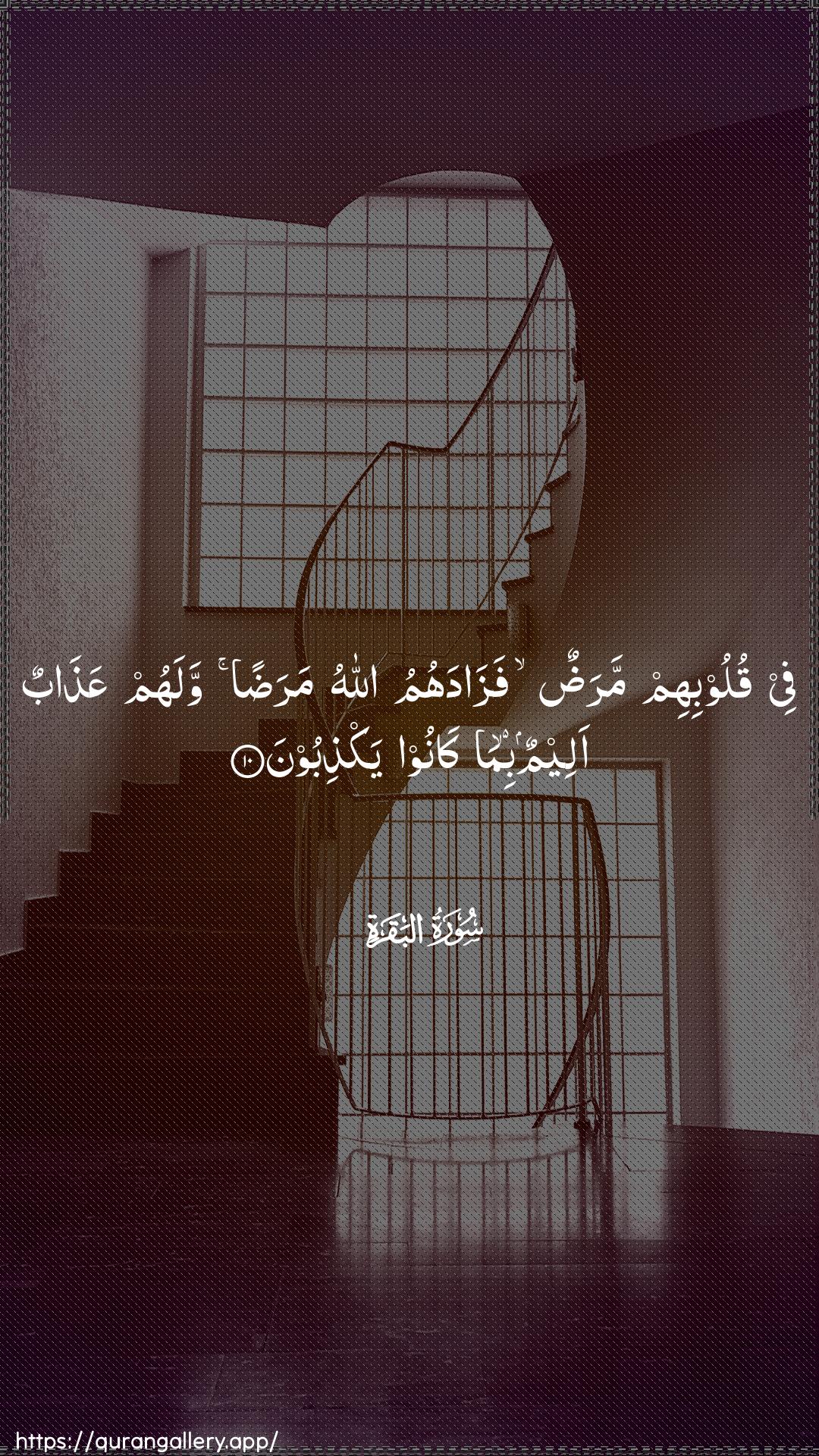
Arabic
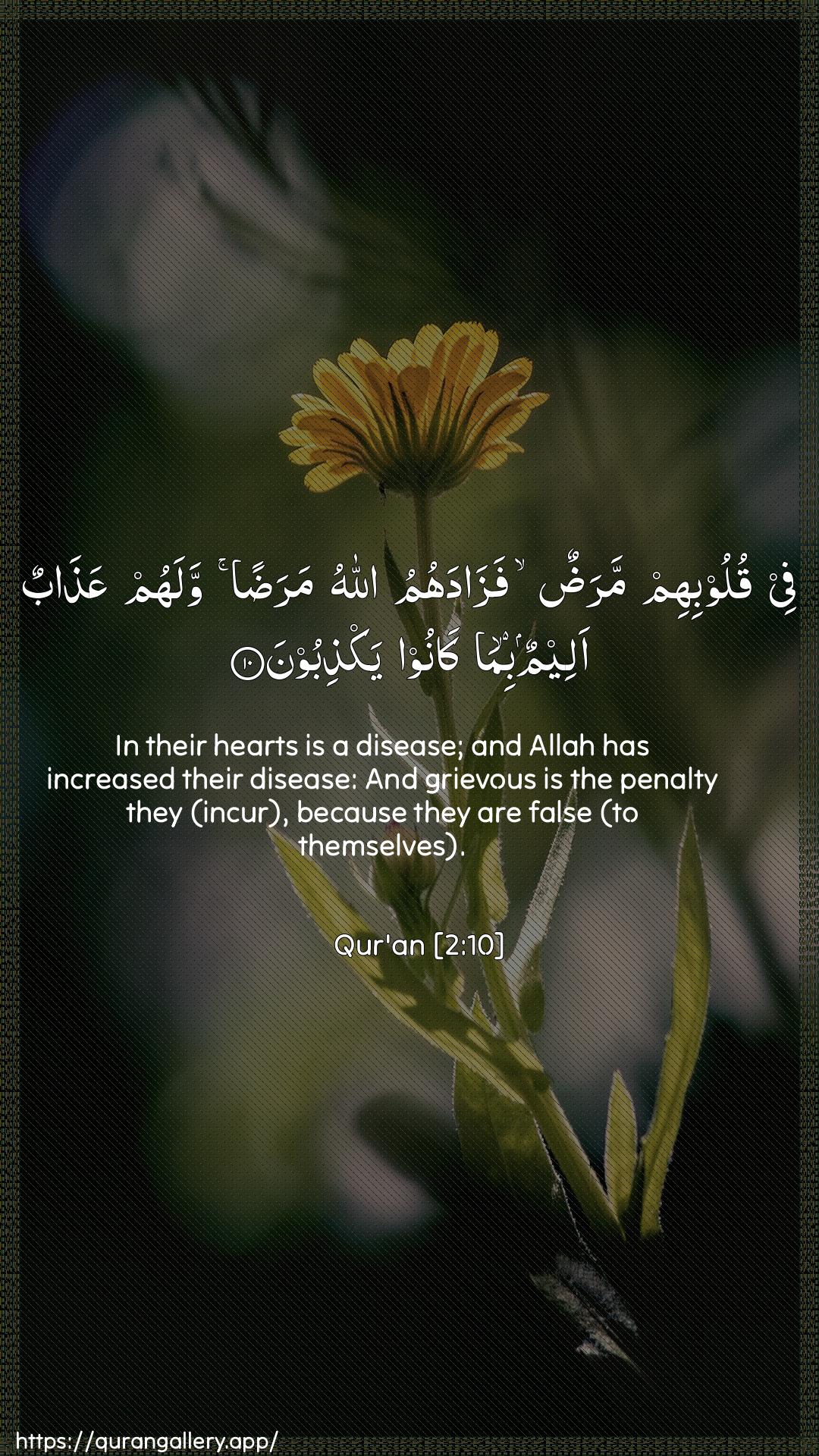
Arabic + English
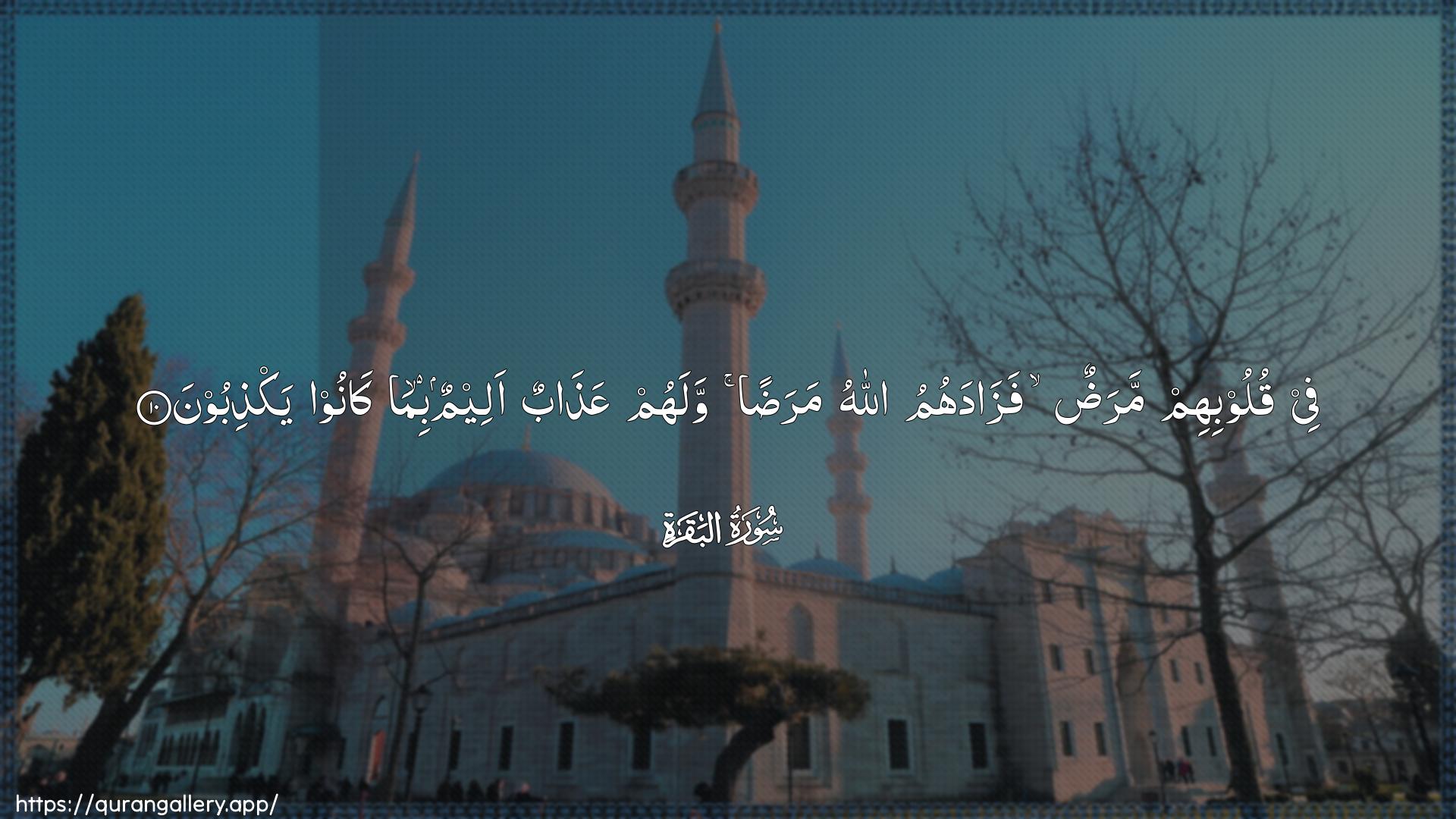
Arabic (Wide)
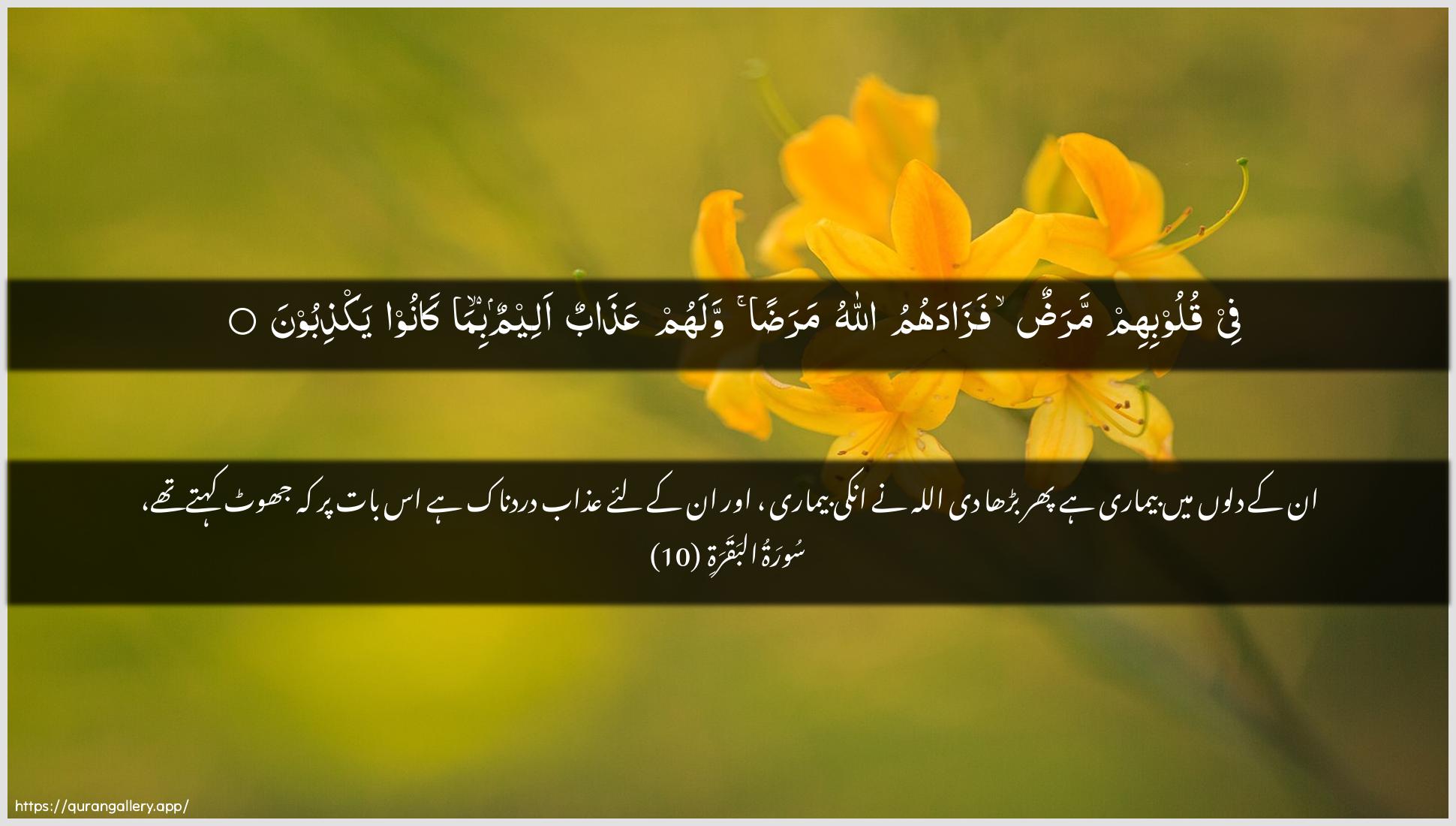
Arabic + Urdu
Free for personal & educational use with attribution
Quick Facts about this Verse
Surah
Al-Baqara
Revealed
Madani
Position
Juz 1,2,3
Explore this Verse
Verse Meaning
According to classical Islamic scholarship, Quran 2:10 reveals the spiritual reality of hypocrites whose hearts contain 'marad' (disease) - referring to doubt, hypocrisy, envy, and spiritual corruption. A comprehensive review of classical tafsirs, including those by Al-Tabari and Ibn Kathir, shows a consensus that this is a spiritual ailment, not a physical one. Ibn Abbas and Ibn Mas'ud defined the disease as 'doubt' (شك), while others like 'Ikrimah mentioned 'riya' (showing off). The verse diagnoses the core problem of the hypocrites: a sickness of faith that manifests as duplicity. The synthesis of scholarly opinions reveals a profound spiritual law: Allah increases this disease ('fazadahumullahu marada') as a direct consequence of their persistence in hypocrisy and denial. This is not an arbitrary act, but a divine principle where rejecting truth leads to deeper spiritual blindness and corruption. As Abdur-Rahman ibn Zayd ibn Aslam explained, this is akin to the verse in Surah At-Tawbah (9:125) which states that new revelations 'added filth to their filth'. The punishment of an 'agonizing torment' ('adhabun alim') is explicitly linked to their lying ('bima kanu yakdhibun'), highlighting the gravity of dishonesty as a cornerstone of hypocrisy. This comprehensive understanding shows that the verse is not just a description but a warning about the compounding nature of spiritual corruption.
Questions for Reflection
Textual Contemplation
Al-Tabari discusses two valid readings: 'yakdhibun' (they lie) and 'yukadhdhibun' (they deny the truth). Contemplate the relationship between these two actions. How does the act of lying with the tongue about one's faith lead to the heart's eventual denial and rejection of truth itself?
Personal Transformation
The verse states, 'Allah increased their disease.' As Ibn Kathir and others explain, this is a consequence of their choices. Reflect on a time a small compromise or sin in your life, when left unchecked, made the next one easier. How does this verse reveal the spiritual law that our own actions can open the door for our misguidance to deepen?
Relational Wisdom
The hypocrites' disease of doubt and insincerity poisoned their relationship with the believing community. In what subtle ways can 'diseases' like envy, suspicion, or insincerity affect my relationship with fellow Muslims? How can I apply the antidote of sincerity and good assumptions to purify these interactions for the sake of Allah?
Practical Applications
Conduct a daily 'sincerity audit' by examining your intentions behind good deeds to detect and purify any traces of 'riya' (showing off).
Especially crucial in the age of social media, where actions are often performed for public validation rather than for Allah's sake.
Uproot all forms of dishonesty, beginning with minor falsehoods, understanding that lying is the direct cause of the painful punishment.
Applicable in business dealings, personal relationships, and in one's internal monologue to ensure alignment with truth.
When faced with a difficult Islamic ruling or concept, actively seek knowledge to resolve doubt rather than letting it linger in the heart.
When encountering challenging questions about Islam online or in discussions, the correct response is sincere study, not silent uncertainty.
Hidden Gem
The synthesis of tafsirs reveals a profound spiritual reality: the 'disease' is not static; it is an active, growing ailment. It is not that Allah makes a healthy heart sick, but that He allows a diseased heart that refuses medicine (guidance) to succumb to its sickness. This transforms the verse from a statement of passive affliction to a dynamic process of spiritual decay fueled by personal choice, making the need for purification urgent and continuous.
Scroll to see more verses or use the dropdown in the breadcrumb to jump to any verse
Common Questions
2 more questions available in the full page