
Al-Baqara - The Cow
Arabic Name: الْبَقَرَة
Urdu Name: گائے
Type: Madani
Serial Number: 2
Revelation Order: 87
Total Verses: 286
Parah: 1,2,3
Rukus: 40
Sajda: None
Share Verse Art
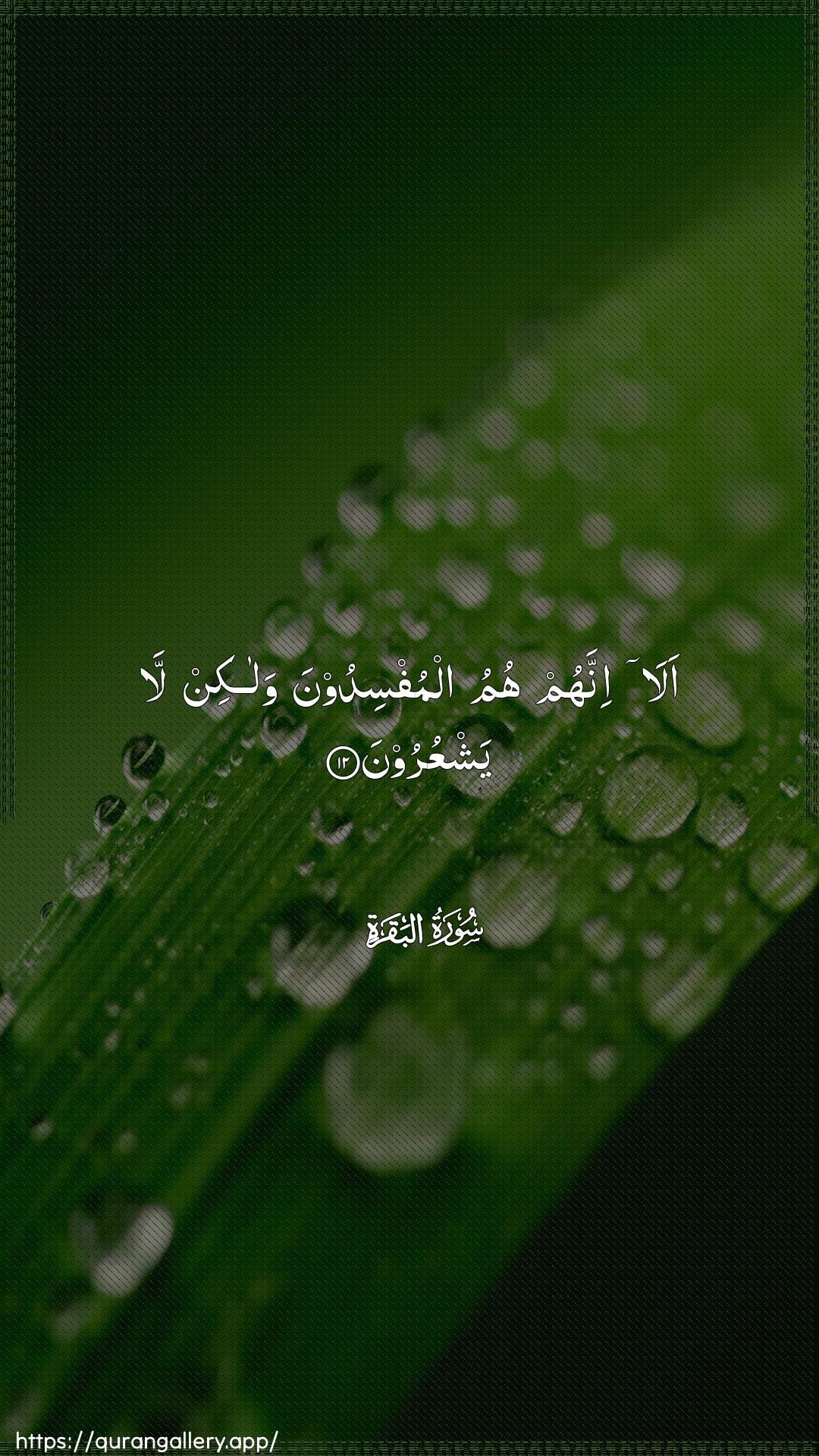
Arabic
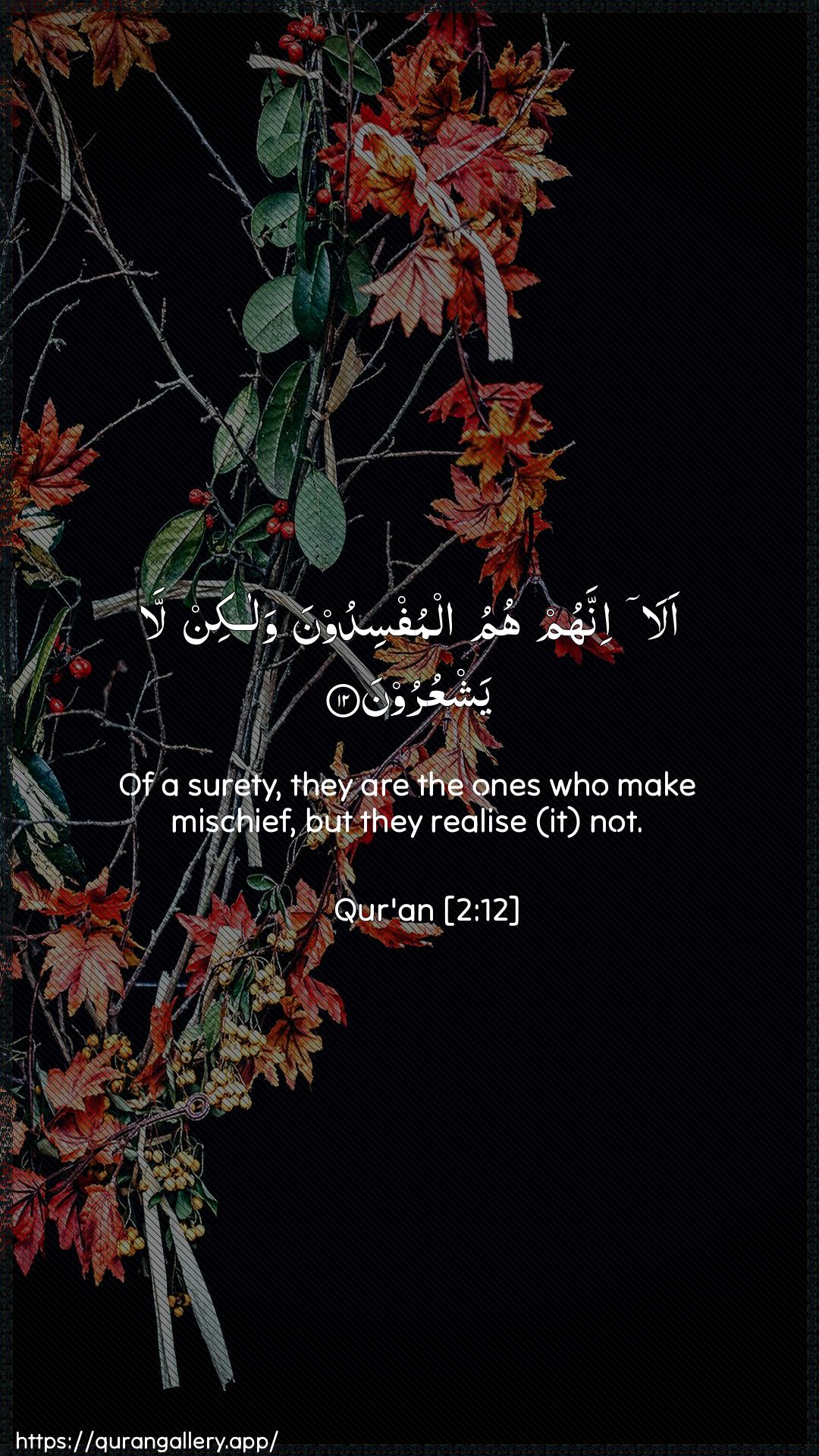
Arabic + English
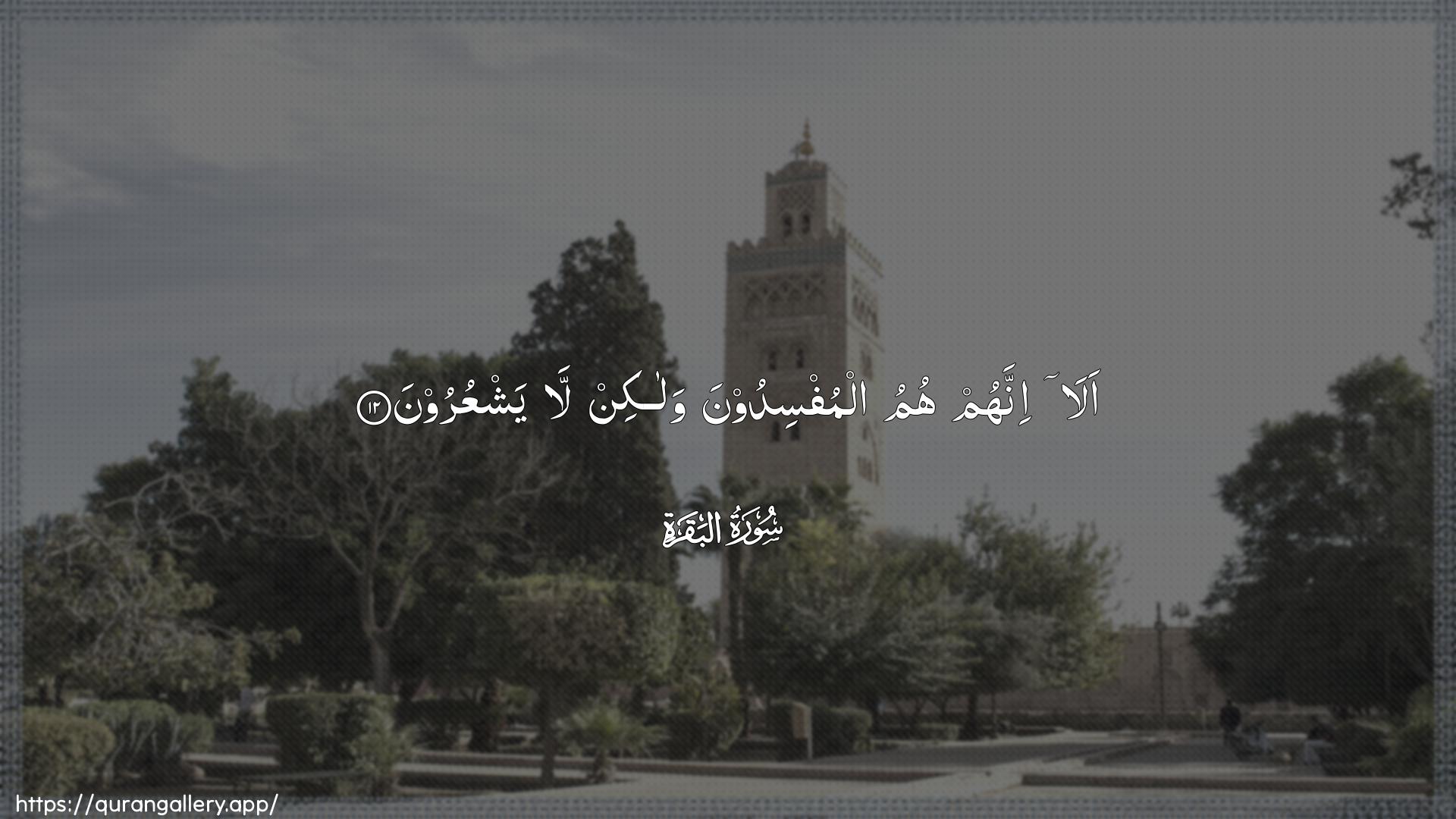
Arabic (Wide)
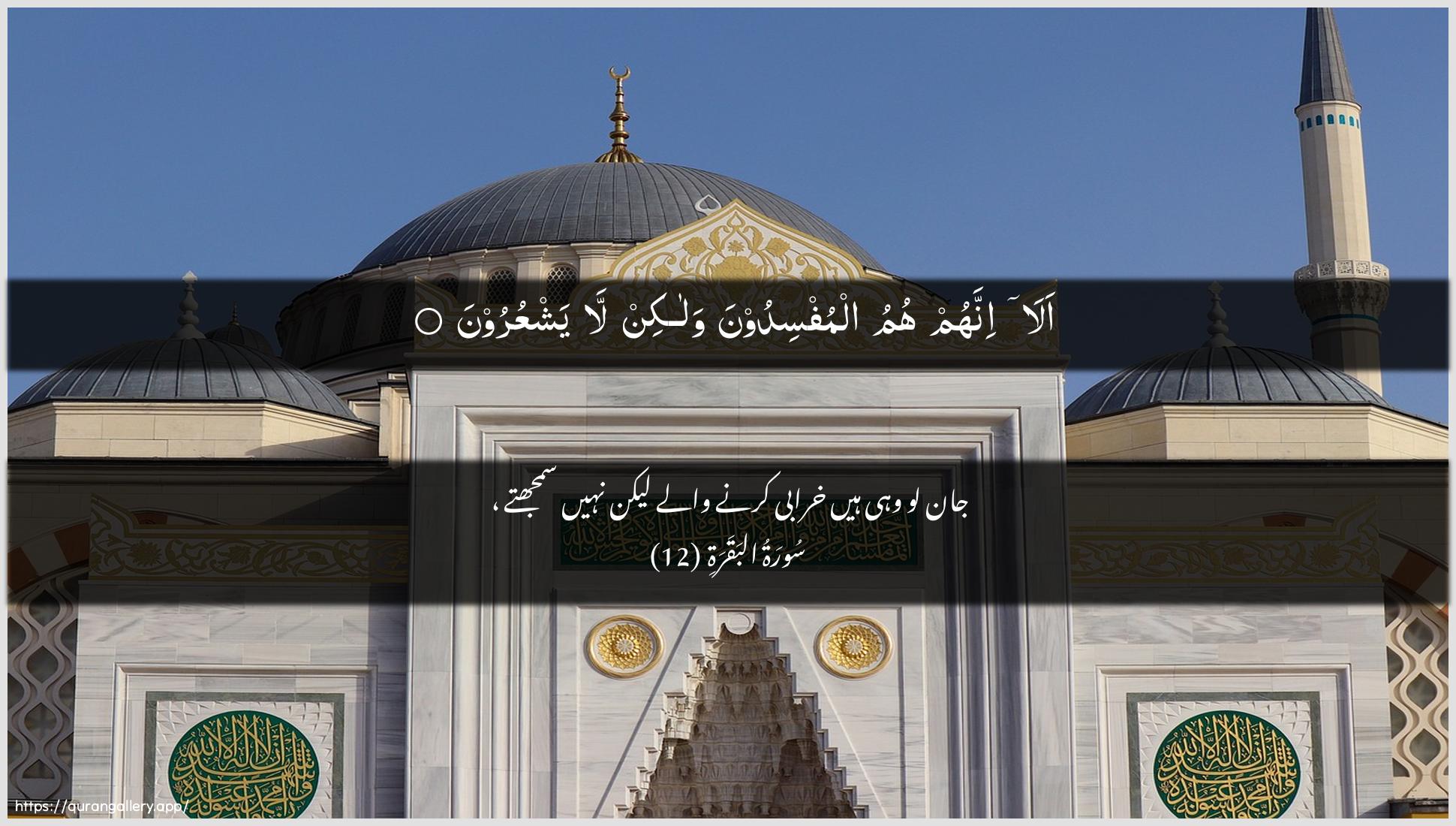
Arabic + Urdu
Free for personal & educational use with attribution
Quick Facts about this Verse
Surah
Al-Baqara
Revealed
Madani
Position
Juz 1,2,3
Explore this Verse
Verse Meaning
According to classical commentators like Ibn Kathir, Quran 2:12 serves as a direct and emphatic rebuttal from Allah, correcting the hypocrites' deluded self-perception. They claim to be reformers, but Allah exposes their reality: they are the very source of corruption. A comprehensive synthesis of tafsirs, including those of Al-Tabari and Al-Qurtubi, reveals that 'corruption' (fasad) here is not merely social mischief, but fundamentally disbelief and disobedience to Allah, which in turn corrupts the earth. The verse's power lies in its multiple layers of emphasis, as noted by Al-Wasit, using 'Ala' (Behold!), 'inna' (verily), and the pronoun 'hum' (they) to confine the act of corruption exclusively to them. This synthesis shows that the core of their condition is a profound spiritual blindness; they are so immersed in their wrongdoing that they cannot even perceive it as such. As Imam Al-Saadi explains, their actions corrupt the very purpose of creation, which is to worship Allah, yet they lack the self-awareness to understand this reality.
Questions for Reflection
Personal Contemplation
Reflect on an area of your life where you are absolutely certain you are 'doing good'. Applying Ibn Kathir's principle that corruption is disobedience, is it possible your actions, despite good intentions, conflict with divine commands? What veils your perception ('la yash'urun')?
Relational Contemplation
Consider a recent conflict where you believed you were the 'reformer'. As Al-Qurtubi notes, the hypocrites genuinely thought their corruption was صلاح (goodness). Could your attempts at 'reform' have been perceived as 'fasad' (corruption) by the other party? What prevents you from seeing their perspective?
Communal Contemplation
Al-Saadi explains that sin corrupts the earth itself. Contemplate how modern societal issues that are often framed as 'progress' or 'reform' might actually be contributing to 'fasad' on a larger scale—spiritually, environmentally, or socially. How does this verse challenge our collective self-perception?
Practical Applications
Conduct a daily 'Reform vs. Corruption' self-assessment by examining one's intentions and actions against the standards of the Quran and Sunnah, not personal justifications.
Useful when evaluating business practices, community projects, or personal relationships to ensure they are genuinely beneficial and not just self-serving.
When offering advice or criticism, frame it with the goal of genuine 'islah' (reformation) based on Islamic principles, avoiding the hypocritical pattern of causing division under the guise of improvement.
Crucial for engaging in online discussions, family mediations, or workplace collaborations without causing unintended harm.
Hidden Gem
The synthesis of the tafsirs reveals a profound spiritual insight: the state of 'la yash'urun' is not a lack of intelligence, but a corruption of the heart's ability to feel. The hypocrites' spiritual senses were so dulled by their choices that they could no longer 'feel' the discord their actions created. The contemplation gem is that true perception (shu'ur) is a faculty of a sound heart, cultivated through sincere obedience.
Scroll to see more verses or use the dropdown in the breadcrumb to jump to any verse
Common Questions
1 more question available in the full page