
Al-Baqara - The Cow
Arabic Name: الْبَقَرَة
Urdu Name: گائے
Type: Madani
Serial Number: 2
Revelation Order: 87
Total Verses: 286
Parah: 1,2,3
Rukus: 40
Sajda: None
Share Verse Art
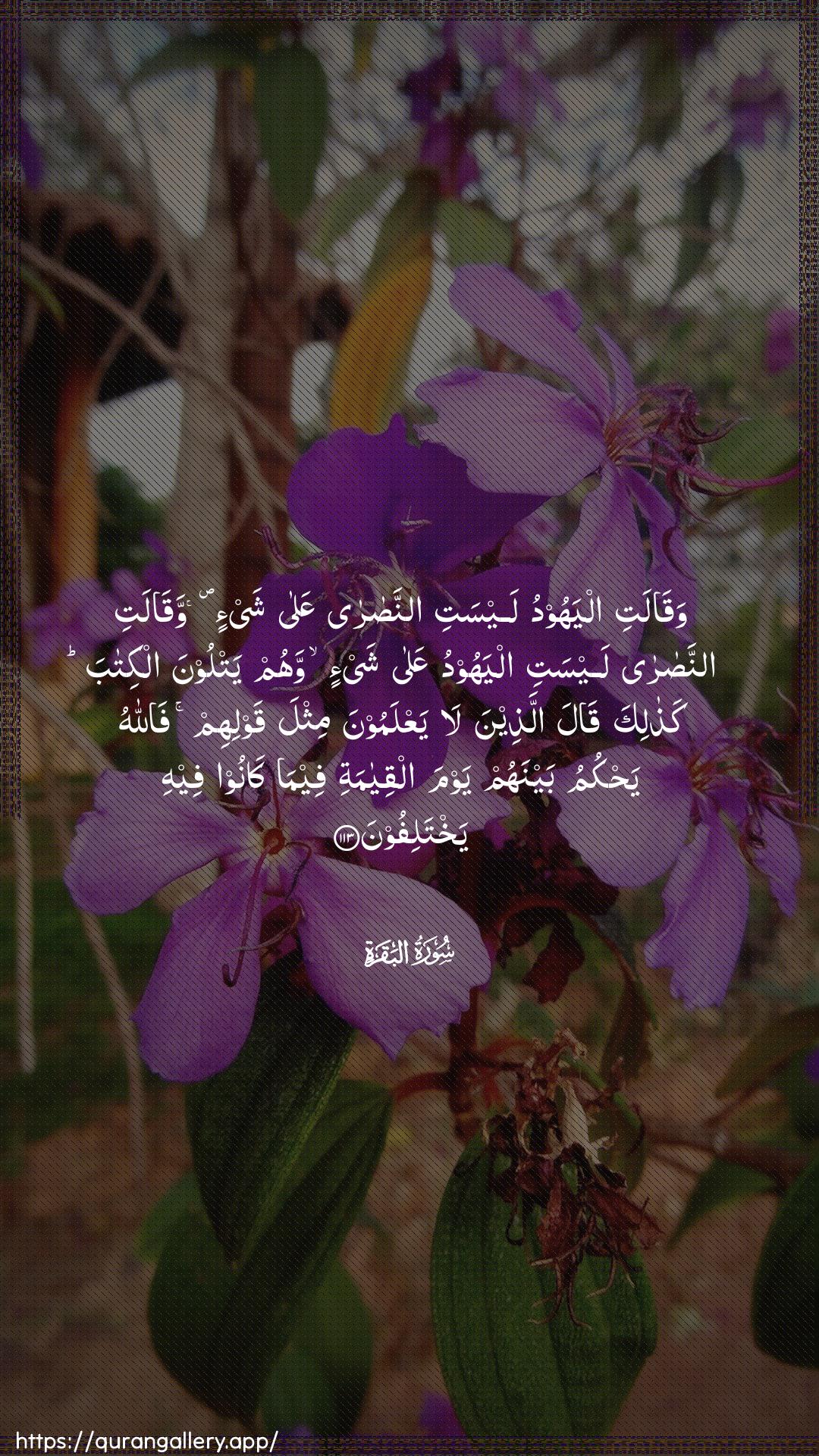
Arabic
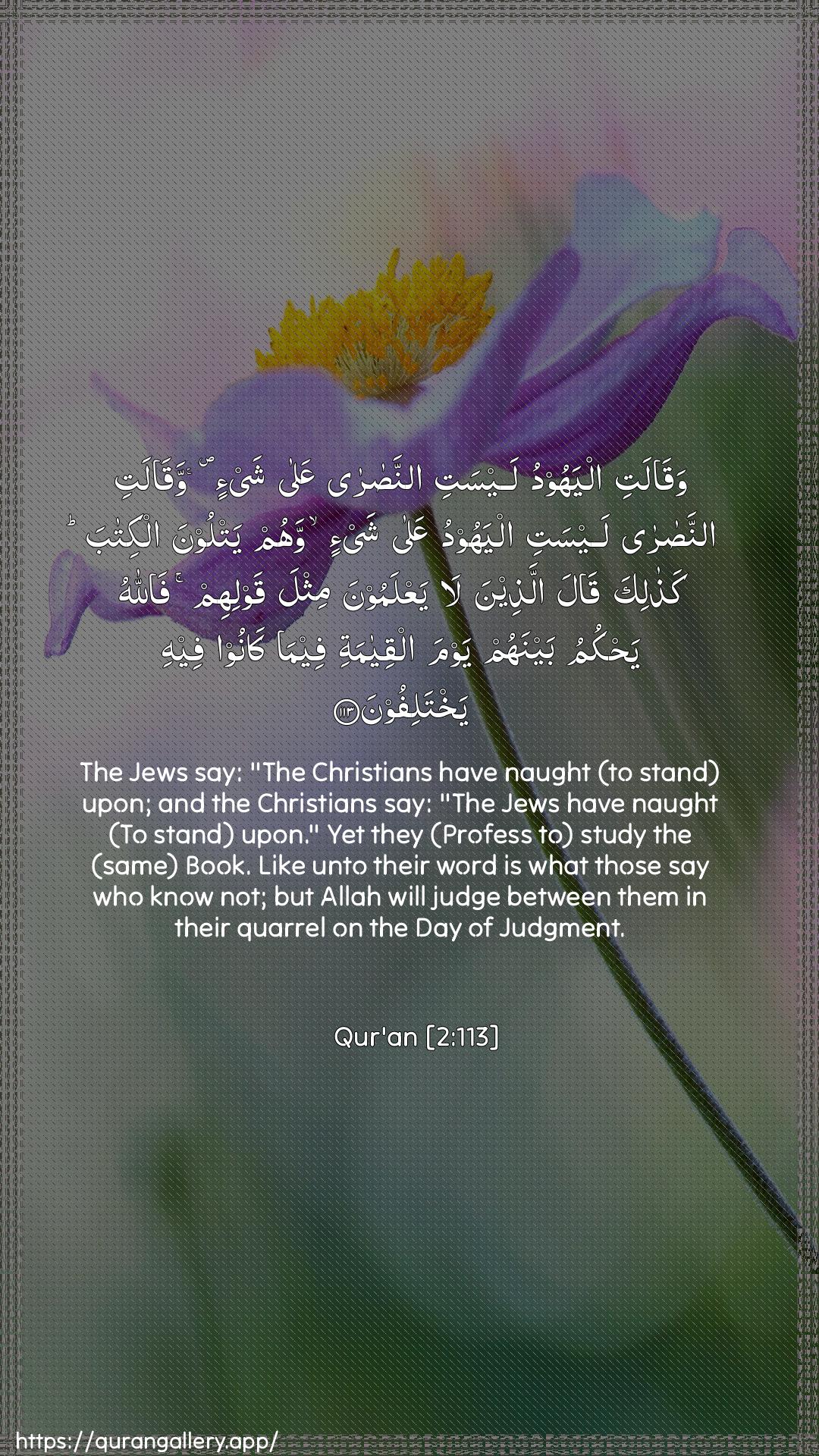
Arabic + English
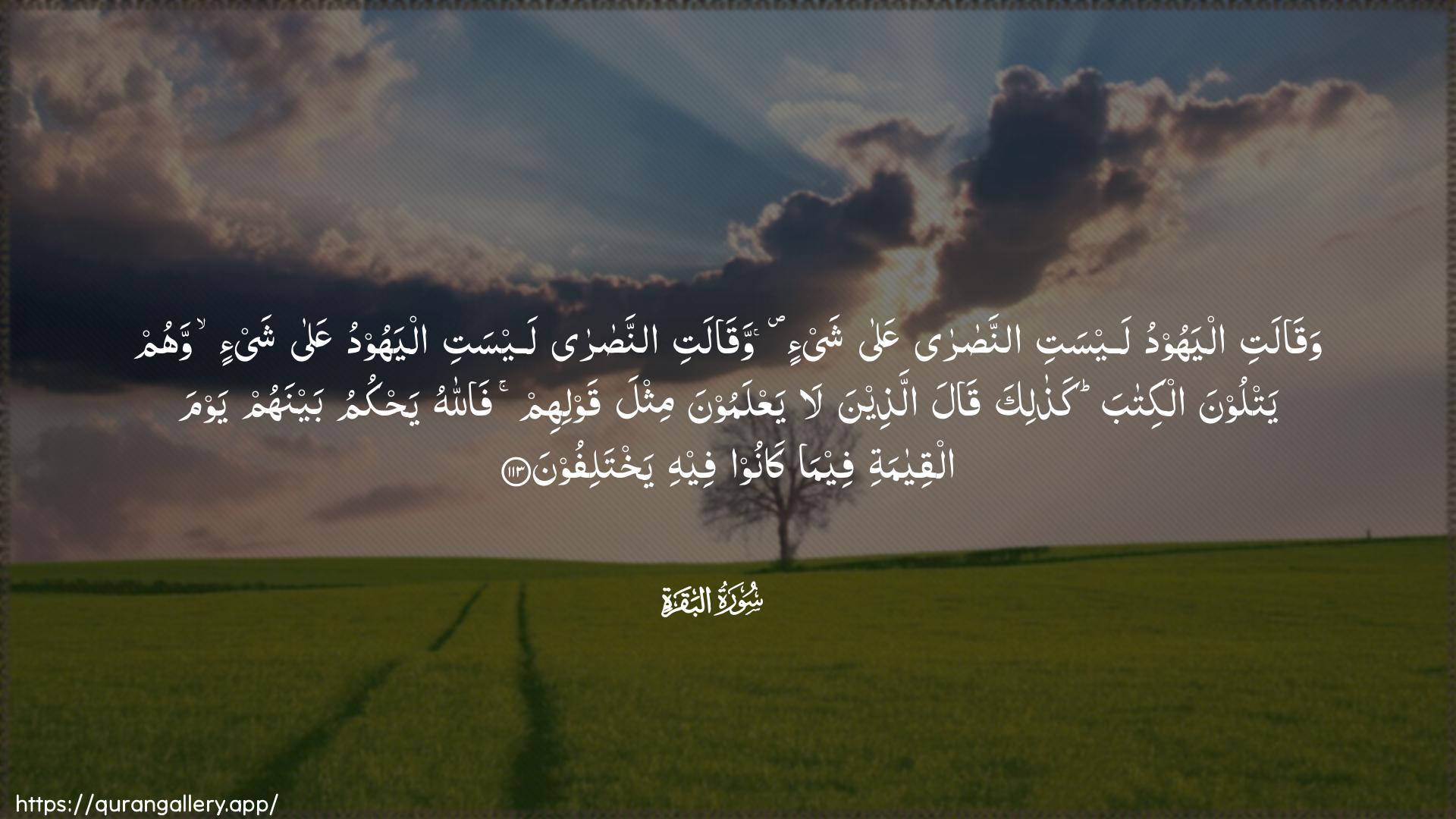
Arabic (Wide)
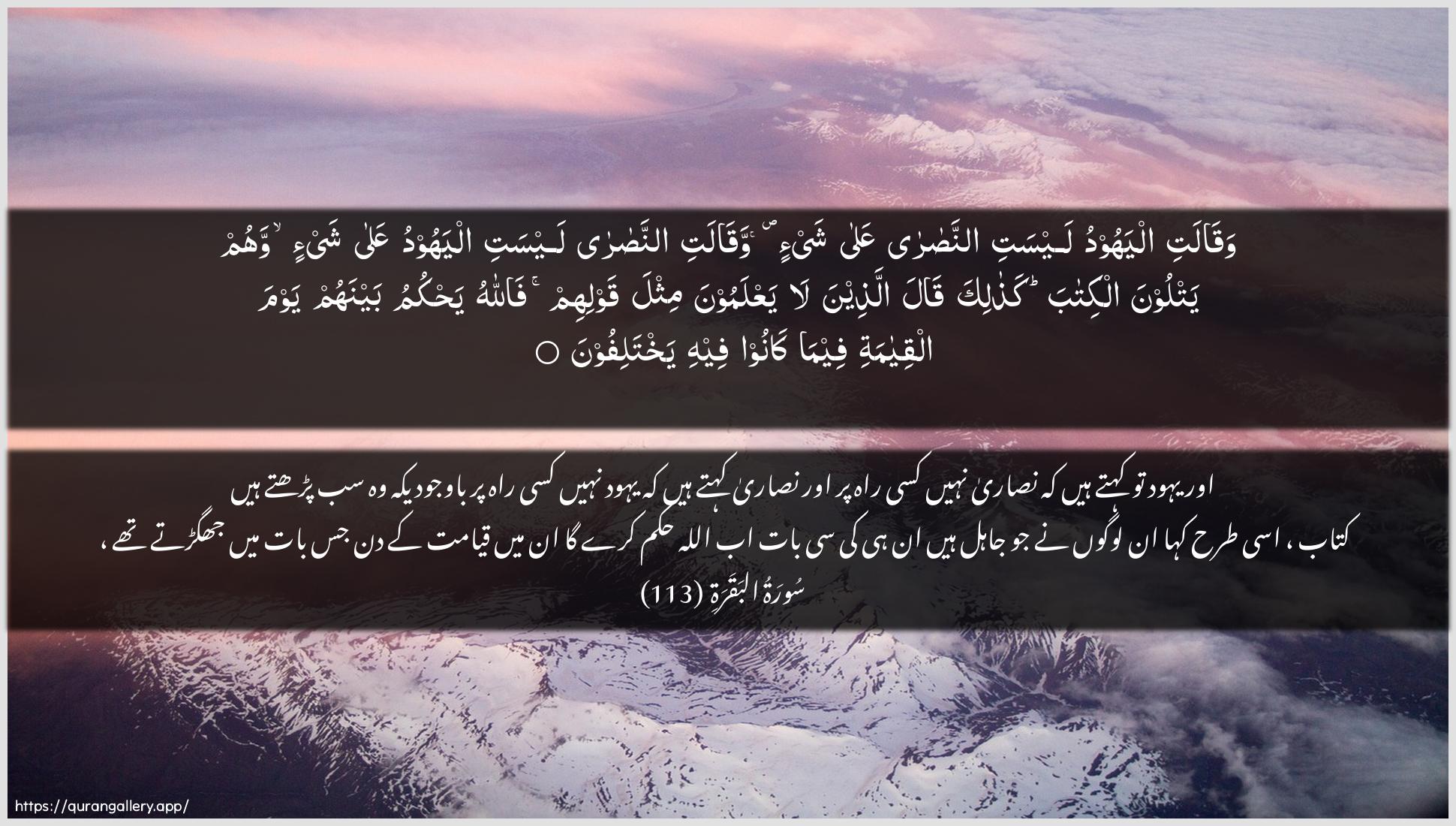
Arabic + Urdu
Free for personal & educational use with attribution
Quick Facts about this Verse
Surah
Al-Baqara
Revealed
Madani
Position
Juz 1,2,3
Explore this Verse
Verse Meaning
According to the classical scholar Ibn Kathir, verse 2:113 of Surah Al-Baqarah was revealed concerning a dispute between the Jews of Medina and a Christian delegation from Najran in the presence of the Prophet Muhammad ﷺ. A comprehensive analysis of classical tafsirs, including those of Al-Tabari and Al-Qurtubi, reveals a profound critique of religious exclusivism. The Jews claimed the Christians had no valid foundation, and the Christians made the identical claim about the Jews, despite both groups reciting their respective scriptures (the Torah and the Gospel) which paradoxically contained affirmations of the other's prophetic lineage. The hidden gem uncovered through this synthesis is the verse's powerful irony: their own holy books served as evidence against their claims of exclusivity. Al-Tabari highlights that the Torah, read by the Jews, contained prophecies about Jesus, and the Gospel, read by the Christians, confirmed the prophethood of Moses. Thus, their mutual condemnation was an act of willful ignorance and pride. This verse equates their behavior to that of 'those who do not know'—the polytheists of Arabia—who made similar baseless claims out of ignorance. The verse concludes by deferring the ultimate resolution to Allah, stating that He will judge between their differences on the Day of Resurrection, establishing a crucial principle for believers: to avoid definitive condemnation of others and entrust final judgment to God.
Questions for Reflection
Personal Accountability
The verse states, 'they both recite the Scripture.' Reflect on the knowledge you possess, whether religious or secular. How often do you recite or read without truly internalizing the message? Contemplate a time when your knowledge made you dismissive of someone else's perspective, and how you could have applied the humility this verse calls for.
Communal Dynamics
The verse describes a pattern of mutual delegitimization between communities. Consider the groups you belong to (religious, cultural, professional). How does your group speak about 'outsiders'? Reflect on the parallels between the claims of the Jews and Christians in the verse and the rhetoric used by or against your own community today.
Theological Humility
The verse concludes, 'Allah will judge between them on the Day of Resurrection.' Contemplate the vastness of Allah's knowledge versus your own limited understanding. How does embracing the reality of a final, divine judgment change your approach to worldly disagreements and theological debates? Meditate on the peace that comes from entrusting the ultimate truth to Al-Hakam (The Judge).
Practical Applications
Before engaging in interfaith dialogue, reflect on the common scriptural heritage to foster mutual respect rather than seeking to invalidate others' beliefs.
Applicable in online forums, academic discussions, and community interfaith events to promote a more productive and respectful exchange of ideas.
When feeling certain of one's own group's righteousness, consciously recall the phrase 'Allah will judge between them' to practice deferring final judgment.
A powerful mental tool during political debates, sectarian disagreements, or when encountering different interpretations of faith within the Muslim community.
Hidden Gem
A deeper synthesis of the tafsirs reveals that the verse is not just a historical account but a spiritual diagnostic tool. The similarity between the claims of the knowledgeable ('People of the Book') and the ignorant ('those who know not') suggests a universal spiritual illness: when the heart is clouded by envy and pride, knowledge becomes a tool for self-deception, making the 'scholar' and the 'ignorant' functionally identical in their baseless claims.
Scroll to see more verses or use the dropdown in the breadcrumb to jump to any verse
Common Questions
2 more questions available in the full page