
Al-Baqara - The Cow
Arabic Name: الْبَقَرَة
Urdu Name: گائے
Type: Madani
Serial Number: 2
Revelation Order: 87
Total Verses: 286
Parah: 1,2,3
Rukus: 40
Sajda: None
Share Verse Art
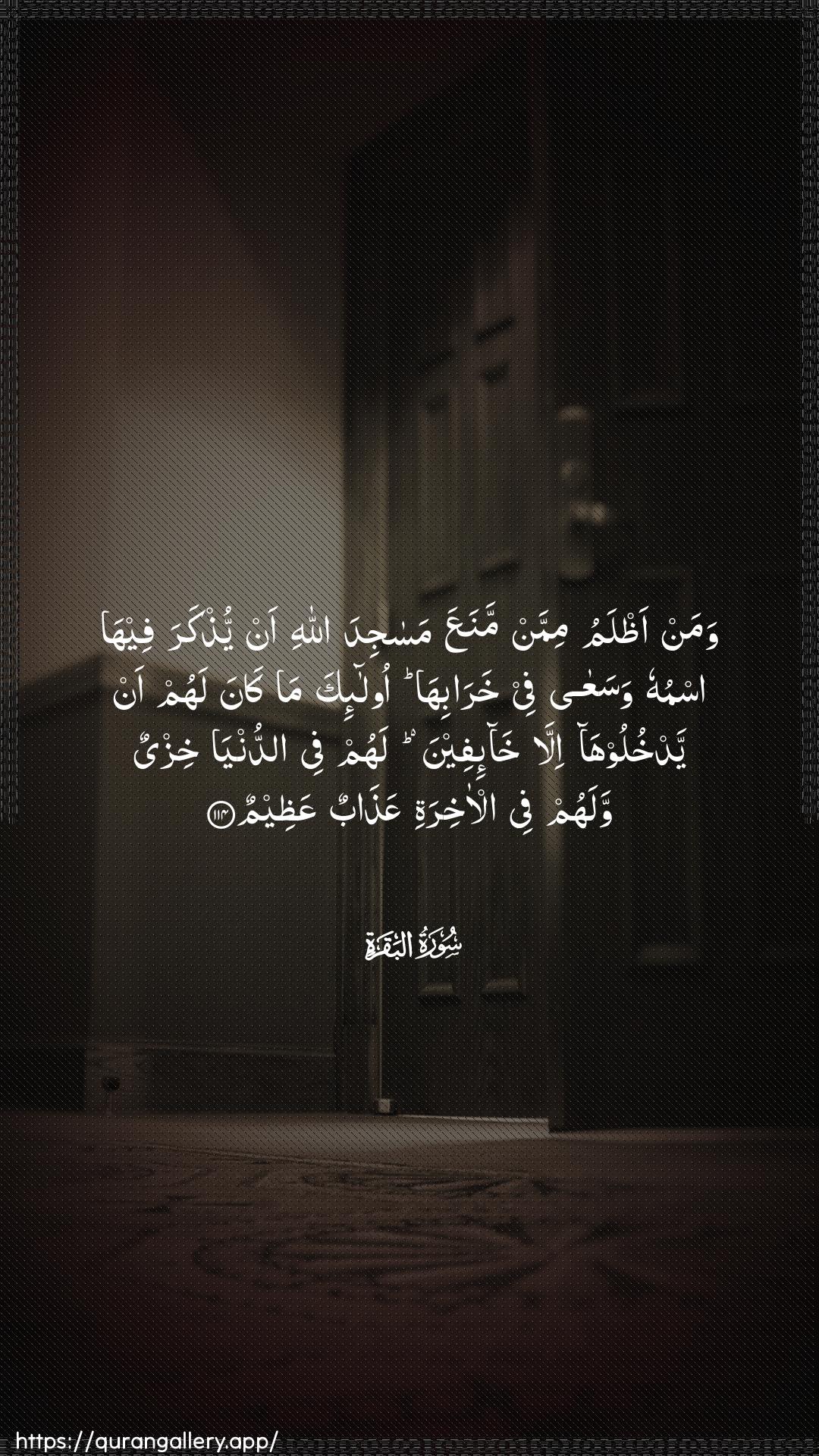
Arabic
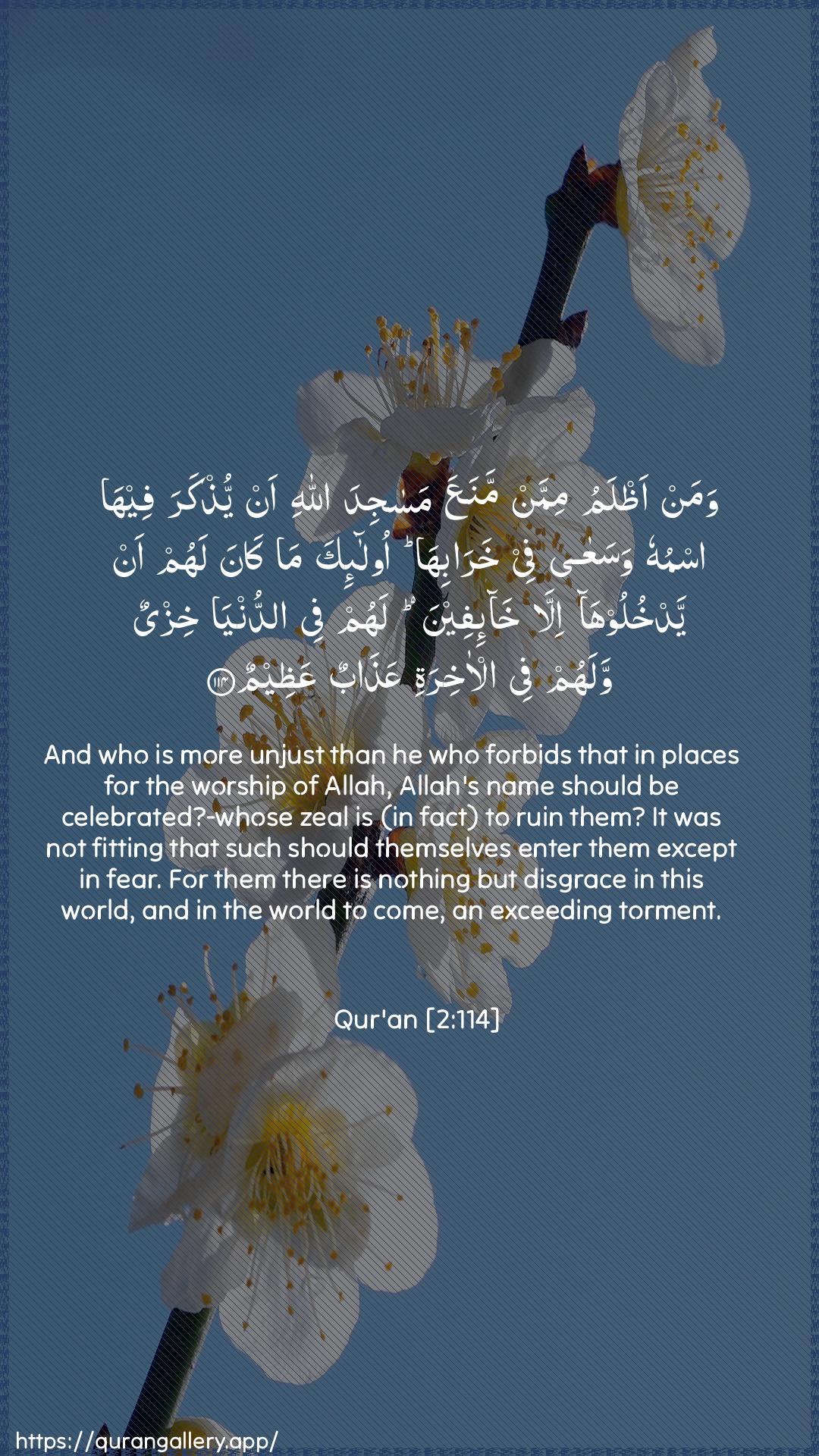
Arabic + English
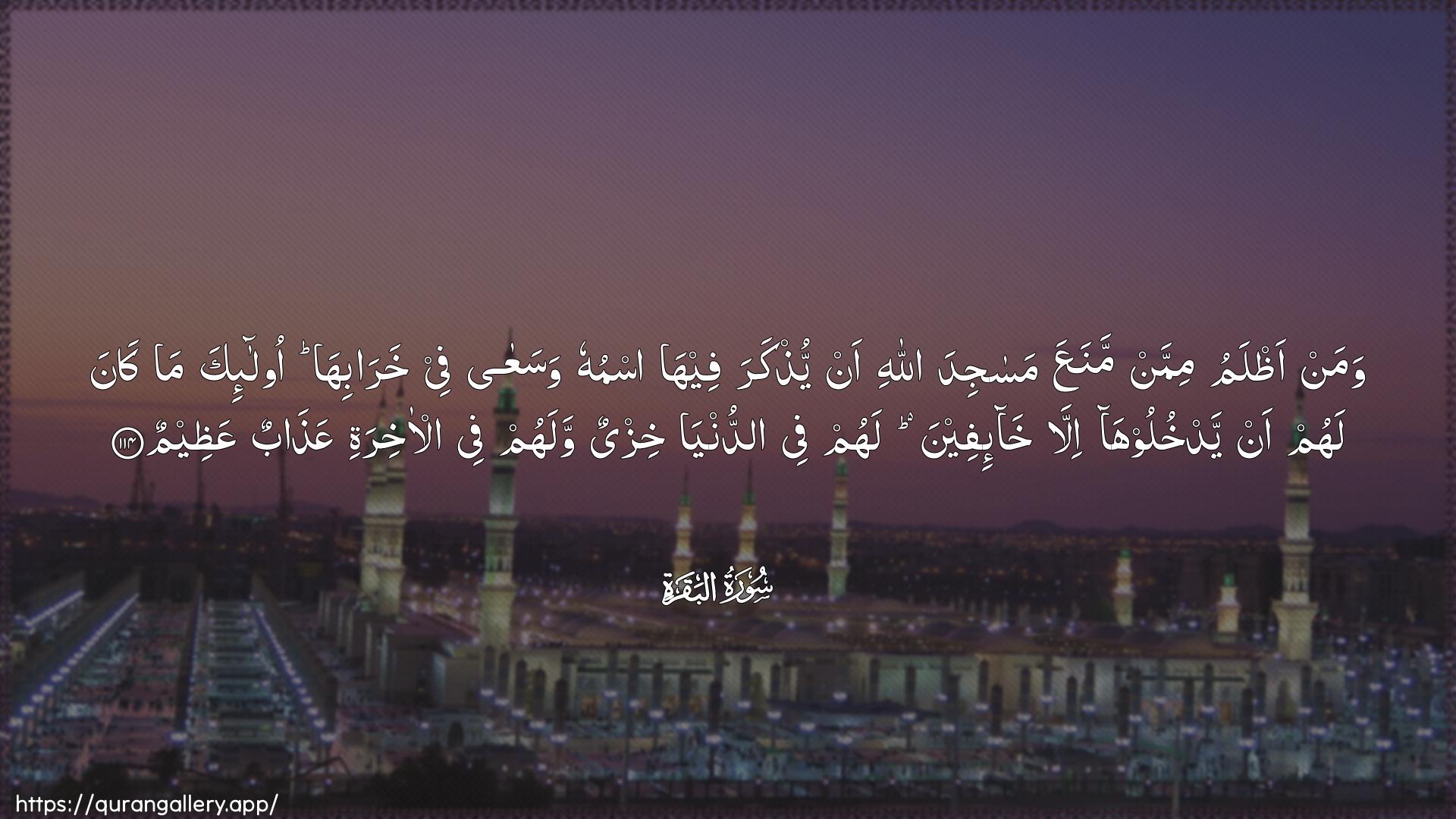
Arabic (Wide)
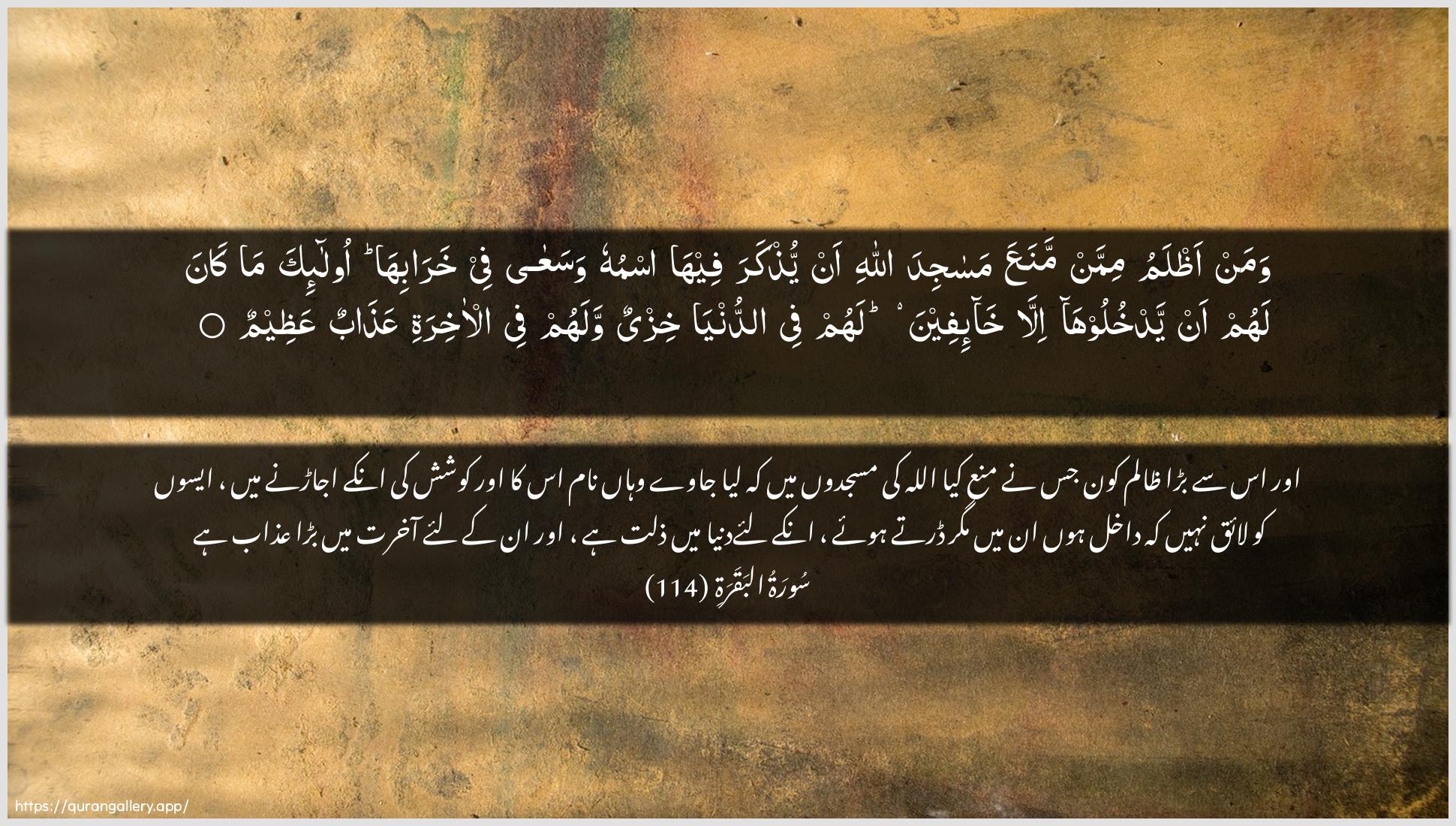
Arabic + Urdu
Free for personal & educational use with attribution
Quick Facts about this Verse
Surah
Al-Baqara
Revealed
Madani
Position
Juz 1,2,3
Explore this Verse
Verse Meaning
According to the classical exegete Ibn Kathir, Quran 2:114 poses a powerful rhetorical question: 'And who is more unjust than those who prevent the name of Allah from being mentioned in His mosques and strive toward their destruction?' This verse addresses the gravest of sins—obstructing the worship of God and desecrating sacred spaces. A significant scholarly discussion, detailed by both Al-Tabari and Ibn Kathir, revolves around the verse's specific historical context. Al-Tabari favors the view that it refers to the Christians who aided the Romans in the destruction and desecration of the Temple in Jerusalem out of animosity towards the Jews. In contrast, Ibn Kathir argues compellingly that it refers to the Quraysh of Mecca, who prevented the Prophet Muhammad ﷺ and his companions from worshipping at the Kaaba, particularly during the events leading to the Treaty of Hudaybiyyah. The synthesis of these views reveals a universal principle: the 'ruin' of a mosque is not merely physical demolition but also its spiritual desecration by filling it with idolatry or preventing true monotheistic worship. The wow-factor emerges from the verse's dual nature as both a condemnation and a prophecy, promising that these oppressors would eventually only be able to enter these sacred spaces in fear—a promise fulfilled with the conquest of Mecca.
Questions for Reflection
historical
Reflect on the two historical accounts provided by Al-Tabari (Christians and Romans destroying the Temple) and Ibn Kathir (Quraysh barring Muslims from the Kaaba). How does Allah's condemnation of both actions, despite the different perpetrators and locations, reveal a universal divine law about the sanctity of worship, and what recurring patterns of injustice does this expose throughout human history?
personal
Ibn Kathir argues that spiritual ruin (filling the Kaaba with idols) is a greater violation than physical ruin. In what subtle ways might one personally contribute to the 'spiritual ruin' of a mosque today? Consider actions like engaging in gossip, showing off piety, creating division, or attending without a present heart. How can you actively shift from being a passive attendee to a true 'maintainer' of its sanctity?
communal
The verse promises that the oppressors would eventually only enter these places 'in fear'—a prophecy fulfilled for the Muslims. Contemplate the relationship between a community's collective actions of injustice (like barring believers) and the divine consequence of humiliation ('khizy'). How does this verse teach that a community's security and honor are directly tied to its upholding of justice and the sanctity of worship?
Practical Applications
Actively support and facilitate access to local mosques for prayer, learning, and community building, recognizing this as the opposite of 'striving for their ruin'.
Volunteering, donating, or simply welcoming newcomers to a masjid, especially those from different backgrounds or levels of practice.
Condemn and refuse to participate in any form of religious intolerance that leads to the desecration or obstruction of any house of worship, regardless of faith.
Speaking out against vandalism of synagogues or churches, and promoting interfaith dialogue to protect all sacred spaces.
Maintain unwavering faith in God's promise of justice and victory when facing oppression or being barred from practicing your faith.
For Muslim communities facing restrictions or hostility, this verse serves as a source of hope and a reminder that divine justice will ultimately prevail.
Hidden Gem
A synthesis of the tafsirs reveals a profound spiritual insight: The ultimate 'ruin' of a mosque is when it ceases to be a house of Allah and becomes a symbol of tribal or national pride. Both the Romans (for their empire) and the Quraysh (for their tribe) claimed ownership over a house of God. The deepest contemplation is to ask: Do we view 'our' mosques as houses belonging to Allah, open to all His servants, or as exclusive clubs for 'our' group?
Scroll to see more verses or use the dropdown in the breadcrumb to jump to any verse
Common Questions
2 more questions available in the full page