
Al-Baqara - The Cow
Arabic Name: الْبَقَرَة
Urdu Name: گائے
Type: Madani
Serial Number: 2
Revelation Order: 87
Total Verses: 286
Parah: 1,2,3
Rukus: 40
Sajda: None
Share Verse Art
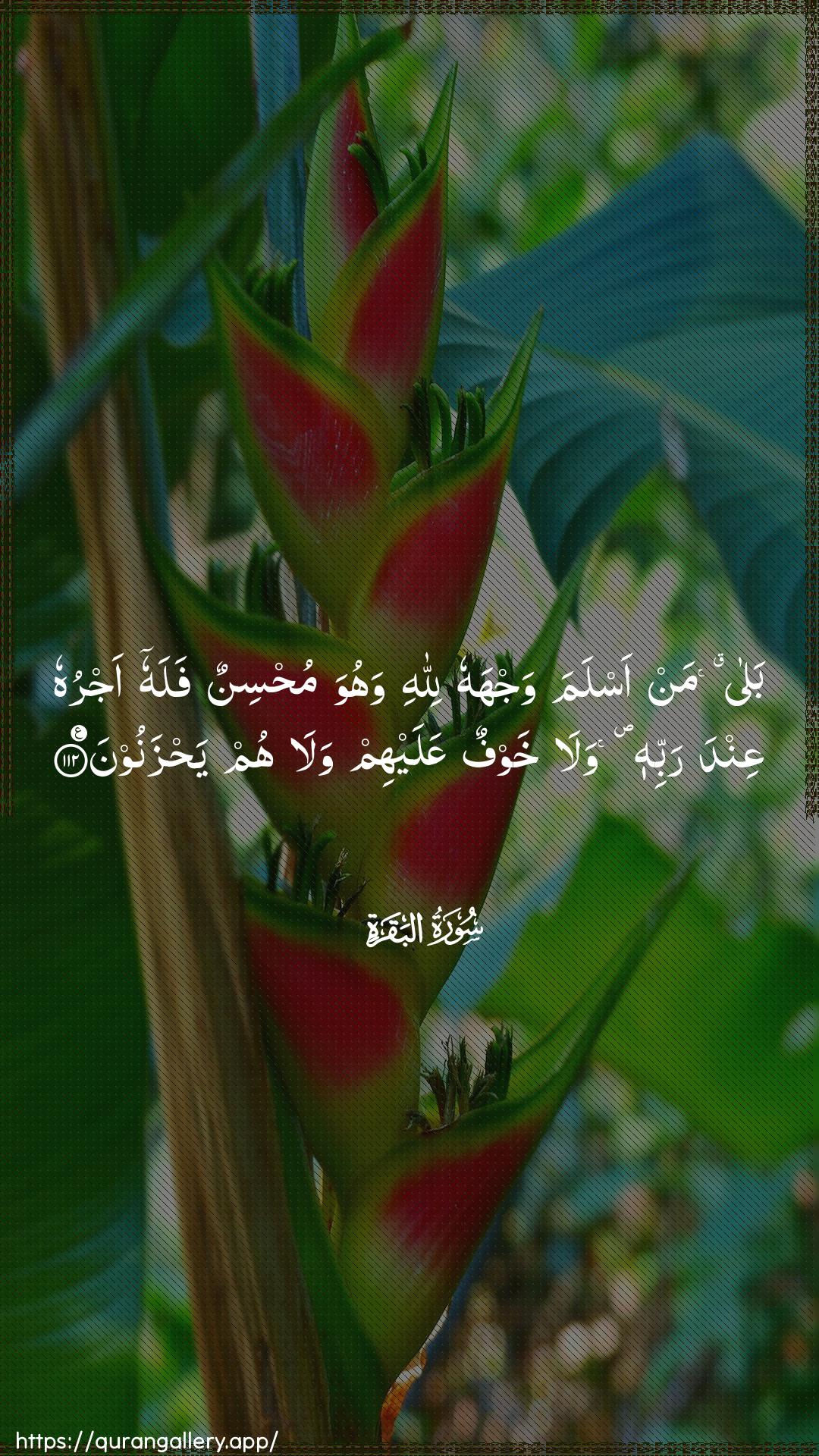
Arabic
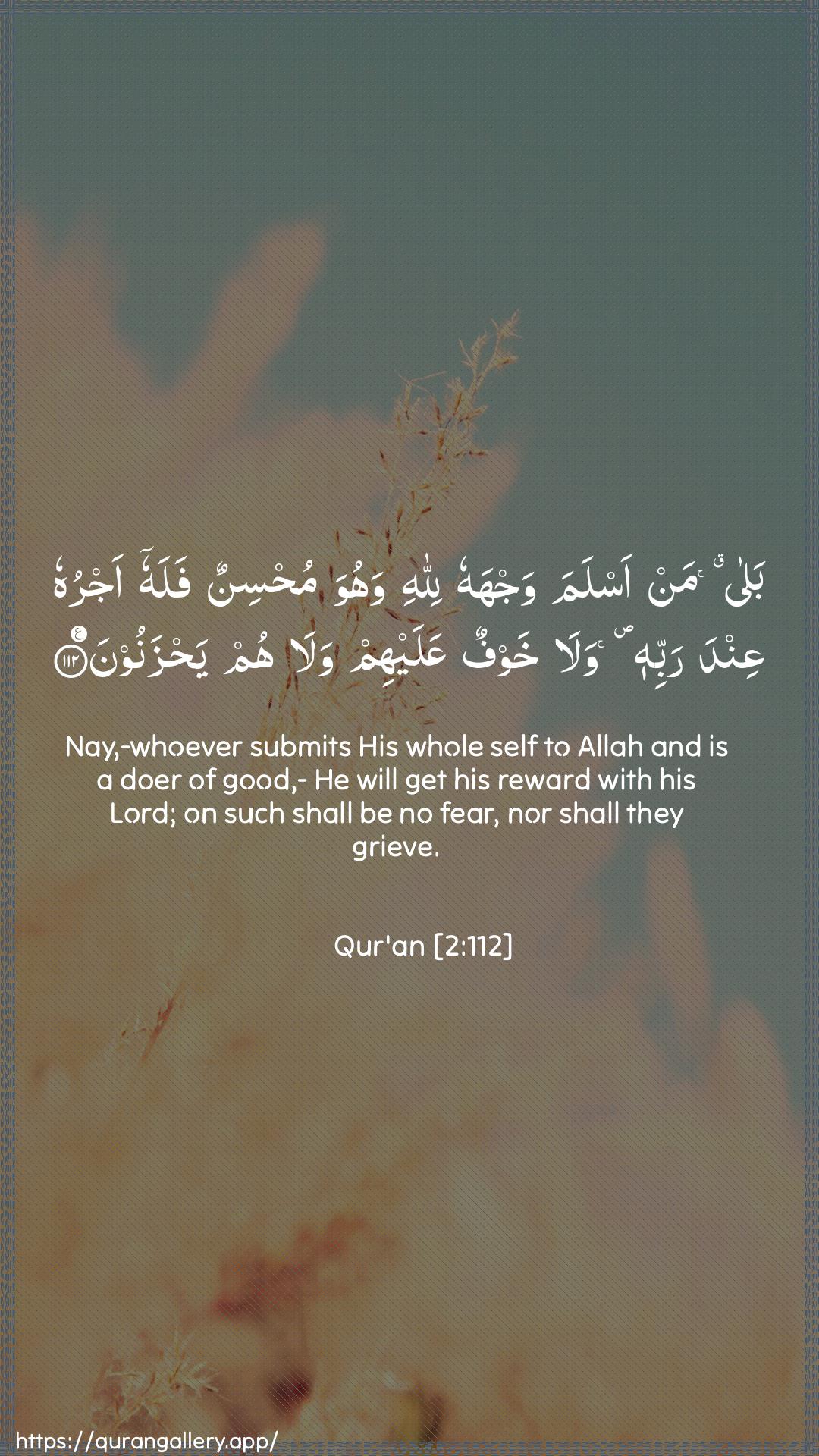
Arabic + English
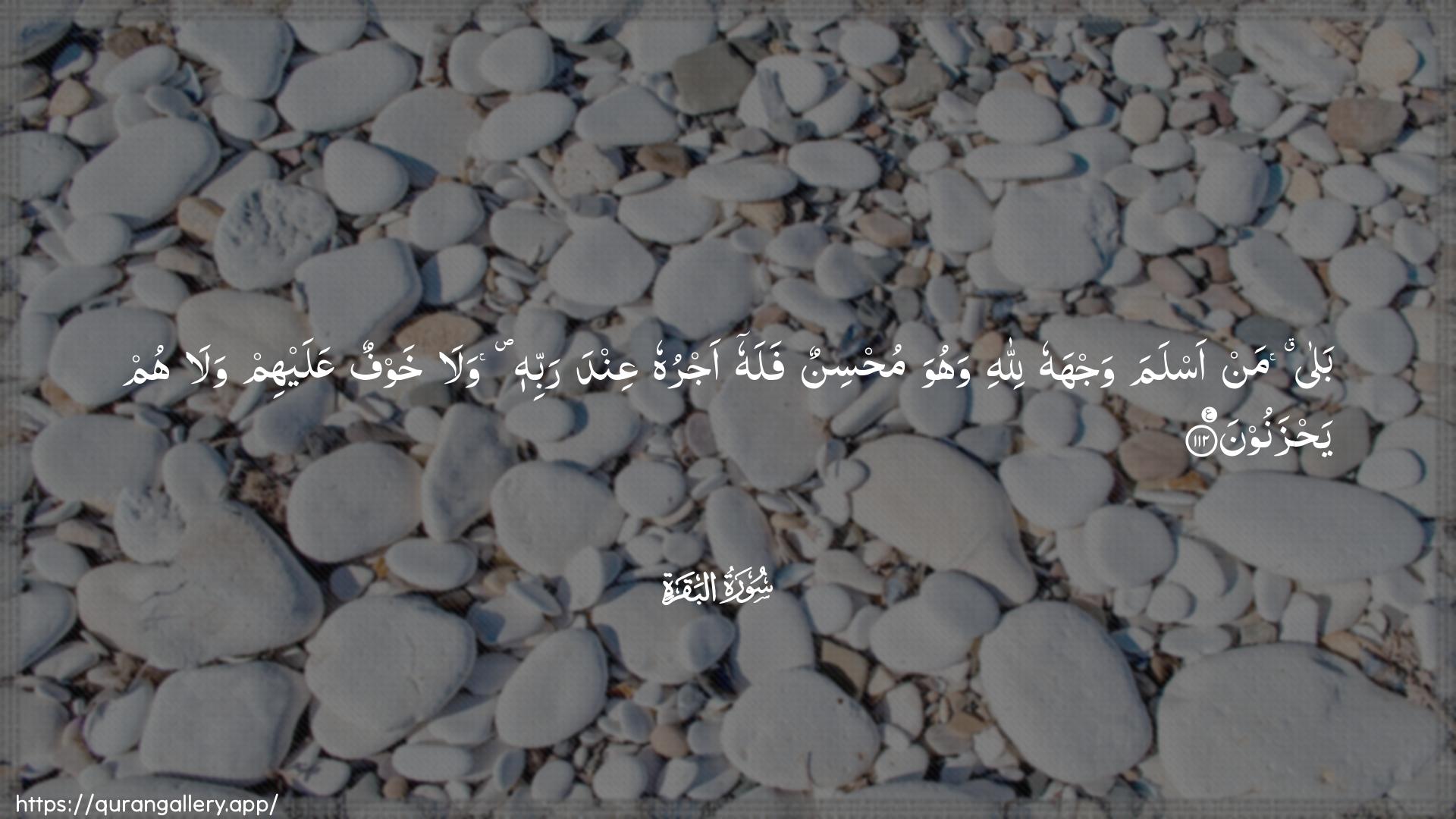
Arabic (Wide)
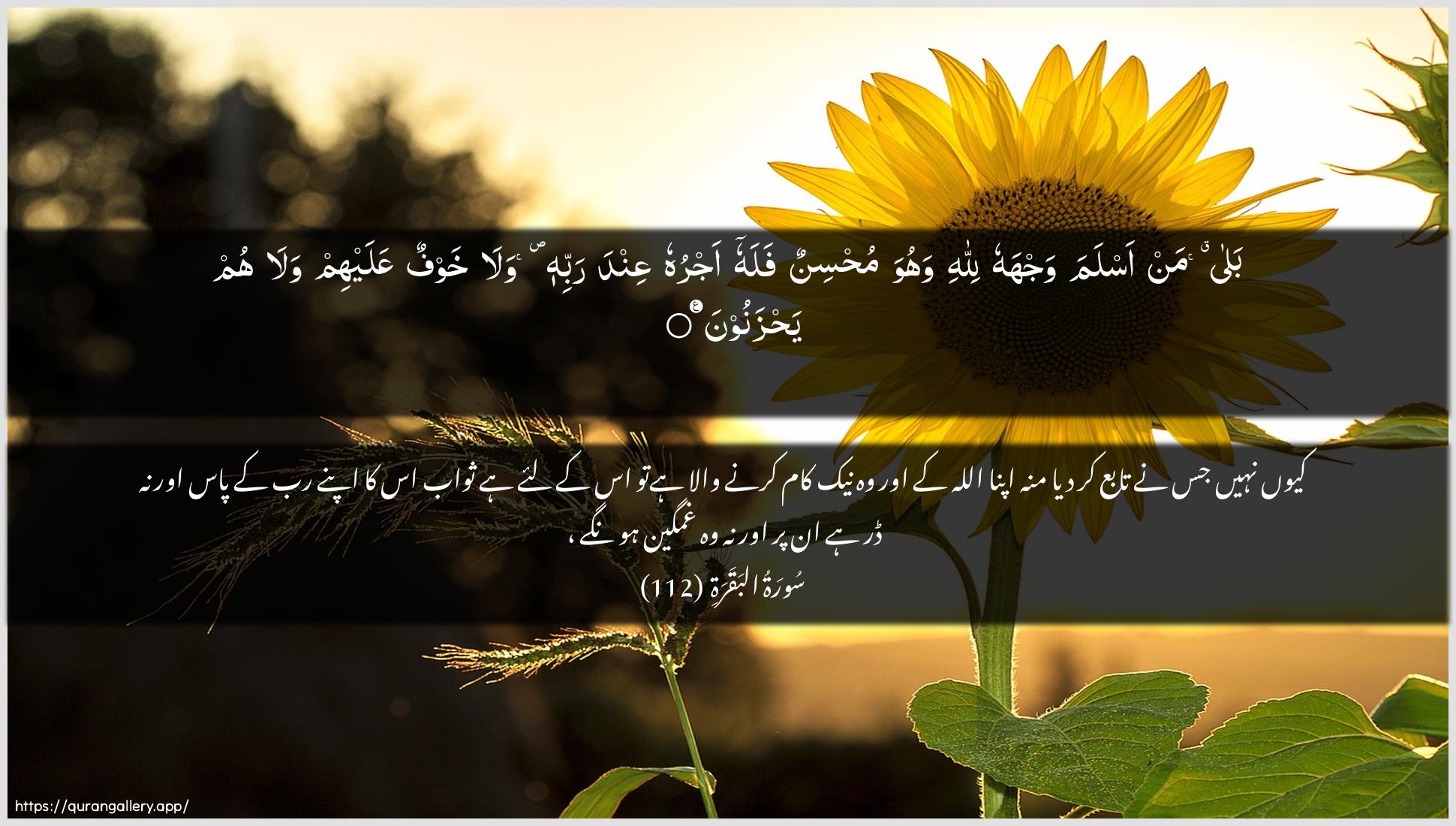
Arabic + Urdu
Free for personal & educational use with attribution
Quick Facts about this Verse
Surah
Al-Baqara
Revealed
Madani
Position
Juz 1,2,3
Explore this Verse
Verse Meaning
According to the great exegete Ibn Kathir, Quran 2:112 provides the universal and unchangeable divine law for salvation, correcting the false claims of exclusivity made by any single religious group. A synthesis of classical tafsirs reveals this verse establishes the two fundamental pillars for any action to be accepted by Allah. The first, 'whoever submits his face to Allah' (`man aslama wajhahu lillahi`), signifies pure sincerity (`Ikhlas`)—directing one's entire being, intention, and devotion solely to God. Al-Tabari explains this phrase is a powerful Arabic metaphor where the 'face,' being the most noble part, represents the submission of the entire self. The second condition, 'and is a doer of good' (`wa huwa muhsin`), signifies correctness (`Ittiba`)—ensuring that the act of worship conforms to the guidance brought by the prophets, specifically the final Messenger, Muhammad (ﷺ). This synthesis reveals a profound spiritual formula: salvation is not a matter of heritage or group identity, but a dynamic state of being achieved through the fusion of sincere internal submission with righteous external action. This verse guarantees that anyone who fulfills these two conditions will have their reward secured, and will be granted ultimate peace, free from all fear of the future and grief for the past.
Questions for Reflection
Textual Contemplation
Al-Tabari highlights that the 'face' (wajh) is the most noble part of a person. Contemplate why Allah chose this specific word. How does submitting the most honored and visible part of yourself represent the totality of submission in a way that just saying 'submits himself' does not? Reflect on the vulnerability and trust inherent in this act.
Personal Transformation
Ibn Kathir states that for a deed to be accepted it must be both sincere (for Allah) and correct (following the Sharia). Examine a recent 'good deed' you performed. Was it a 50/50 split of sincerity and correctness, or was one stronger? What would it take to make both pillars equally strong in all your actions, transforming them into perfect acts of 'Ihsan'?
Relational Wisdom
The verse promises that those who meet these conditions will have 'no fear upon them, nor shall they grieve.' Contemplate the sources of your current fears and regrets. How are they tied to a reliance on things other than Allah—approval from people, worldly status, past events? How would fully internalizing the reality of 'his reward is with his Lord' dissolve these specific anxieties?
Practical Applications
Conduct an 'Intention Audit' before any significant action, asking: 'Am I doing this purely for Allah's sake, or for praise, recognition, or worldly gain?'
Crucial in an age of social media, where actions are often performed for public validation rather than sincere devotion.
Align your acts of worship and daily conduct with the authentic teachings of Prophet Muhammad (ﷺ), seeking knowledge to ensure correctness.
In a world of countless 'spiritual' paths, this provides a clear, divine benchmark for authentic and effective practice.
Cultivate inner peace by focusing on these two conditions, liberating yourself from the fear of not belonging to the 'right' group and the grief of past mistakes.
Offers a powerful antidote to modern anxieties about identity, belonging, and regret, grounding one's security in God alone.
Hidden Gem
The synthesis reveals that 'Islam' (submission) and 'Ihsan' (doing good) are not two separate items on a checklist. 'Muhsin' describes the *state* of the one submitting. The verse isn't saying 'do X and Y,' but rather 'be a person who submits *while in a state of excellence*.' This transforms the meaning from a transactional process to a holistic state of being.
Scroll to see more verses or use the dropdown in the breadcrumb to jump to any verse
Common Questions
1 more question available in the full page