
Al-Baqara - The Cow
Arabic Name: الْبَقَرَة
Urdu Name: گائے
Type: Madani
Serial Number: 2
Revelation Order: 87
Total Verses: 286
Parah: 1,2,3
Rukus: 40
Sajda: None
Related Hadith
"The signs of a hypocrite are three: when he speaks, he lies; when he makes a promise, he breaks it; and when he is entrusted, he betrays."
Provides the observable traits that stem from the inner state of deception described in the verse.
Share Verse Art

Arabic
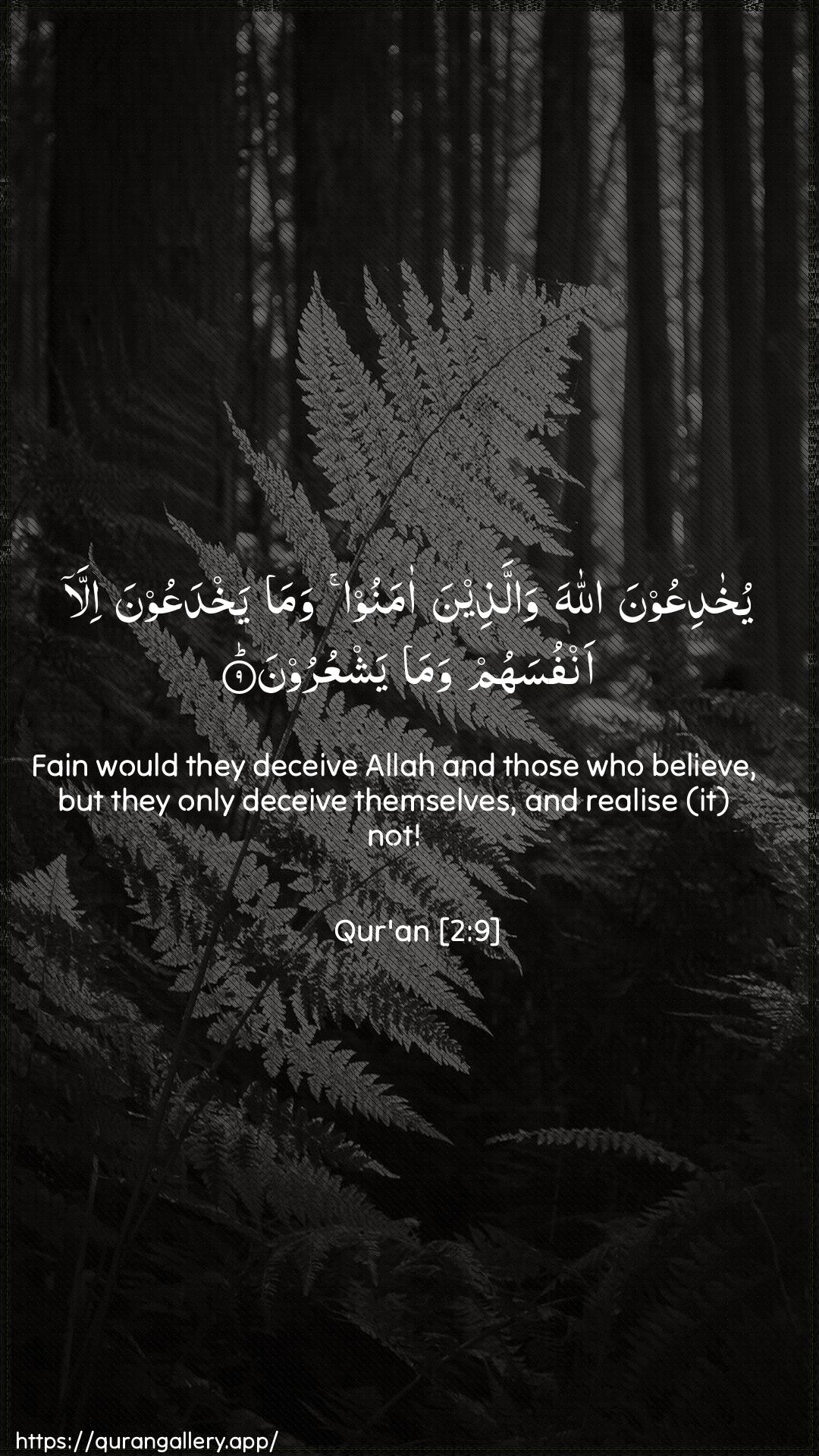
Arabic + English

Arabic (Wide)
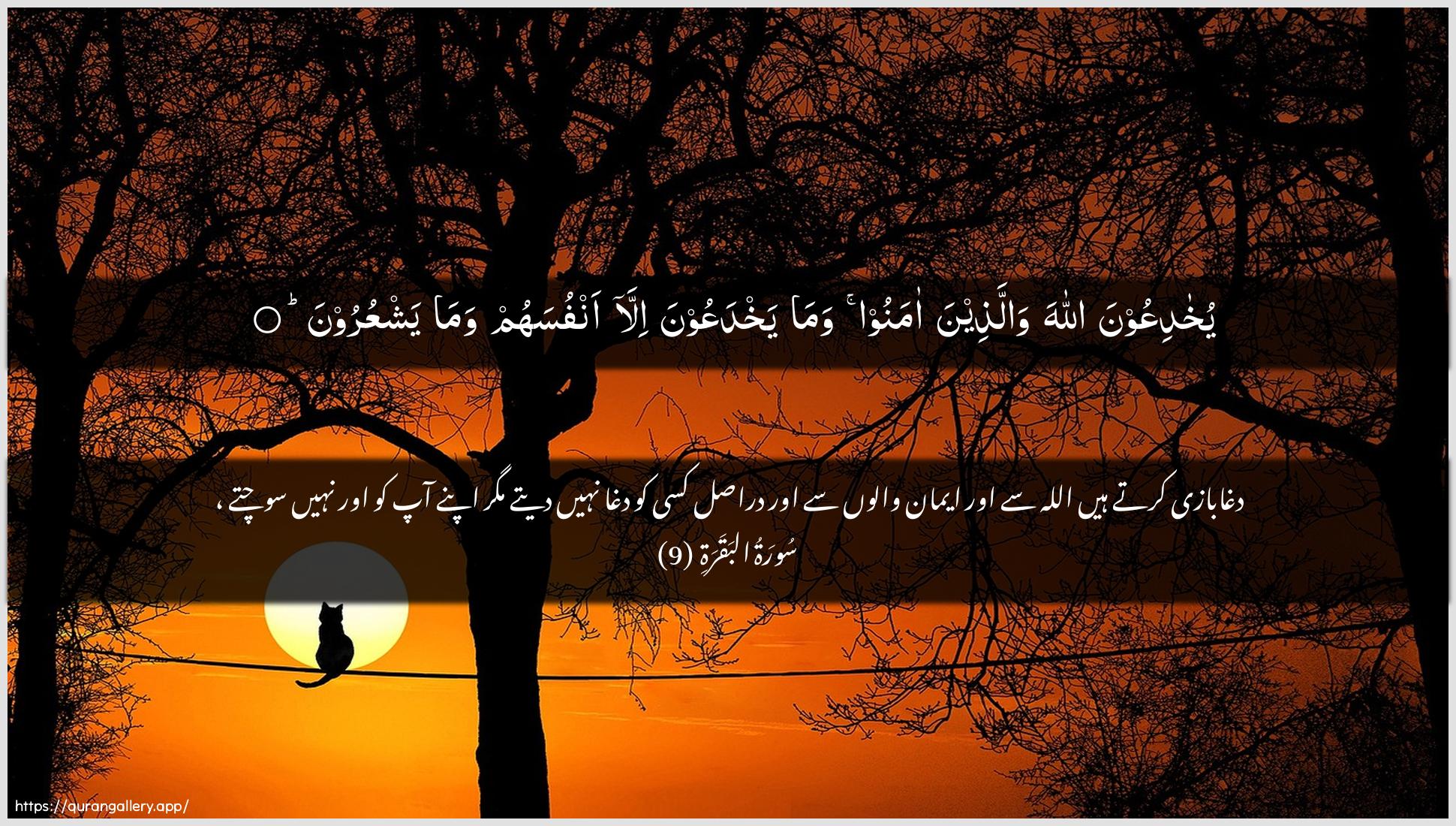
Arabic + Urdu
Free for personal & educational use with attribution
Quick Facts about this Verse
Surah
Al-Baqara
Revealed
Madani
Position
Juz 1,2,3
Explore this Verse
Verse Meaning
According to the classical scholar Ibn Kathir, verse 2:9 of Surah Al-Baqarah exposes the profound ignorance of the hypocrites, who believe their outward profession of faith can deceive Allah in the same way it might deceive some believers. Al-Tabari elaborates that this deception is a calculated act to secure worldly benefits, such as the protection of their lives and property. The synthesis of these classical interpretations reveals a crucial theological concept: the hypocrites' attempt at deception is not an act against Allah, but a spiritual boomerang. By attempting to trick God, they entangle themselves in a far greater deception. The most profound insight, derived from a comprehensive analysis of scholarly thought, is that the very 'success' of their deception in the temporal world is the mechanism of their ultimate self-deception. They mistake the preservation of their worldly status for divine approval, a delusion Allah allows them to persist in as a prelude to their downfall in the hereafter. As Al-Qurtubi notes, the root of 'khida' implies corruption, indicating that their actions corrupt their own souls. The verse culminates in a tragic diagnosis: `Wa ma yash'urun`—'and they do not perceive it.' Their hearts, clouded by insincerity, are rendered incapable of recognizing their own spiritual ruin, a state of profound unawareness that is the ultimate consequence of their actions.
Questions for Reflection
Personal Sincerity
Ibn Kathir points out their belief that their deception is beneficial. Reflect on an area of your life where you might be justifying a compromise. Are you convincing yourself it's 'harmless' or 'strategic' when, in reality, it distances you from Allah?
The Nature of Deception
Al-Tabari explains that their deception was a means to a worldly end. Contemplate the idea that every act of insincerity, no matter how small, is a transaction where we trade a portion of our Akhirah for a fleeting worldly gain. Where might you be making such trades without realizing it?
Cultivating Perception
The verse ends with the haunting phrase 'wa ma yash'urun' (and they do not perceive it). This implies a spiritual numbness. Contemplate the state of your heart. Is it sensitive to spiritual truths, or has it become hardened by the pursuit of the dunya, making you unaware of your own spiritual state?
Practical Applications
Conduct a 'Sincerity Audit' of a recent good deed, questioning whether the primary motivation was for Allah's pleasure or for social validation.
Apply this in professional settings, community service, and even social media posts where the line between genuine sharing and seeking praise can blur.
Re-evaluate 'Success': Identify one area where worldly success feels paramount and consciously connect its ultimate outcome to the Akhirah.
Use this during career planning, financial goal-setting, or when facing social pressure to achieve certain material standards.
Hidden Gem
The synthesis of classical tafsir reveals a startling spiritual equation: The intensity of one's effort to deceive for worldly gain is directly proportional to the depth of one's own spiritual blindness. Ibn Kathir's focus on their 'ignorant belief' and Al-Tabari's on their 'self-harm' converge on this point. The verse teaches that self-deception isn't a passive state, but an active process fueled by worldly attachments, which is why detachment is a key to spiritual perception.
Scroll to see more verses or use the dropdown in the breadcrumb to jump to any verse
Common Questions
2 more questions available in the full page