
Al-Baqara - The Cow
Arabic Name: الْبَقَرَة
Urdu Name: گائے
Type: Madani
Serial Number: 2
Revelation Order: 87
Total Verses: 286
Parah: 1,2,3
Rukus: 40
Sajda: None
Share Verse Art
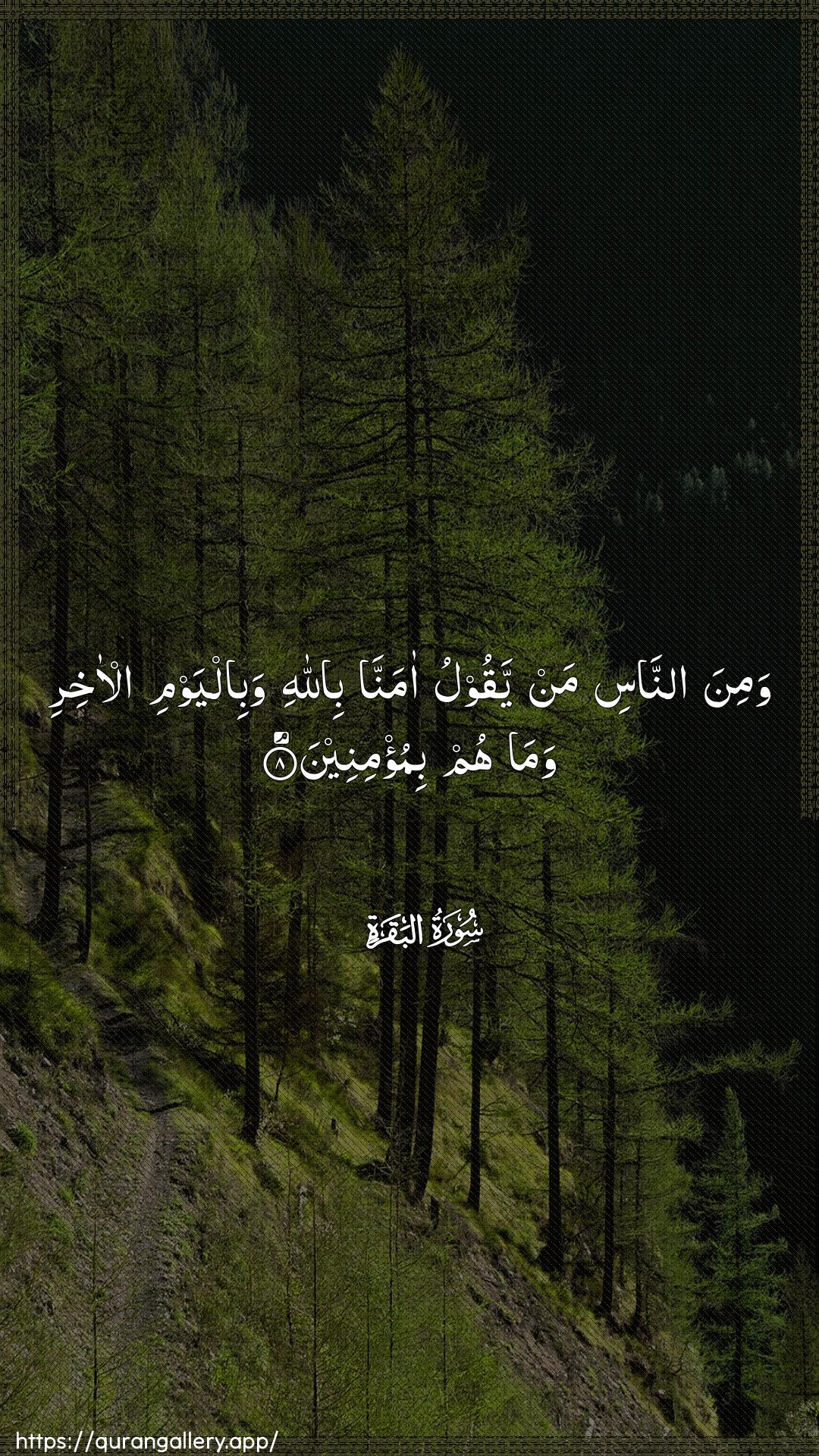
Arabic
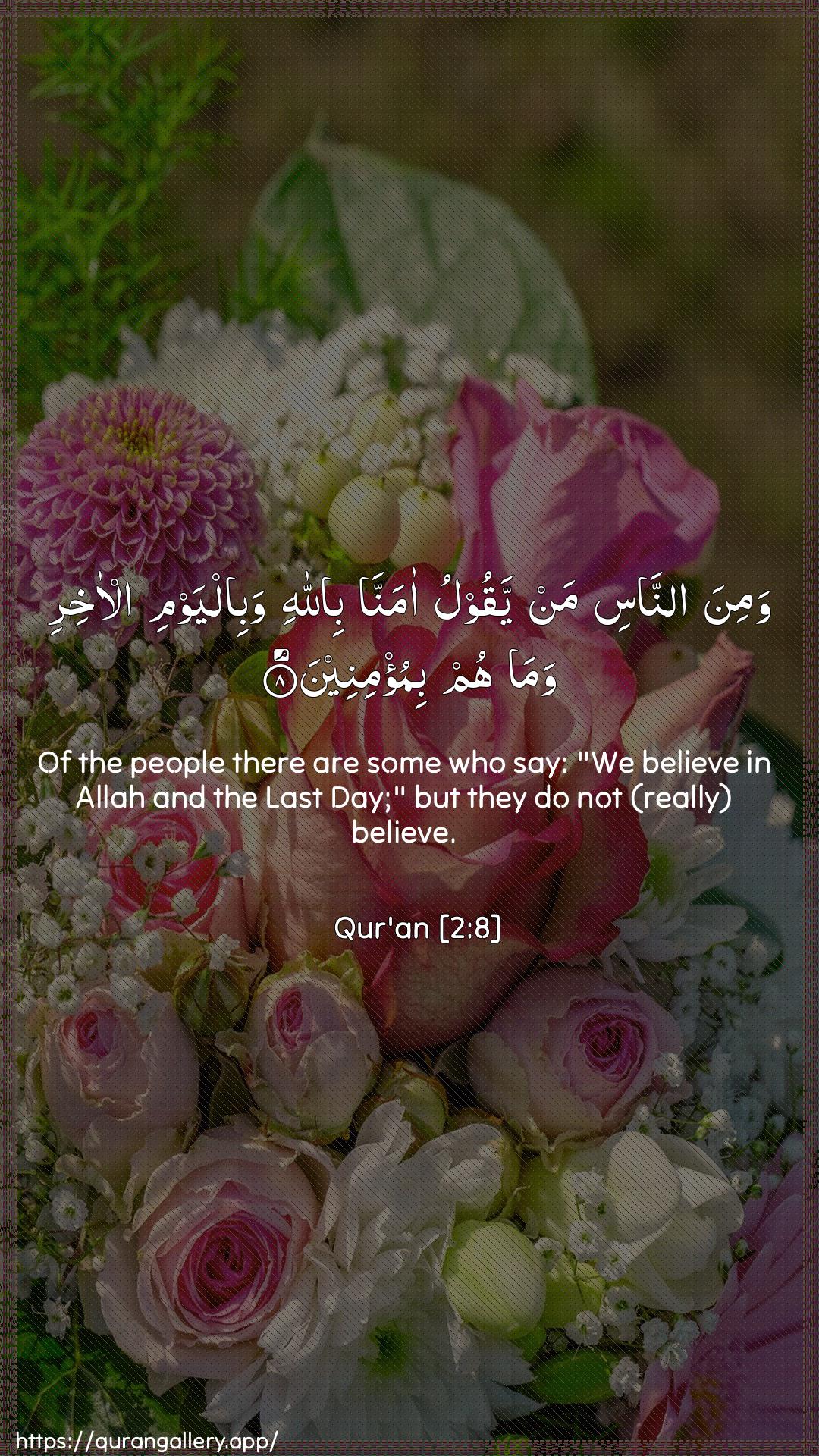
Arabic + English
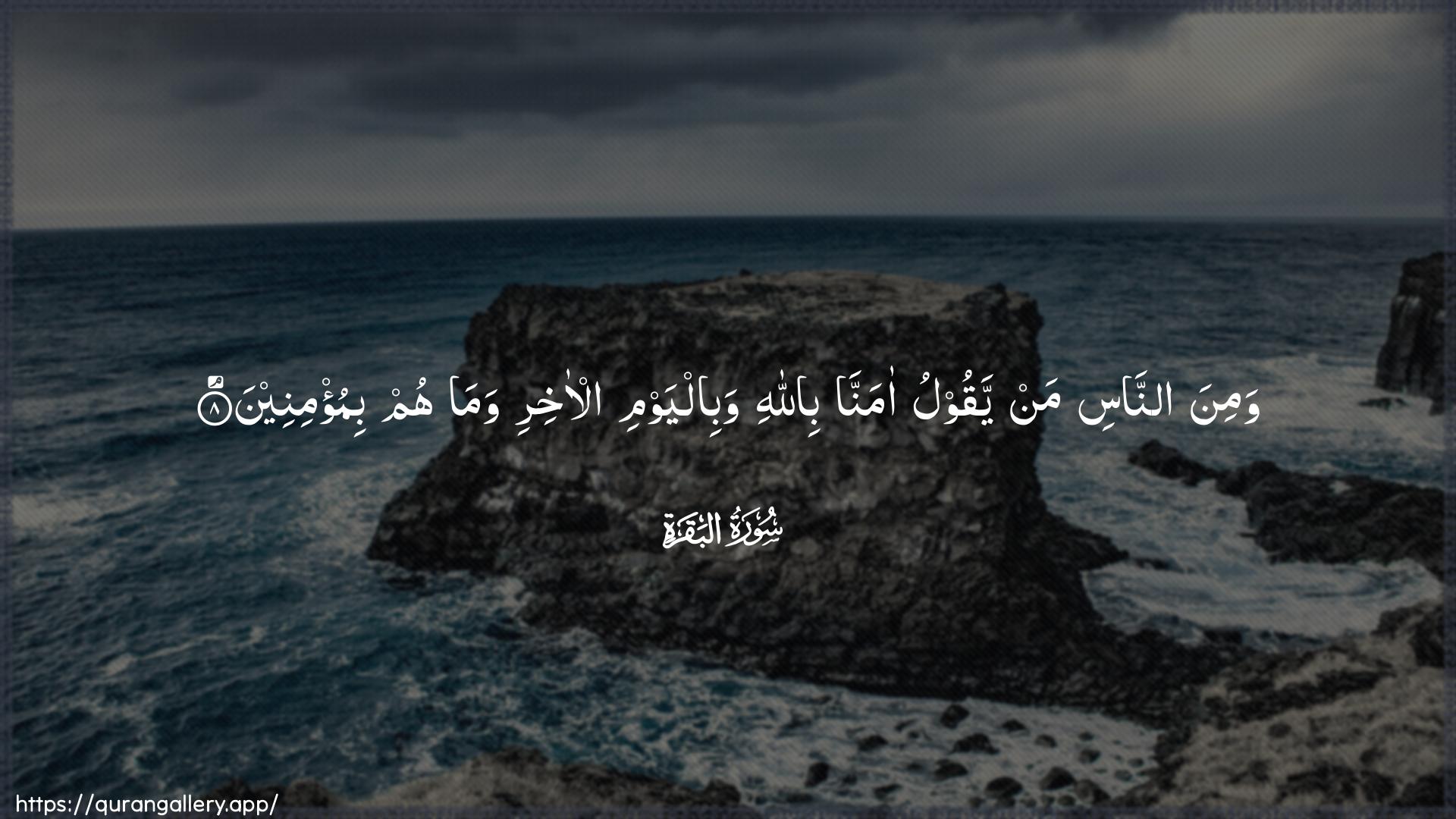
Arabic (Wide)
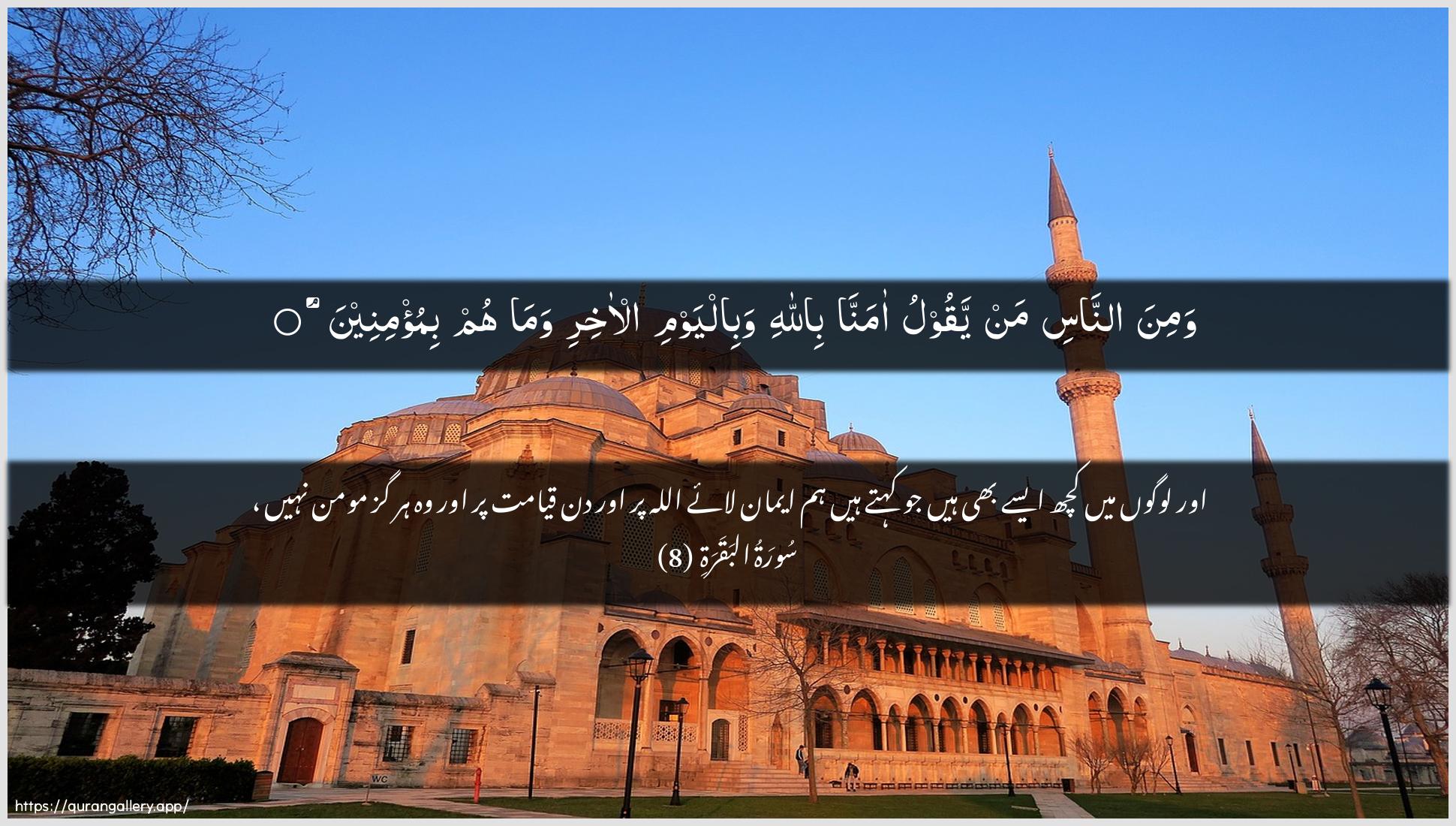
Arabic + Urdu
Free for personal & educational use with attribution
Quick Facts about this Verse
Surah
Al-Baqara
Revealed
Madani
Position
Juz 1,2,3
Explore this Verse
Verse Meaning
According to the consensus of classical exegetes like Ibn Kathir and Al-Tabari, Quran 2:8 introduces the third and most dangerous group discussed in Surah Al-Baqarah: the hypocrites (Munafiqun). This verse unmasks those who outwardly profess belief in Allah and the Last Day, a declaration made with their tongues, yet Allah exposes their inner reality with the definitive statement, 'they are not believers.' The synthesis of scholarly opinion reveals that this hypocrisy (*nifaq*) was not present in Makkah but emerged in Madinah after the Muslim victory at the Battle of Badr. Leaders like Abdullah ibn Ubayy ibn Salul, seeing the rise of Islam, feigned conversion to protect their status and work against the Muslims from within. Al-Tabari provides a deep linguistic and historical context, explaining that their claim to faith was a strategic lie to avoid the consequences of open disbelief. Al-Qurtubi connects the term 'munafiq' to the burrow of a jerboa, which has two openings, mirroring how the hypocrite presents a face of faith to Muslims and a face of disbelief to their allies. The profound insight from this synthesis is that Allah does not just negate their claim, but defines true faith as a harmony between the heart and the tongue, a standard the hypocrites fail to meet.
Questions for Reflection
Textual Contemplation
Allah uses the emphatic negation 'wa ma hum bi-mu'mineen' (and they are not believers at all). Al-Tabari explains this is a direct divine rebuttal to their claim. Contemplate the certainty and finality in Allah's tone. How does this divine clarity cut through the ambiguity the hypocrites tried to create, and what does it teach us about the importance of absolute sincerity in Allah's sight?
Personal Transformation
Ibn Kathir highlights that hypocrisy arose in Madinah only after Islam became powerful. Reflect on your own life: are there aspects of your Islamic practice that are motivated by social acceptance or convenience rather than a deep, internal conviction? Where might a 'sliver of hypocrisy' hide in your heart, driven by a desire for worldly ease or approval?
Relational Wisdom
The hypocrites said, 'We believe,' to deceive the believers. This was a betrayal of the sacred trust within the community. Contemplate the role of trust and truthfulness in your own relationships (family, friends, work). How does this verse underscore that insincerity not only corrupts one's faith but also poisons the foundations of a healthy community?
Practical Applications
Conduct a 'Sincerity Audit' of your speech by consciously aligning your private and public statements about your faith and values.
Especially relevant in the age of social media, where public personas can easily diverge from private realities. Apply this to your online posts, comments, and real-life conversations.
Strengthen faith beyond verbal declaration by linking every statement of belief to a corresponding action, no matter how small.
If you say 'I trust Allah's plan,' follow it by taking a tangible step in a difficult project. If you say 'I believe in charity,' immediately donate a small amount or volunteer time.
Analyze your motivations during times of ease and difficulty, ensuring your commitment to Islam is not conditional on worldly outcomes.
Reflect on whether your religious practice increases when things are going well and wanes during trials, or if your connection to Allah remains steadfast regardless of external circumstances.
Hidden Gem
The synthesis reveals a subtle point: the hypocrites claimed belief in 'Allah and the Last Day,' but omitted the Messenger. The scholars explain this was intentional. Contemplating this omission unveils a deep truth: true faith is not a pick-and-choose buffet. It is a complete submission to the entire package of revelation, including the authority of the Prophet (ﷺ). This insight transforms the contemplation from a simple sincerity check into a profound examination of whether one truly submits to all aspects of the faith or only those that are convenient.
Scroll to see more verses or use the dropdown in the breadcrumb to jump to any verse
Common Questions
3 more questions available in the full page