
Al-Baqara - The Cow
Arabic Name: الْبَقَرَة
Urdu Name: گائے
Type: Madani
Serial Number: 2
Revelation Order: 87
Total Verses: 286
Parah: 1,2,3
Rukus: 40
Sajda: None
Share Verse Art
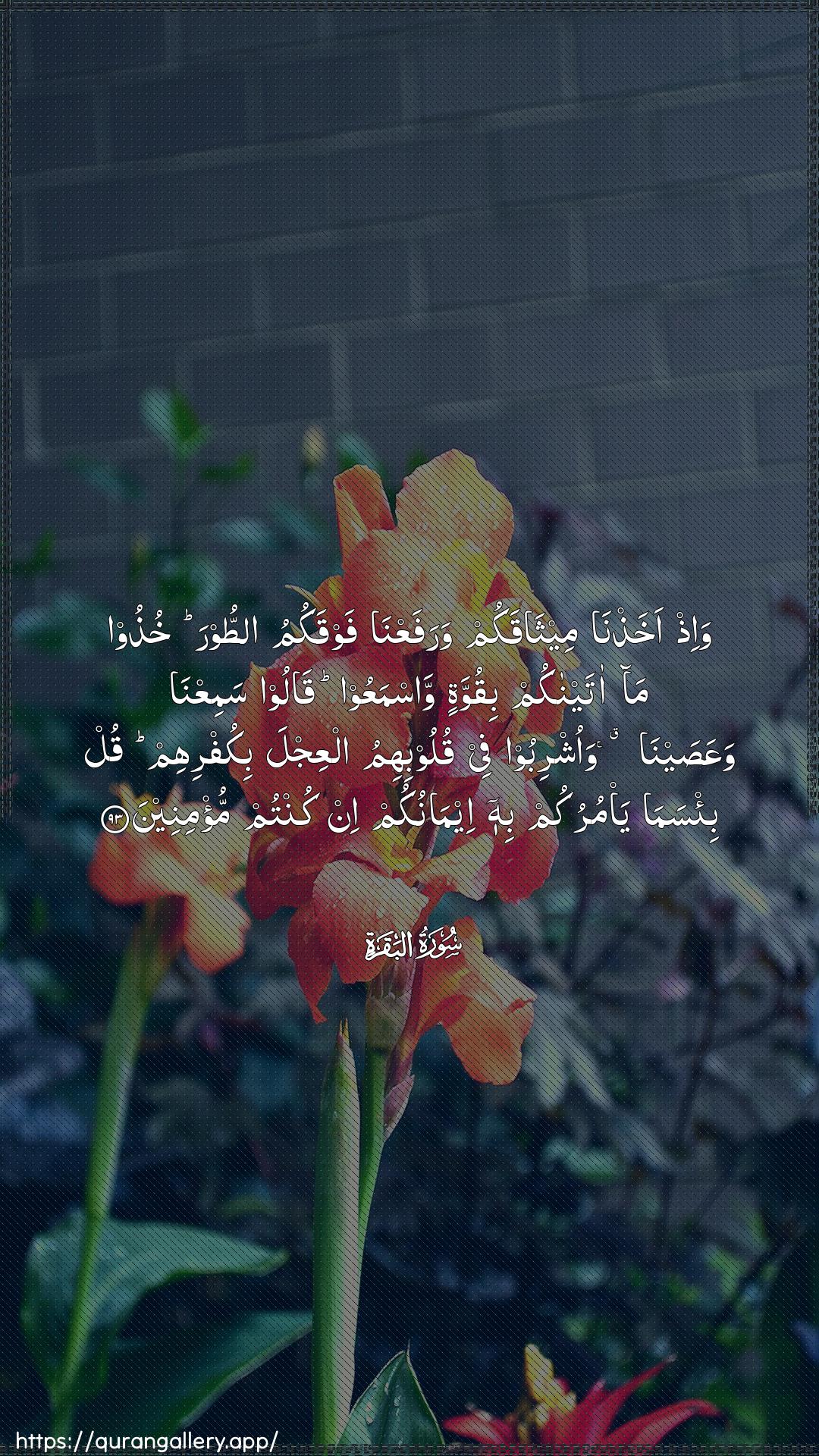
Arabic
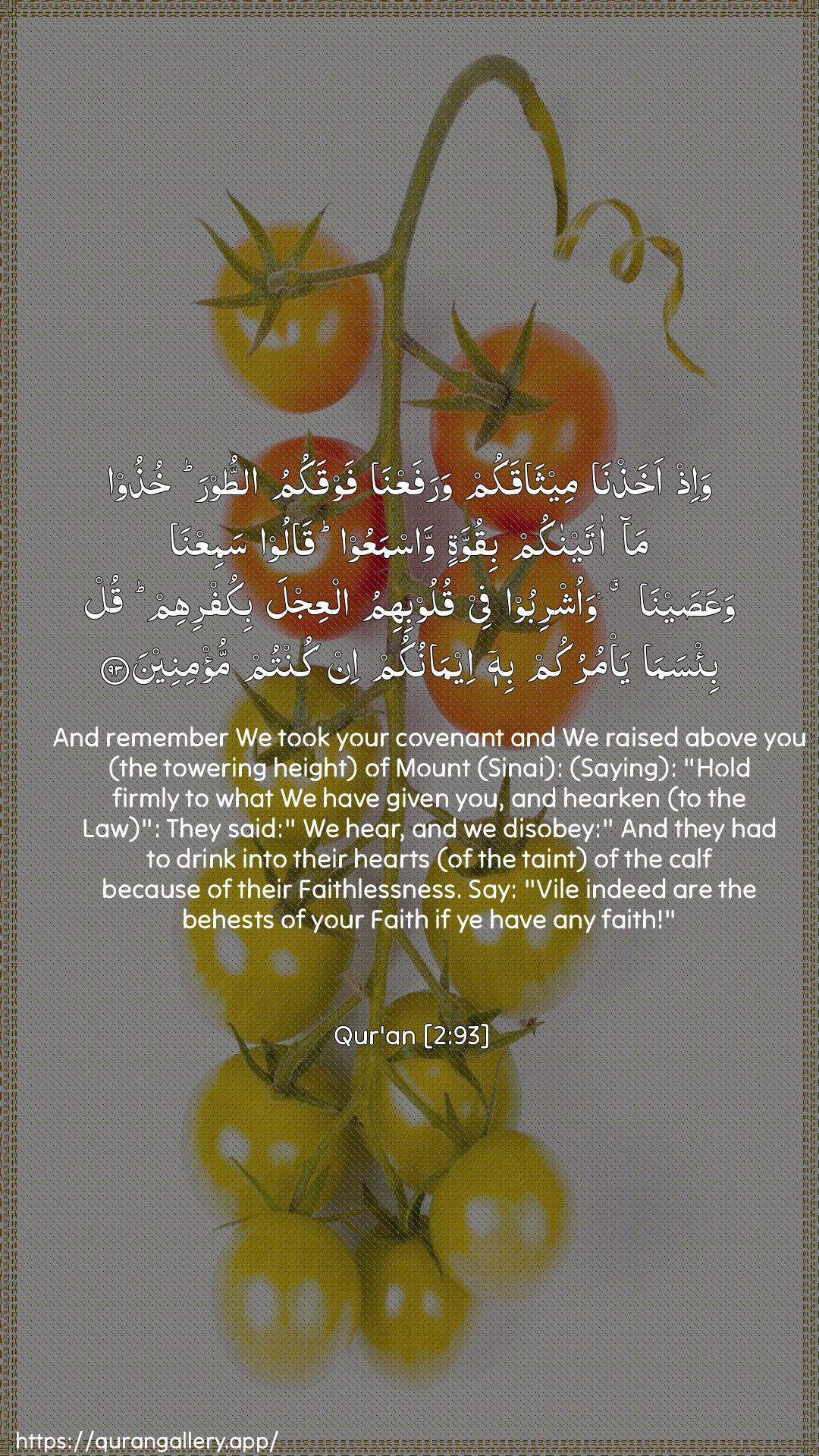
Arabic + English
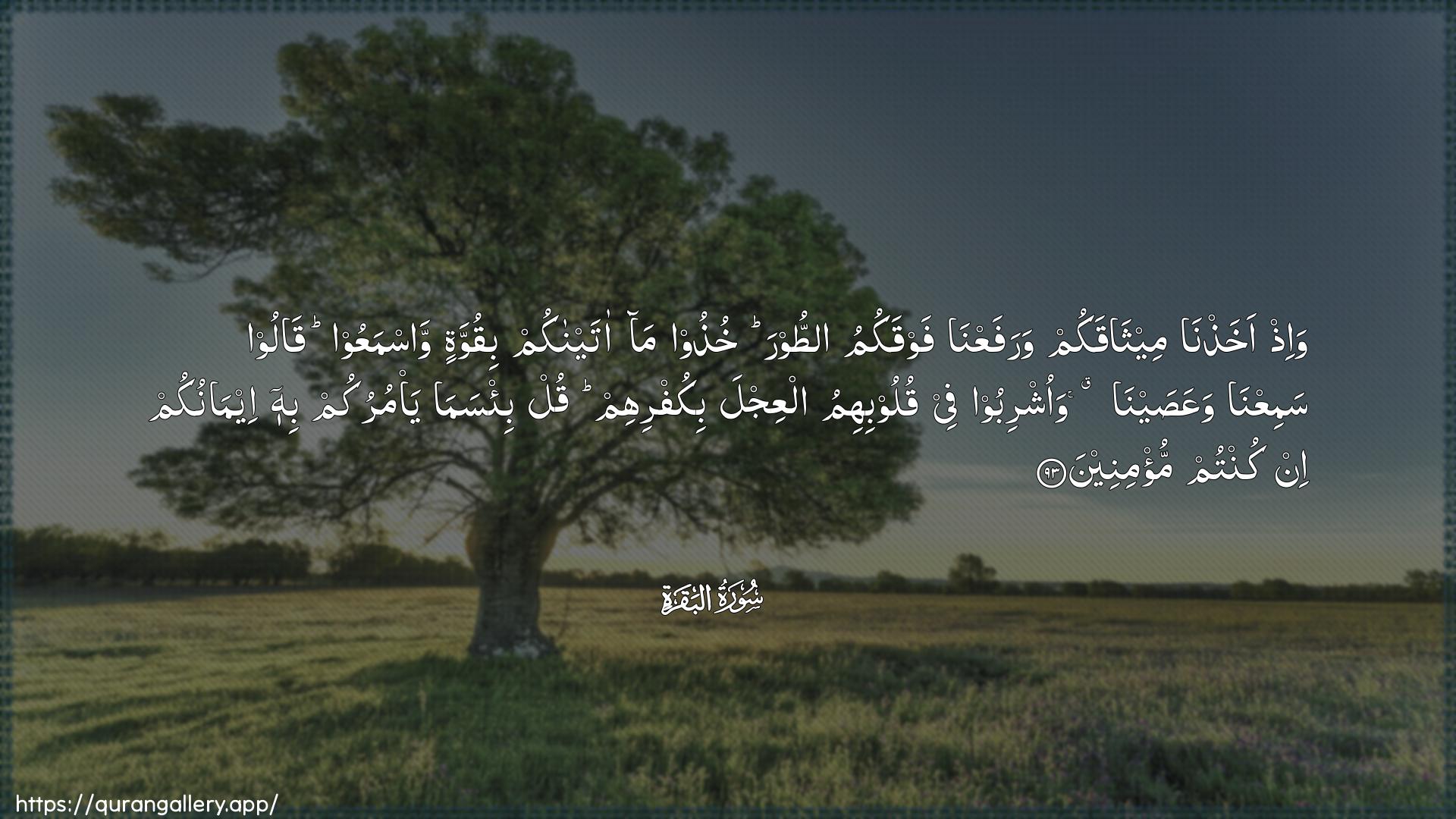
Arabic (Wide)
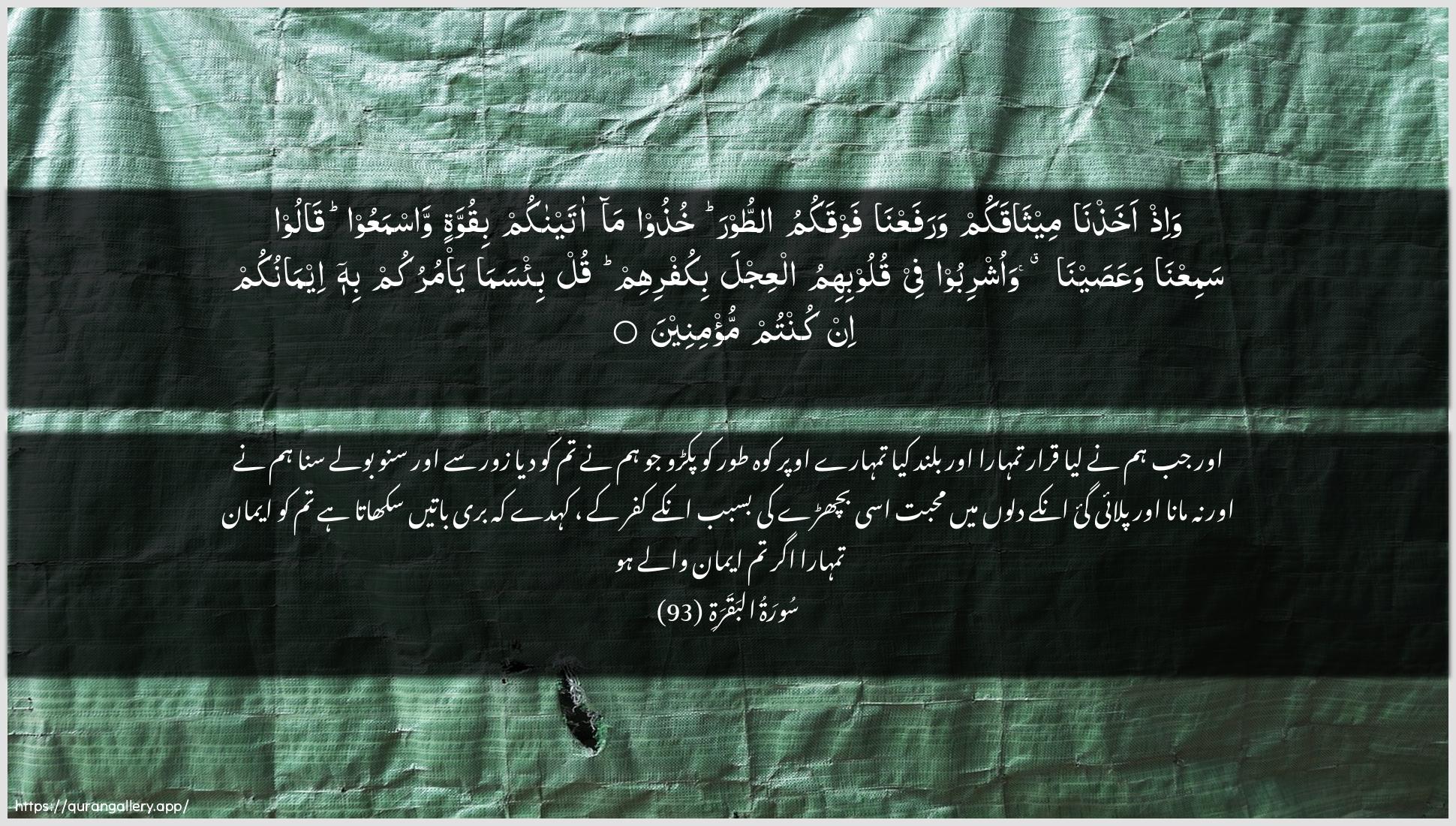
Arabic + Urdu
Free for personal & educational use with attribution
Quick Facts about this Verse
Surah
Al-Baqara
Revealed
Madani
Position
Juz 1,2,3
Explore this Verse
Verse Meaning
According to the classical scholar Al-Tabari, Quran 2:93 serves as a stark reminder of the covenant taken from the Children of Israel at Mount Tur, a moment of profound divine gravity. The verse captures their blatant rebellion; when commanded to hold fast to the Torah with strength and to listen, their response was 'Samina wa 'asayna'—'We have heard, and we disobey.' This statement reveals a deep-seated hypocrisy, an outward compliance masking an inner rejection of divine authority. A comprehensive synthesis of tafsirs, including those of Ibn Kathir and Al-Qurtubi, reveals the profound spiritual disease that led to this rebellion. The phrase 'wa ushribu fi qulubihimul-'ijl' ('and they were made to drink the calf into their hearts') is a powerful metaphor for how deeply idolatry had penetrated their beings. As Al-Tabari explains, this wasn't just a fleeting mistake but a love and devotion to the calf that had saturated their hearts, becoming as integral as a liquid absorbed by the body. This profound attachment to falsehood, born from their disbelief, is what made their subsequent claim to faith so baseless. The verse concludes with a piercing rhetorical question, challenging the very foundation of their identity: 'Evil is that which your faith commands you, if you are believers!'
Questions for Reflection
Personal Sincerity
Reflect on the phrase 'We hear and we disobey.' Where does this subtle rebellion manifest in your personal worship and daily conduct? Consider the prayers you rush, the charity you give reluctantly, or the knowledge you acquire but fail to implement. How does this internal disobedience corrupt the 'hearing'?
The Idol of the Heart
The verse says they were 'made to drink the calf into their hearts.' As Al-Tabari explains, this is about a deep-seated love. What worldly attachments—wealth, status, relationships, ideologies—have you allowed to saturate your heart to the point that they dictate your decisions, even when they conflict with Allah's commands?
The Nature of Covenants
Allah raised a mountain to signify the gravity of the covenant. Contemplate the Shahada, your five daily prayers, and your commitment to the Quran. Do you treat these as life-altering covenants taken under the weight of divine majesty, or as casual routines? How would your devotion change if you truly felt the 'mountain' of this responsibility?
Practical Applications
Conduct a 'Samina wa 'Asayna' audit of your life. Identify one area where you verbally agree with an Islamic principle but your actions consistently contradict it.
Applicable to financial dealings (knowing riba is haram but engaging in it) or social interactions (knowing backbiting is wrong but practicing it).
Identify the 'golden calves' in your life—attachments or ideologies that have been 'soaked into your heart' and compete with your love for Allah.
Consider obsessions with career, wealth, social media validation, or entertainment that dictate one's values and time.
Hidden Gem
A synthesis of scholarly thought reveals a profound insight: their love for the calf was not an external force, but a consequence of their initial disbelief ('bikufrihim'). The external idol was only able to enter their hearts because the internal vessel was already empty of true faith. Contemplate how a weak iman creates a vacuum that the idols of the modern world rush to fill.
Scroll to see more verses or use the dropdown in the breadcrumb to jump to any verse
Common Questions
2 more questions available in the full page