
Al-Baqara - The Cow
Arabic Name: الْبَقَرَة
Urdu Name: گائے
Type: Madani
Serial Number: 2
Revelation Order: 87
Total Verses: 286
Parah: 1,2,3
Rukus: 40
Sajda: None
Share Verse Art
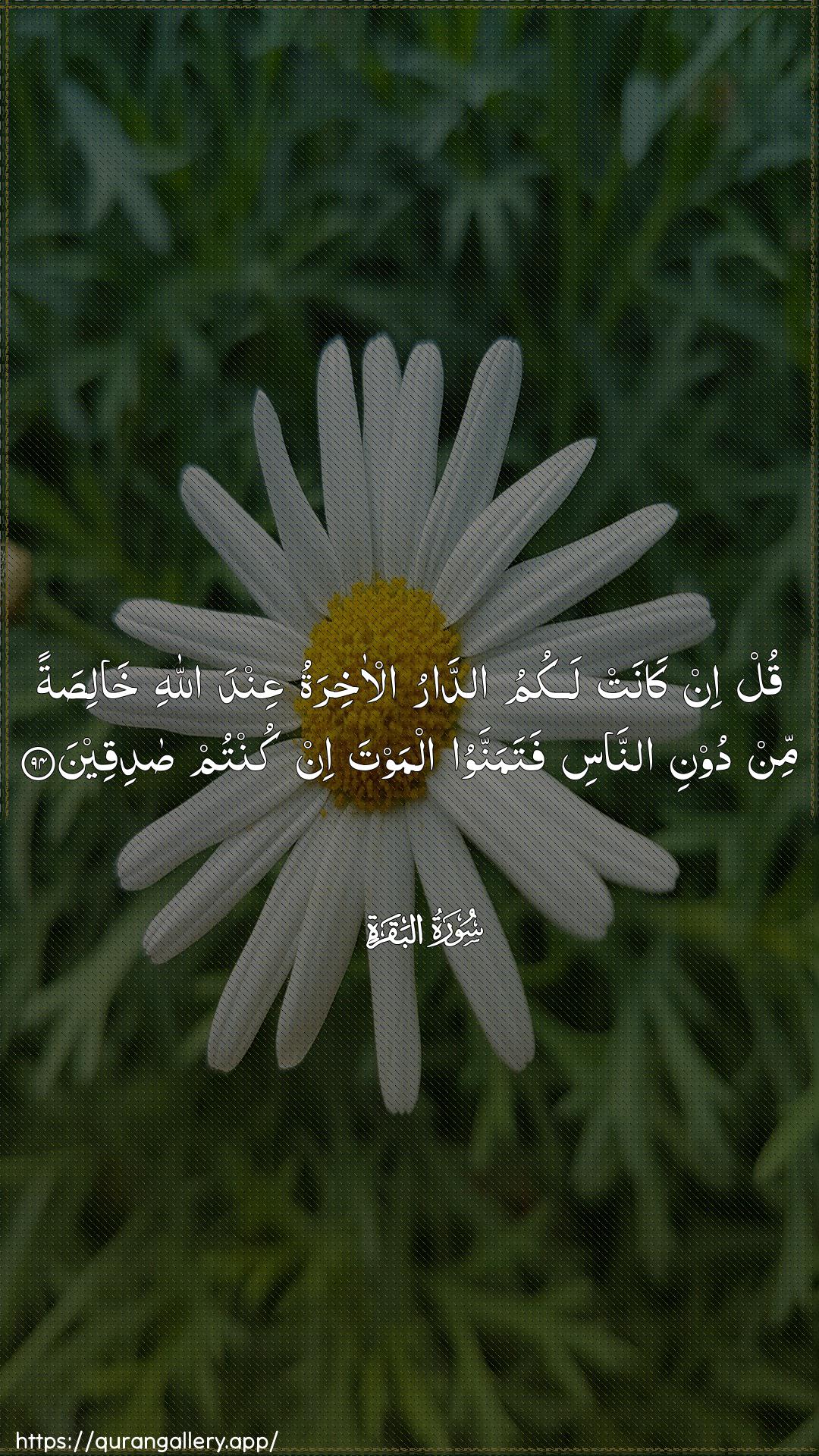
Arabic

Arabic + English

Arabic (Wide)
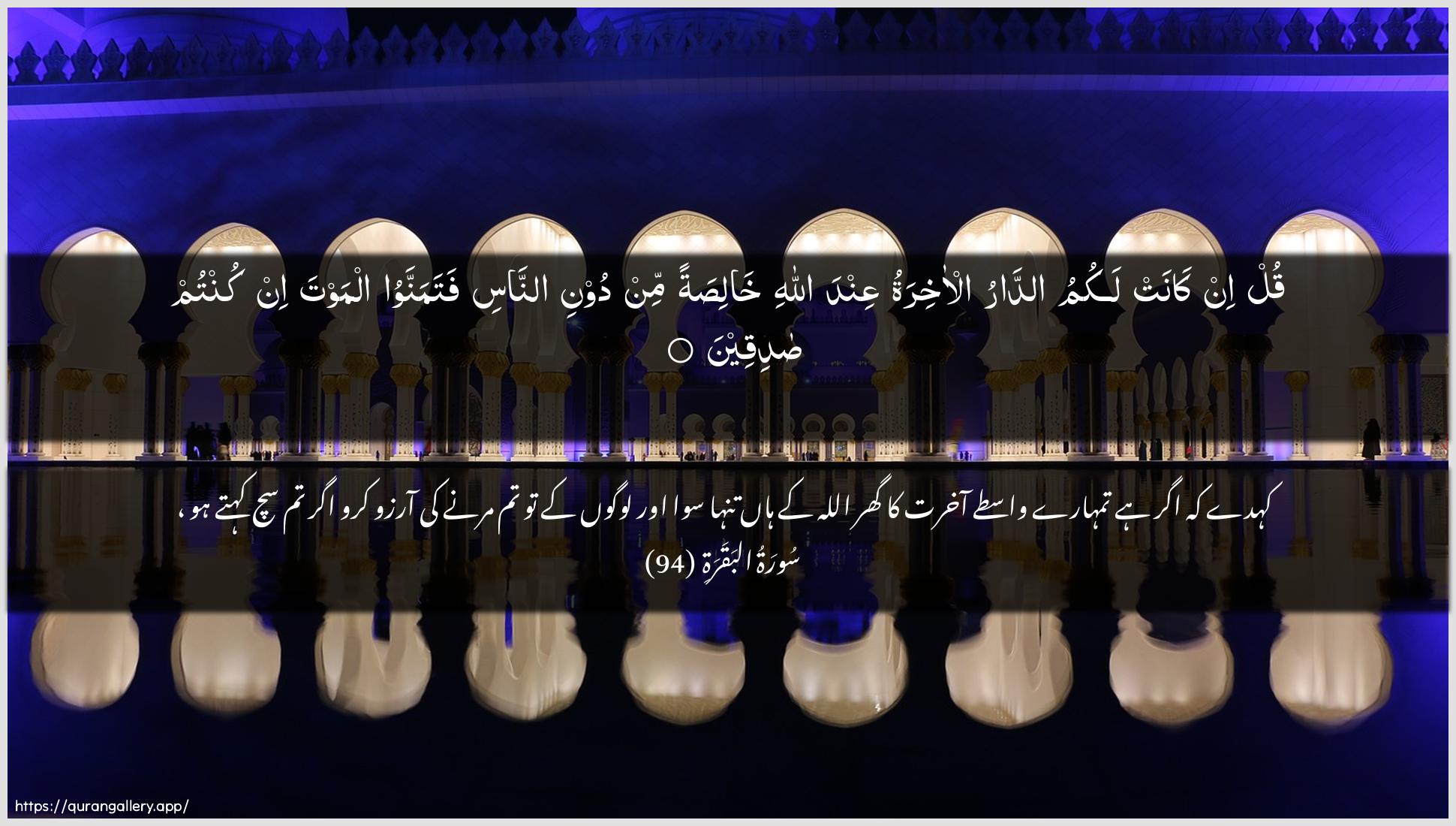
Arabic + Urdu
Free for personal & educational use with attribution
Quick Facts about this Verse
Surah
Al-Baqara
Revealed
Madani
Position
Juz 1,2,3
Explore this Verse
Verse Meaning
According to the classical scholar Al-Tabari, Quran 2:94 is a divine command to Prophet Muhammad ﷺ to issue a decisive challenge to the Jews of Medina who made exclusive claims to Paradise. This verse functions as a form of 'mubahala' or mutual invocation, not just a simple wish. As Ibn Kathir clarifies, the challenge was a direct response to their assertions like, 'We are the children of Allah and His beloved' (Quran 5:18) and 'None will enter Paradise except one who is a Jew...' (Quran 2:111). The synthesis of scholarly opinions, including that of Al-Qurtubi, reveals that the core of the challenge lies in a universal truth: one who is certain of their place in Paradise would not cling so desperately to the inferior life of this world. Their refusal to wish for death, therefore, became a public and undeniable proof of their lack of conviction. The hidden gem in this cross-tafsir analysis is the understanding that this was not merely a rhetorical question but a real spiritual test; had they accepted, they would have perished, exposing the falsehood of their claims and the truth of the Prophet's message.
Questions for Reflection
personal
Al-Qurtubi points out their intense love for worldly life. Contemplate your own heart: If you were guaranteed Jannah today, would your attachment to this world (your possessions, status, relationships) diminish? What does your honest answer reveal about the true state of your iman in the Akhirah?
theological
Ibn Kathir and Al-Tabari stress this challenge was a response to a claim of exclusivity ('for you alone'). Reflect on the danger of believing one's group has a special, exclusive monopoly on God's favor. How does this verse dismantle religious arrogance and redirect reliance from group identity to personal sincerity and Allah's mercy?
communal
The challenge was issued to a community. Reflect on the collective claims our communities make ('We are the true believers,' 'We are on the right path'). Does our collective community behavior—our priorities, our fears, our aspirations—reflect a people certain of their place in the Hereafter? Where is the disconnect?
Practical Applications
Conduct a 'Sincerity Audit' by evaluating your attachment to worldly life versus your longing for Allah's reward.
In a world of materialism, regularly assess if your career, financial, and life goals are aligned with your belief in an eternal life.
Challenge your own doctrinal certainties. If you believe something gives you special status with God, test if that belief brings you peace with meeting Him.
Use this to guard against arrogance in your own practice of faith, ensuring it is based on humility and hope, not on a presumed special status.
Hidden Gem
The synthesis of scholarly views reveals a subtle point: the verse is not an encouragement of asceticism but a challenge of conviction. They were not asked to abandon the world, but to simply 'wish' for the superior alternative they claimed was theirs. This implies that true faith doesn't necessarily mean hating the world, but it must mean loving the Hereafter more.
Scroll to see more verses or use the dropdown in the breadcrumb to jump to any verse
Common Questions
1 more question available in the full page