
Yunus - Jonas
Arabic Name: يُوْنـُس
Urdu Name: یونس
Type: Makki
Serial Number: 10
Revelation Order: 51
Total Verses: 109
Parah: 11
Rukus: 11
Sajda: None
Share Verse Art

Arabic

Arabic + English
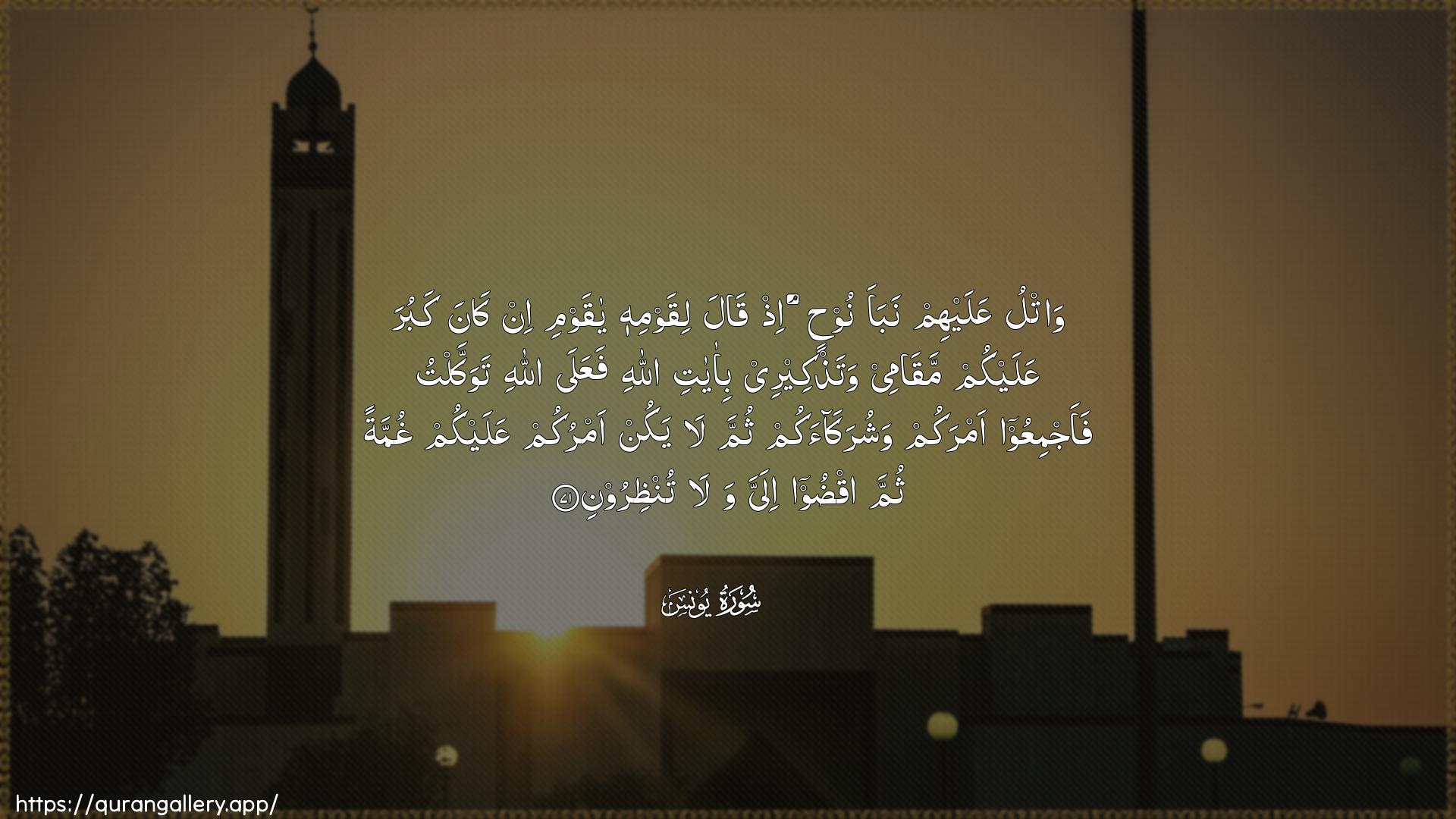
Arabic (Wide)
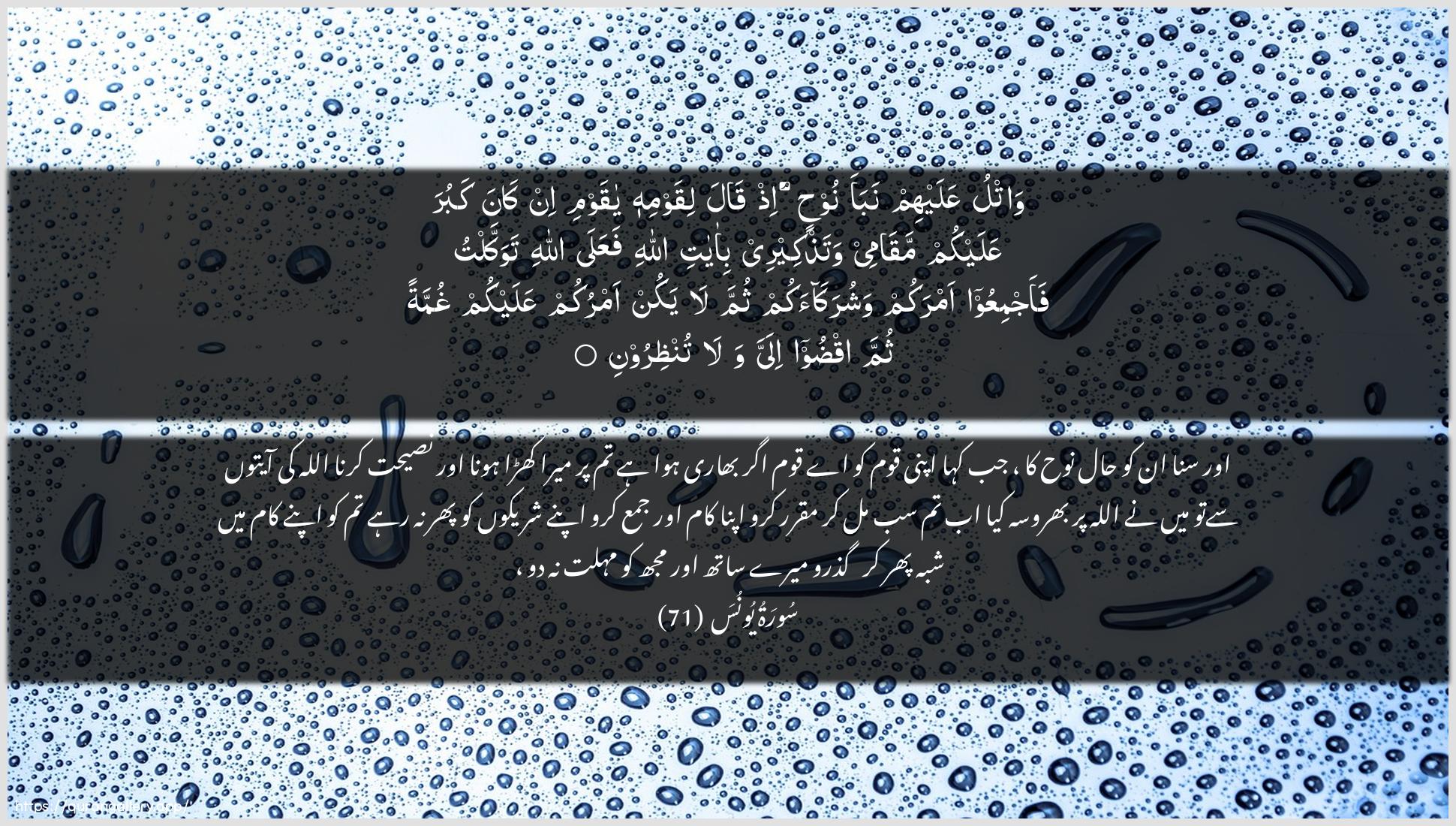
Arabic + Urdu
Free for personal & educational use with attribution
Quick Facts about this Verse
Surah
Yunus
Revealed
Makki
Position
Juz 11
Explore this Verse
Verse Meaning
According to the classical scholar Ibn Kathir, Quran 10:71 encapsulates a pivotal moment of confrontation in Prophet Nuh's mission, where he issues an ultimate challenge to his disbelieving people. This synthesis of classical tafsirs reveals the verse is not merely a statement of frustration, but a profound demonstration of *tawakkul* (absolute trust in Allah). Al-Tabari's linguistic analysis of `fa'ajmi'u amrakum` (so resolve your plan) highlights Nuh's command for them to unite and conspire openly, while Al-Qurtubi explains `thumma la yakun amrukum alaykum ghummah` (then let not your plan be obscure to you) as a demand for complete transparency in their plotting. The hidden gem that emerges from this comprehensive analysis is that Nuh's challenge is a spiritual strategy; by daring his opponents to act decisively and without delay (`wa la tunzirun`), he exposes the powerlessness of their idols and their collective might against the singular, supreme power of Allah, upon Whom he has relied. This verse, therefore, serves as a divine template for all believers on how unwavering faith in Allah dismantles the psychological and material threats of disbelief.
Questions for Reflection
Personal Faith Assessment
Nuh says, 'if my stay and my reminding...is hard on you, then I have put my trust in Allah.' Reflect on the sources of your own anxieties. Are they rooted in the approval or disapproval of people? How can you, like Nuh, pivot your emotional and spiritual reliance entirely onto Allah when you feel rejected?
Confronting Hidden Fears
Nuh challenged his people: 'let not your plan be obscure to you.' As Al-Tabari explains, 'ghummah' means ambiguity or confusion. What are the vague, undefined fears or threats in your life that hold power over you? How can you, through dua and decisive action, bring them into the light so they lose their power?
The Power of Divine Sufficiency
Nuh stood alone before his entire nation and their idols, yet his trust made him feel completely secure. Contemplate the reality that Allah's support is sufficient against any and all opposition. Where in your life are you seeking 'partners' or worldly means for security instead of turning first and foremost to Allah?
Practical Applications
Confront Overwhelming Opposition with Divine Certainty
Use this principle when facing workplace intimidation, unjust social pressure, or any situation where forces seem overwhelmingly against you.
Demand Clarity from Your Adversaries to Expose Their Weakness
In negotiations or conflicts, insist on clear terms and transparent intentions from the other party, trusting that clarity benefits the one upon the truth.
Initiate Action from a Position of Trust, Not Fear
When you have placed your trust in Allah for a righteous cause, do not hesitate or delay. Proceed with courage, knowing you are not dependent on the approval or inaction of others.
Hidden Gem
The synthesis reveals a profound spiritual equation: The magnitude of Nuh's challenge to his people was directly proportional to the magnitude of his trust in Allah. He could dare them to do their absolute worst because his reliance was on the absolute best. This transforms the verse from a historical account into a personal metric for our own Tawakkul: the greater our trust, the smaller our fear of the creation.
Scroll to see more verses or use the dropdown in the breadcrumb to jump to any verse
Common Questions
2 more questions available in the full page