
Yunus - Jonas
Arabic Name: يُوْنـُس
Urdu Name: یونس
Type: Makki
Serial Number: 10
Revelation Order: 51
Total Verses: 109
Parah: 11
Rukus: 11
Sajda: None
Share Verse Art
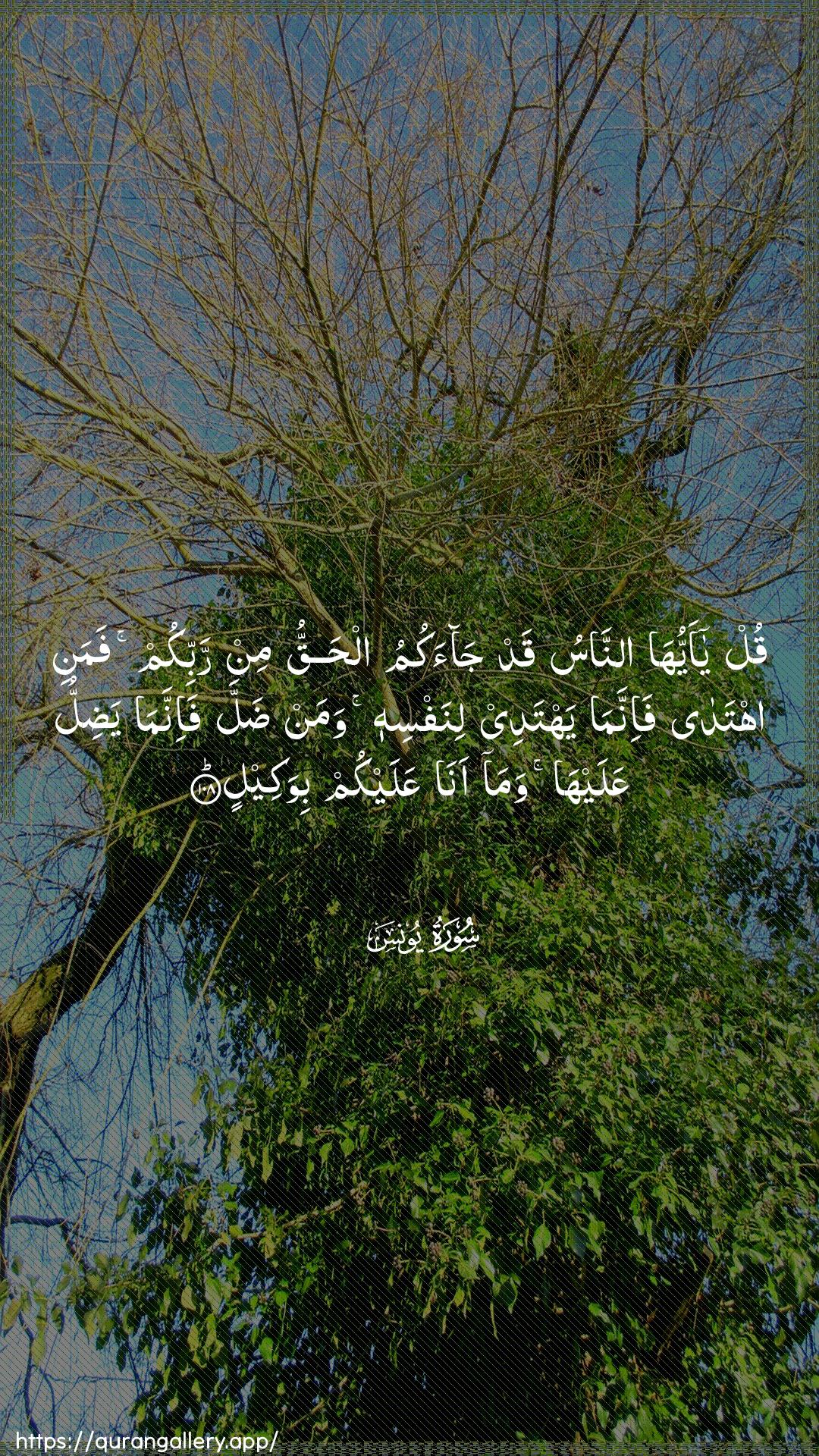
Arabic
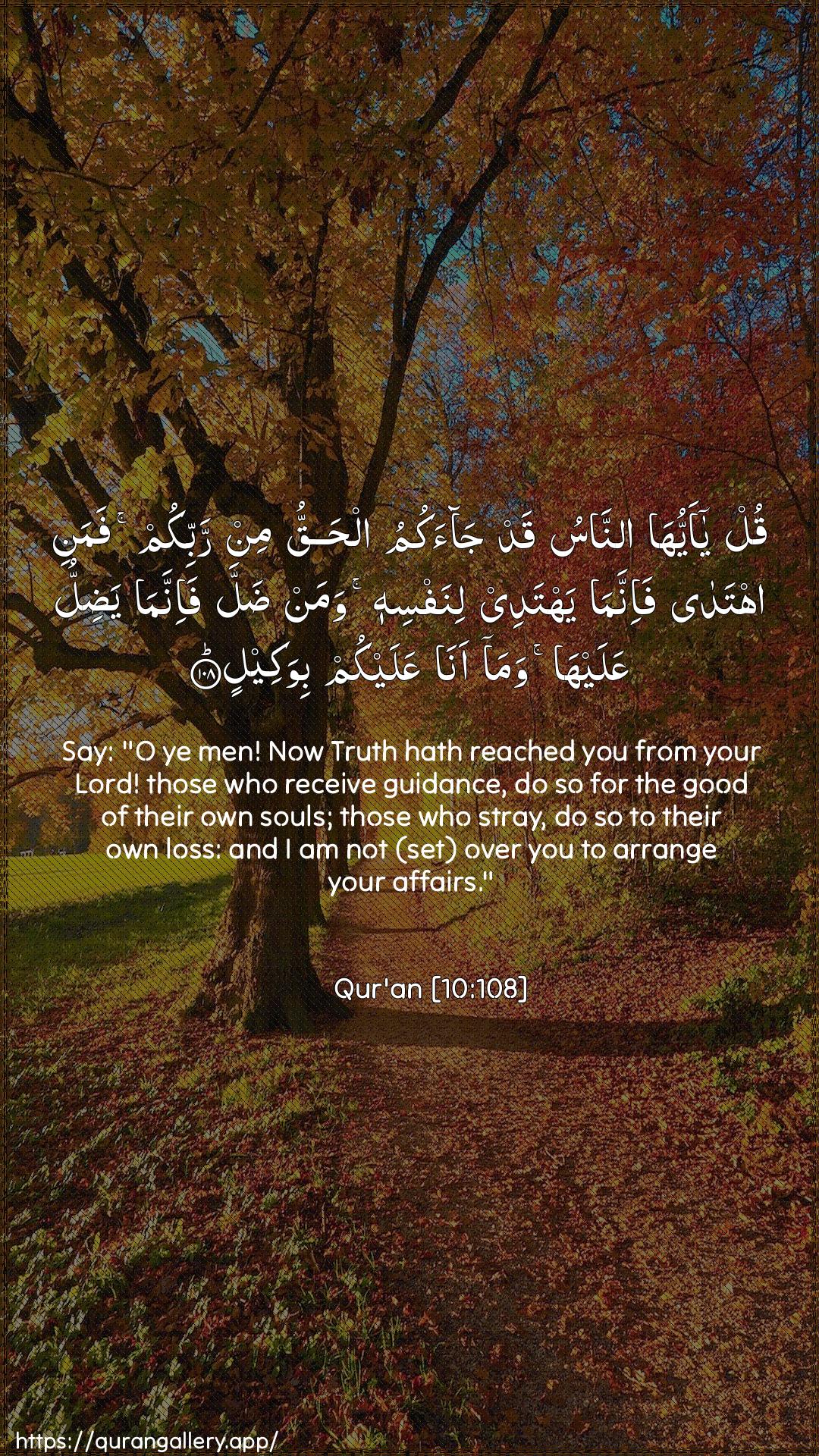
Arabic + English
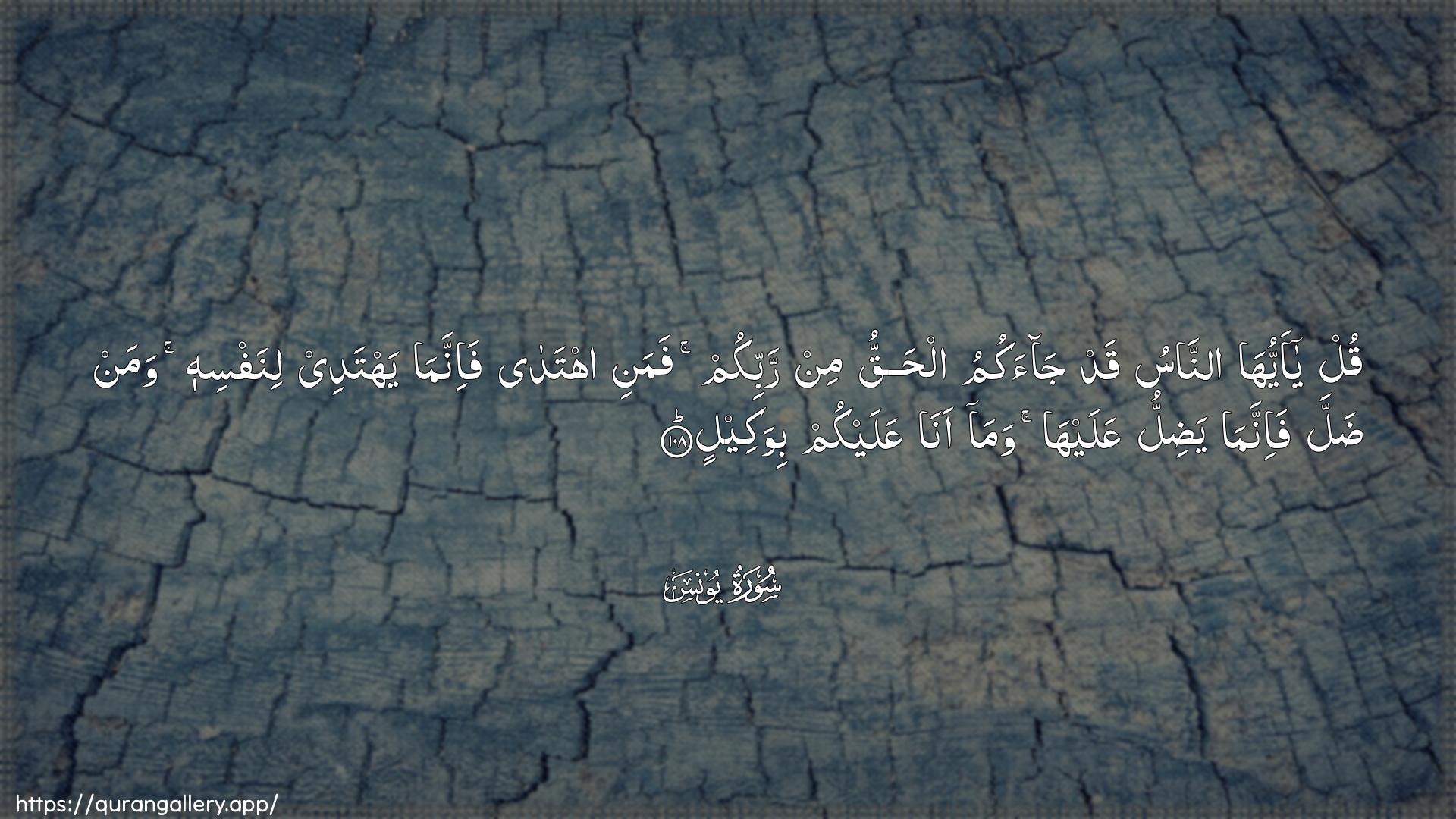
Arabic (Wide)
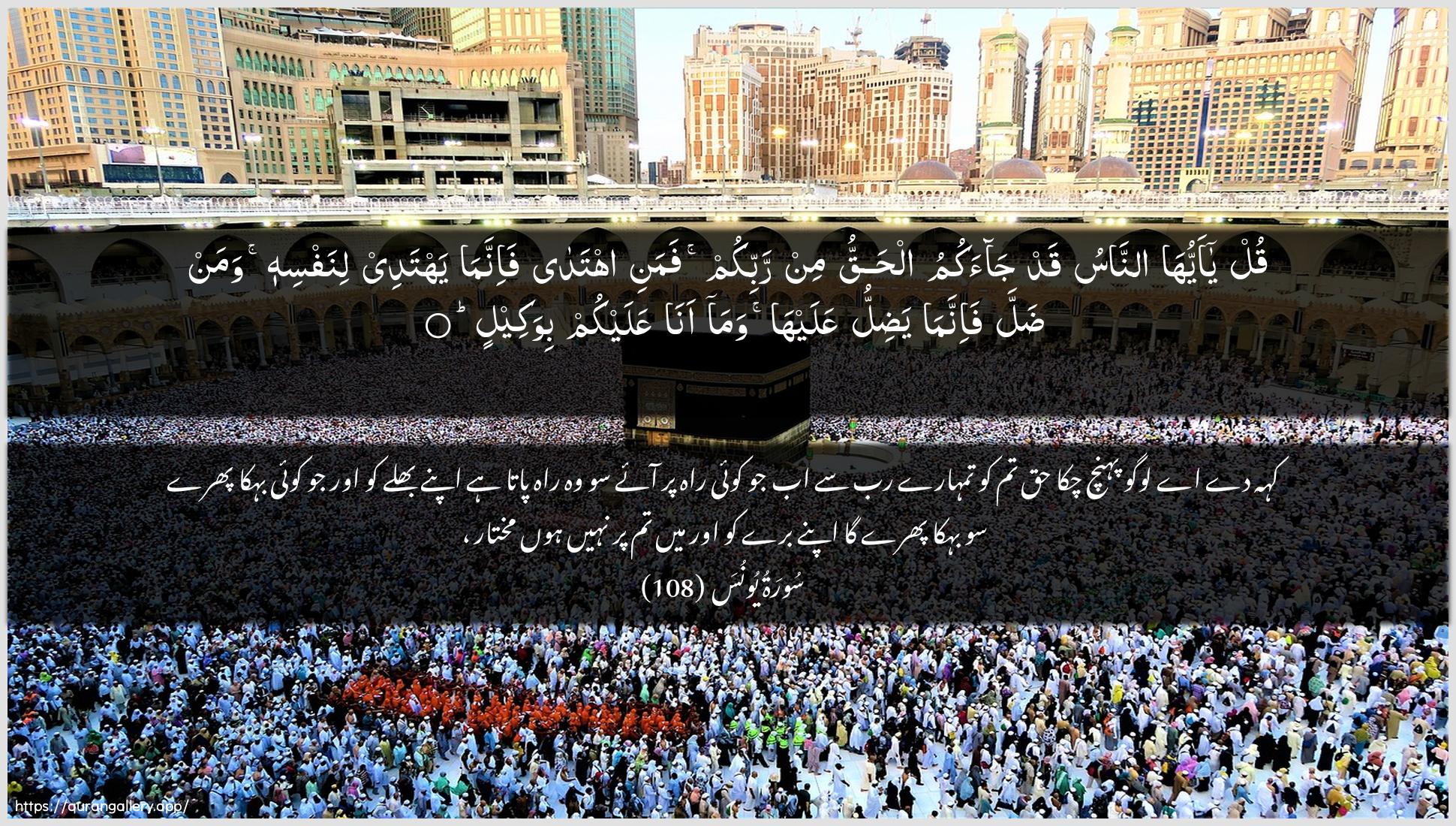
Arabic + Urdu
Free for personal & educational use with attribution
Quick Facts about this Verse
Surah
Yunus
Revealed
Makki
Position
Juz 11
Explore this Verse
Verse Meaning
According to the classical exegete Imam Al-Tabari, Quran 10:108 is a profound declaration to all of humanity that the ultimate Truth—the Quran and the message of Islam—has been unequivocally delivered by their Lord. This verse establishes a core tenet of Islamic theology: absolute individual responsibility. As Ibn Kathir explains, the benefit of embracing guidance and the detriment of choosing to go astray are entirely personal; the outcome of one's choice returns to the soul that made it. The phrase 'I am not a guardian (Wakeel) over you' is a crucial clarification of the Prophet Muhammad's mission. As Imam Al-Saadi notes, the Prophet's role is that of a clear warner and conveyor of the message, not a custodian who compels belief or manages people's affairs. His duty is to present the Truth, but the choice to accept or reject it, and the subsequent accountability, rests solely with each individual. This principle liberates humanity from coercion and empowers each person with the agency to determine their own spiritual destiny.
Questions for Reflection
Textual Contemplation
Al-Tabari highlights that 'Al-Haqq' (The Truth) has 'come to you.' Contemplate the implications of the Truth being a delivered gift, not something you must create or discover from scratch. How does this certainty affect your confidence in Islam?
Personal Transformation
Ibn Kathir explains that the benefit or loss of your actions is confined to you. Reflect on a recent choice you made. Can you trace its ultimate consequence—positive or negative—back to your own soul, free from blaming others or external factors?
Relational Wisdom
This verse defines the Prophet's role as not being a 'Wakeel' (guardian/manager). How does this understanding change your relationship with the Prophet Muhammad (ﷺ)? Does it shift your perspective from passive follower to active student of his teachings?
Practical Applications
Conduct a 'Spiritual Responsibility Audit' by identifying areas where you blame circumstances or others for your spiritual state, and reframe them as opportunities for personal choice and growth.
Apply this to habits like missing prayers, neglecting Quran study, or engaging in negative speech, recognizing that the choice to change is entirely yours.
Internalize the Prophet's role as a compassionate warner, not a coercive authority, by focusing on the 'why' behind Islamic guidance rather than just the 'what'.
When faced with a difficult command (e.g., waking for Fajr, modesty), instead of seeing it as a burden, ask: 'How does this guidance benefit my soul?'
Hidden Gem
The synthesis reveals that the verse is not just about human responsibility but also about Divine Sufficiency. By stating 'I am not a guardian over you,' the Prophet (ﷺ), by Allah's command, implicitly directs us to the true Guardian: Allah Himself. The absence of a human 'Wakeel' creates the space and necessity to turn to Allah as the ultimate 'Al-Wakeel'.
Scroll to see more verses or use the dropdown in the breadcrumb to jump to any verse
Common Questions
2 more questions available in the full page