
Hud - Hud
Arabic Name: هُوْد
Urdu Name: حود
Type: Makki
Serial Number: 11
Revelation Order: 52
Total Verses: 123
Parah: 12,11
Rukus: 10
Sajda: None
Related Hadith
"رحمة الله على لوط ، لقد كان يأوي إلى ركن شديد - يعني : الله عز وجل - فما بعث الله بعده من نبي إلا في ثروة من قومه"
This hadith is the primary key to the verse's deeper theological interpretation, clarifying that the ultimate 'strong support' is Allah and explaining the wisdom behind providing future prophets with worldly support.
Share Verse Art
Arabic
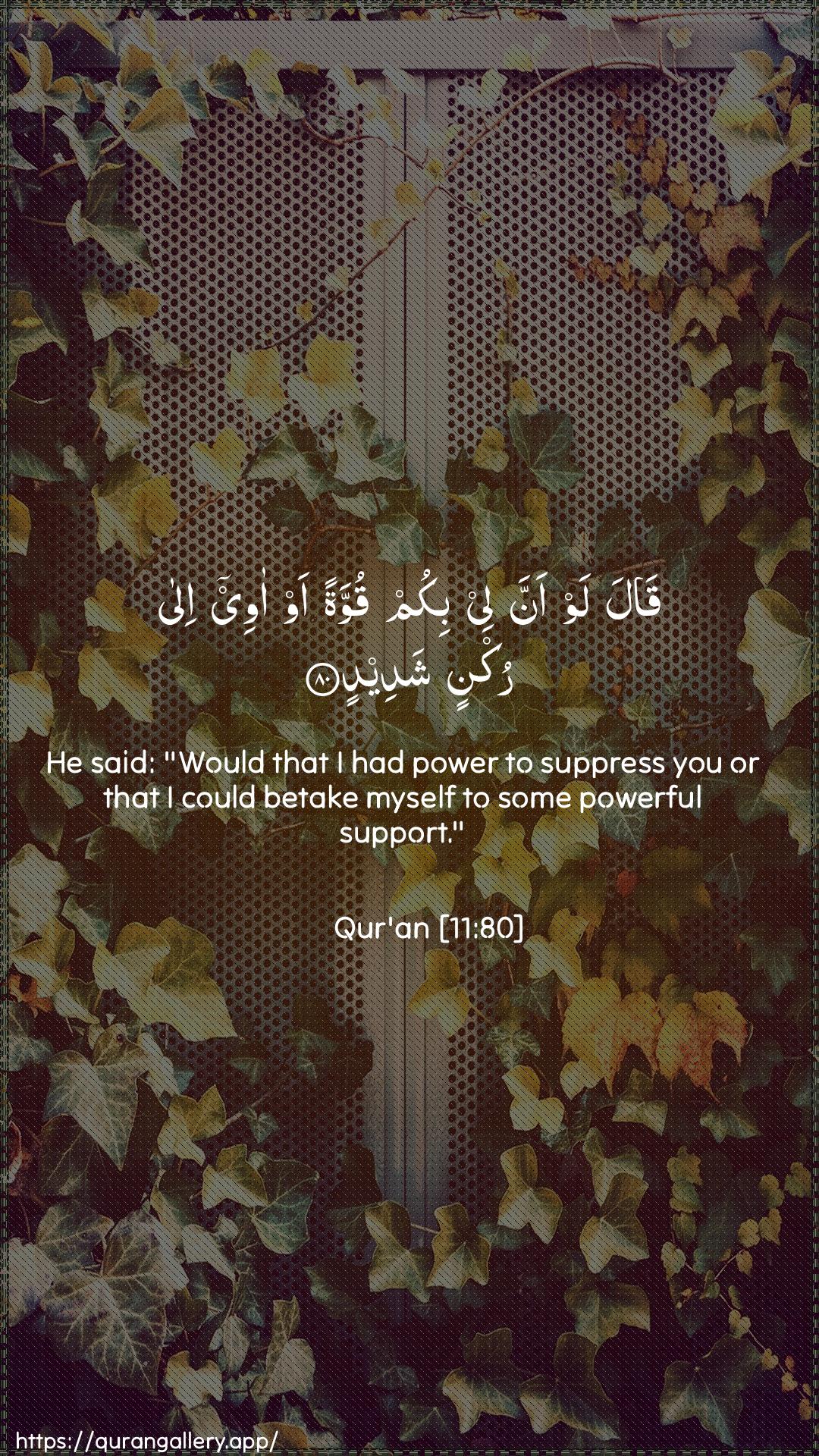
Arabic + English
Arabic (Wide)
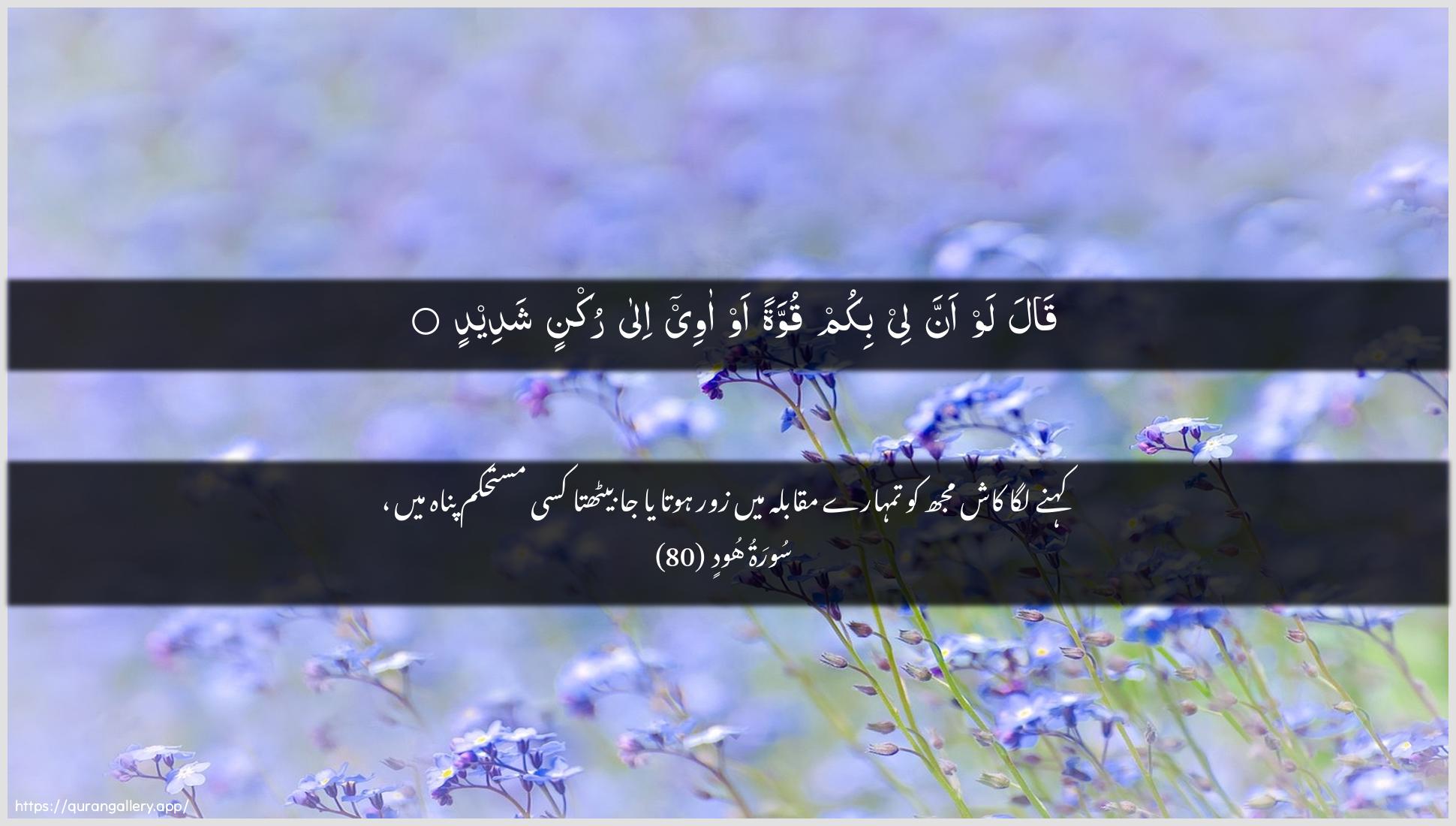
Arabic + Urdu
Free for personal & educational use with attribution
Quick Facts about this Verse
Surah
Hud
Revealed
Makki
Position
Juz 12,11
Explore this Verse
Verse Meaning
According to classical tafsir by scholars like Al-Tabari and Ibn Kathir, Quran 11:80 captures a moment of profound human desperation from Prophet Lut. Faced with his people's relentless corruption, he expresses a wish for physical strength ('quwwah') or the backing of a powerful tribe ('rukn shadid') to protect his guests. This reflects his isolation as a stranger in Sodom without a strong clan to defend him. However, the deepest insight into this verse comes from the commentary of Prophet Muhammad ﷺ himself. As narrated by Abu Hurayrah and recorded in multiple tafsirs, the Prophet ﷺ reframed Lut's plea, stating, 'May Allah have mercy on Lut, he was indeed seeking refuge in a strong support'—clarifying that this ultimate support was Allah Himself. This synthesis reveals a powerful theological lesson: while it is natural for humans, even prophets, to feel the need for worldly means, true and unfailing strength lies only with Allah. The verse and its prophetic explanation beautifully illustrate the relationship between utilizing worldly means (*asbab*) and maintaining ultimate trust (*tawakkul*) in Allah.
Questions for Reflection
Personal Transformation
Reflect on a time you felt utterly powerless, just as Prophet Lut did. What was the 'strong support' (rukn shadid) you wished for—a person, a job, financial security? As Al-Tabari and Ibn Kathir narrate the Prophet's ﷺ commentary, how can you reframe that memory to recognize that Allah was, and always is, your ultimate 'Rukn Shadid'?
Relational Wisdom
Prophet Lut felt the pain of having no tribe ('ashira) to defend him, as Al-Qurtubi notes. Consider the support systems in your own life. How does this verse encourage you to be a 'rukn shadid' for others in need, while simultaneously reminding you that all collective strength is granted by Allah?
Theological Deepening
The Prophet Muhammad's ﷺ statement 'May Allah have mercy on Lut' is a profound act of compassion for a fellow prophet's human moment. How does this hadith, cited by numerous scholars, deepen your understanding of Allah's mercy and the humanity of His messengers? How does it teach us to have compassion for ourselves and others in moments of perceived weakness?
Practical Applications
Validate your feelings of helplessness, then consciously elevate your focus to the divine.
When facing overwhelming work pressure, family conflict, or financial uncertainty, allow yourself to feel the need for help, then actively remind yourself: 'My true strong support is Allah.'
Integrate seeking worldly means ('asbab') with ultimate heart-reliance ('tawakkul').
In job searching, apply for positions and network (asbab), but maintain the conviction that the outcome and provision (rizq) are solely from Allah (tawakkul).
Hidden Gem
The synthesis reveals a subtle lesson: Lut's cry of desperation was the very trigger for the angels to reveal their identity and divine power in the next verse. Contemplate how your own moments of turning to Allah in utter helplessness, when all worldly supports seem to fail, are precisely the moments when divine intervention is nearest.
Scroll to see more verses or use the dropdown in the breadcrumb to jump to any verse
Common Questions
2 more questions available in the full page