
Yusuf - Joseph
Arabic Name: يُوْسُف
Urdu Name: یوسف
Type: Makki
Serial Number: 12
Revelation Order: 53
Total Verses: 111
Parah: 12,13
Rukus: 12
Sajda: None
Share Verse Art

Arabic
Arabic + English

Arabic (Wide)

Arabic + Urdu
Free for personal & educational use with attribution
Quick Facts about this Verse
Surah
Yusuf
Revealed
Makki
Position
Juz 12,13
Explore this Verse
Verse Meaning
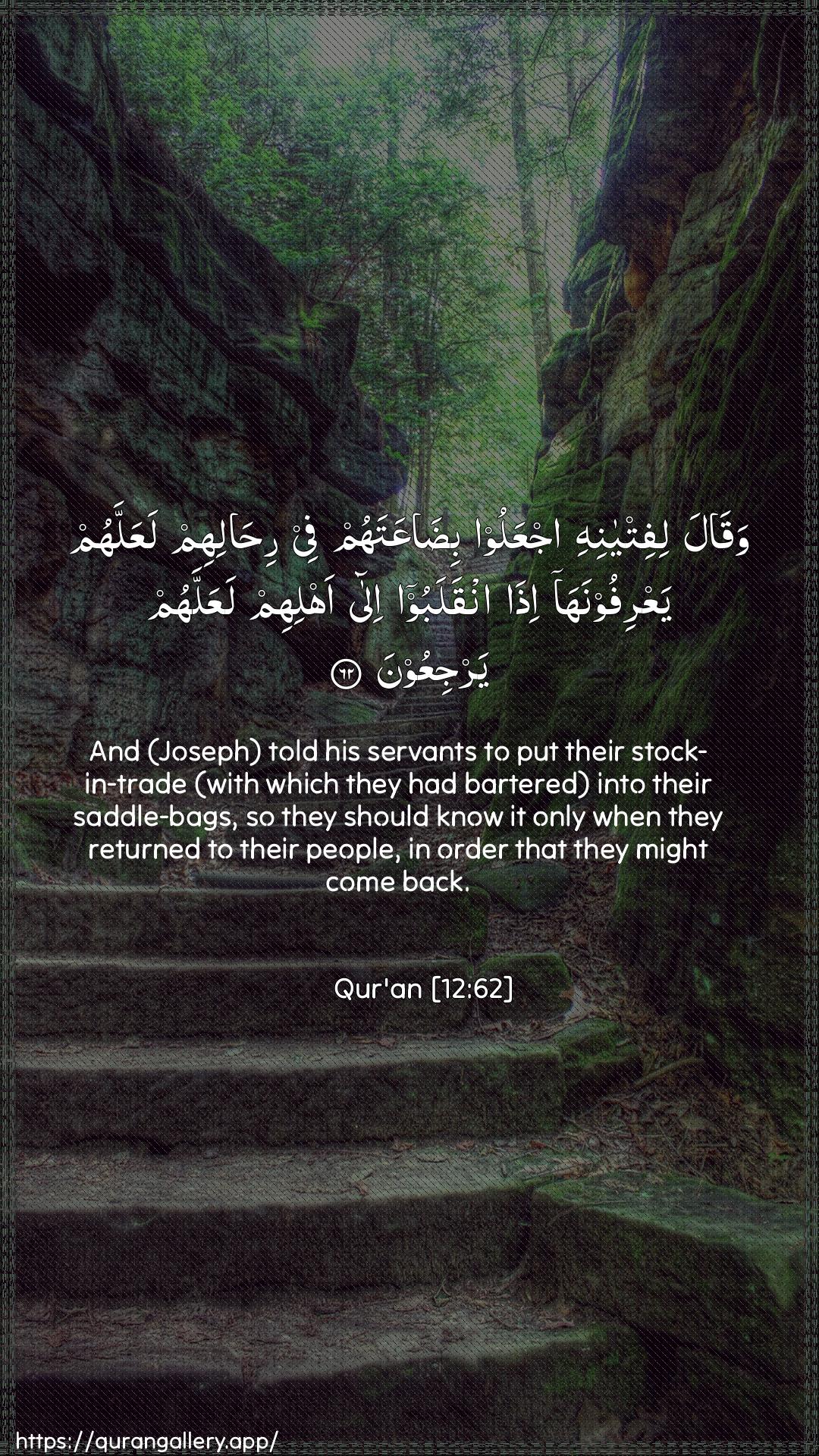
According to classical scholars like Ibn Kathir, Surah Yusuf, verse 62, reveals a masterstroke of strategic generosity by Prophet Joseph (Yusuf, peace be upon him). He instructs his servants to secretly place his brothers' payment back into their saddlebags. This act was not merely a simple return of money; it was a multi-layered plan rooted in profound wisdom. The synthesis of scholarly opinions from authorities like Al-Tabari and Al-Qurtubi reveals several interlocking motives: a compassionate gesture, as he may have feared they lacked further resources for their return journey during a famine; a point of honor, as he felt it improper to take payment from his own family; and a brilliant psychological strategy. Yusuf (as) knew his brothers' sense of integrity would compel them to return the goods they thought were taken by mistake, thus ensuring they would come back to Egypt, and, crucially, bring their youngest brother, Benjamin, with them as he had requested. This verse encapsulates the essence of *Ihsan* (excellence) in action—combining mercy, foresight, and a deep understanding of human nature to orchestrate a divine plan of reunion and forgiveness.
Questions for Reflection
Strategic Contemplation
Yusuf (as) had power and authority. He could have simply commanded his brothers to return. Reflect on why he chose this subtle, generous, and indirect method instead. What does this teach about the nature of true influence and leadership?
Personal Contemplation (Dignity)
Reflect on a time you received help. Did it make you feel empowered or indebted? How did Yusuf's method of returning the goods secretly preserve his brothers' dignity, even though they had wronged him? How can you apply this principle of preserving dignity in your own giving?
Spiritual Contemplation (Tawakkul)
Yusuf (as) executed a brilliant plan, but he had no guarantee it would work. His brothers could have kept the money and not returned. Contemplate the balance between meticulous planning (tying the camel) and ultimate trust in Allah's decree (Tawakkul) that this action demonstrates.
Practical Applications
Practice 'Hidden Giving' to preserve the recipient's dignity and focus the act purely on pleasing Allah.
When helping a friend or family member, find ways to provide support without making them feel indebted, such as through an anonymous gift or a 'coincidental' opportunity.
Integrate foresight into acts of kindness, considering how a single act can pave the way for long-term positive outcomes.
Instead of just giving a donation, mentor someone to help them secure a job, thereby creating a long-term benefit and a lasting bond.
Use generosity as a tool for reconciliation and opening doors for future communication, even with those who have wronged you.
In a strained family relationship, offering an unconditional and unexpected gift or favor can break a stalemate and signal a willingness to reconnect.
Hidden Gem
The synthesis of scholarly thought reveals a hidden spiritual reality: Yusuf (as) was creating a 'moral magnet'. By placing the goods in their sacks, he was not just giving them money; he was giving them a test of their own conscience. He trusted that their innate fitrah (natural disposition), though corrupted by past sins, would be magnetically drawn back to correct this moral imbalance, thus pulling them back to him and towards their own redemption.
Scroll to see more verses or use the dropdown in the breadcrumb to jump to any verse
Common Questions
1 more question available in the full page