
Yusuf - Joseph
Arabic Name: يُوْسُف
Urdu Name: یوسف
Type: Makki
Serial Number: 12
Revelation Order: 53
Total Verses: 111
Parah: 12,13
Rukus: 12
Sajda: None
Share Verse Art

Arabic

Arabic + English

Arabic (Wide)
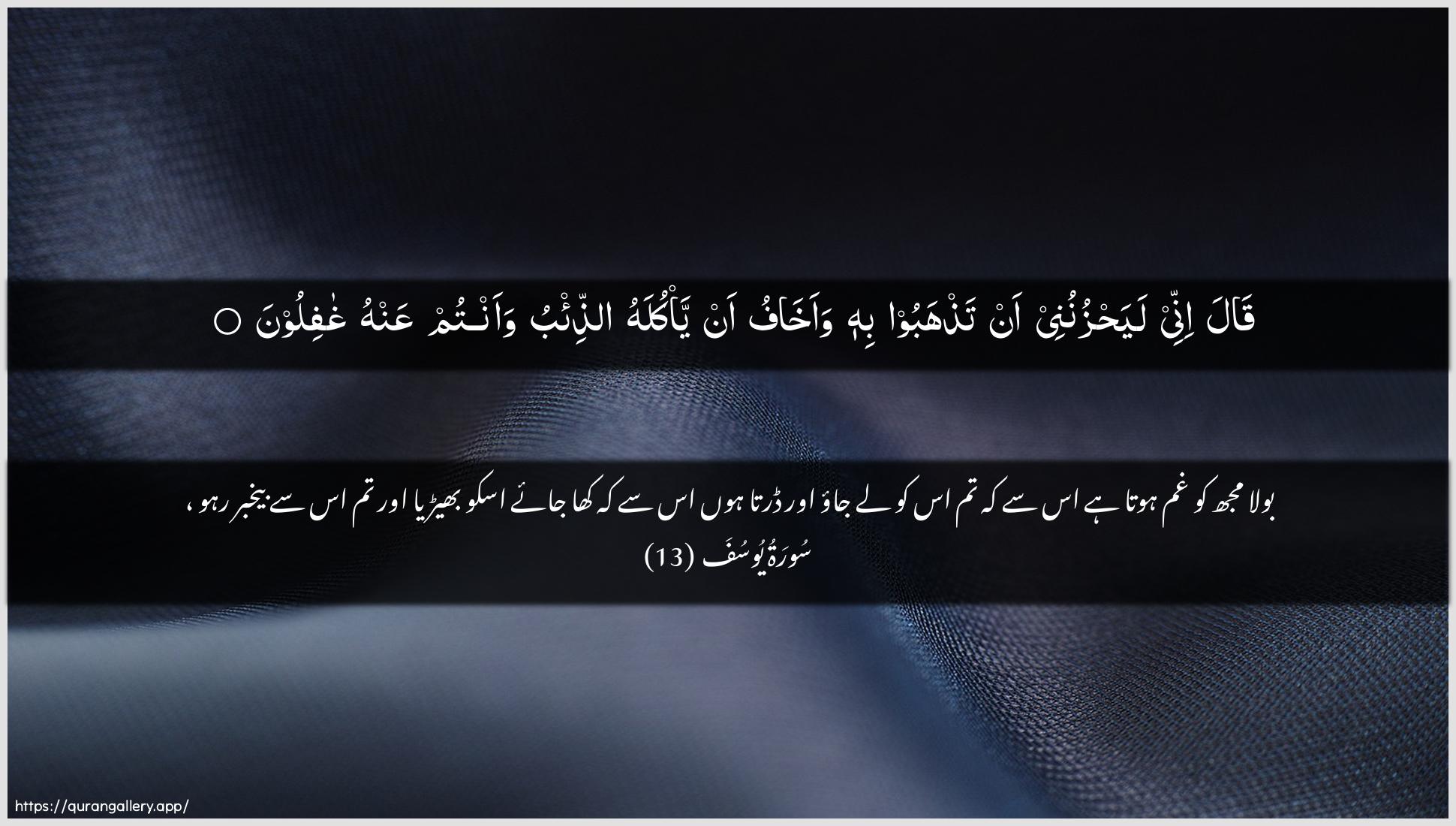
Arabic + Urdu
Free for personal & educational use with attribution
Quick Facts about this Verse
Surah
Yusuf
Revealed
Makki
Position
Juz 12,13
Explore this Verse
Verse Meaning
According to a comprehensive synthesis of classical tafsirs, Quran 12:13 reveals the profound and multi-layered anxiety of Prophet Ya'qub (Jacob). While Ibn Kathir explains the expressed sentiments as the natural sorrow and fear of a loving father pained by separation and worried about physical harm, a deeper analysis unveils a prophetic dimension. Al-Qurtubi and Al-Baghawy cite that Ya'qub's fear was not arbitrary but stemmed from a specific dream in which he saw a wolf attacking Yusuf. This transforms his statement from mere parental concern to a prophetic premonition. Furthermore, Al-Qurtubi introduces a powerful allegorical interpretation from Ibn Abbas, suggesting the 'wolf' was a metaphor for the brothers themselves, making Ya'qub's words a veiled warning. The synthesis of these views shows a father grappling with a divine insight he cannot fully articulate, expressing his fear in literal terms that his other sons would tragically exploit. This verse masterfully captures the intersection of paternal love, prophetic insight, and the dramatic irony of speaking a fear into reality.
Questions for Reflection
The Nature of Attachment
Ibn Kathir highlights that Ya'qub's sorrow comes from the mere thought of separation. Reflect on your own attachments. At what point does deep love become a source of profound sorrow and fear, and how does this verse teach us to navigate that fine line while maintaining trust in Allah?
The Burden of Insight
According to Al-Qurtubi, Ya'qub's fear was rooted in a prophetic dream. Contemplate a time you had a strong intuition or premonition about a situation. How does this verse illustrate the challenge of having insight that others do not share, and the difficulty of communicating it without causing strife or giving away a 'script' for deception?
Words and Destiny
As-Sa'di points out that Ya'qub expressed two concerns, both of which were tragically realized in a way. Contemplate the power of words. How can voicing our fears sometimes contribute to their manifestation, and how does this verse guide us to balance expressing legitimate concern with a profound trust in Allah's overarching plan (Qadr)?
Practical Applications
Validate and explore your parental intuition. When feeling a strong sense of unease, treat it not as mere anxiety but as a potential insight worth investigating through prayer and reflection.
Apply when making decisions about a child's friendships, activities, or travel, using deep feelings of unease as a trigger for Istikhara (prayer for guidance).
Practice wise communication by considering how your expressed fears might be used by others. Articulate concerns without providing a ready-made excuse for misconduct.
Relevant in management, parenting, and negotiations, where voicing a specific fear might inadvertently give others a blueprint for deception.
Hidden Gem
The synthesis of the tafsirs reveals a profound spiritual paradox: Ya'qub, the prophet, had a glimpse of the divine plan (the 'wolf' attack), yet his human love made him grieve and fear it. This teaches that even for prophets, submission to Allah's will is an active struggle between human emotion and divine trust. His expression of fear was not a lack of faith, but a testament to the depth of his love, which made his eventual patience and submission all the more profound.
Scroll to see more verses or use the dropdown in the breadcrumb to jump to any verse
Common Questions
3 more questions available in the full page