
Al-Baqara - The Cow
Arabic Name: الْبَقَرَة
Urdu Name: گائے
Type: Madani
Serial Number: 2
Revelation Order: 87
Total Verses: 286
Parah: 1,2,3
Rukus: 40
Sajda: None
Share Verse Art
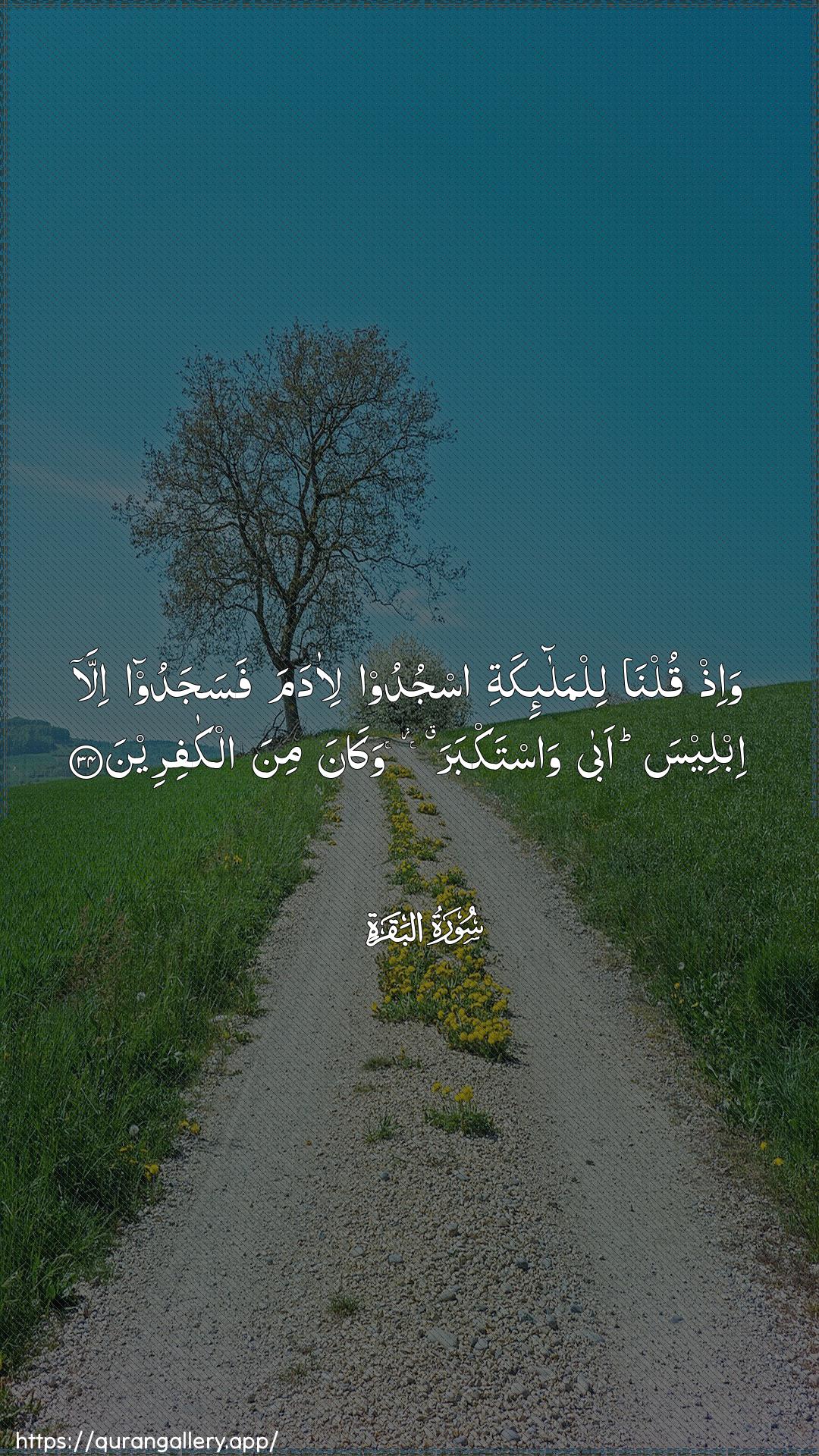
Arabic
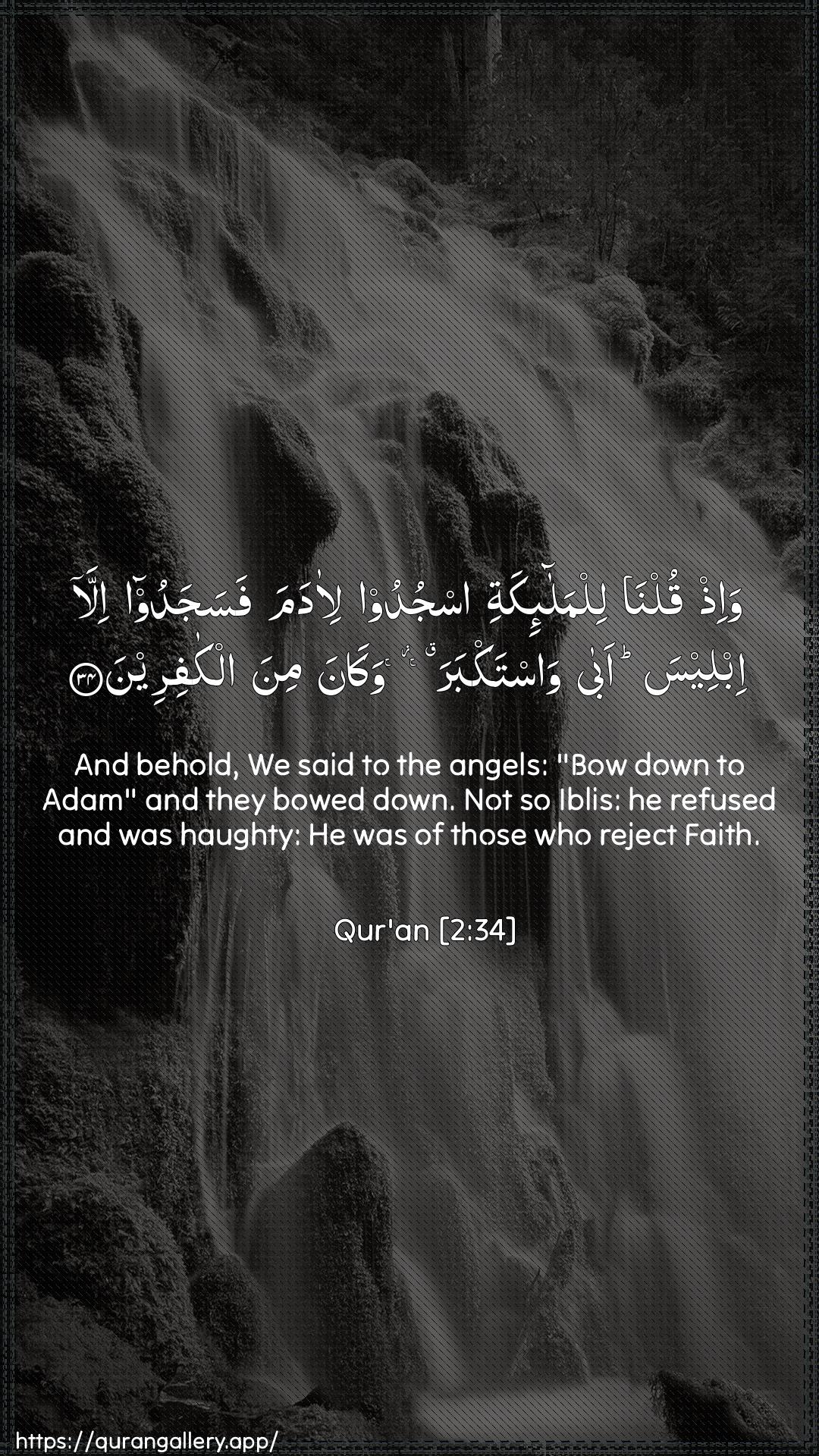
Arabic + English
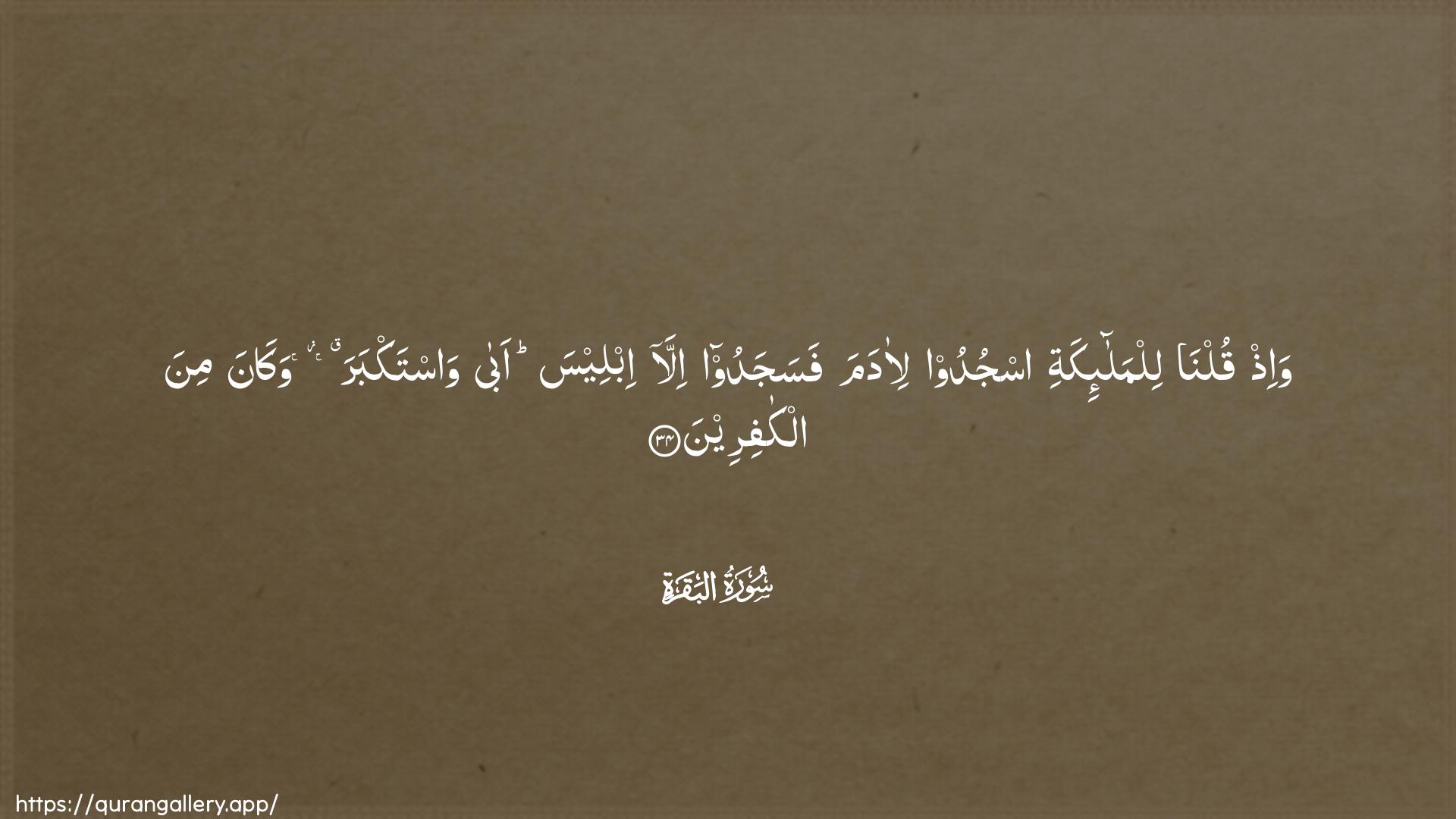
Arabic (Wide)
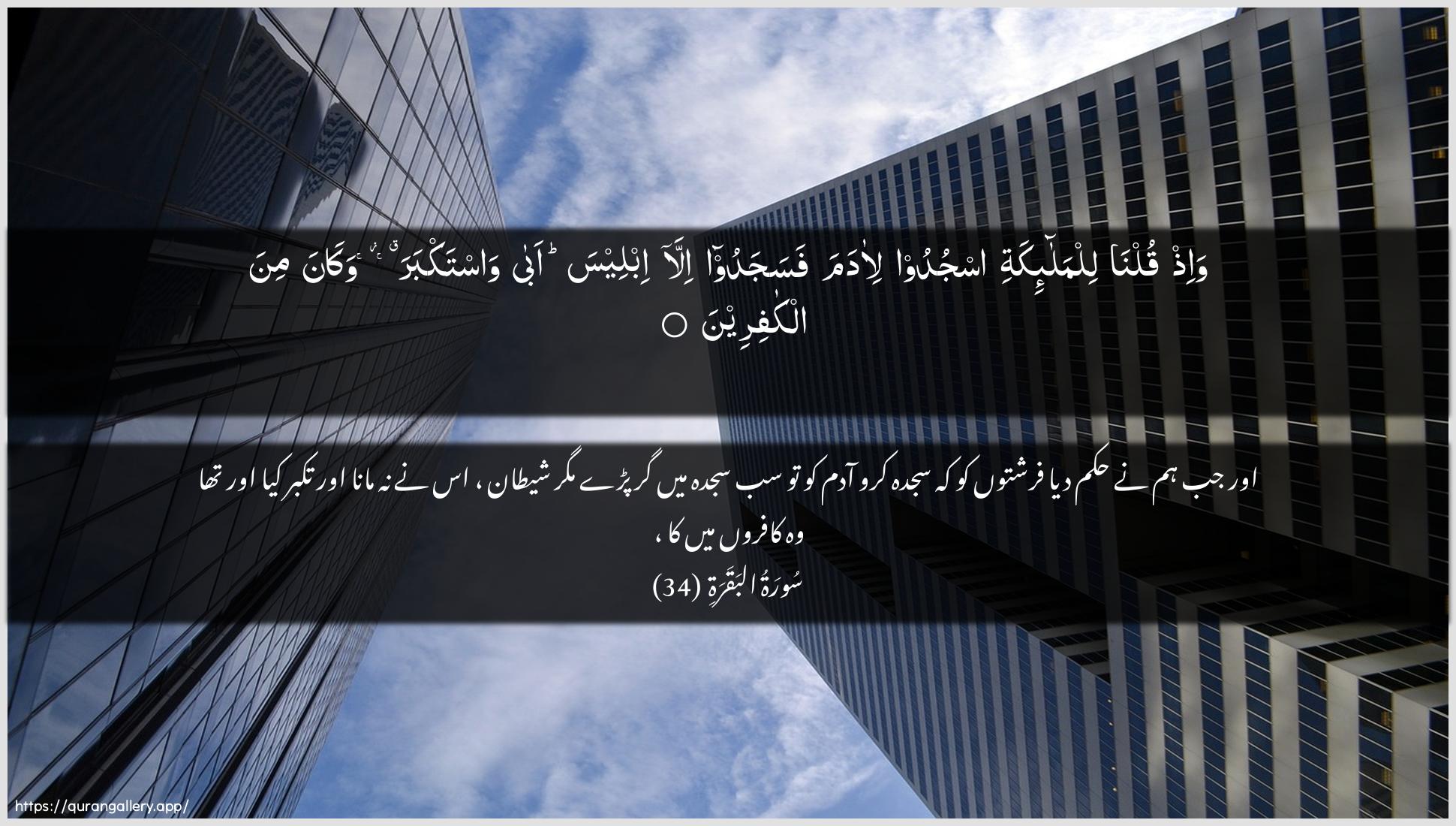
Arabic + Urdu
Free for personal & educational use with attribution
Quick Facts about this Verse
Surah
Al-Baqara
Revealed
Madani
Position
Juz 1,2,3
Explore this Verse
Verse Meaning
According to the comprehensive tafsir of Imam Al-Tabari, Quran 2:34 marks the first great test of obedience in creation, a pivotal moment that established the honor of humanity and the origin of satanic enmity. This verse recounts Allah's command to the angels to prostrate before Adam—an act not of worship, but of profound respect and acknowledgement of the station granted to him by God. The immediate compliance of the angels is contrasted with the rebellion of Iblis. A synthesis of classical interpretations, including those of Ibn Kathir and Al-Qurtubi, reveals that Iblis's refusal was not born of misunderstanding but of 'kibr'—a toxic pride and arrogance. He rejected the divine command based on a flawed, racist logic, deeming his own creation from fire superior to Adam's from clay. The hidden gem discovered through cross-tafsir analysis is that 'wa kāna min al-kāfirīn' ('and he was of the disbelievers') signifies that this act of rebellion did not create his disbelief, but rather revealed a hidden state of ingratitude and pride that was already in his nature, a state that was, as Al-Tabari notes, already within Allah's eternal knowledge. This event thus serves as the ultimate archetype for all future acts of disobedience rooted in arrogance against divine wisdom.
Questions for Reflection
Personal (The Kibr Within)
Al-Qurtubi identifies 'kibr' (arrogance) as the primary sin. Contemplate the subtle forms of kibr in your own life. When have you rejected truth or advice because it came from someone you deemed 'lesser' than you? Reflect on a specific moment where your ego prevented you from accepting a divine command or a simple truth, and dissect the root of that feeling. Was it based on knowledge, wealth, status, or worship?
Relational (Seeing the Divine Honor in Others)
Iblis saw only clay; the angels obeyed the command to honor Adam. Ibn Kathir's tafsir emphasizes that Adam was honored for what Allah bestowed upon him. Contemplate a person in your life you look down upon. What 'clay' do you see? Now, strive to see the 'divine breath' (Ruh) and the potential for knowledge Allah has placed in them. How does shifting your perspective from their perceived flaws to their God-given honor change your relationship with them and your own spiritual state?
Cosmic (The Unseen Battle)
Al-Tabari explains this event as setting the stage for the entire human saga. Contemplate that every choice you make for humility over pride is a reenactment of the angels' prostration, and every choice for arrogance is a reenactment of Iblis's refusal. How does viewing your daily struggles—in the office, at home, within yourself—as part of this cosmic reality change their significance? How does it empower you to consciously align with the forces of submission rather than rebellion?
Practical Applications
Before making a judgment about another person, consciously recall Iblis's reasoning ('I am better') and ask if any part of your judgment stems from a similar feeling of superiority.
Apply this during workplace disagreements, social media interactions, or when feeling envy towards someone's success.
When faced with a divine ruling that is difficult for you to understand or accept, perform an act of physical submission like sujood (prostration) while reflecting on the angels' immediate obedience.
Useful when struggling with Islamic rulings on finance, social matters, or personal conduct that conflict with modern sensibilities.
Hidden Gem
The synthesis of tafsirs reveals a profound insight: the command was to prostrate *to Adam*, a created being, as an act of obedience *to the Creator*. This teaches that the highest form of tawheed is not just worshipping Allah directly, but obeying His command even when it seems illogical or involves honoring another part of His creation. True submission is tested not in the obvious, but in the paradoxical.
Scroll to see more verses or use the dropdown in the breadcrumb to jump to any verse