
Al-Baqara - The Cow
Arabic Name: الْبَقَرَة
Urdu Name: گائے
Type: Madani
Serial Number: 2
Revelation Order: 87
Total Verses: 286
Parah: 1,2,3
Rukus: 40
Sajda: None
Share Verse Art
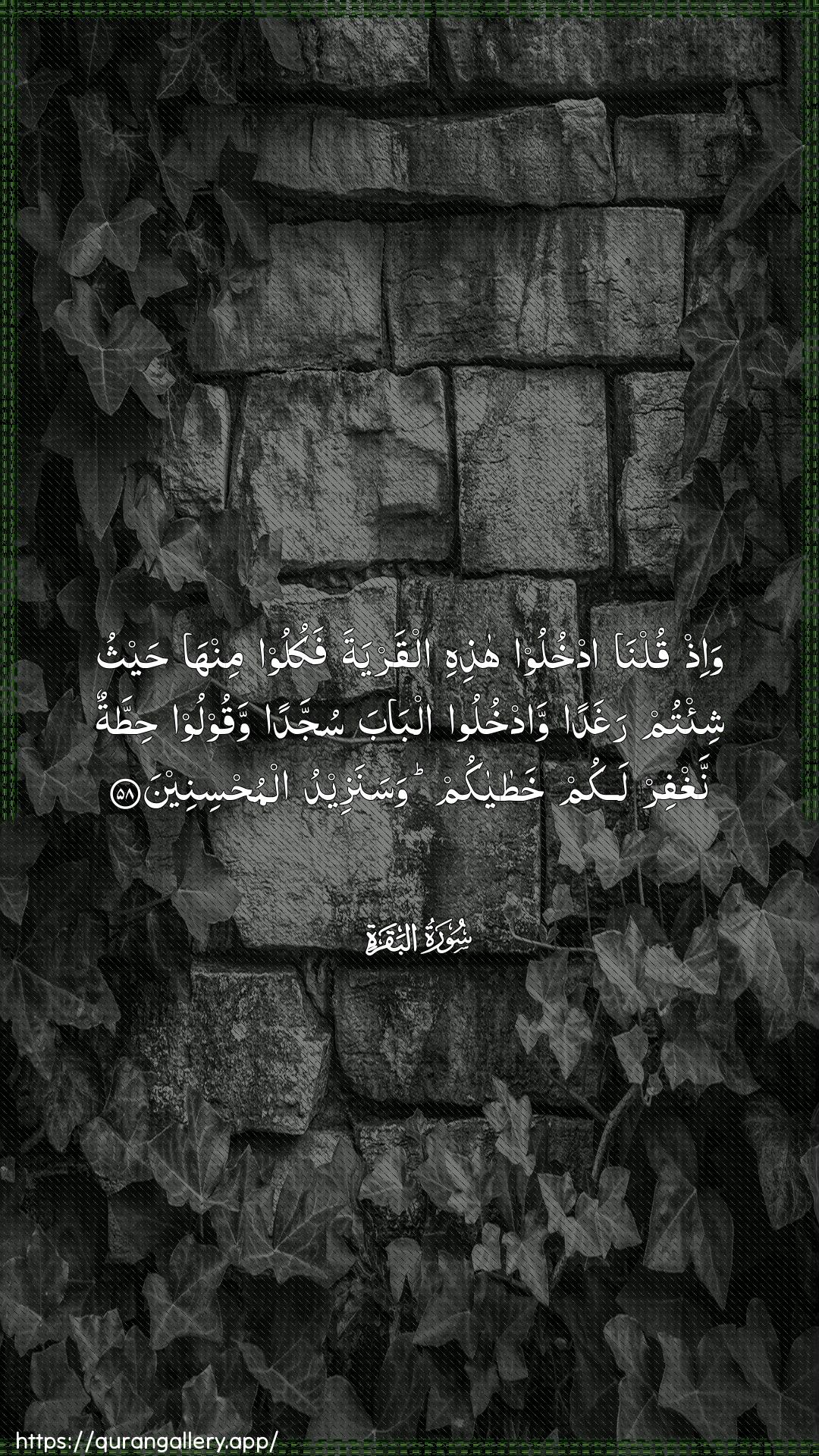
Arabic
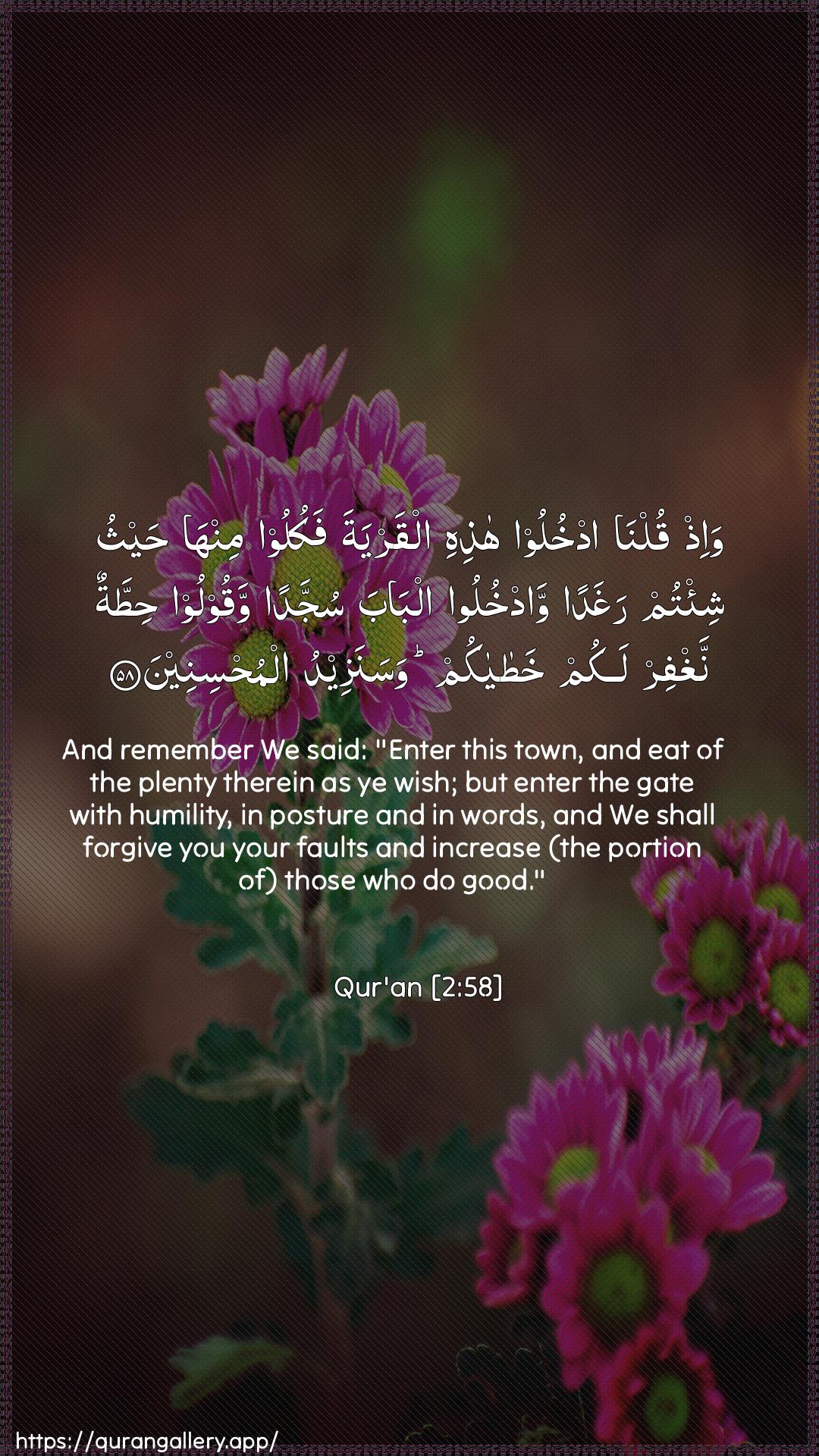
Arabic + English
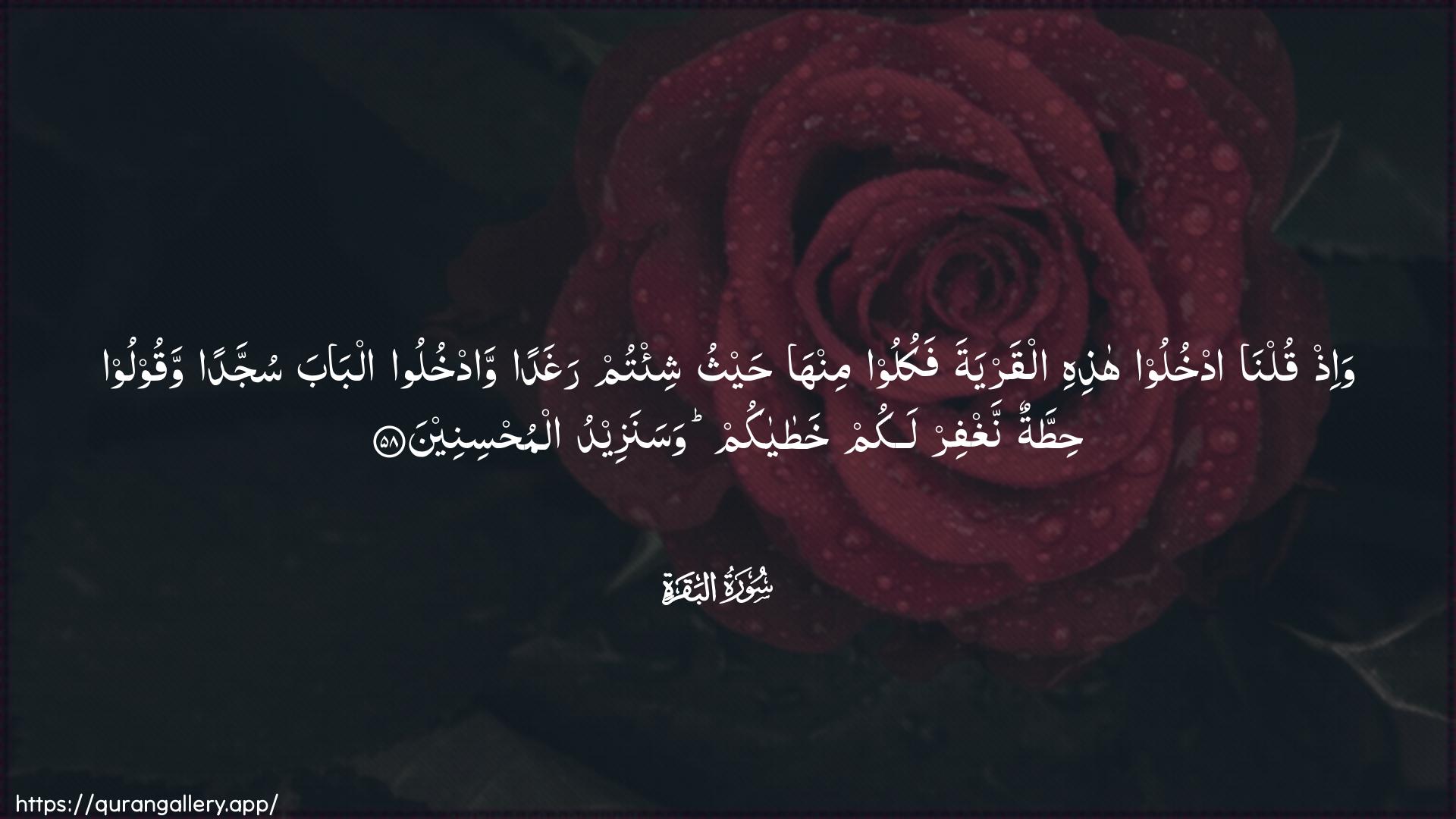
Arabic (Wide)
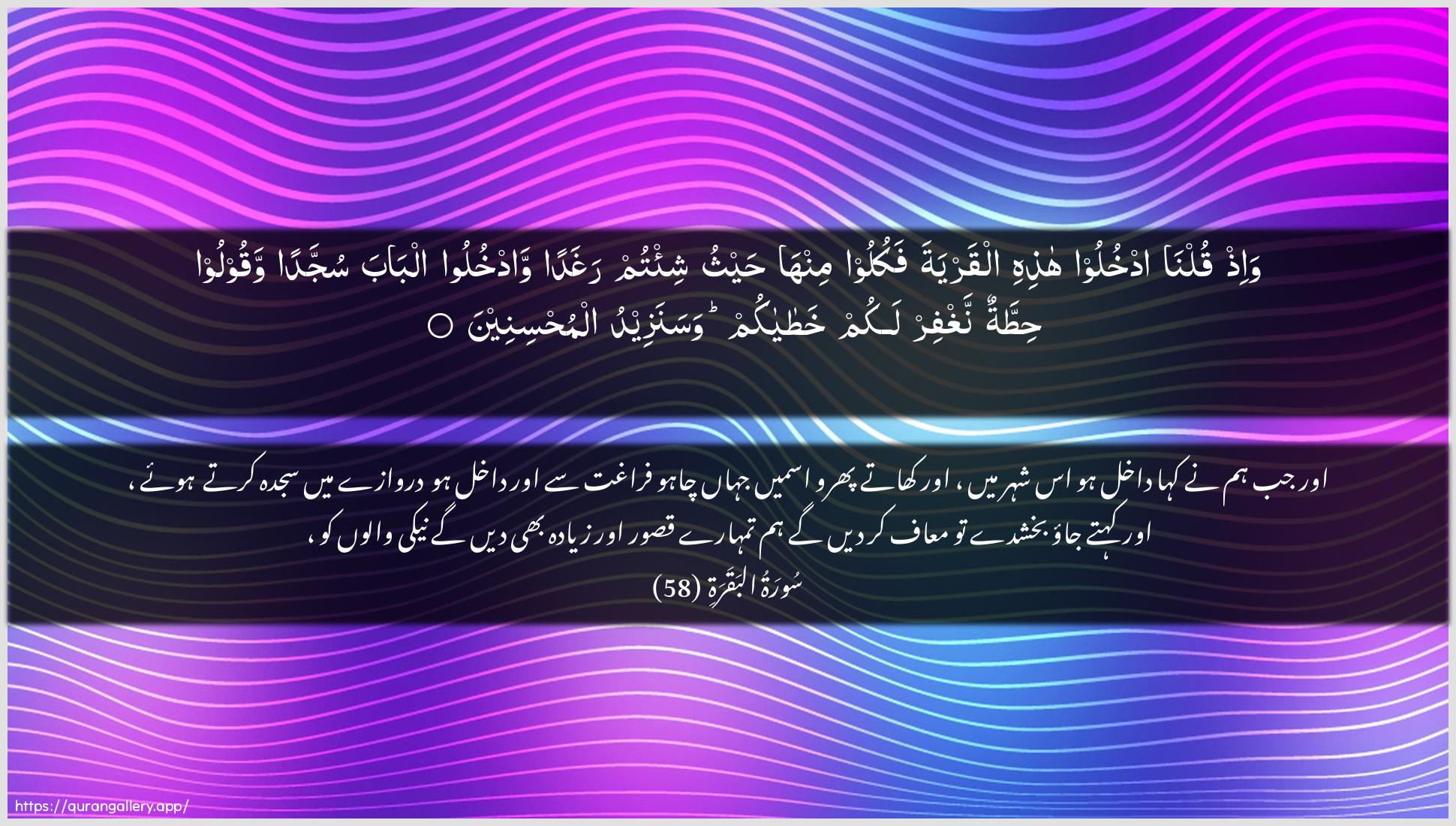
Arabic + Urdu
Free for personal & educational use with attribution
Quick Facts about this Verse
Surah
Al-Baqara
Revealed
Madani
Position
Juz 1,2,3
Explore this Verse
Verse Meaning
According to the great classical exegete Al-Tabari, Quran 2:58 recounts Allah's command to the Children of Israel, after their wandering, to enter a blessed town, which the majority of scholars identify as Bayt al-Maqdis (Jerusalem). The divine instruction was twofold, demanding both physical and verbal submission. As Ibn Kathir explains, they were to 'enter the gate prostrating' ('sujjadan'), an act of physical humility and gratitude for the victory, and to say 'Hittah,' a plea for their sins to be removed. This synthesis reveals a profound spiritual formula: true repentance is not merely a statement but a state of being, combining humble action with sincere supplication. The promise was immense: complete forgiveness ('We will forgive your sins') and an increase in rewards for the righteous ('and We will increase the doers of good'). The verse thus establishes a universal principle for receiving divine blessings—approaching them with humility and a heart of repentance.
Questions for Reflection
personal
Al-Tabari discusses the meaning of 'sujjadan' as entering 'ruk'an' (bowing). Reflect on a recent success or blessing in your life—a promotion, a recovery from illness, a new relationship. Did you 'enter' this new phase with a heart of entitlement or with the bowing humility of one who knows the gift is purely from Allah? How can you cultivate this state of heart in future blessings?
communal
Ibn Kathir notes this was a command to a collective nation. How does a community's collective attitude—of humility versus arrogance—affect the blessings it receives? Contemplate the state of your own community. What would a collective act of entering a gate 'sujjadan' and saying 'Hittah' look like today?
spiritual
As-Sa'di points out the immediate link between the command and the promised reward ('naghfir lakum'). Contemplate the immediacy of Allah's forgiveness when its conditions are met. Does your heart truly believe that sincere, humble repentance instantly erases sins, or do you harbor doubts that prevent you from feeling the relief of 'Hittah'?
Practical Applications
When starting a new job, entering a new home, or beginning a marriage, consciously adopt a posture of humility and say a prayer of gratitude and for forgiveness.
Counteracts the modern emphasis on 'self-made' success by attributing all achievements to Allah's will and asking for His help in being righteous with the new blessing.
In seeking forgiveness for a specific sin, pair the verbal 'Istighfar' (seeking forgiveness) with a physical act of submission, such as performing two rak'ahs of Salah al-Tawbah (Prayer of Repentance).
Provides a tangible action for those struggling with guilt, moving beyond mere words to an embodied practice of seeking divine mercy.
Hidden Gem
The synthesis of scholarly opinions reveals a profound gem: the act of entering prostrating ('sujjadan') was the physical manifestation of the word they were to speak ('Hittah'). The body was to enact the plea of the tongue. This teaches that the most powerful repentance is one where our physical state aligns perfectly with our spiritual plea, leaving no room for hypocrisy and demonstrating complete submission.
Scroll to see more verses or use the dropdown in the breadcrumb to jump to any verse