
Al-Baqara - The Cow
Arabic Name: الْبَقَرَة
Urdu Name: گائے
Type: Madani
Serial Number: 2
Revelation Order: 87
Total Verses: 286
Parah: 1,2,3
Rukus: 40
Sajda: None
Share Verse Art
Arabic
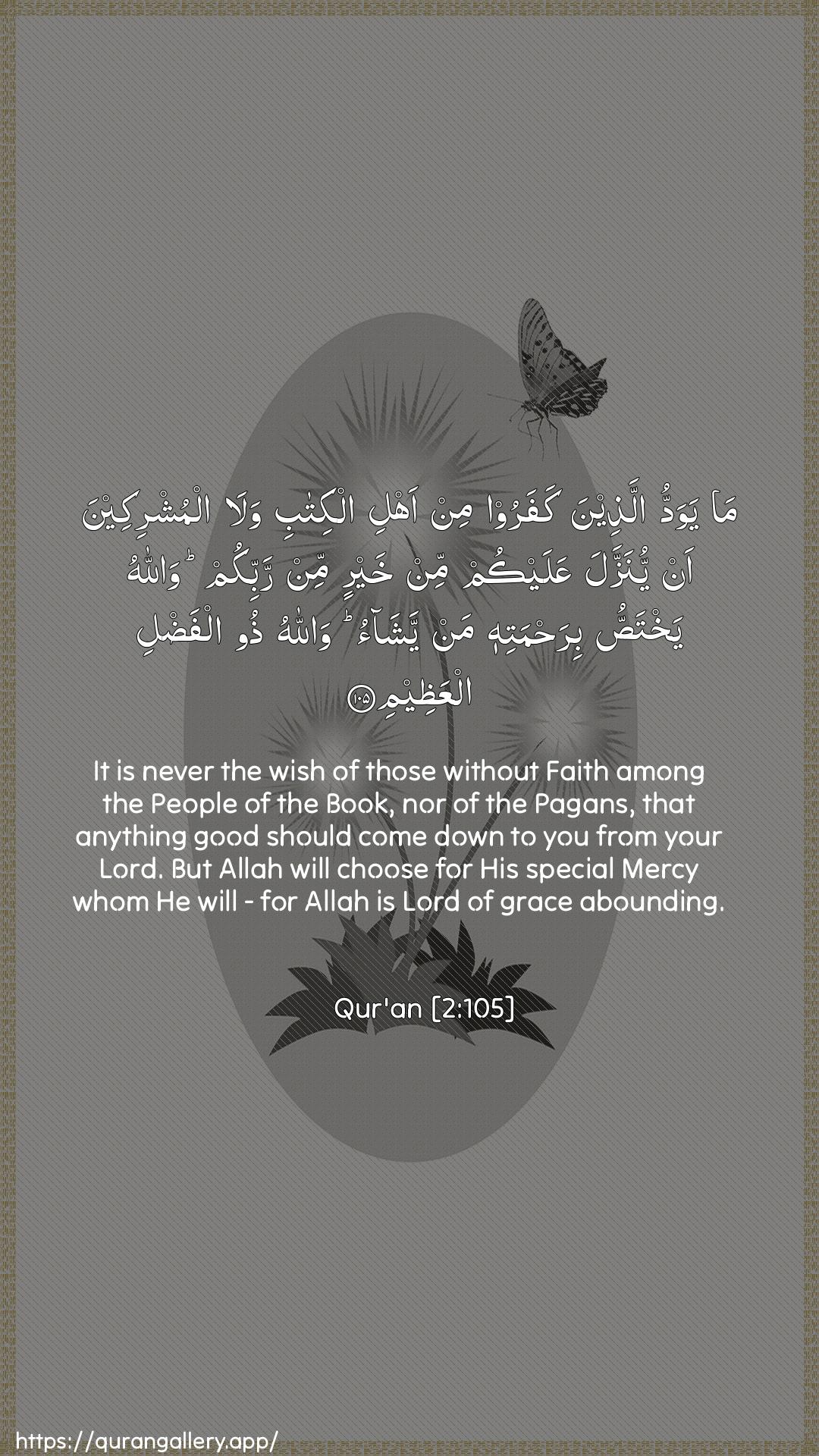
Arabic + English
Arabic (Wide)
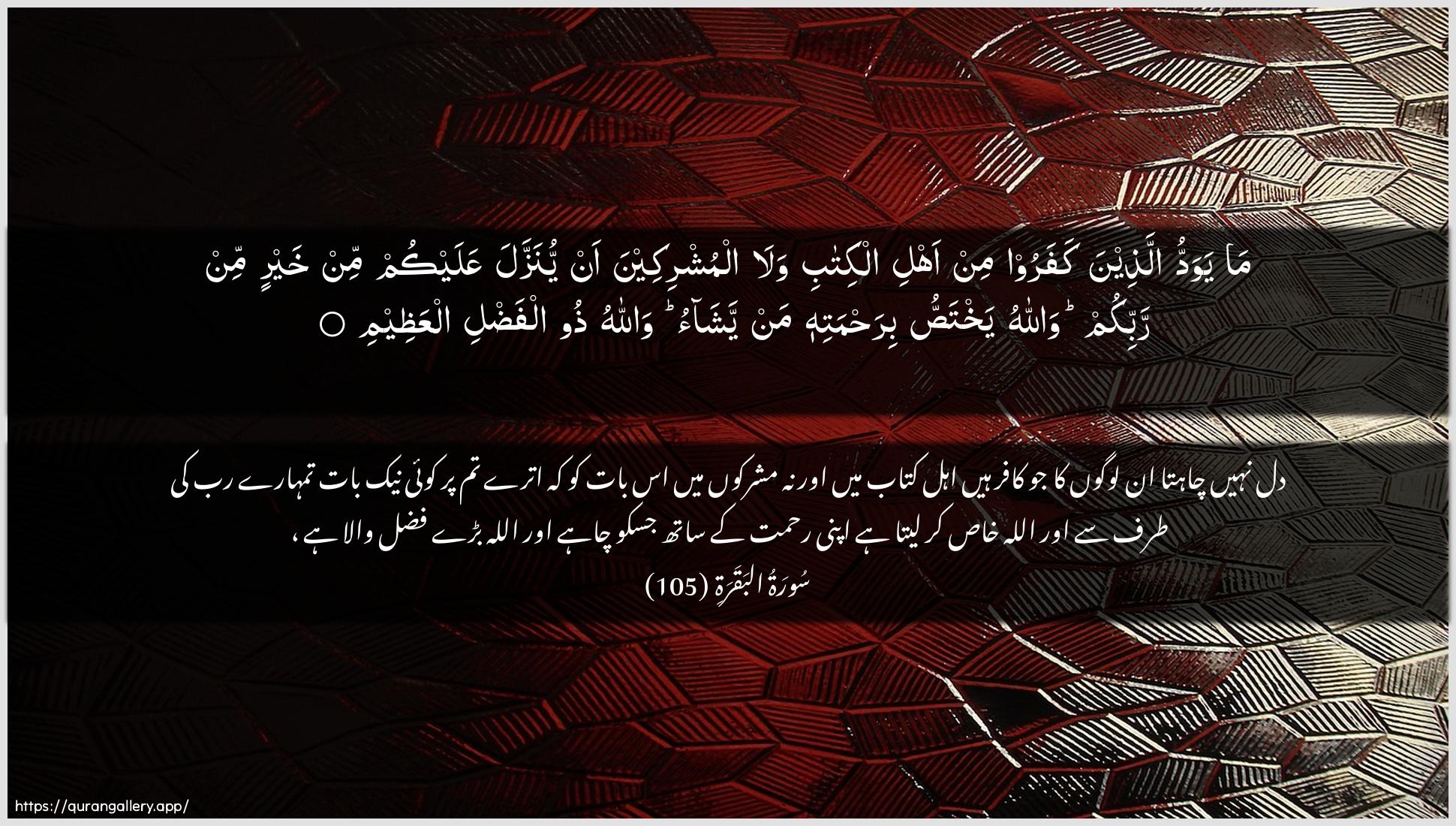
Arabic + Urdu
Free for personal & educational use with attribution
Quick Facts about this Verse
Surah
Al-Baqara
Revealed
Madani
Position
Juz 1,2,3
Explore this Verse
Verse Meaning
According to the classical scholar Al-Tabari, Quran 2:105 exposes the deep-seated animosity and envy harbored by the disbelievers—both from the People of the Book (Jews and Christians) and the polytheists (mushrikin)—towards the nascent Muslim community. A comprehensive synthesis of tafsirs, including those of Ibn Kathir and Al-Qurtubi, reveals this is not mere disagreement, but an active wish ('ma yawaddu') that no 'khayr' (good) of any kind, whether revelation, knowledge, or victory, be sent down upon the believers from their Lord. This envy was particularly potent regarding the blessing of prophethood being granted to Prophet Muhammad ﷺ. The verse then pivots to a profound theological reality: Allah's absolute sovereignty. As As-Sa'di explains, the statement 'Allah singles out for His mercy whom He wills' is a direct rebuttal to their envy, affirming that divine favor is not subject to human desires or lineage but is a gift bestowed by Allah's wisdom. The verse concludes with 'And Allah is the possessor of great bounty (Al-Fadl Al-'Azim),' a declaration that His grace is boundless and cannot be constrained or comprehended by the jealous hearts of those who disbelieve.
Questions for Reflection
personal
The verse states the disbelievers do not 'wish' for any good to come to you. Reflect on the subtle forms of envy ('hasad') you may have felt or encountered. How does internalizing 'Allah singles out for His mercy whom He wills' liberate you from the burden of comparing your journey to others?
communal
The verse identifies two distinct groups who are united in their envy: People of the Book and the Polytheists. In what ways does shared animosity towards the truth unite disparate groups today? How should this verse inform the Muslim community's understanding of external pressures and the importance of internal unity?
theological
Allah concludes with 'And Allah is the possessor of great bounty.' Ponder the immensity of this statement. If Allah's bounty is 'great' ('Azim'), how does the envy of creation appear in comparison? How does this truth reframe your perception of what is truly valuable and who the ultimate giver is?
Practical Applications
When facing jealousy or ill will, redirect your focus from the person to the ultimate source of your blessings, Allah.
In professional or social settings, when encountering envy, consciously affirm, 'This is a bounty from Allah,' to re-center your perspective.
Internalize that divine favor (prophethood, faith, guidance) is a selective mercy from Allah, not a birthright or entitlement.
Remind yourself daily that your faith and blessings are a special gift, not something you earned, to maintain a state of gratitude.
Hidden Gem
The synthesis of tafsirs reveals a profound spiritual dynamic: the disbelievers' intense wish for the absence of good ('ma yawaddu') is met with Allah's active, specific, and powerful act of selection ('yakhtassu'). Contemplate that every blessing you have is not just a gift, but a divine act that directly counters a negative wish from elsewhere. Your blessings are a form of divine victory.
Scroll to see more verses or use the dropdown in the breadcrumb to jump to any verse
Common Questions
1 more question available in the full page