
Al-Baqara - The Cow
Arabic Name: الْبَقَرَة
Urdu Name: گائے
Type: Madani
Serial Number: 2
Revelation Order: 87
Total Verses: 286
Parah: 1,2,3
Rukus: 40
Sajda: None
Share Verse Art
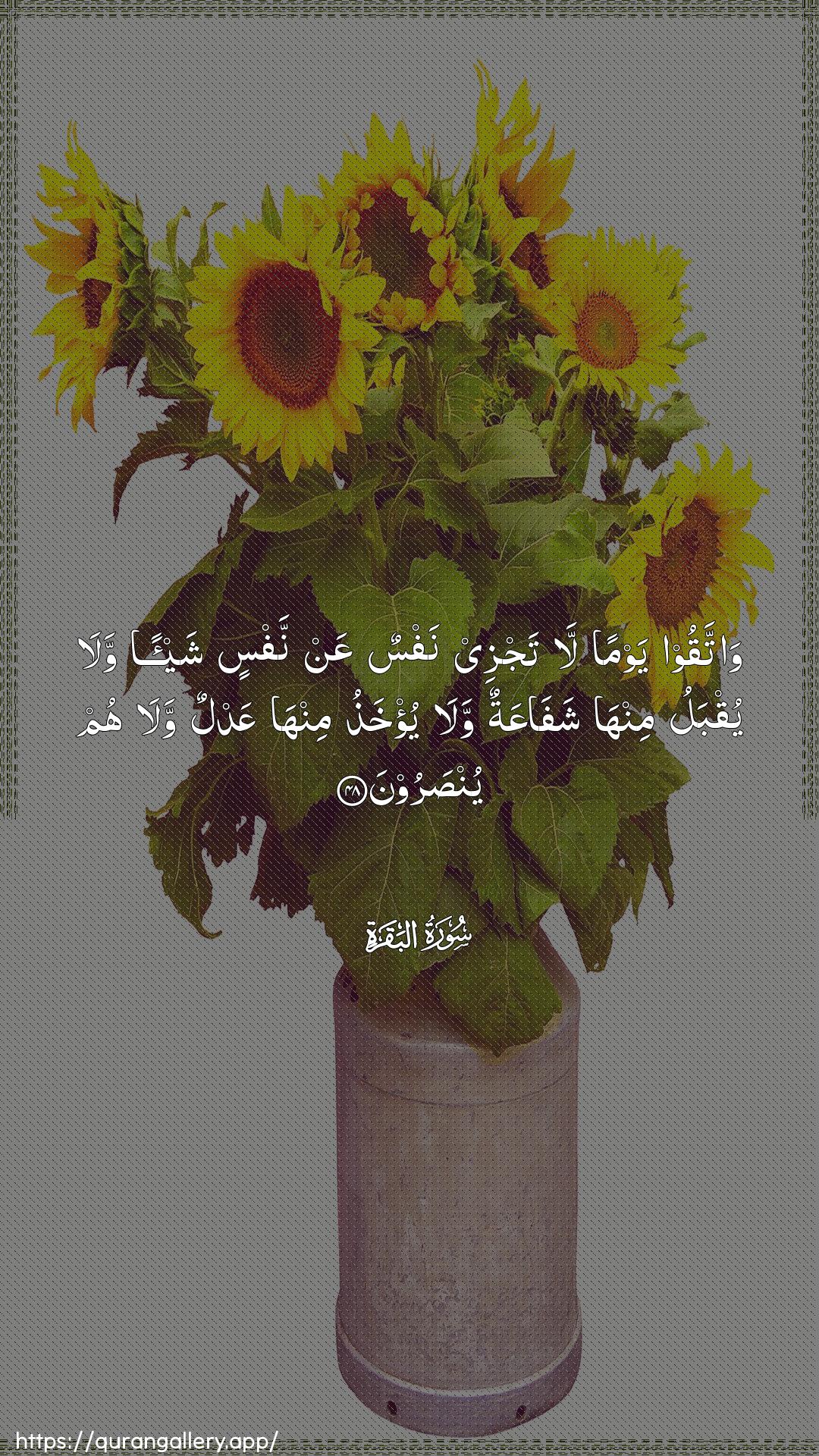
Arabic
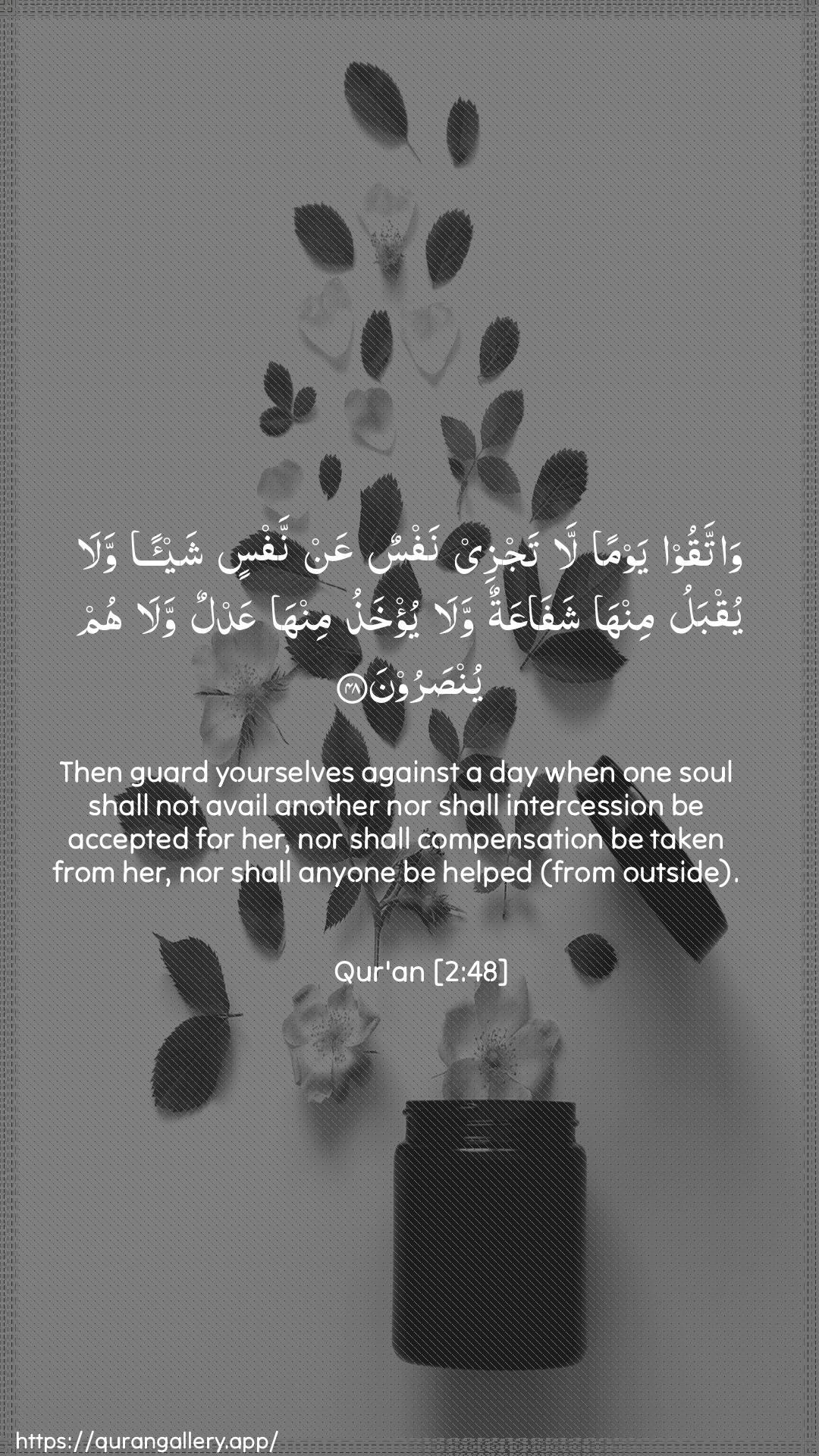
Arabic + English
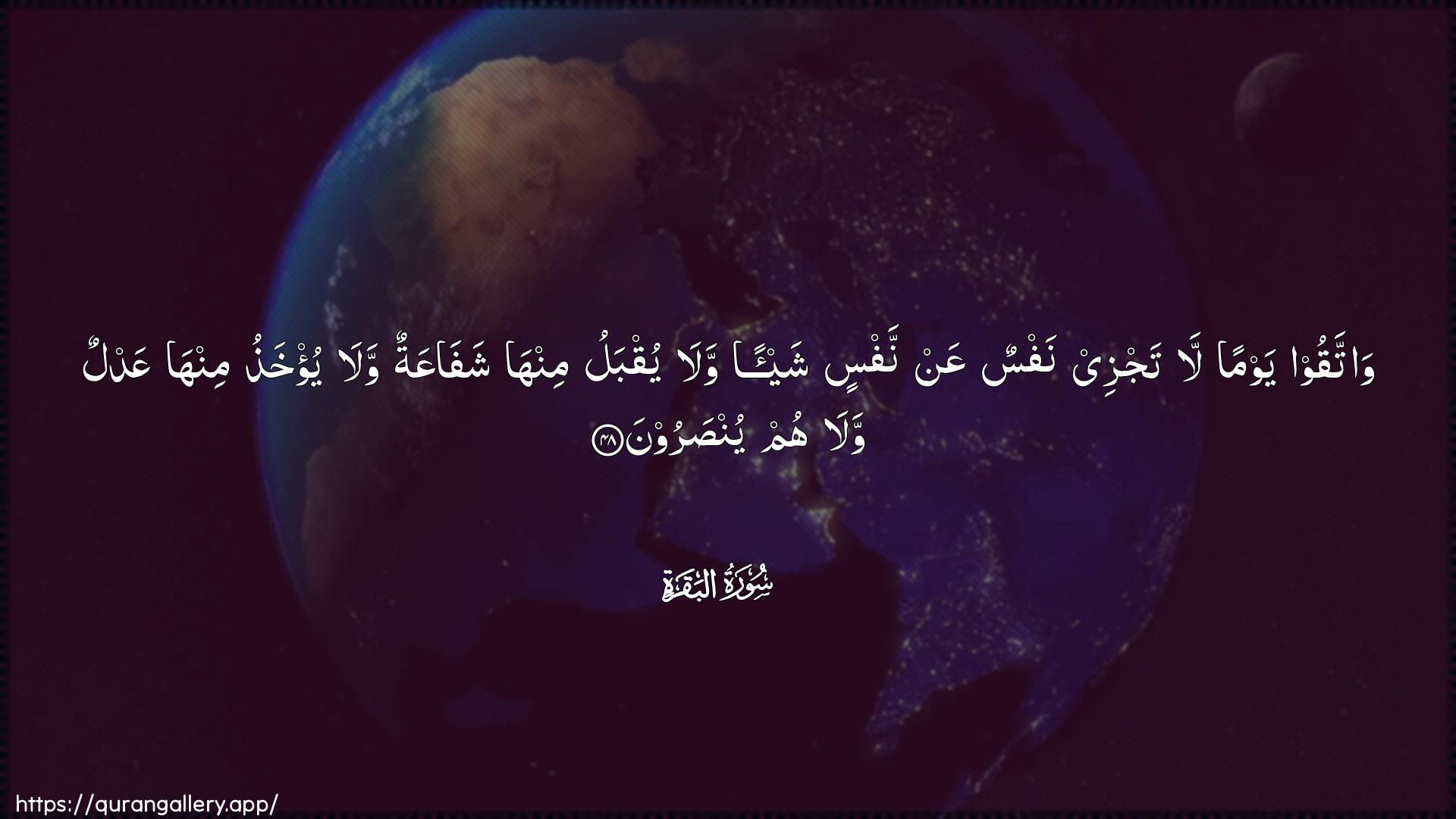
Arabic (Wide)
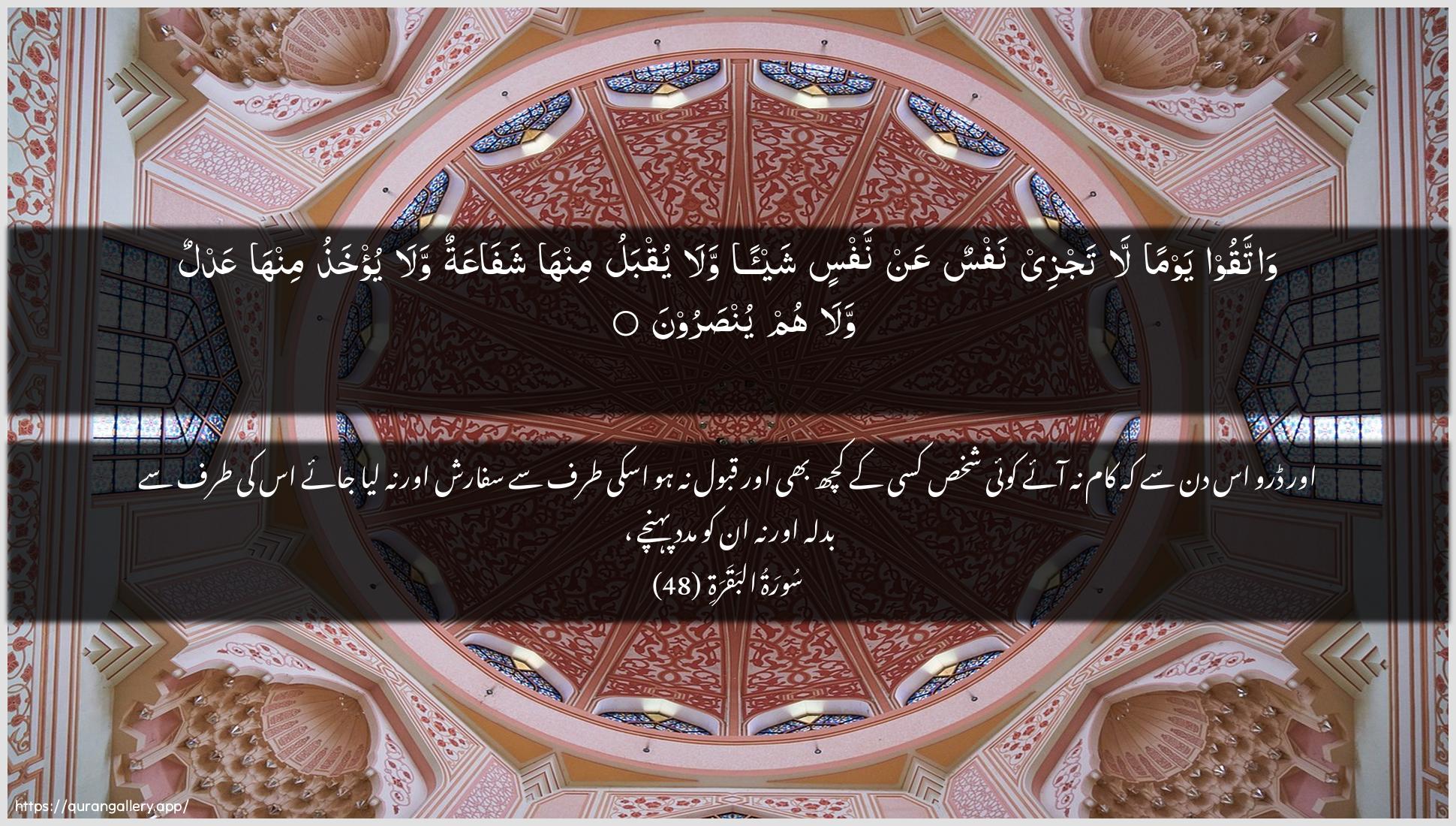
Arabic + Urdu
Free for personal & educational use with attribution
Quick Facts about this Verse
Surah
Al-Baqara
Revealed
Madani
Position
Juz 1,2,3
Explore this Verse
Verse Meaning
According to the classical exegete Al-Tabari, Quran 2:48 is a profound warning primarily directed at the Children of Israel, dismantling their false reliance on ancestral piety for salvation. This verse establishes the absolute and individual nature of accountability on the Day of Judgment. The synthesis of scholarly thought, including insights from Ibn Kathir and As-Sa'di, reveals a four-fold negation of all worldly means of deliverance: no soul can bear another's burden, no intercession will be accepted for the disbeliever, no ransom (`'adl`) can be paid to avert punishment, and no external support can aid them. The hidden gem, as clarified by Al-Tabari's comprehensive analysis, is that this absolute negation of intercession applies specifically to those who die in a state of disbelief. This resolves the apparent contradiction with authentic hadiths confirming the Prophet Muhammad's ﷺ intercession, which is a mercy reserved only for the people of faith by Allah's permission. Therefore, the verse serves not to deny all intercession, but to eradicate the false hope that lineage or group identity can substitute for personal faith and righteous deeds.
Questions for Reflection
personal
As-Sa'di highlights that this verse aims to cut the heart's attachment to created beings. Reflect on your own life: on whom or what do you secretly rely for your ultimate success and salvation? Is it your family's reputation, your wealth, your connections, or your own deeds and Allah's mercy?
theological
Al-Tabari and Ibn Kathir clarify that this verse's negation of intercession applies to disbelievers. Contemplate the profound mercy in the concept of divinely-permitted intercession for believers. How does understanding this exception deepen your appreciation for the gift of Iman (faith) and the station of Prophet Muhammad ﷺ?
social
The verse warns against a collective false security that afflicted the Children of Israel. Look at our communities today. What are the modern-day equivalents of 'relying on the piety of ancestors'? How can this verse inspire a communal shift from pride in heritage to a collective pursuit of present-day righteousness?
Practical Applications
Conduct a daily self-audit of your deeds, recognizing that only this personal record will have value on the Day of Judgment.
In an age of social networks and group identity, this fosters spiritual individualism and direct responsibility before Allah.
Detach your hope for salvation from lineage or group affiliation, focusing instead on cultivating personal taqwa (God-consciousness).
This applies to anyone who feels secure due to their family's piety or their association with a particular Islamic group or movement.
Internalize that Allah's justice is perfect and cannot be bypassed through worldly means like ransom or influence.
This is a powerful reminder for the wealthy and influential that their status in this world has no bearing on their standing with Allah.
Hidden Gem
The synthesis of tafsirs reveals that the four negations in the verse correspond to the four primary types of worldly power: authority (no one can act for you), influence (no intercession), wealth (no ransom), and force (no helpers). Contemplating this provides a spiritual lens to see the ultimate powerlessness of all worldly treasures on the Day when only Allah's authority remains.
Scroll to see more verses or use the dropdown in the breadcrumb to jump to any verse