
Al-Baqara - The Cow
Arabic Name: الْبَقَرَة
Urdu Name: گائے
Type: Madani
Serial Number: 2
Revelation Order: 87
Total Verses: 286
Parah: 1,2,3
Rukus: 40
Sajda: None
Share Verse Art
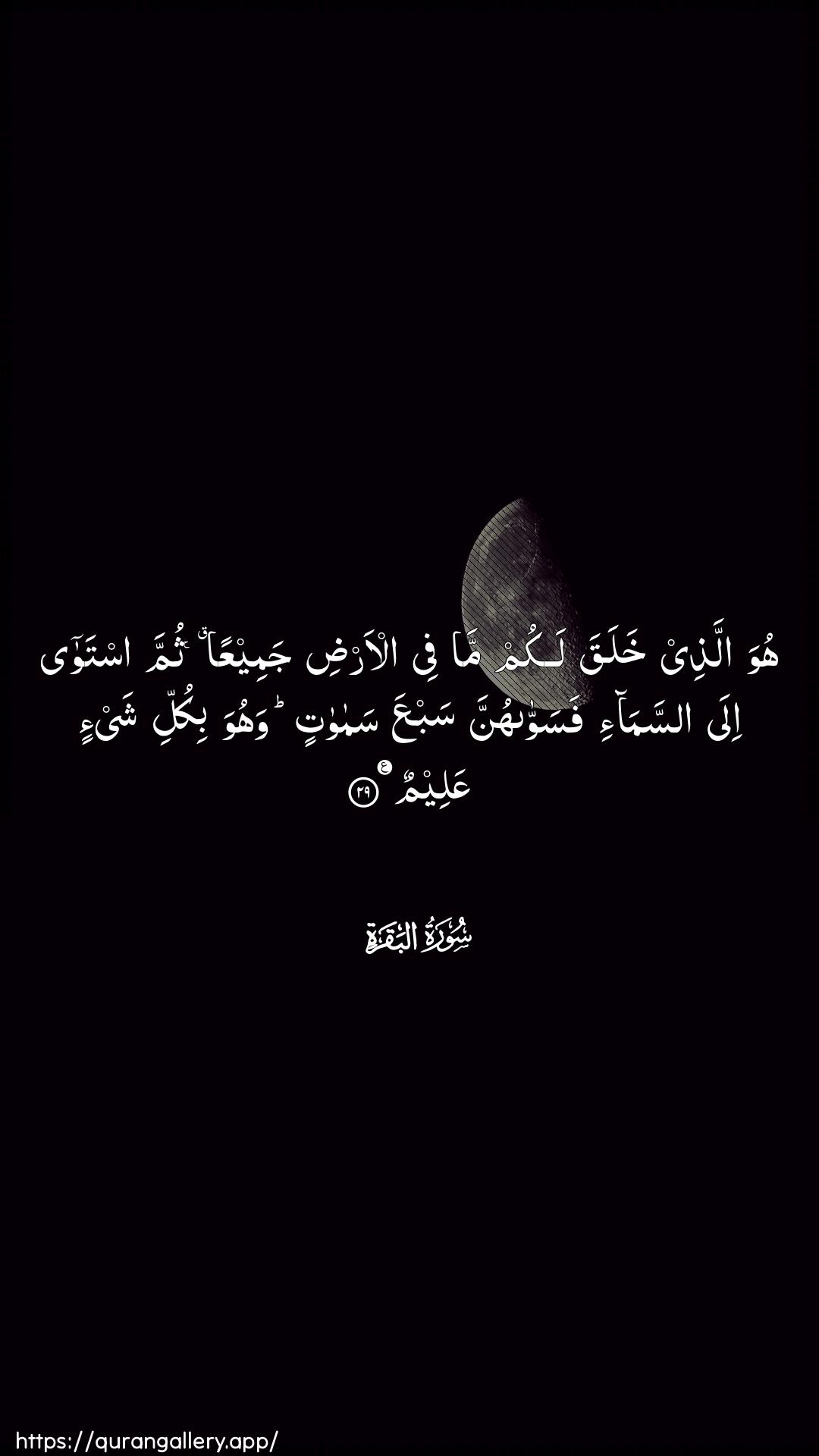
Arabic
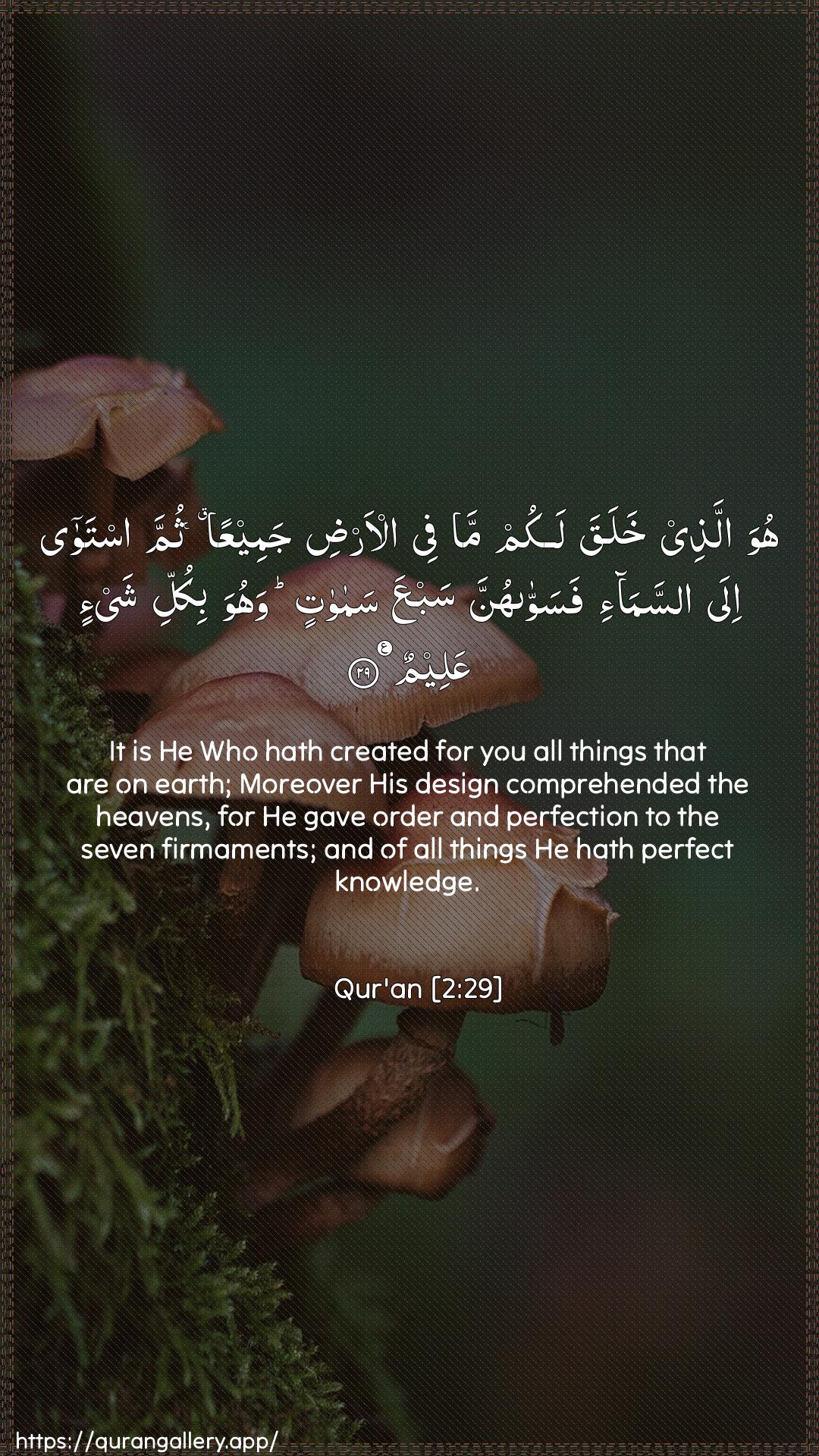
Arabic + English
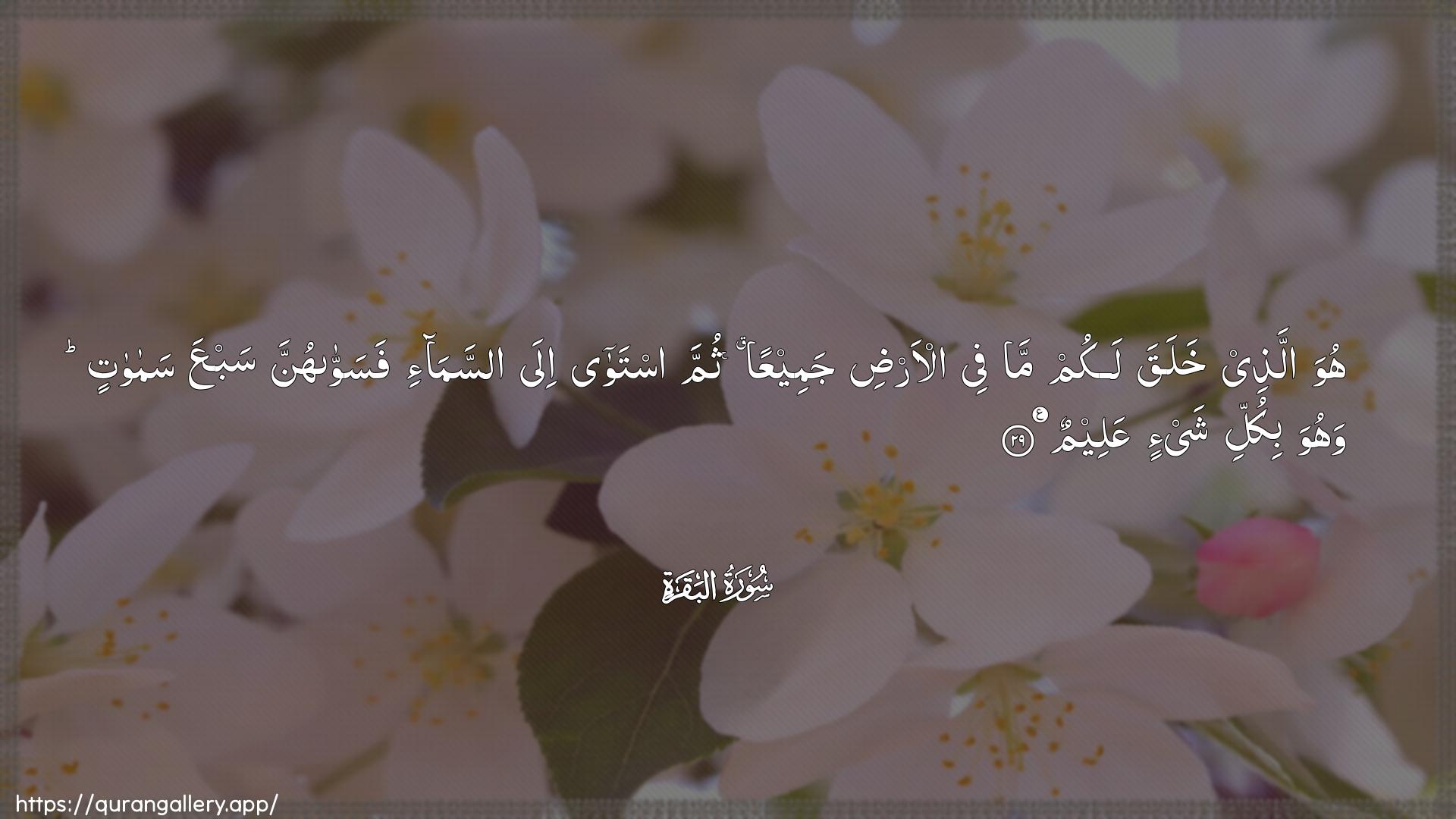
Arabic (Wide)
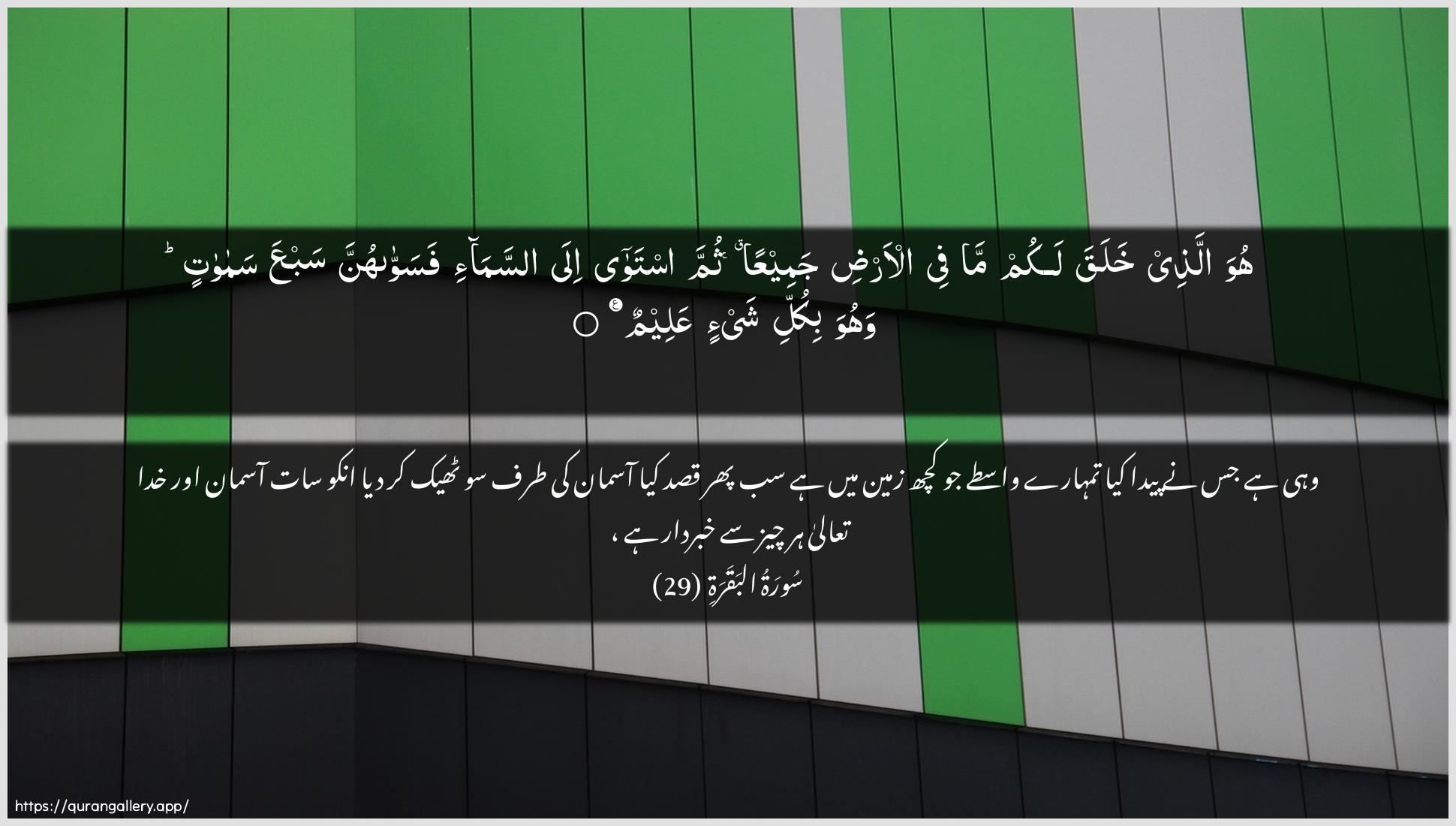
Arabic + Urdu
Free for personal & educational use with attribution
Quick Facts about this Verse
Surah
Al-Baqara
Revealed
Madani
Position
Juz 1,2,3
Explore this Verse
Verse Meaning
According to the classical scholar Imam Al-Tabari, Quran 2:29 serves as a profound testament to Allah's omnipotence and His favor upon humanity. This verse encapsulates the divine act of creating all that is on Earth for mankind's benefit, followed by the majestic fashioning of the seven heavens. A comprehensive synthesis of tafsirs, including those of Ibn Kathir and Al-Qurtubi, reveals a nuanced scholarly discussion. While the verse indicates the Earth was created first, this is harmonized with other verses by explaining that the initial creation (khalq) of Earth preceded the heavens, but its preparation and spreading (dahw) came after. The term 'istawa ila al-sama' (turned to the heaven) is interpreted not as physical movement, but as an act of will and intention ('qasad'), signifying Allah's directing His power towards this creation. This cross-tafsir analysis unveils a hidden gem: the verse is not merely a chronological account but a powerful reminder of humanity's place and purpose, endowed with the resources of an entire planet as a means for sustenance, reflection, and ultimately, recognizing the All-Knowing Creator ('alim).
Questions for Reflection
Personal
The verse states Allah 'created for you all that is in the earth.' As Al-Qurtubi implies, this is a profound personal address. Contemplate one specific thing in your immediate environment—a fruit, a glass of water, the air you breathe. How does internalizing that this specific item was created 'for you' change your sense of gratitude, responsibility, and worth in the eyes of the Creator?
Cosmic
Reflect on the transition from 'all that is in the earth' to the fashioning of 'seven heavens.' Ibn Kathir explains this as a demonstration of divine power. How does this vast leap in scale—from the familiar earth to the multi-layered, unknown heavens—impact your understanding of Allah's omnipotence and the limits of your own knowledge? How does it make your personal worries seem in comparison?
Relational
The verse concludes with 'He is Knowing of all things.' Al-Tabari links this to the preceding acts of creation. Contemplate how Allah's perfect creation of the earth and heavens for your benefit is a direct expression of His perfect knowledge of your needs. How does this strengthen your trust (tawakkul) that the All-Knowing who designed the cosmos is also perfectly managing the details of your life?
Practical Applications
Cultivate a 'Stewardship Mindset' by viewing every resource—water, food, time—as a divine trust created specifically for your benefit and test.
Practice mindful consumption, reduce waste, and engage in environmentally conscious activities as an act of worship.
Utilize nature for contemplation (tafakkur) by observing the earth and sky, and reflecting on them as signs of a knowledgeable Creator.
Dedicate time weekly for nature walks, stargazing, or even observing plants, consciously connecting them back to the Creator's power and knowledge.
Hidden Gem
A synthesis of scholarly opinion on the term 'istawa' (turned to) reveals a subtle spiritual insight. It implies a deliberate, focused act of creative will, not a casual or secondary thought. Contemplate that the same level of specific, divine intention used to fashion seven heavens was first applied to create the earth for you. This reframes your existence not as an afterthought, but as the foundational purpose before the celestial masterpiece was perfected.
Scroll to see more verses or use the dropdown in the breadcrumb to jump to any verse