
Al-Baqara - The Cow
Arabic Name: الْبَقَرَة
Urdu Name: گائے
Type: Madani
Serial Number: 2
Revelation Order: 87
Total Verses: 286
Parah: 1,2,3
Rukus: 40
Sajda: None
Share Verse Art
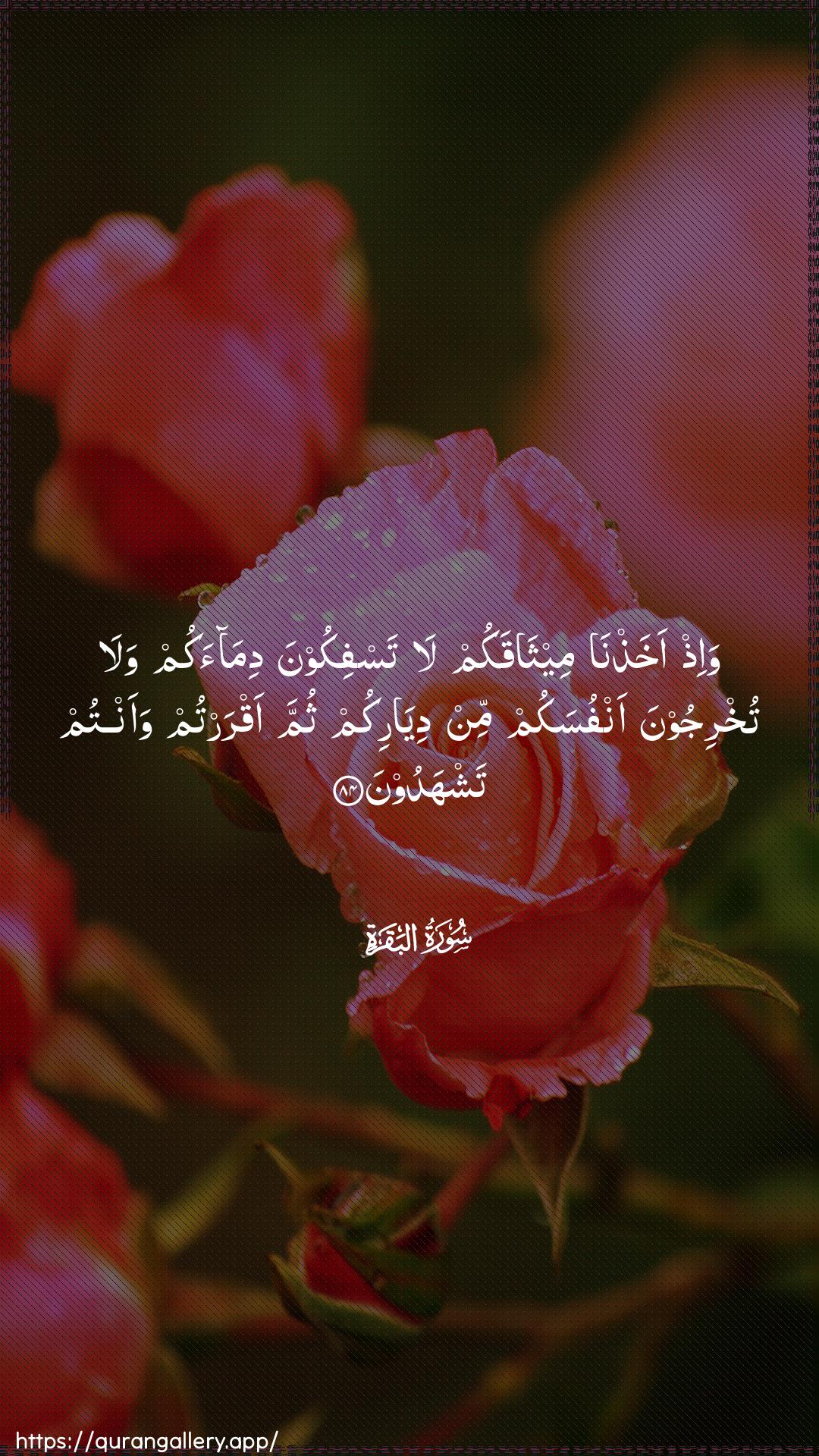
Arabic
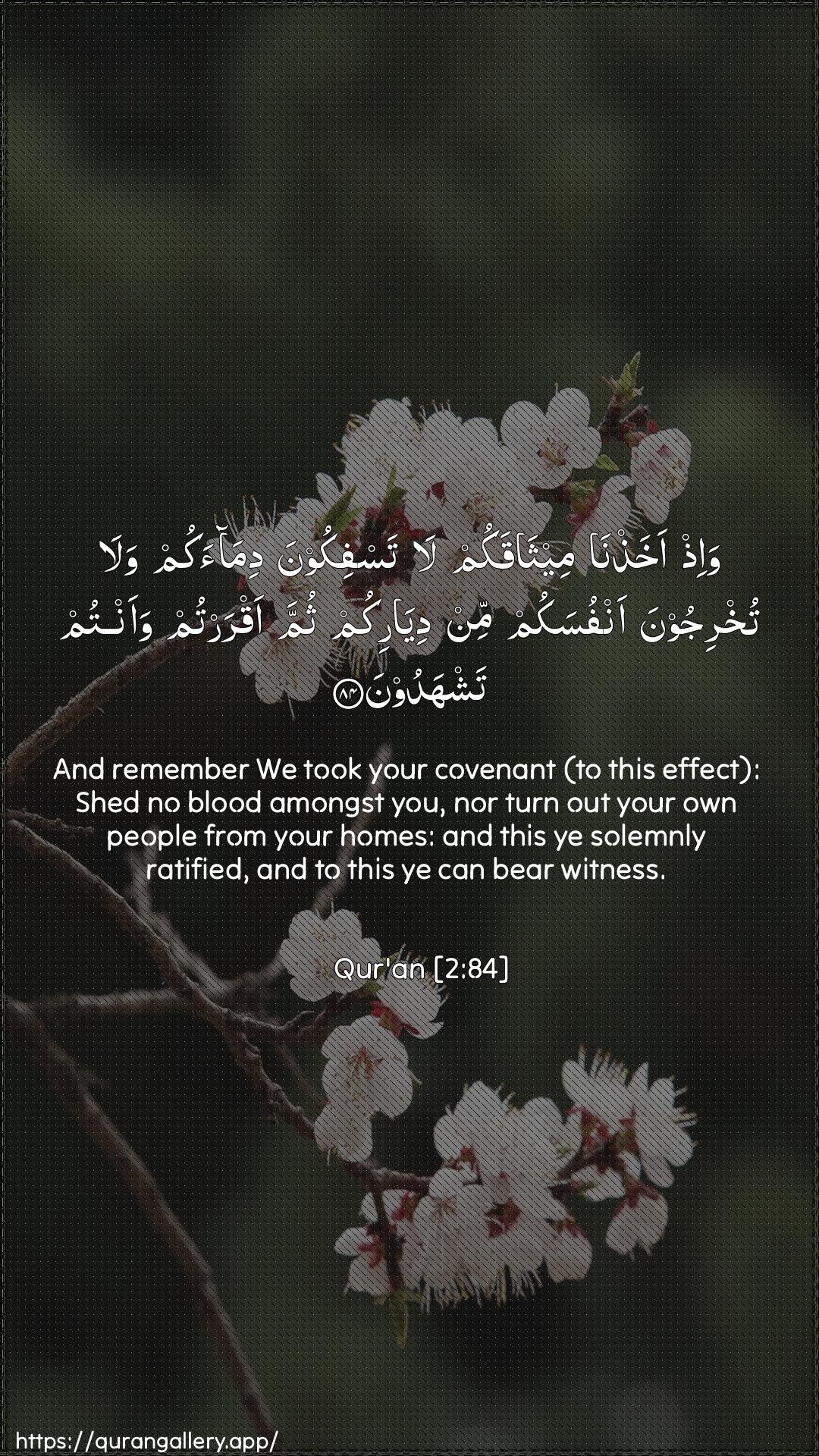
Arabic + English
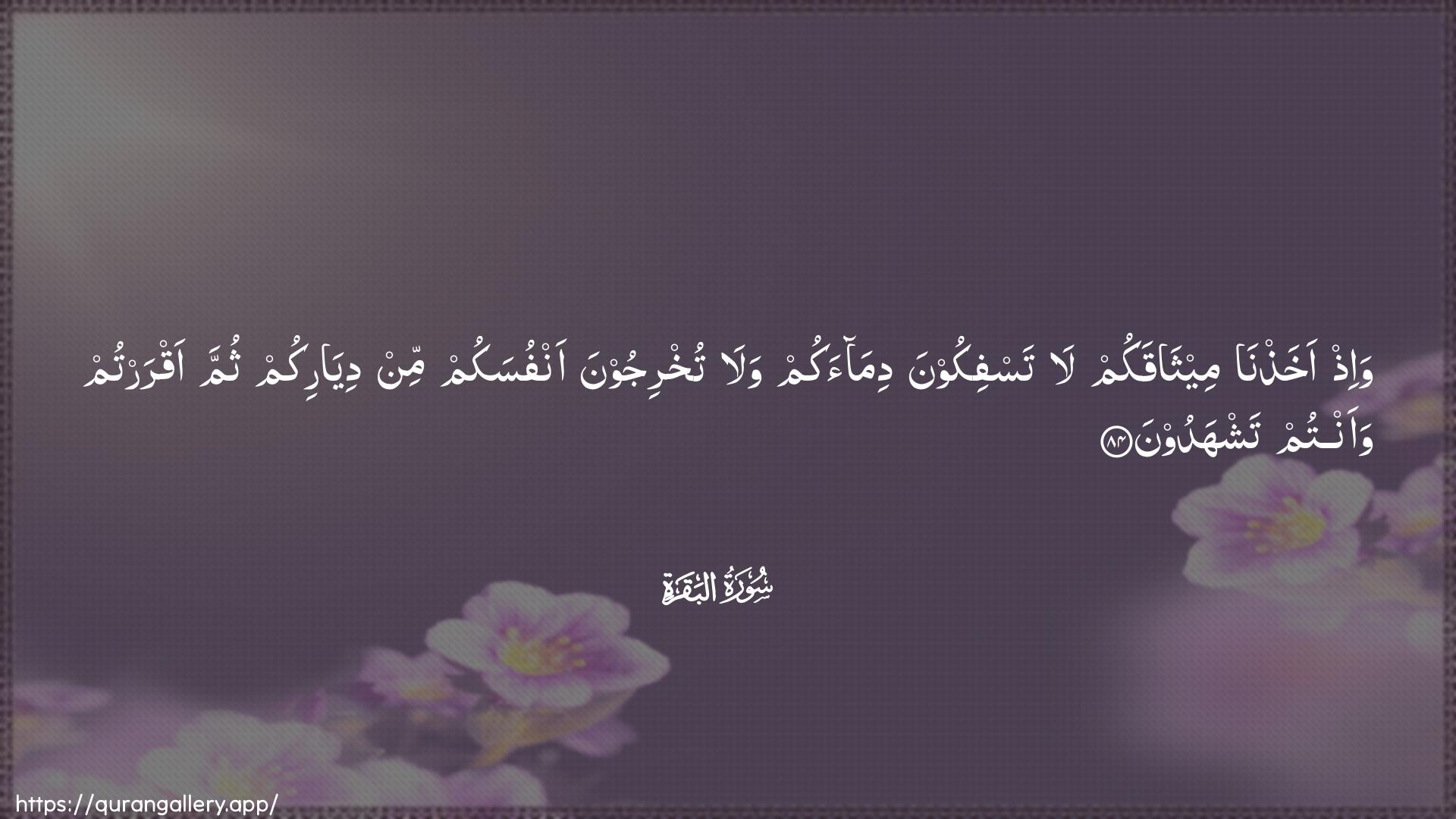
Arabic (Wide)
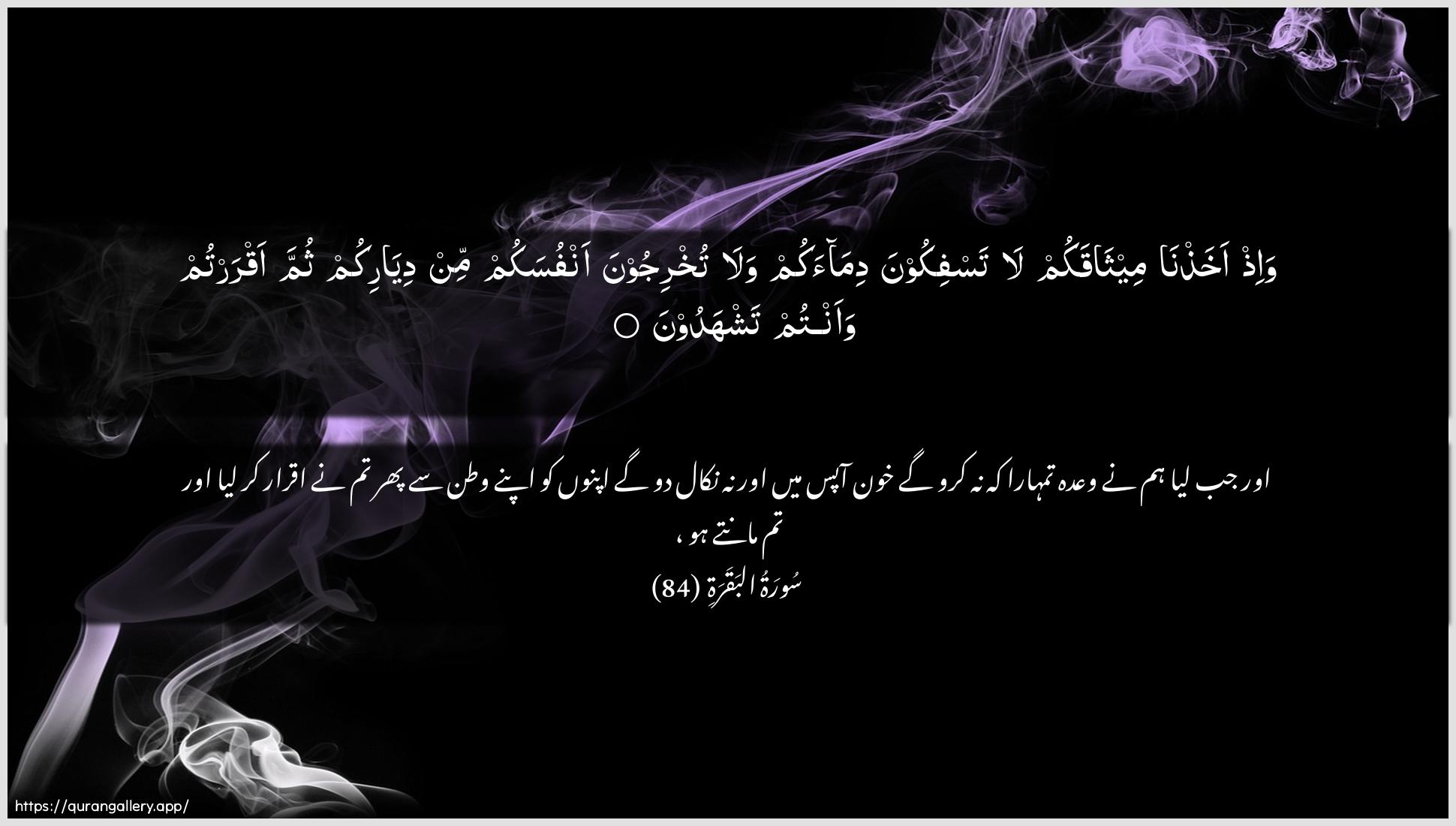
Arabic + Urdu
Free for personal & educational use with attribution
Quick Facts about this Verse
Surah
Al-Baqara
Revealed
Madani
Position
Juz 1,2,3
Explore this Verse
Verse Meaning
According to the classical scholar Ibn Kathir, Quran 2:84 is a divine admonishment detailing a sacred covenant taken from the Children of Israel, specifically the Jewish tribes of Medina. This pact established two foundational principles for communal harmony: the absolute prohibition of internal bloodshed ('you shall not shed your blood') and the prevention of forced displacement ('nor expel yourselves from your homes'). Al-Tabari's linguistic analysis highlights the profound expression 'your blood' and 'yourselves,' which frames the community as a single body, making violence against a fellow member an act of self-harm. This comprehensive synthesis of scholarly opinion reveals that the verse is not merely a historical account but a universal law on the sanctity of life and the right to a secure dwelling within a faith community. The final clause, 'then you acknowledged, while you were witnessing,' serves as an undeniable legal confirmation, making their subsequent violation, as detailed in the following verses, a deliberate act of rebellion against a witnessed and accepted divine command.
Questions for Reflection
Communal Responsibility
The verse addresses the community in the plural ('your covenant,' 'your blood'). Contemplate the subtle ways your community might be 'shedding blood'—not with weapons, but with words, gossip, or character assassination that kills a person's spirit and reputation. How does this verse command a collective responsibility to stop such harms?
The Sanctity of Home
Allah pairs the sanctity of life with the sanctity of the home. Why is being expelled from one's home equated with such a grave sin as bloodshed? Reflect on what a 'home' truly represents beyond a physical structure—security, identity, belonging, and peace. How does this understanding change your duty towards those who are displaced or homeless?
Witnessing the Truth
The verse concludes with '...you acknowledged, and you were witnessing.' You, as a reader of the Quran, are now a witness to this covenant. What does it mean to be a witness to this divine command in your daily life? How does this knowledge obligate you to act when you see these principles being violated in your own community or the world?
Practical Applications
Treat every member of your community as you would treat yourself, recognizing that harming them is harming the entire body.
Applicable in online forums, community centers, and family disputes to de-escalate conflict and promote reconciliation.
Actively safeguard the homes and security of your neighbors, understanding that displacement causes deep societal wounds.
Relevant for housing disputes, protecting the vulnerable from eviction, and creating welcoming neighborhoods for newcomers.
Hidden Gem
The synthesis of tafsirs reveals a profound psychological insight: the Israelites were not just killing enemies, they were killing their brethren who were allied with their enemies. This verse forces a contemplation on how we dehumanize those on the 'other side' of a conflict, even when they share our core identity. It's a divine warning against letting worldly alliances sever the sacred bonds of faith.
Scroll to see more verses or use the dropdown in the breadcrumb to jump to any verse