
Yunus - Jonas
Arabic Name: يُوْنـُس
Urdu Name: یونس
Type: Makki
Serial Number: 10
Revelation Order: 51
Total Verses: 109
Parah: 11
Rukus: 11
Sajda: None
Related Hadith
"They are a people who love one another for the sake of Allah, without any relationship of kinship or property. By Allah, their faces will be light and they will be on thrones of light."
Provides a clear, prophetic description of the qualities and reward of the Awliya' Allah.
Share Verse Art
Arabic
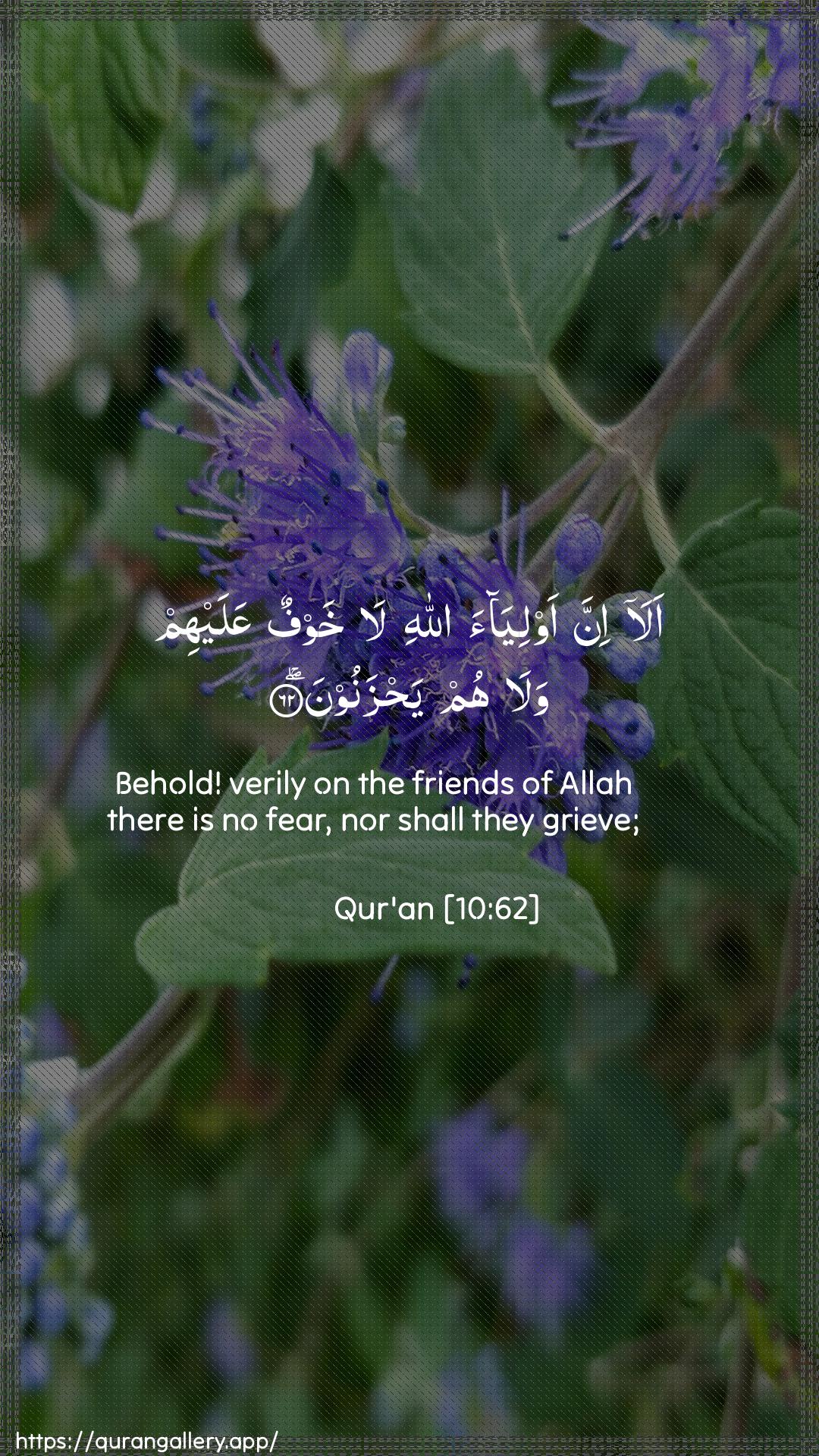
Arabic + English

Arabic (Wide)
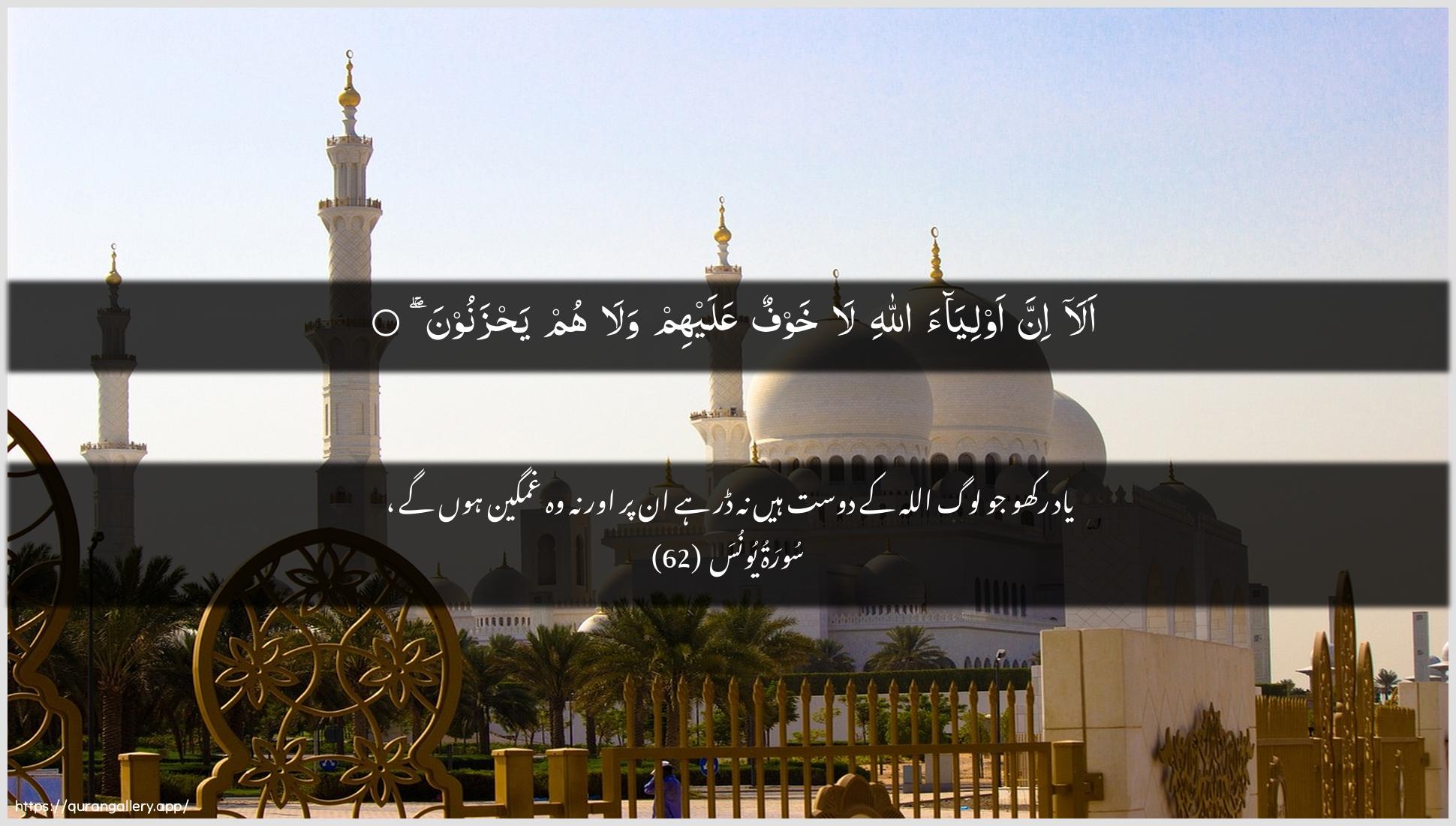
Arabic + Urdu
Free for personal & educational use with attribution
Quick Facts about this Verse
Surah
Yunus
Revealed
Makki
Position
Juz 11
Explore this Verse
Verse Meaning
According to the classical scholar Ibn Kathir, verse 10:62 provides a definitive and comforting declaration about the status of Allah's friends (Awliya' Allah). The synthesis of scholarly commentary, particularly from Al-Tabari and Al-Qurtubi, reveals that a 'Wali' is not a title for a special class, but a state accessible to every pious believer. This is reinforced by prophetic traditions, which describe them not by miracles, but by their spiritual effect: they are people loved for Allah's sake, not for lineage or wealth, and their very presence reminds others of God. The phrase 'no fear upon them' (la khawfun 'alayhim) refers to future adversities, particularly the horrors of the Day of Judgment, while 'nor shall they grieve' (wa la hum yahzanun) pertains to past worldly matters they have left behind. The comprehensive analysis shows that their faith and piety (iman and taqwa) grant them a unique spiritual security that transcends temporal worries, anchoring them in a state of profound peace and contentment with Allah's decree.
Questions for Reflection
Textual Contemplation
Ibn Kathir states this verse is explained by the next: 'Those who believed and had taqwa.' Contemplate the inseparable link between these two qualities and the promised outcome of 'no fear, no grief.' How does unwavering faith neutralize fear of the unknown future, and how does conscious piety (taqwa) heal the grief of past mistakes?
Personal Transformation
The Prophet described the Awliya' as those whose faces will be 'light.' As Al-Qurtubi notes, this is a reflection of their inner state. Reflect on the sources of 'darkness' in your own life—anxiety, envy, anger, regret. How can cultivating the qualities of a Wali, such as sincere love for others for Allah's sake, begin to replace that darkness with inner light?
Relational Wisdom
A key hadith cited by Al-Tabari describes the Awliya' as those who 'love one another for the sake of Allah, without ties of kinship or wealth.' Examine your most important relationships. What is their foundation? Contemplate one relationship and identify a practical way to elevate its basis from worldly benefit to a shared pursuit of Allah's pleasure.
Practical Applications
Cultivate relationships based purely on shared faith and love for Allah's sake, independent of worldly gain.
Actively seek friends and mentors in masjids, study circles, and community projects whose primary connection is the pleasure of Allah.
Strive to become a living reminder of Allah through your character, speech, and conduct.
In professional and personal interactions, prioritize honesty, compassion, and calm reliance on Allah, becoming a walking example of faith in action.
Consciously reframe fear and grief by recalling this divine promise of security.
When faced with anxiety about the future (career, family) or sorrow over the past (losses, mistakes), recite this verse to affirm your identity as one under Allah's care.
Hidden Gem
The synthesis of commentaries reveals a profound insight: the opposite of a Wali is not merely a sinner, but one whose relationships are transactional. The hadith specifically negates kinship and wealth as the basis of their love, suggesting that the path to 'walayah' involves a fundamental rewiring of our social connections from self-interest to divine-interest. True friendship with Allah manifests as selfless friendship with His creation.
Scroll to see more verses or use the dropdown in the breadcrumb to jump to any verse
Common Questions
2 more questions available in the full page