
Al-Baqara - The Cow
Arabic Name: الْبَقَرَة
Urdu Name: گائے
Type: Madani
Serial Number: 2
Revelation Order: 87
Total Verses: 286
Parah: 1,2,3
Rukus: 40
Sajda: None
Share Verse Art
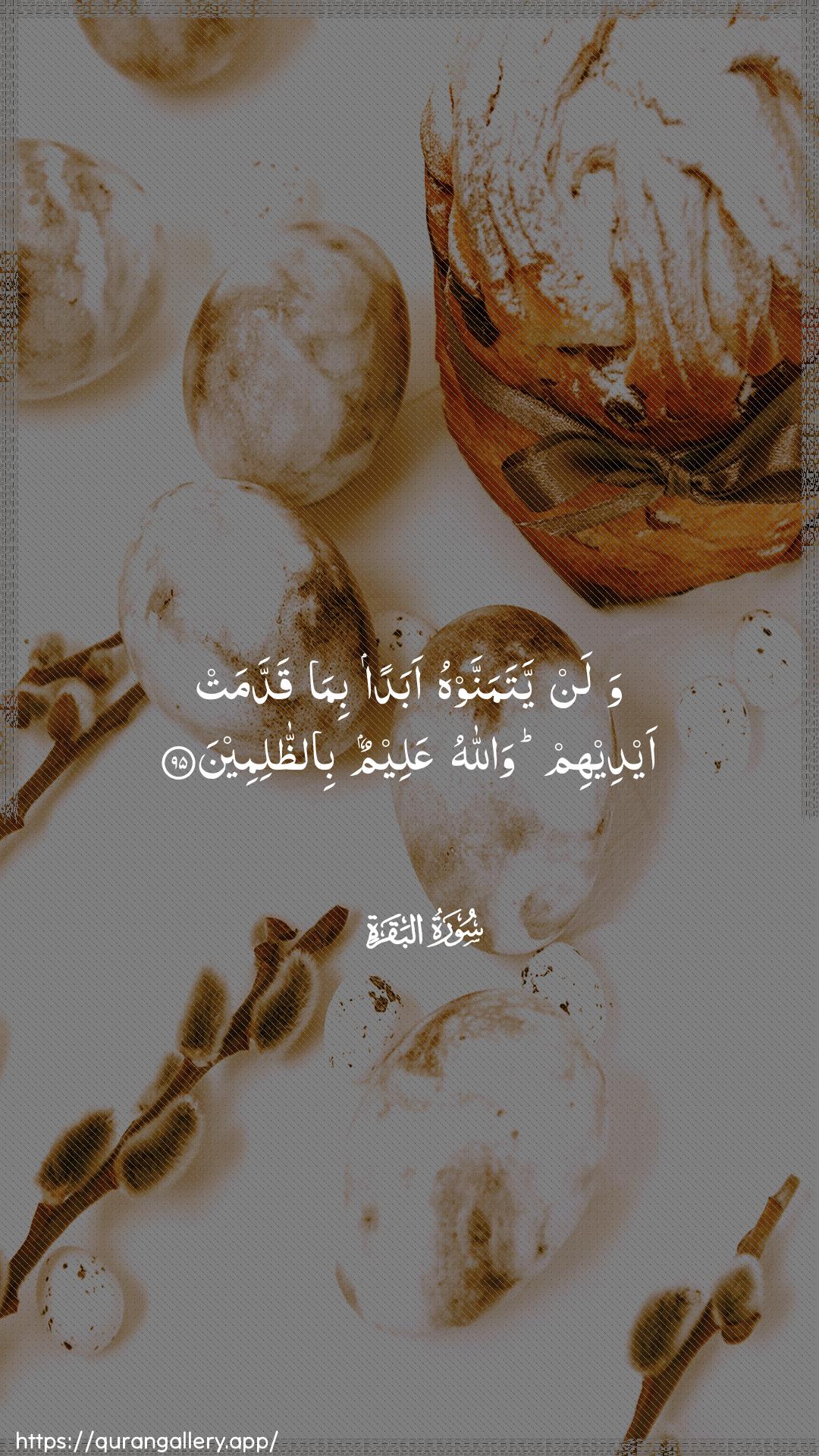
Arabic
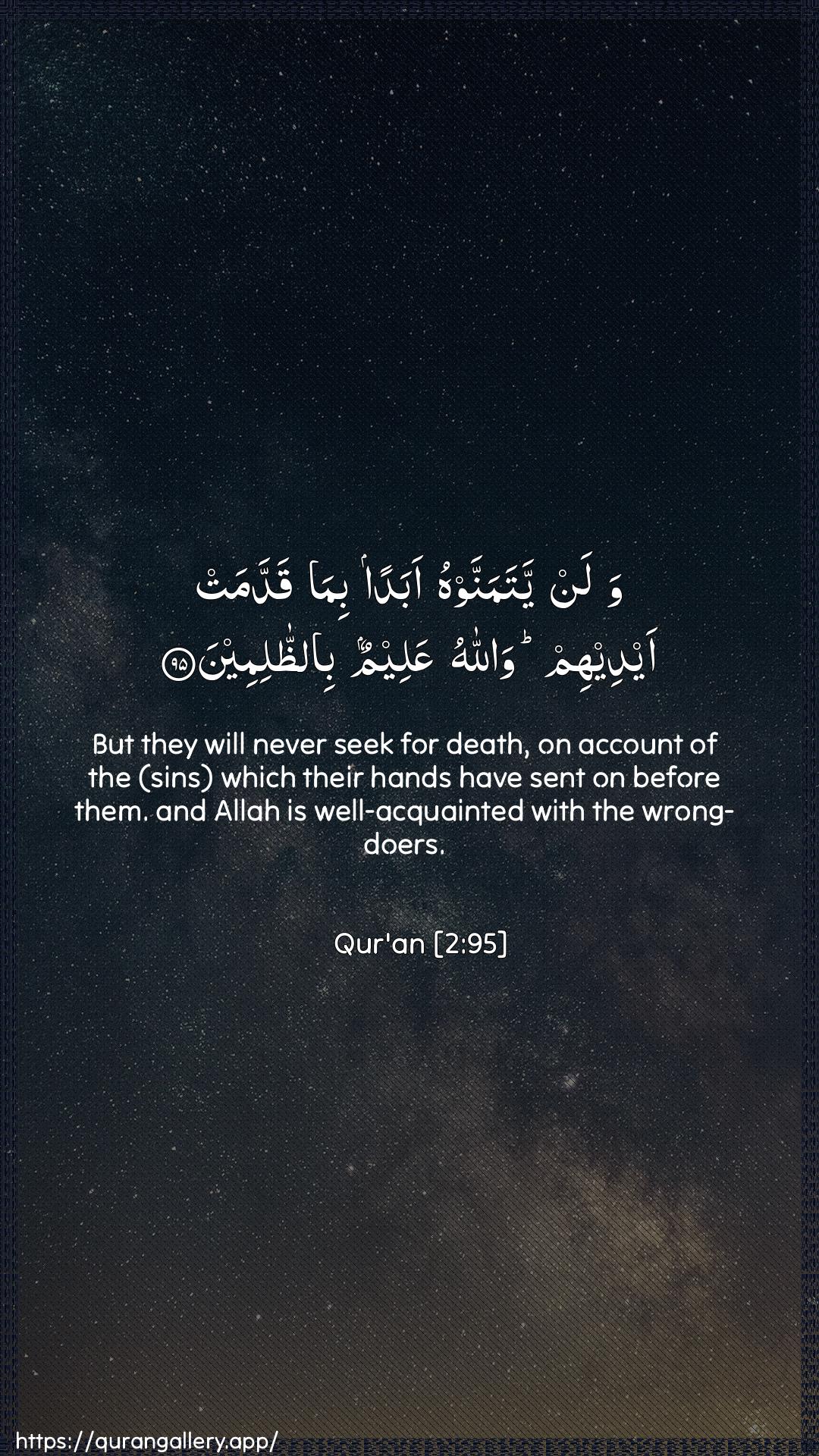
Arabic + English
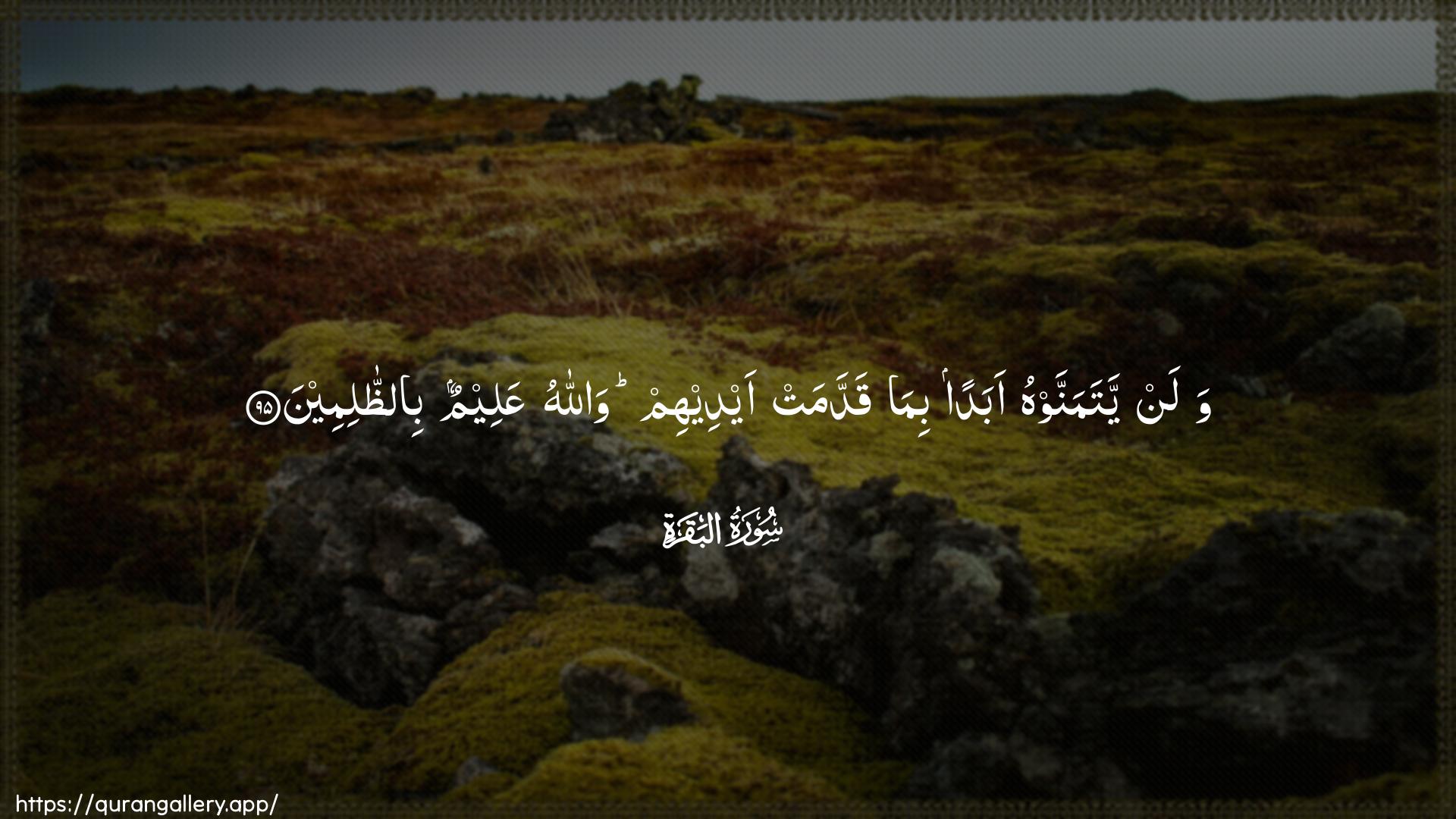
Arabic (Wide)
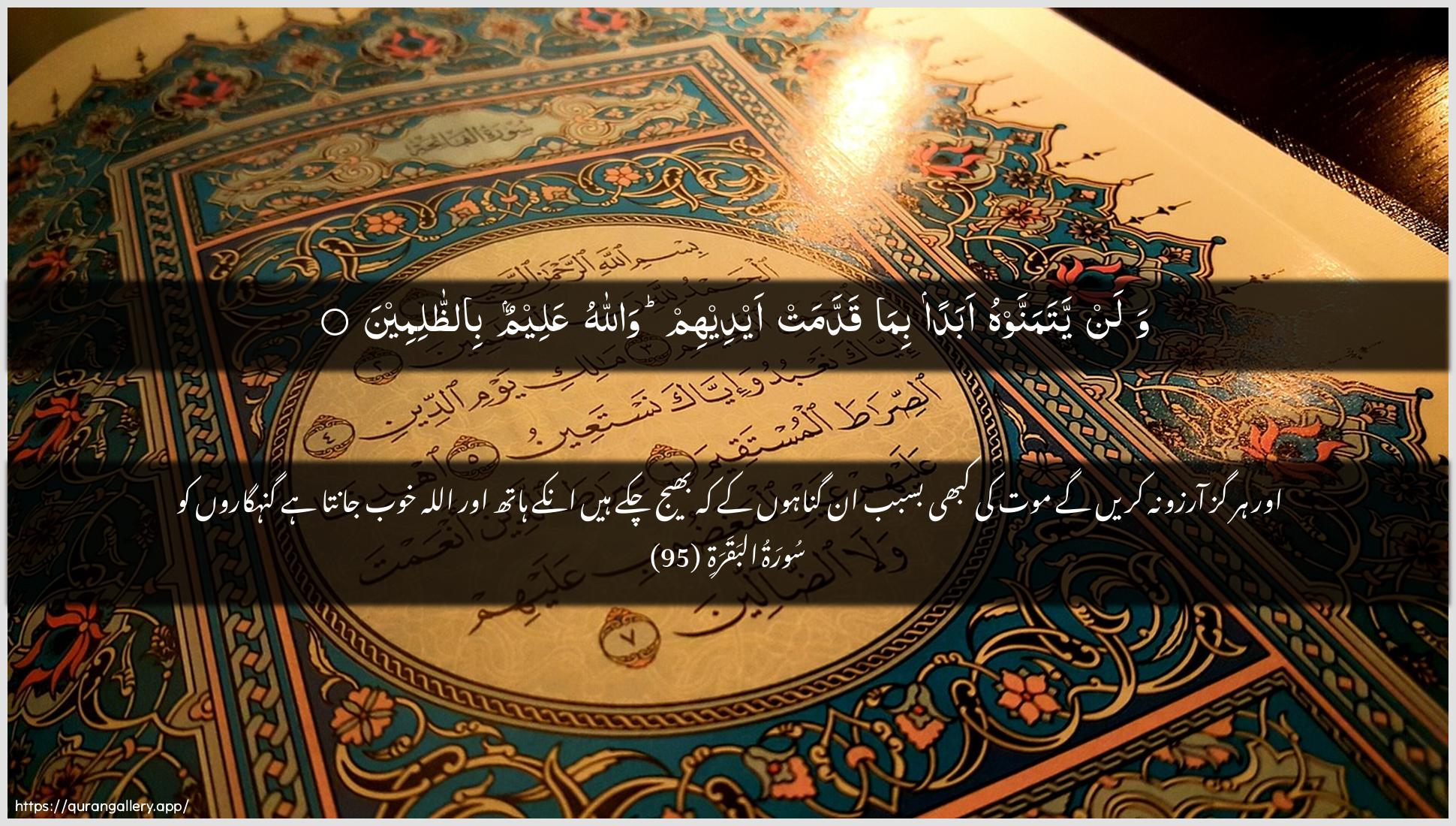
Arabic + Urdu
Free for personal & educational use with attribution
Quick Facts about this Verse
Surah
Al-Baqara
Revealed
Madani
Position
Juz 1,2,3
Explore this Verse
Verse Meaning
According to the classical exegesis of Ibn Kathir, verse 2:95 of Surah Al-Baqarah serves as a divine pronouncement on the spiritual state of the Children of Israel, exposing the insincerity behind their claims of exclusive divine favor. Following a direct challenge for them to wish for death if they were truthful (2:94), this verse declares they will *never* do so. The reason, as Al-Tabari explains, is encapsulated in the phrase 'bimā qaddamat aydīhim' (because of what their hands have sent forth). This is a powerful metaphor for their accumulated sins and willful disbelief, including their rejection of Prophet Muhammad ﷺ despite recognizing him from their scriptures. This refusal to accept the challenge, as noted by Al-Qurtubi, is a profound miracle (a prophecy of the unseen) and a testament to their own inner knowledge of their falsehood. They feared death because it would lead directly to accountability for their deeds. The verse concludes with 'Wallāhu 'alīmun biẓ-ẓālimīn' (And Allah is All-Knowing of the wrongdoers), a statement that not only confirms their injustice but also serves as a subtle warning that their internal state and hidden sins are perfectly known to Allah, and divine justice is inescapable.
Questions for Reflection
Personal Accountability
Reflect on the phrase 'because of what their hands have sent forth.' What 'portfolio' of deeds have my hands sent forth this week, this month, this year? Do these deeds cultivate a sense of hope and longing to meet Allah, or do they sow a hidden fear of accountability that I might not consciously admit?
Theological Sincerity
The Jews claimed exclusive right to the Hereafter. What exclusive claims might I unknowingly harbor in my heart about my own group, status, or practice? How does this verse challenge me to replace claims of exclusivity with the universal truth that only righteous deeds and sincere faith matter to Allah, Who is 'All-Knowing of the wrongdoers'?
Psychological State
This verse diagnoses a spiritual condition: the fear of death stemming from a guilty conscience. How does my daily conduct affect my psychological and spiritual peace? Does striving for justice and righteousness in my affairs naturally lead to a more serene and accepting attitude towards the inevitable reality of death and meeting Allah?
Practical Applications
Conduct a daily self-audit of your deeds, asking, 'Do my actions today make me more prepared to meet Allah?'
In a world of performative piety, this encourages private, sincere self-reflection and action-based faith.
When claiming a spiritual station or belief, ensure your internal state and outward actions are in complete alignment with that claim.
Applicable to avoiding hypocrisy in social media personas and public life, ensuring authenticity in one's faith.
Hidden Gem
The synthesis of tafsirs reveals that this is not merely a historical account, but a divine law of the soul. Allah is stating a universal principle: a soul that knows its own injustice ('ẓulm') cannot genuinely wish for a meeting with the ultimate Justice. Their refusal was not a choice but an inevitable consequence of their inner state. Contemplate how your own pursuit of justice in all matters is intrinsically linked to your spiritual courage and readiness for the ultimate return.
Scroll to see more verses or use the dropdown in the breadcrumb to jump to any verse