
Al-Baqara - The Cow
Arabic Name: الْبَقَرَة
Urdu Name: گائے
Type: Madani
Serial Number: 2
Revelation Order: 87
Total Verses: 286
Parah: 1,2,3
Rukus: 40
Sajda: None
Share Verse Art

Arabic
Arabic + English

Arabic (Wide)
Arabic + Urdu
Free for personal & educational use with attribution
Quick Facts about this Verse
Surah
Al-Baqara
Revealed
Madani
Position
Juz 1,2,3
Explore this Verse
Verse Meaning
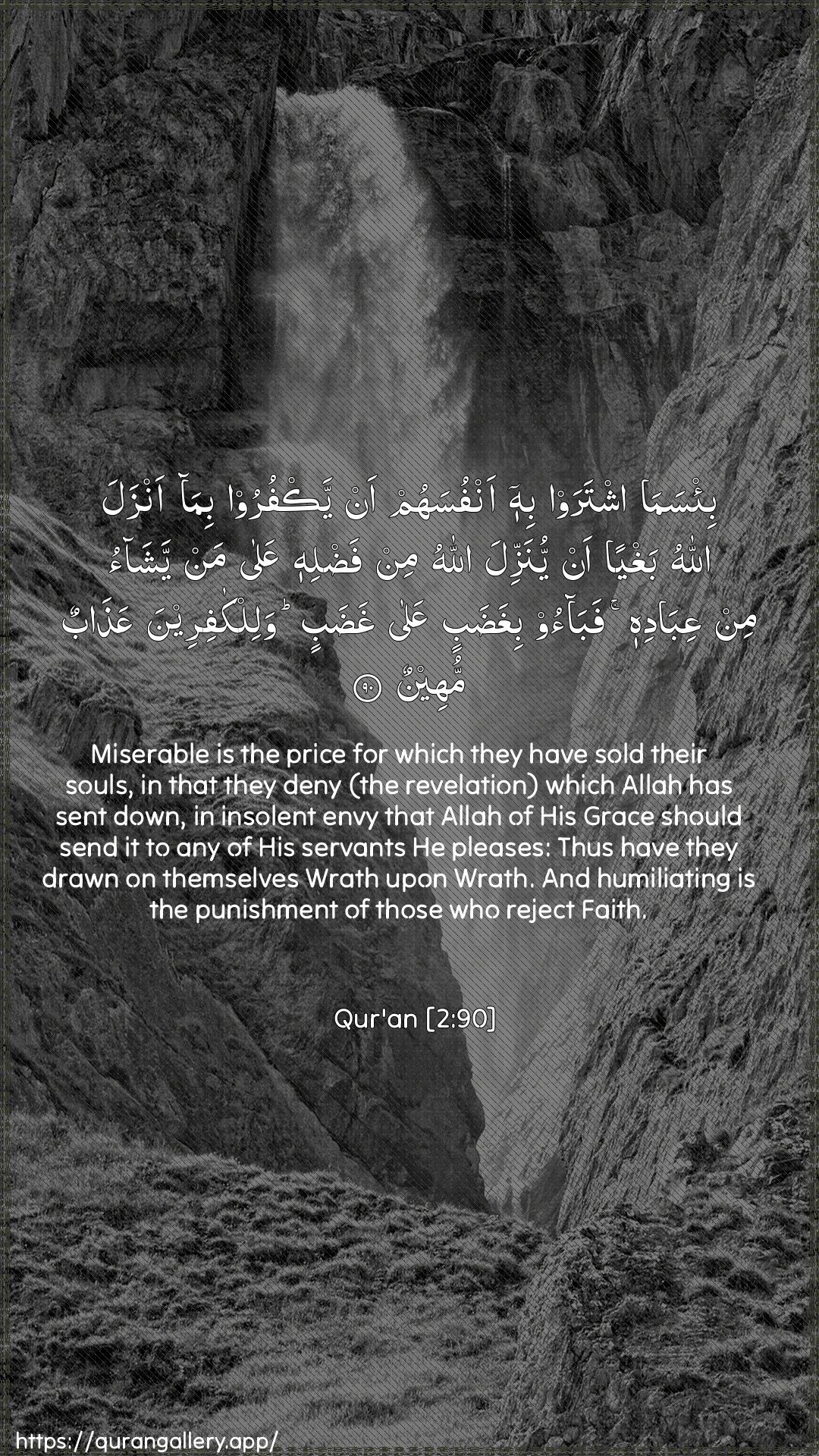
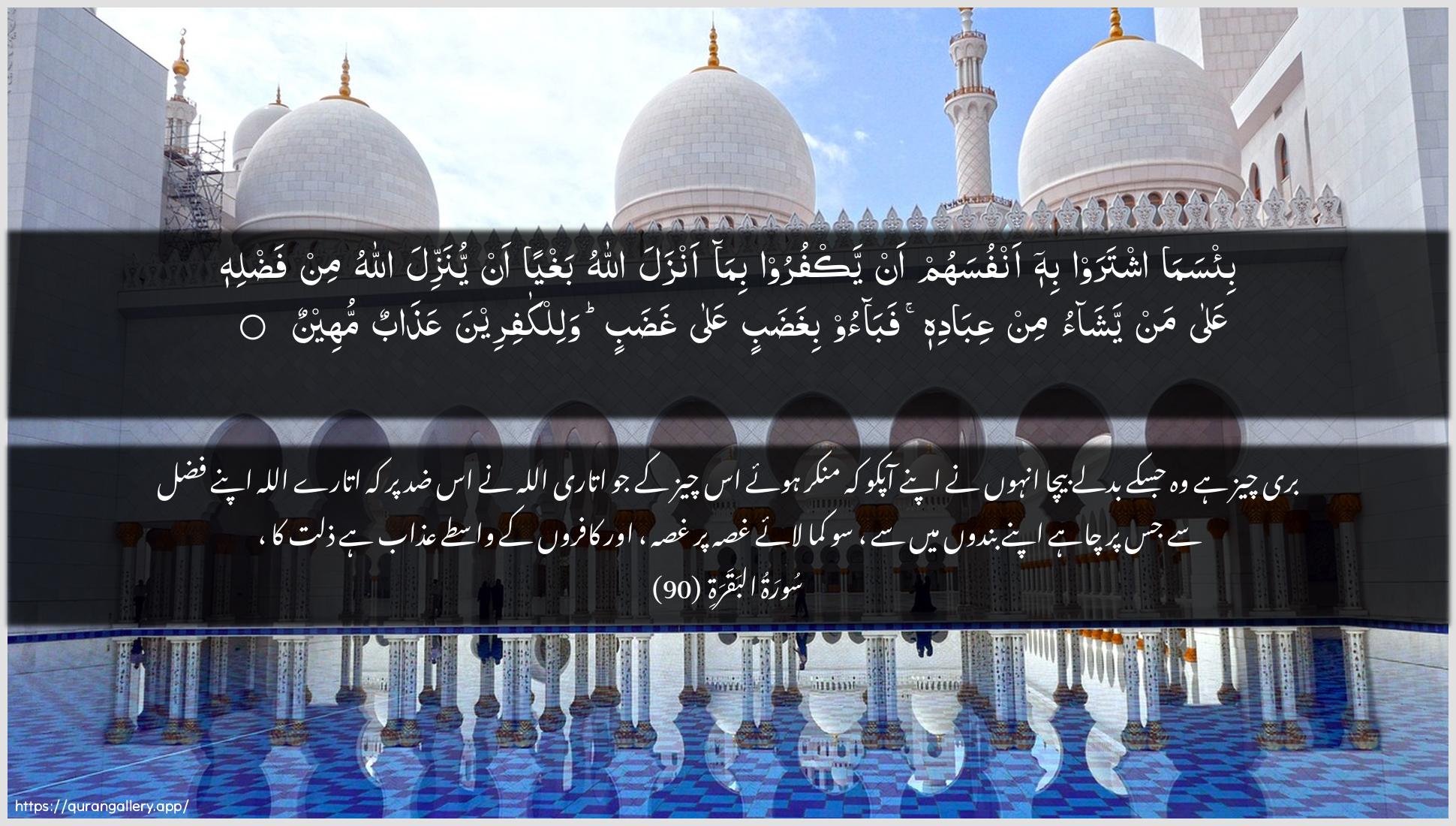
According to the classical exegete Ibn Kathir, Quran 2:90 reveals the wretched spiritual bargain the Children of Israel made, selling their souls for the price of disbelief. This rejection was not due to ignorance, but 'baghyan'—an insolent envy, as Al-Tabari clarifies, that Allah would bestow His favor of prophethood upon whomever He wills, in this case, an Arab, Prophet Muhammad ﷺ. This act of resentful rebellion, born from tribal arrogance, caused them to incur 'wrath upon wrath.' The synthesis of scholarly opinions, including those of Qatadah and As-Suddi, reveals this is a cumulative divine anger; the first wrath for past transgressions like worshipping the calf and altering the Torah, and the second, compounded wrath for their final act of rejecting the awaited Messenger. The verse concludes with a universal principle: for such disbelievers, whose denial stems from arrogance, there is a 'humiliating punishment,' fittingly countering their pride with ultimate disgrace.
Questions for Reflection
Theological Contemplation
The verse identifies their core sin as being resentful that 'Allah should send down His bounty to whomsoever He wills.' Contemplate the nature of Allah's absolute sovereignty. In what subtle ways might I harbor resentment against the divine decree when I see blessings, talents, or opportunities given to others that I desired for myself?
Personal Transformation
Ibn Kathir explains they 'sold their souls' for a wretched price. Reflect on the small, daily 'transactions' of the soul. When have I traded a moment of honesty for social acceptance, a moment of integrity for a small gain, or a moment of humility for the satisfaction of pride? How do these small sales accumulate over time?
Relational Wisdom
The punishment is 'humiliating' ('muhin'), a direct response to their arrogance and envy. Contemplate how envy manifests in your interactions. Does it appear as excessive criticism, downplaying others' achievements, or finding faults in those who possess a blessing you lack? How can you replace this with sincere appreciation and encouragement?
Practical Applications
Audit your disagreements: When you reject an idea or advice, pause and ask, 'Is my rejection based on the substance of the message, or the identity of the messenger?'
Applicable in professional settings, family dynamics, and social media, where envy of another's success or platform can lead to unjust criticism.
Reframe blessings given to others as a test of your submission to Allah's will, not as a personal deficit.
A powerful tool against social media-induced anxiety and comparison culture, promoting mental and spiritual well-being.
When you feel the sting of envy, immediately make a sincere du'a for the person you envy to be blessed even more.
Can be used when seeing a colleague's promotion, a friend's success, or anyone's blessing that triggers a negative internal response.
Hidden Gem
The synthesis reveals that 'baghyan' is not just simple jealousy; it's a form of theological rebellion. They were not just envious of a man; they were outraged at Allah's decision. This transforms the contemplation from a mere moral lesson about envy into a profound examination of our own submission to the divine will and wisdom in every aspect of life.
Scroll to see more verses or use the dropdown in the breadcrumb to jump to any verse