
Al-Baqara - The Cow
Arabic Name: الْبَقَرَة
Urdu Name: گائے
Type: Madani
Serial Number: 2
Revelation Order: 87
Total Verses: 286
Parah: 1,2,3
Rukus: 40
Sajda: None
Share Verse Art
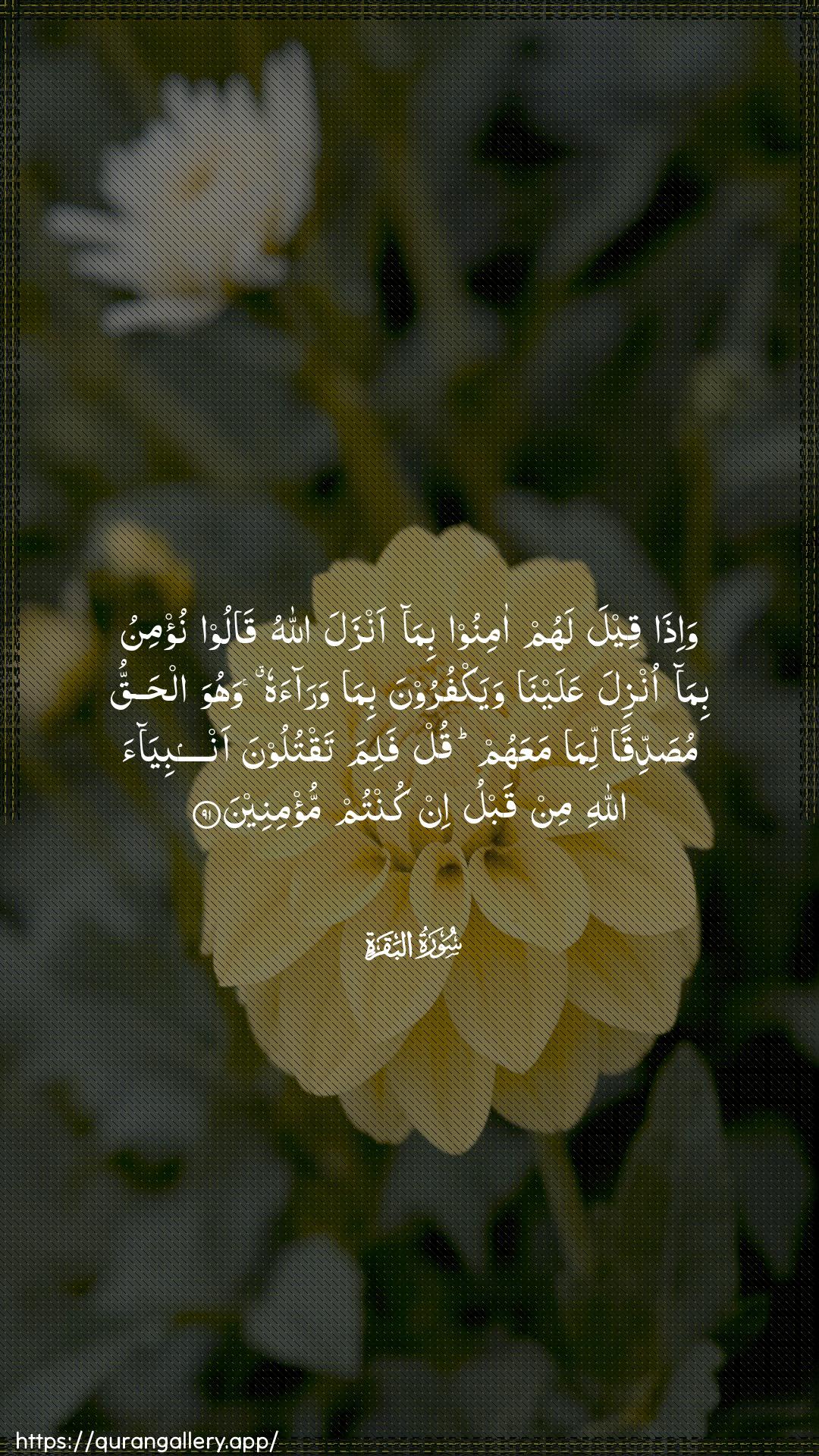
Arabic
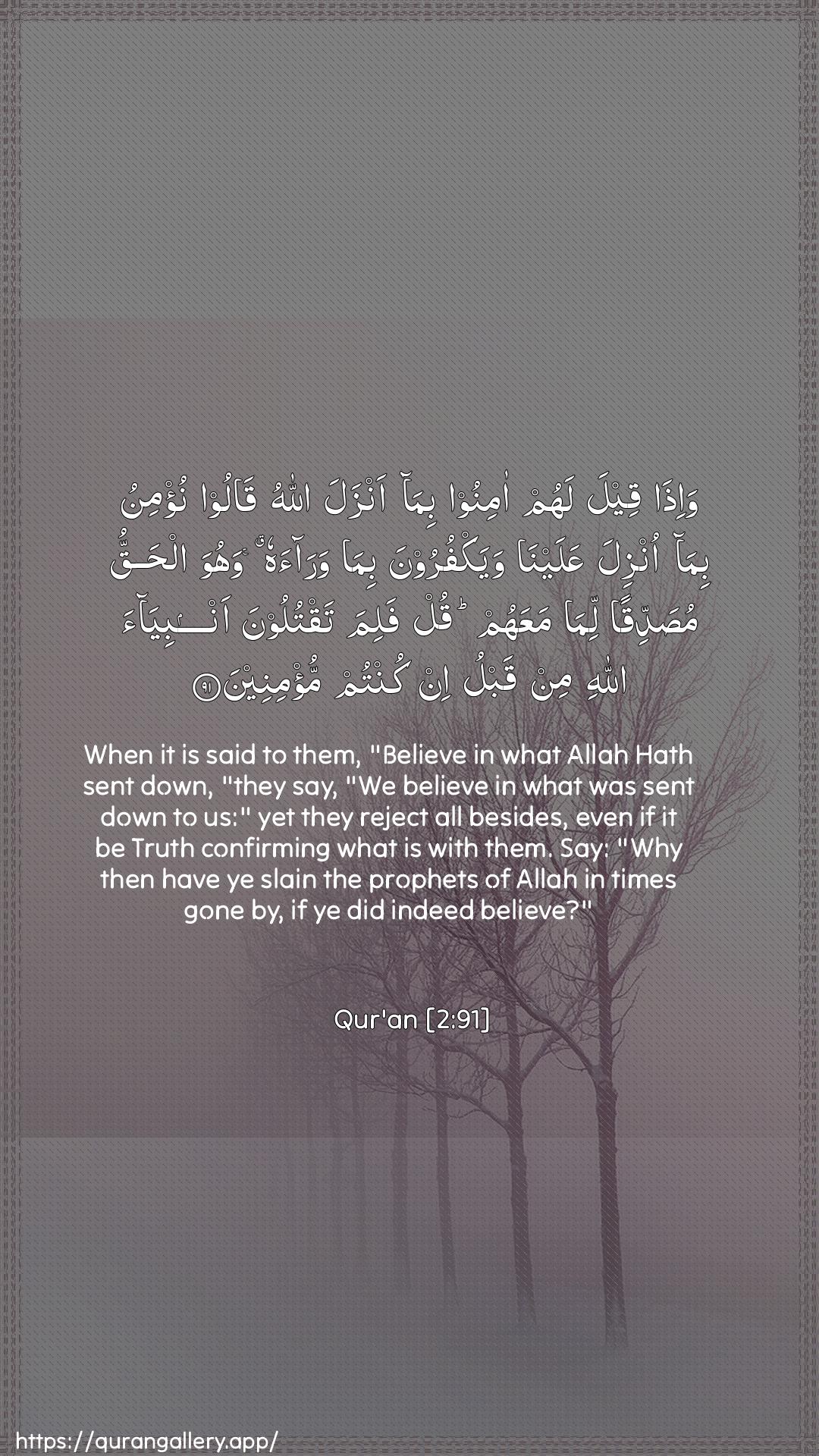
Arabic + English
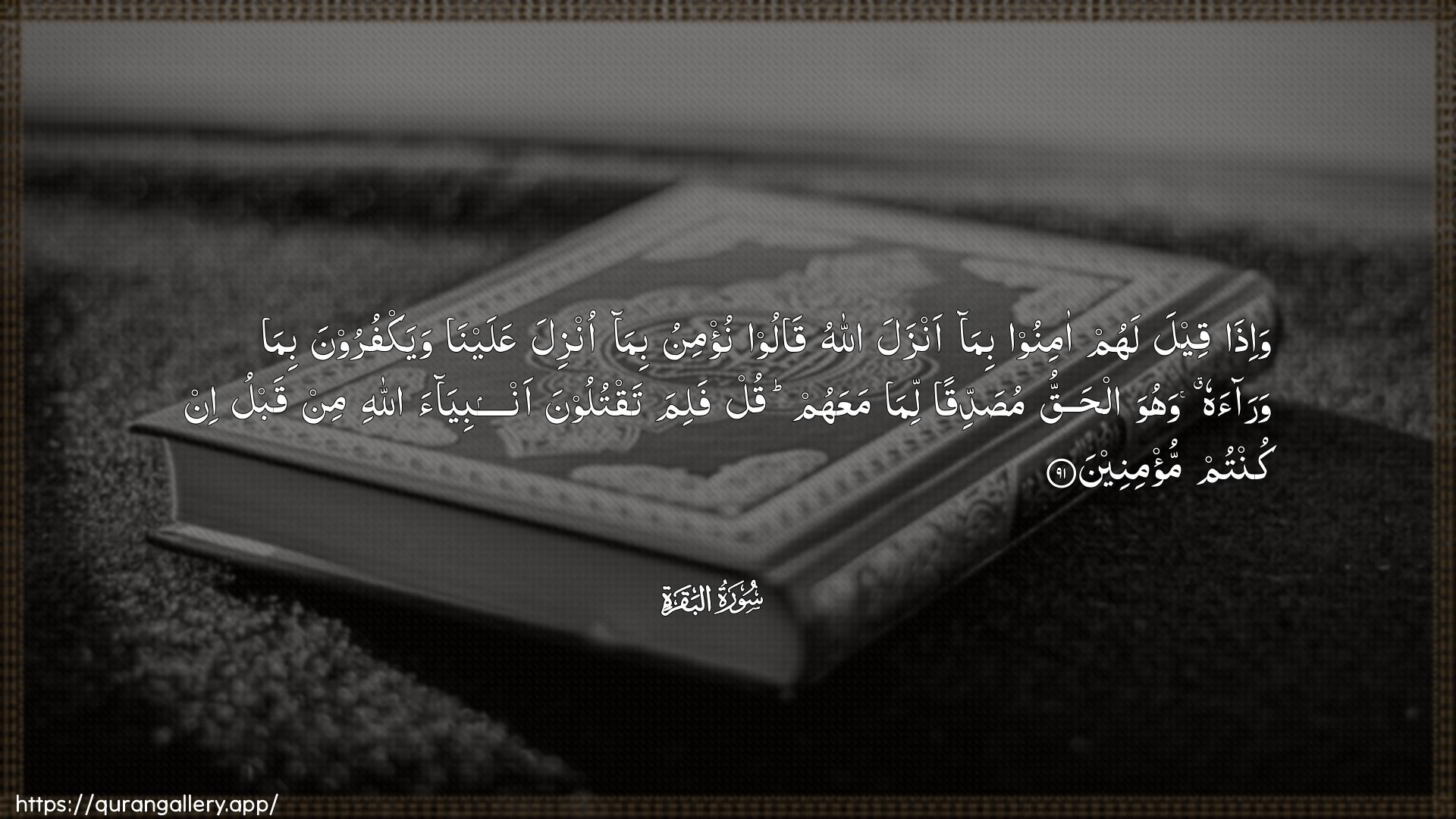
Arabic (Wide)
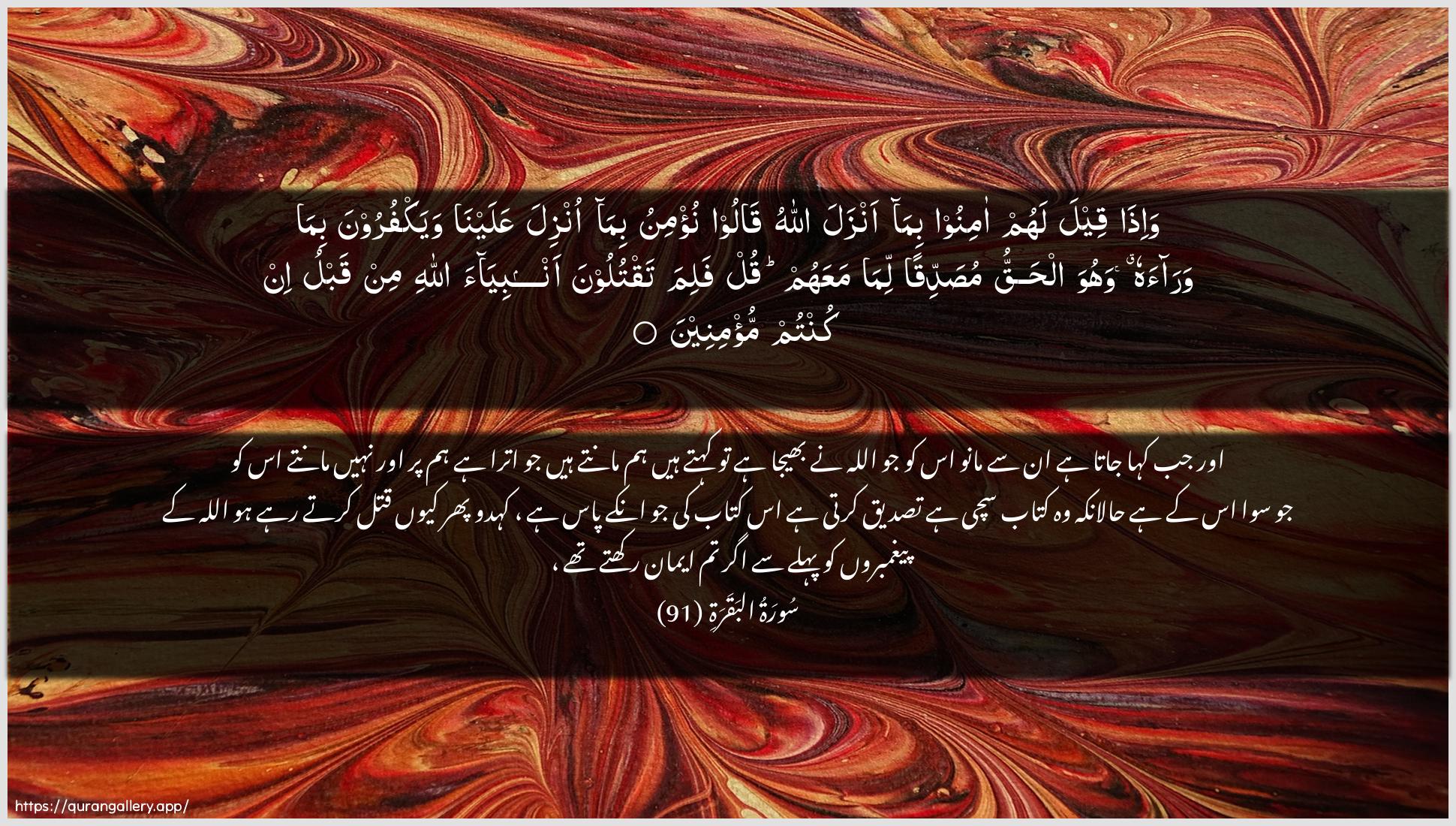
Arabic + Urdu
Free for personal & educational use with attribution
Quick Facts about this Verse
Surah
Al-Baqara
Revealed
Madani
Position
Juz 1,2,3
Explore this Verse
Verse Meaning
According to the classical tafsir of Ibn Kathir, Surah Al-Baqarah verse 91 exposes the profound hypocrisy of the Children of Israel through a powerful rhetorical question. When invited to believe in what Allah has revealed—the Quran—they claim exclusive faith in their own scripture, the Torah, stating, "We believe in what was revealed to us." Al-Tabari explains that this statement is an act of rejection against all subsequent revelation. This exclusive claim is immediately dismantled by Allah's counter-argument, highlighting that the Quran is the Truth (`Al-Haqq`) and, crucially, confirms the very scriptures they claim to uphold. The synthesis of scholarly thought reveals a deep contradiction: if their faith in the Torah was genuine, as Al-Qurtubi discusses, they would necessarily accept the Quran which validates it. The verse culminates in the devastating challenge: "Why then did you kill the prophets of Allah before, if you were believers?" This question refutes their claim to faith by citing their own history of murdering the very prophets who brought the Torah's laws, proving their belief was a superficial claim contradicted by their actions.
Questions for Reflection
personal
The verse presents the claim: 'We believe in what was revealed to us.' Reflect on your own life. Are there parts of Islam you readily accept because they are easy or align with your culture, while ignoring other parts that challenge your desires? Where does your 'belief' stop and your 'self' begin?
historical
Allah uses the gravest of past sins—killing prophets—to challenge their claim. Al-Tabari explains this is because they approved of their ancestors' actions. Contemplate the concept of inherited legacy. In what ways do you passively accept or even approve of past injustices or falsehoods within your own family, community, or culture, thereby making them a part of your own spiritual reality?
communal
Ibn Kathir highlights that the Quran came 'confirming what is with them.' They rejected a truth that affirmed their own. Reflect on your community. Are there times when you or your community reject external wisdom or sincere advice simply because of its source, even if that advice aligns with Islamic principles? How does this 'tribalism' prevent spiritual growth and unity?
Practical Applications
Conduct a 'Belief-Action Audit' by evaluating if your daily actions align with your claimed Islamic beliefs, especially in areas you find difficult.
Applicable to modern scenarios like claiming to be honest while engaging in minor deceptions in business or social life.
Embrace all of God's truth by actively seeking knowledge from the Quran, even if it challenges your cultural norms or personal comfort zones.
Relevant for Muslims who may adhere to cultural practices that conflict with clear Quranic injunctions.
Cultivate respect for all prophets and messengers of God, understanding that rejecting one is equivalent to rejecting all.
Important in interfaith dialogue and for building a comprehensive understanding of salvation history.
Hidden Gem
A profound insight from the synthesis of tafsirs is that Allah refutes their claim not with a theological argument first, but with a behavioral one ('Why did you kill...'). This demonstrates a divine principle: behavior is the most honest tafsir of belief. Contemplate how your own actions are a running commentary on the state of your heart, more truthful than any words you might profess.
Scroll to see more verses or use the dropdown in the breadcrumb to jump to any verse