
Al-Baqara - The Cow
Arabic Name: الْبَقَرَة
Urdu Name: گائے
Type: Madani
Serial Number: 2
Revelation Order: 87
Total Verses: 286
Parah: 1,2,3
Rukus: 40
Sajda: None
Share Verse Art
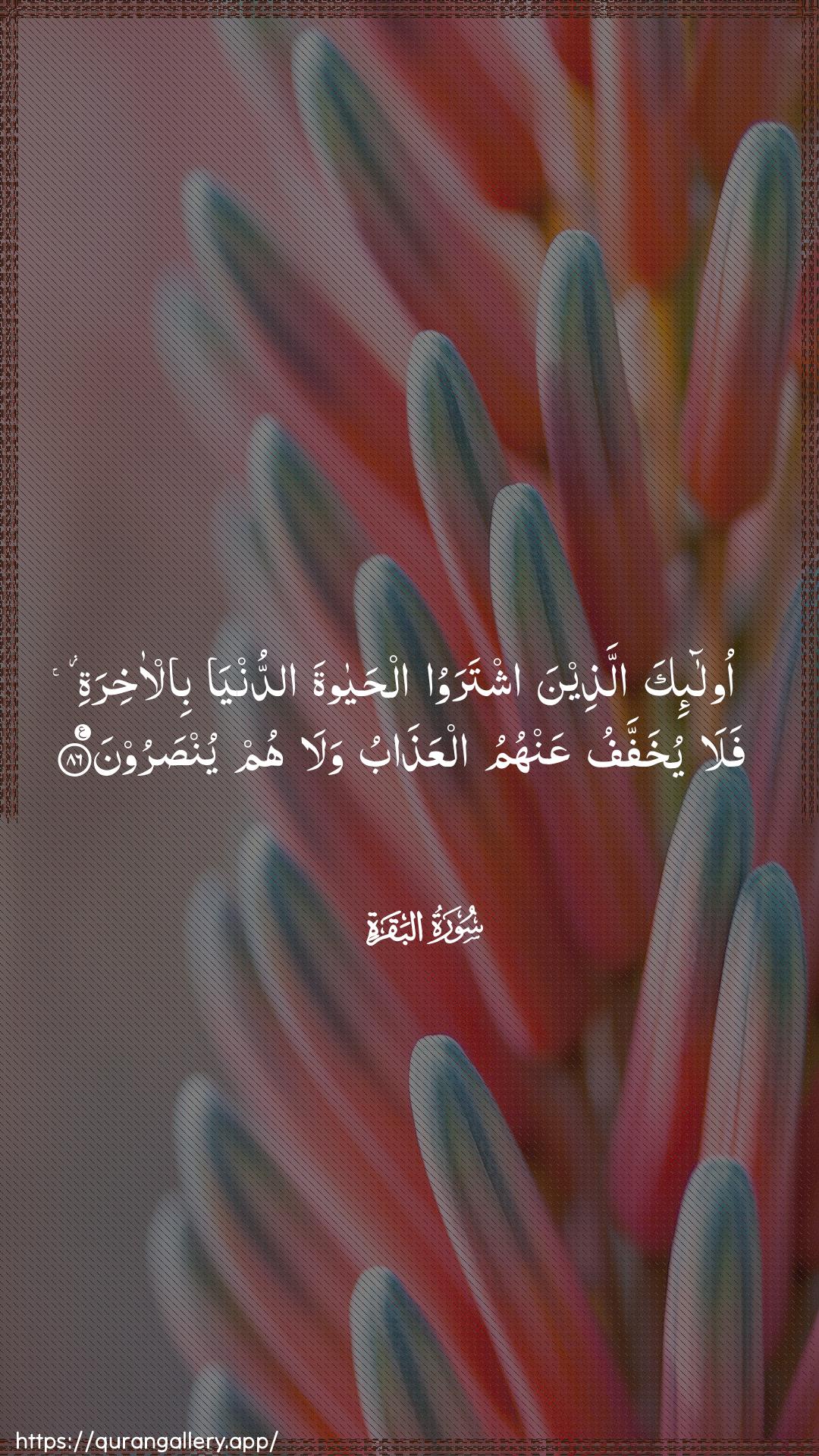
Arabic
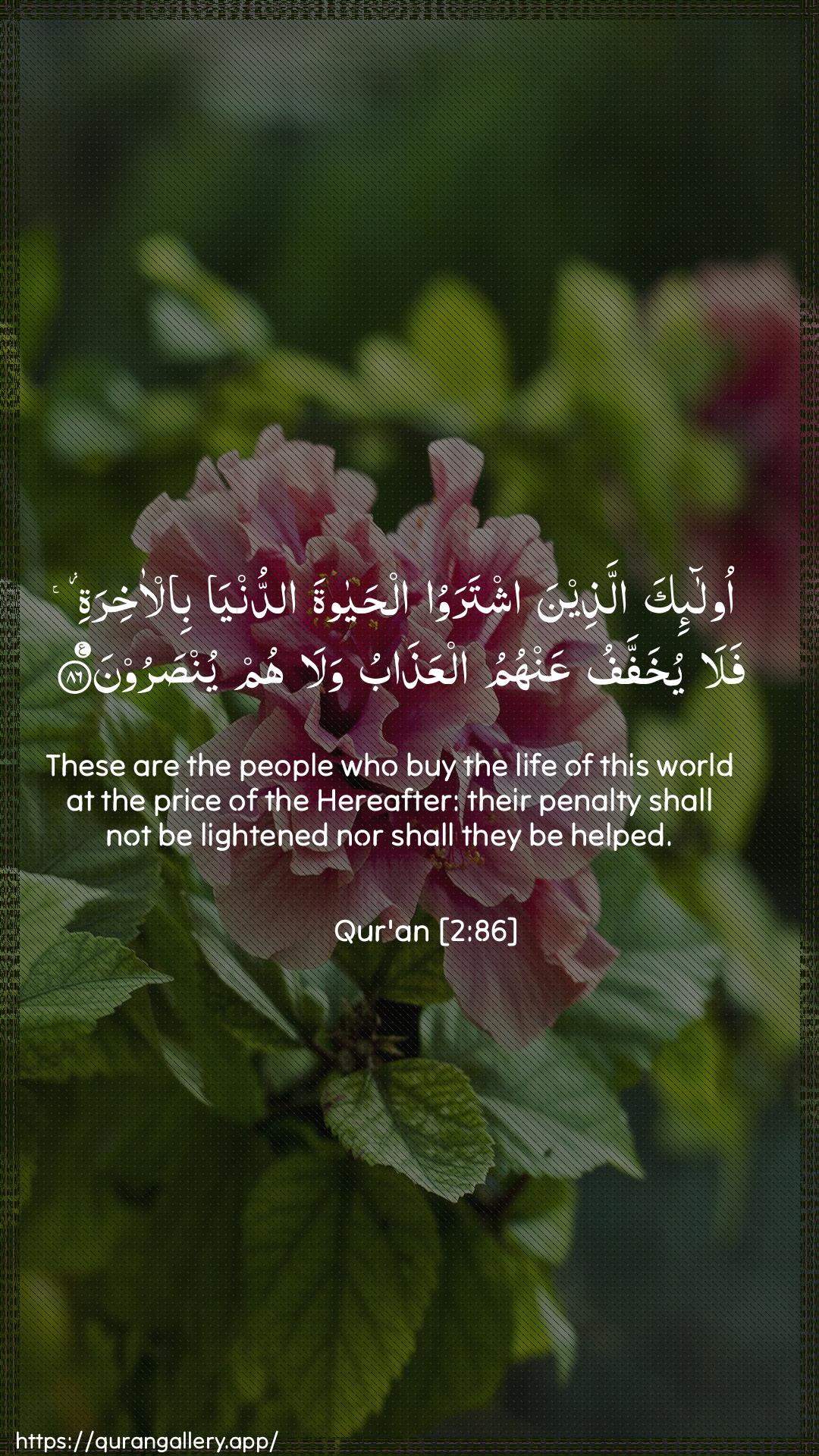
Arabic + English
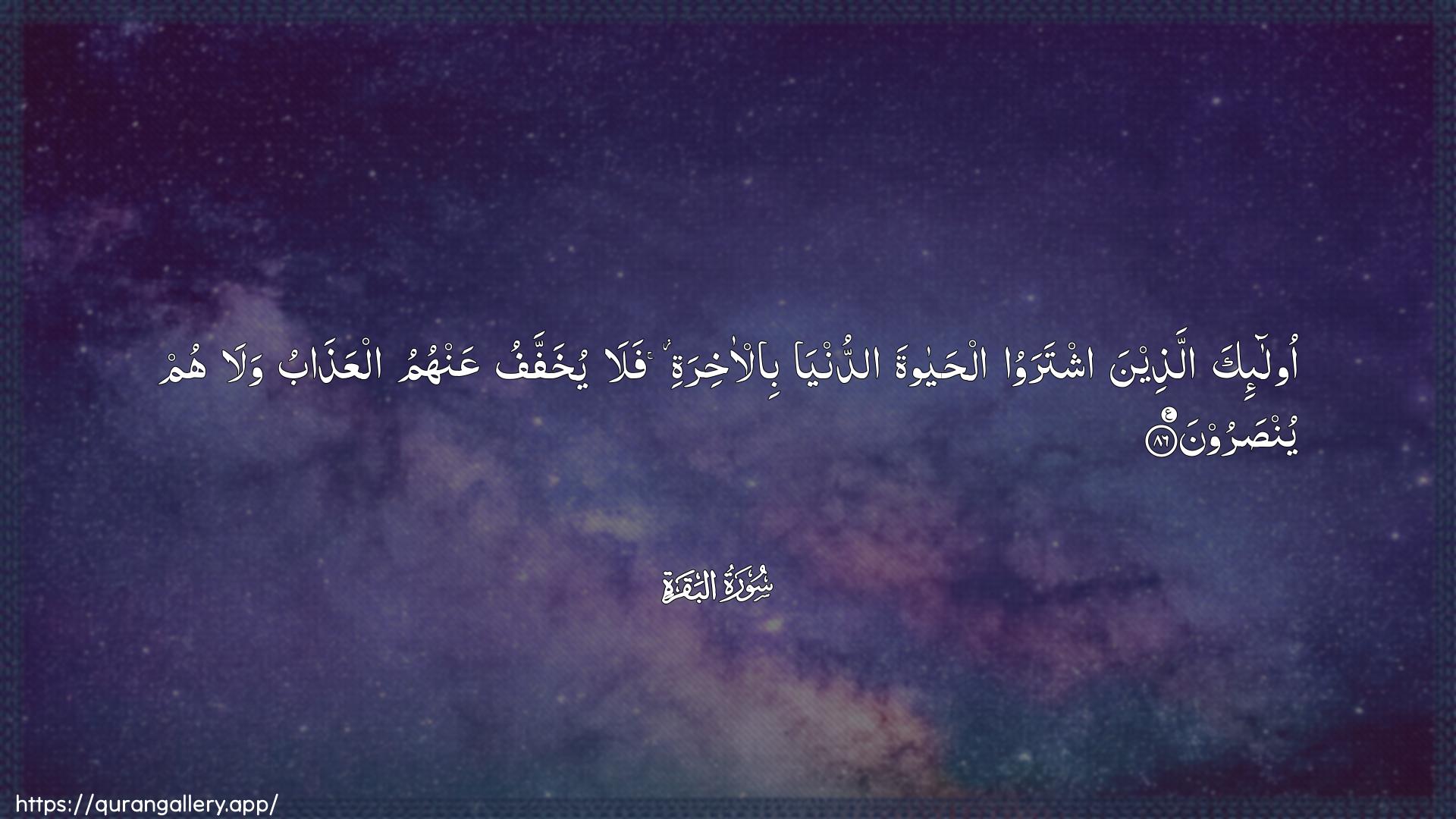
Arabic (Wide)
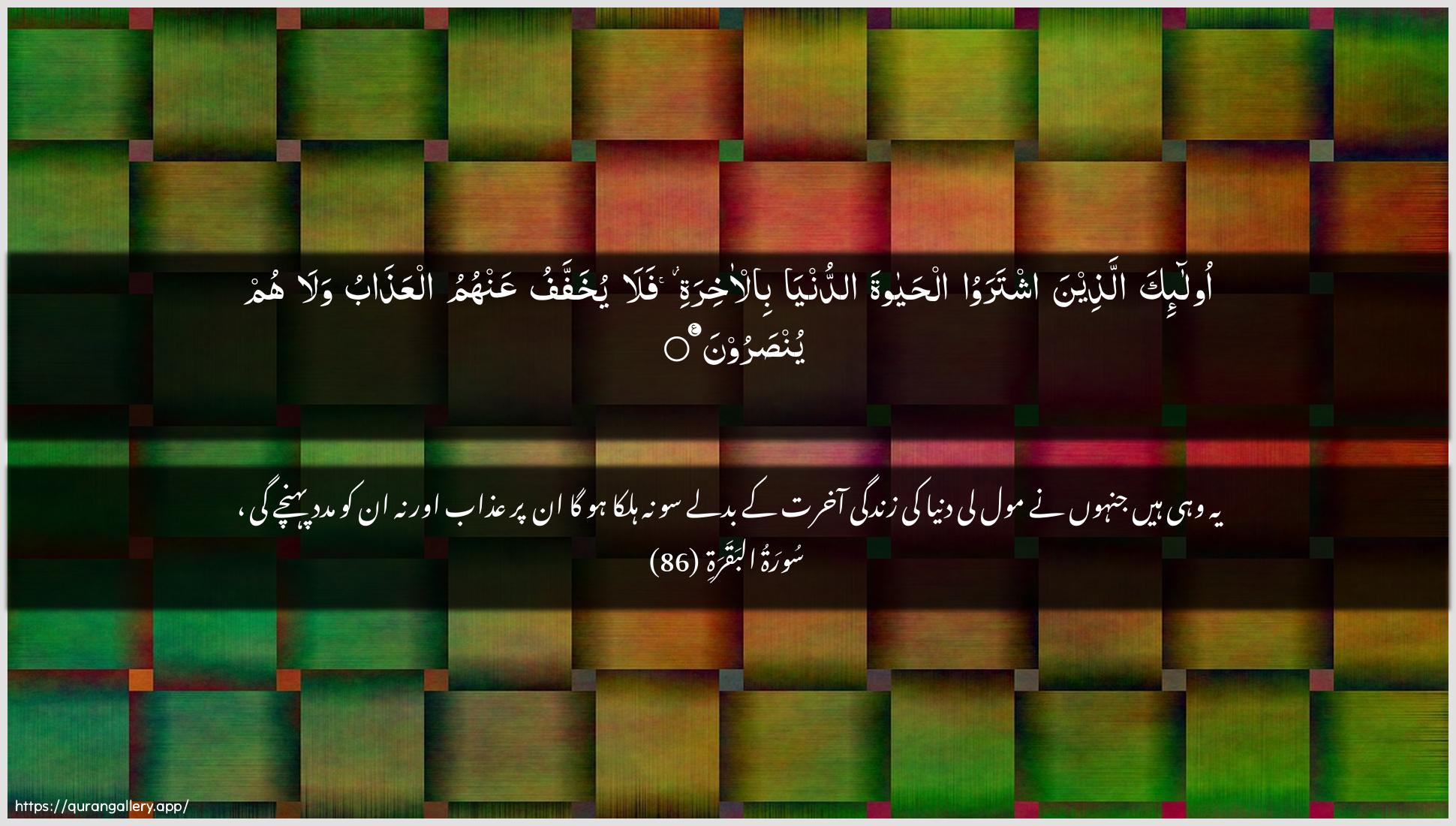
Arabic + Urdu
Free for personal & educational use with attribution
Quick Facts about this Verse
Surah
Al-Baqara
Revealed
Madani
Position
Juz 1,2,3
Explore this Verse
Verse Meaning
According to the classical scholar Ibn Kathir, Quran 2:86 describes those who have willfully preferred the worldly life over the Hereafter. A comprehensive analysis of tafsirs, including those of Al-Tabari and Al-Qurtubi, reveals this is not a simple mistake but a deliberate 'purchase' or 'trade' where eternal bliss is exchanged for transient gains. Al-Tabari emphasizes that they accepted the lowly pleasures of the world as a substitute for the eternal gardens. This synthesis of scholarly opinion shows the verse addresses the mindset of those who selectively obey divine commands, particularly the Bani Israel of Medina who honored parts of their covenant (like ransoming captives) but violated others (like killing and expelling their brethren) for tribal allegiances and worldly status. The profound insight emerging from this cross-tafsir analysis is that this 'purchase' leads to an inescapable and unmitigated punishment. The verse's finality, 'their punishment will not be lightened, nor will they be helped,' serves as a divine declaration that on the Day of Judgment, no intercessor, ally, or power can avert the consequences of this foolish bargain.
Questions for Reflection
personal
The verse uses the metaphor of a purchase ('ishtara'). Reflect on a recent situation where you felt a conflict between a worldly benefit (e.g., social status, financial gain, convenience) and an Islamic principle. What 'price' were you willing to pay for the worldly gain, and what did it 'cost' your Hereafter? How does viewing this through the lens of a final, irreversible transaction change your perspective?
eschatological
Contemplate the phrases 'punishment will not be lightened' and 'nor will they be helped.' Ibn Kathir describes this as a permanent state with no rescuer. Imagine the utter hopelessness of that moment. How does this terrifying finality expose the foolishness of the 'trade' made in this life? How should this reality motivate you to seek Allah's help and forgiveness now, when it is still available?
Practical Applications
Conduct a 'spiritual audit' of your major life decisions: career, relationships, and finances. Ask if the primary motivation is worldly status or pleasing Allah.
Applicable in today's high-pressure environments where success is often measured solely by material wealth and social standing.
Identify one area of Islamic practice you find difficult or inconvenient and make a sincere intention to adhere to it, specifically to prove you value the Hereafter more.
Relevant for overcoming challenges like waking for Fajr, dressing modestly, or avoiding interest-based transactions in a secular society.
Hidden Gem
A profound insight from synthesizing the tafsirs is that the punishment is not just a consequence but a direct reflection of the choice. They chose the 'heavy' and tangible world over the 'unseen' Hereafter, so their punishment is absolute and un-lightened. They chose to rely on worldly allies over Allah, so in the end, they will 'not be helped.' The punishment is the perfect, inescapable mirror of their earthly bargain.
Scroll to see more verses or use the dropdown in the breadcrumb to jump to any verse