
Al-Baqara - The Cow
Arabic Name: الْبَقَرَة
Urdu Name: گائے
Type: Madani
Serial Number: 2
Revelation Order: 87
Total Verses: 286
Parah: 1,2,3
Rukus: 40
Sajda: None
Share Verse Art

Arabic
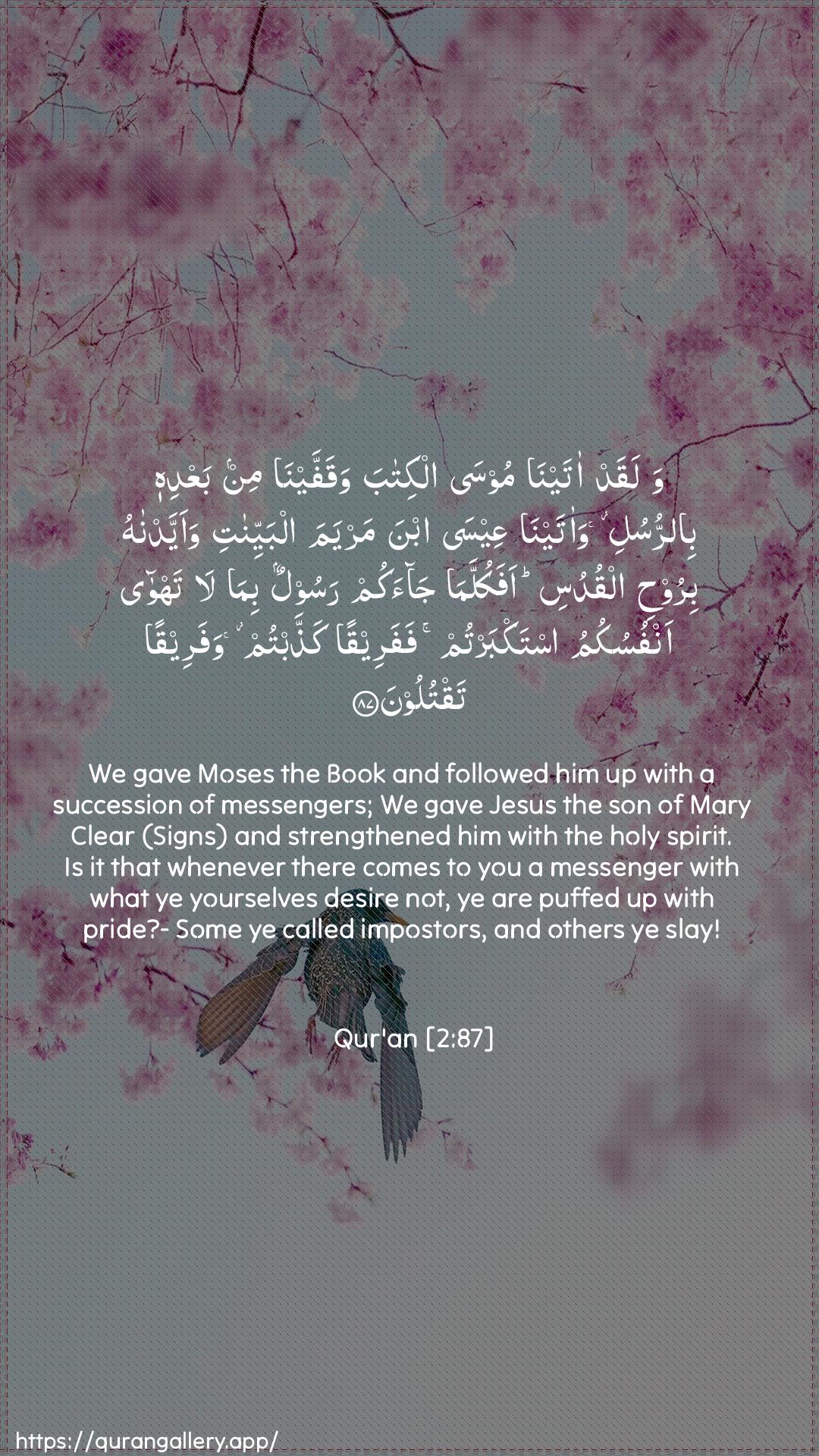
Arabic + English
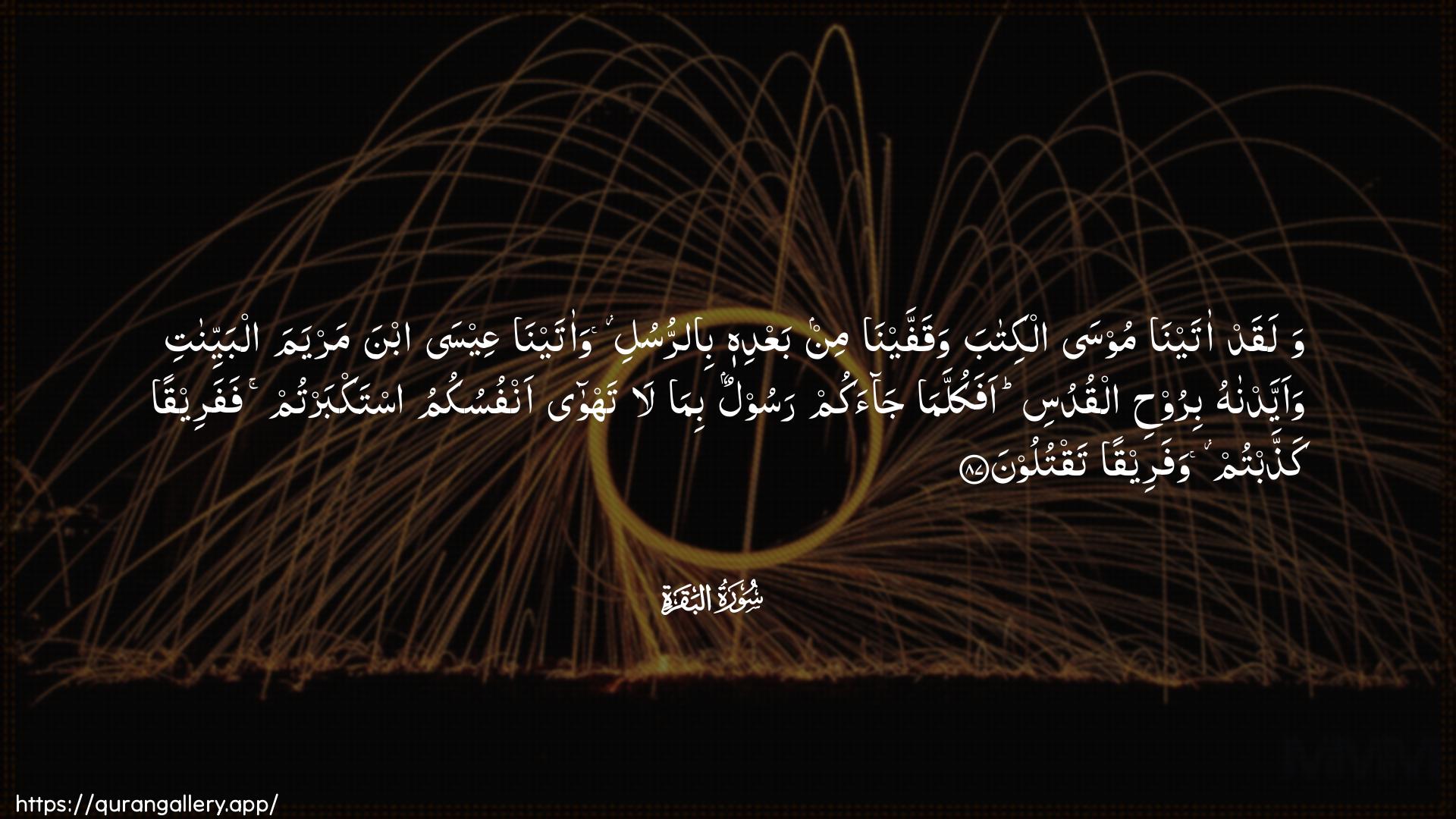
Arabic (Wide)
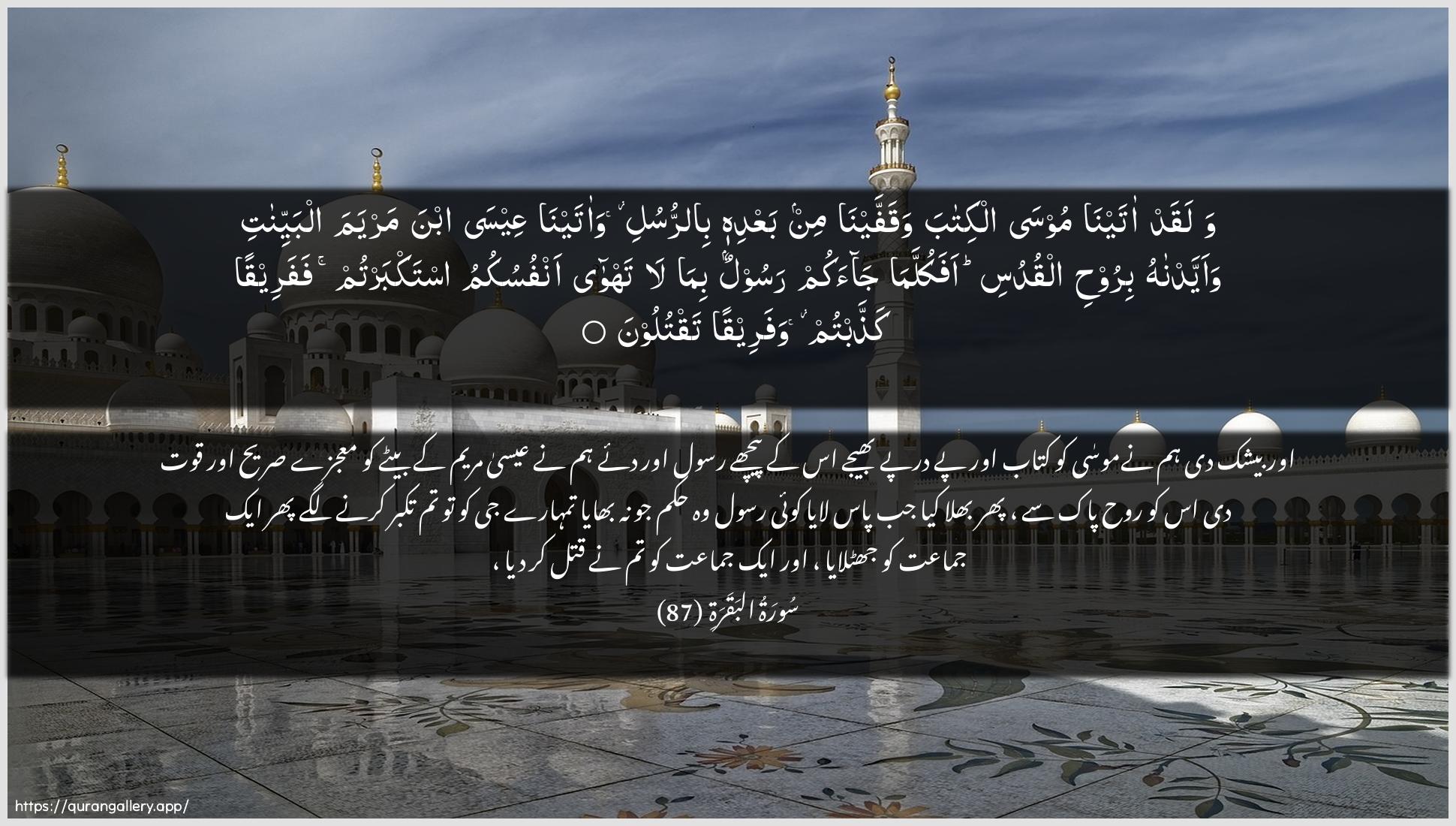
Arabic + Urdu
Free for personal & educational use with attribution
Quick Facts about this Verse
Surah
Al-Baqara
Revealed
Madani
Position
Juz 1,2,3
Explore this Verse
Verse Meaning
According to the classical scholar Ibn Kathir, Quran 2:87 serves as a powerful indictment of the Children of Israel's persistent rebellion against divine guidance. The verse recounts a history of blessings met with arrogance: Allah bestowed the Torah upon Musa (Moses), sent a continuous succession of messengers, and granted Isa (Jesus), the son of Mary, clear miracles (Al-Bayyināt) while supporting him with the Holy Spirit (Rūḥ al-Qudus), identified by a consensus of early scholars like Ibn Abbas and Qatadah as the Angel Jibril (Gabriel). A comprehensive synthesis of tafsirs, including those of Al-Tabari and Al-Qurtubi, reveals a profound spiritual disease: whenever a divine message contradicted their personal desires and worldly ambitions, they reacted with pride (istikbār). This arrogance manifested in a twofold crime—rejecting one group of prophets as liars and murdering another. The hidden gem in this cross-tafsir analysis is not merely the historical account, but the diagnosis of a timeless human ailment: the conflict between divine truth and the ego's desires (al-hawā), which leads to the rejection of guidance and, in its ugliest form, violence against the very bringers of truth.
Questions for Reflection
Personal Accountability
The verse states, '...a messenger came to you... with what your souls did not desire.' Reflect on a time a piece of Islamic advice or a command felt 'heavy' or undesirable. Was the resistance rooted in a lack of clarity in the proof, or a conflict with your personal comfort, habits, or ego? How does my soul's desire (hawā) manifest as a barrier to truth today?
The Nature of Divine Support
Allah supported Isa with 'clear proofs' (Al-Bayyināt) and the 'Holy Spirit.' Contemplate the forms of divine support and clear proofs in your own life that you may be overlooking. Are there 'messengers' of guidance—scholars, righteous friends, life events—that you have dismissed because their message was not what you desired to hear?
The Spectrum of Rejection
The verse mentions two outcomes of arrogance: 'a party you denied and another party you killed.' While we may not physically kill, in what subtle ways do we 'kill' the message of a prophet or scholar in our lives? Do we silence their teachings in our families, dismiss their relevance in our work, or mock their guidance among friends? How does modern dismissal mirror the ancient crime?
Practical Applications
Conduct a 'Desire Audit': When faced with a religious ruling or advice that feels difficult, consciously ask, 'Is my resistance based on a valid concern, or because it clashes with my personal desires?'
Applicable when encountering Islamic teachings on finance, social interactions, or lifestyle choices that conflict with modern secular norms.
Practice 'Active Listening' to Knowledge: When listening to a lecture or reading Islamic guidance, suspend immediate judgment and focus first on understanding the 'why' behind the message, even if you initially disagree.
Crucial for navigating the diverse opinions and scholarly content available online, fostering respect for knowledge.
Hidden Gem
The synthesis of tafsirs reveals a profound gem: the act of 'killing' the prophets was the ultimate attempt to silence a message that demanded change. This teaches that the most dangerous form of arrogance is not just disagreeing with the truth, but actively seeking to eliminate its presence from one's life and community because its existence is a constant reminder of one's own spiritual failings.
Scroll to see more verses or use the dropdown in the breadcrumb to jump to any verse