
Al-Baqara - The Cow
Arabic Name: الْبَقَرَة
Urdu Name: گائے
Type: Madani
Serial Number: 2
Revelation Order: 87
Total Verses: 286
Parah: 1,2,3
Rukus: 40
Sajda: None
Share Verse Art
Arabic
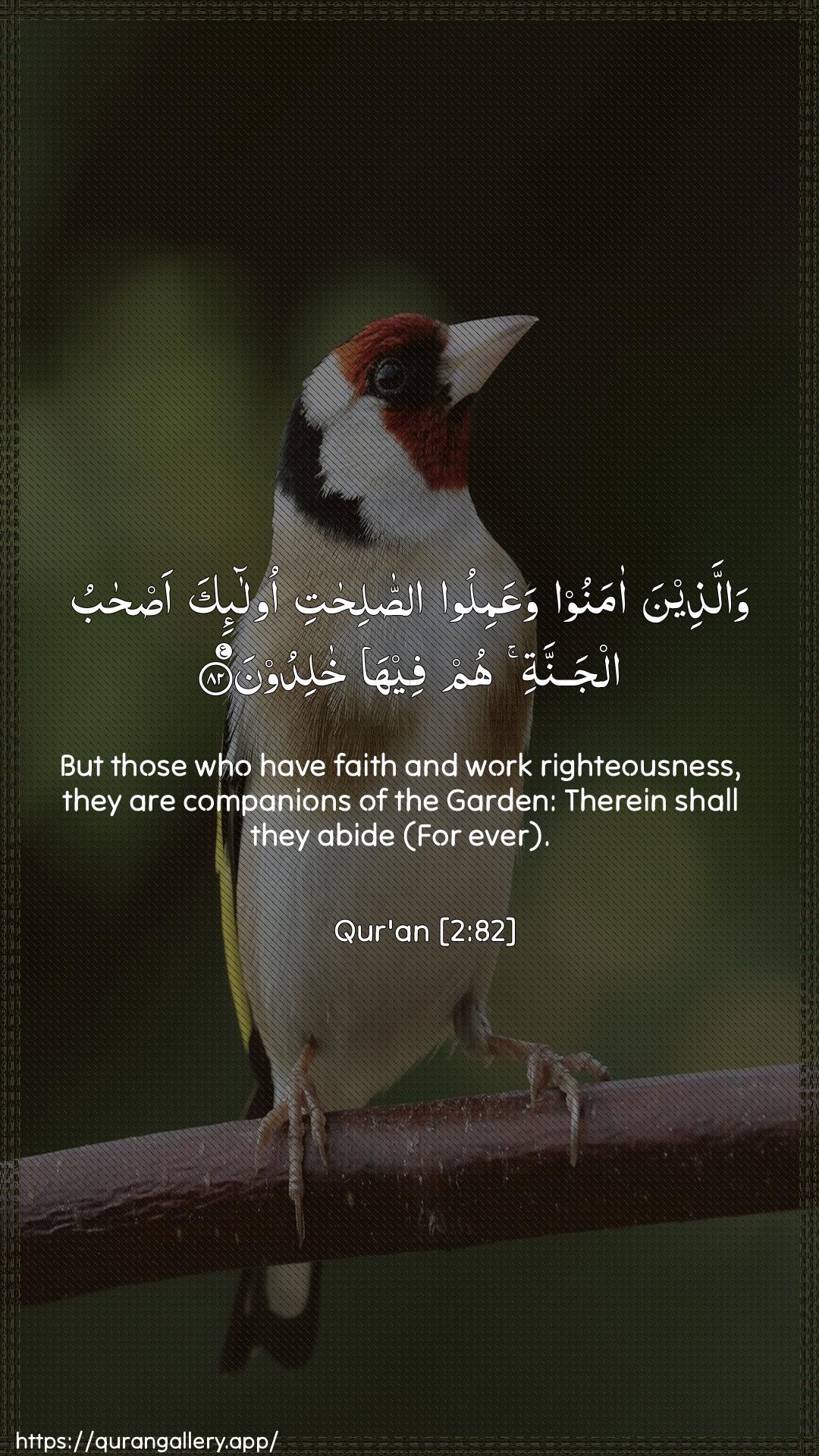
Arabic + English
Arabic (Wide)
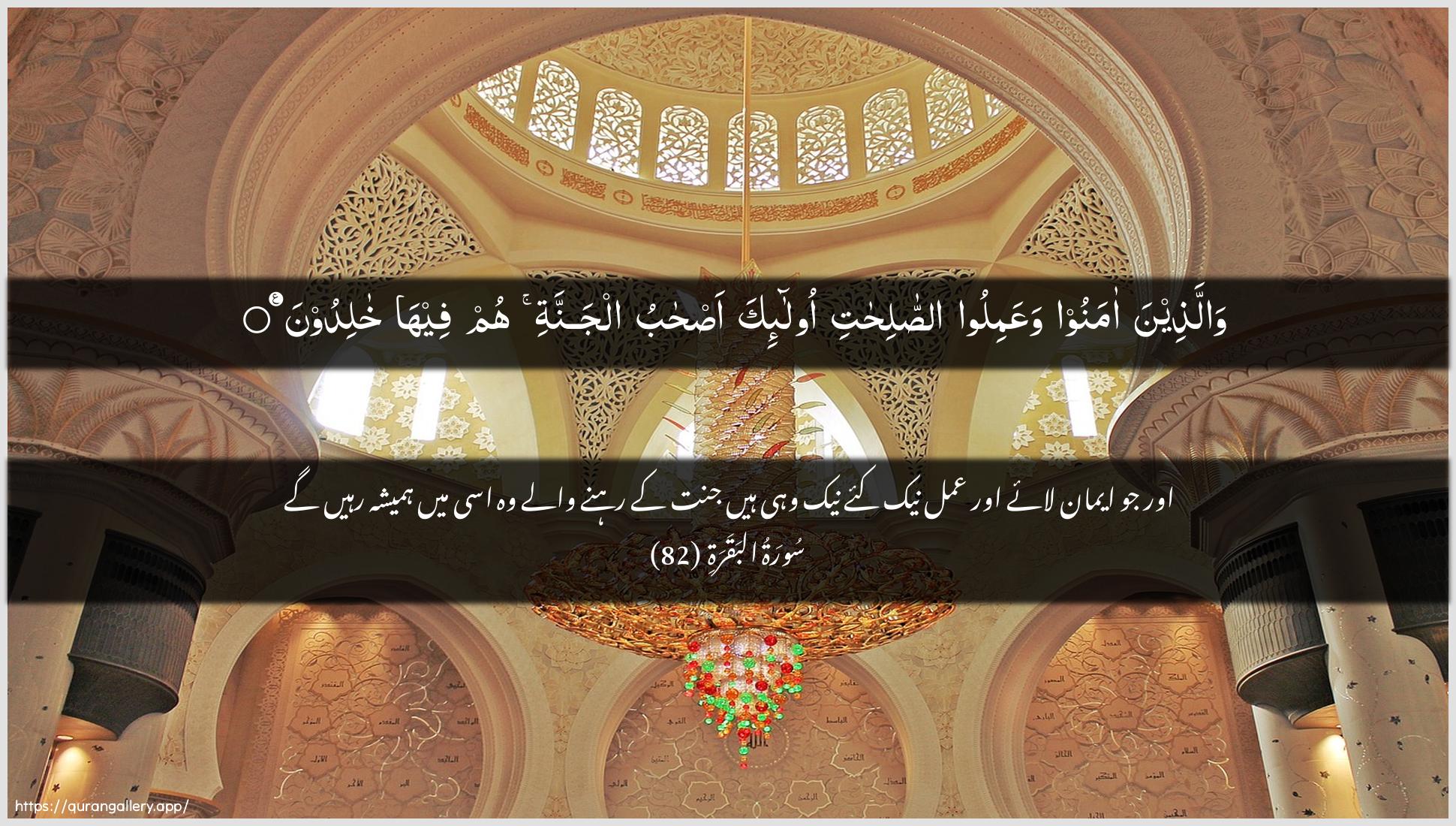
Arabic + Urdu
Free for personal & educational use with attribution
Quick Facts about this Verse
Surah
Al-Baqara
Revealed
Madani
Position
Juz 1,2,3
Explore this Verse
Verse Meaning
According to the classical scholar Imam Al-Tabari, Quran 2:82 establishes the immutable divine principle of salvation, standing in direct contrast to the false claims of the Children of Israel. A comprehensive analysis of tafsirs, including those of Ibn Kathir and As-Sa'di, reveals that this verse is not merely a promise but a declaration of divine law: eternal reward is inextricably linked to two inseparable conditions—authentic faith (Iman) and righteous deeds (As-Salihat). While the previous verse details damnation for those enveloped by sin, this verse presents the clear, universal path to Paradise. As-Sa'di clarifies that righteous deeds are only valid when done sincerely for Allah and in accordance with the guidance of His Messenger. The synthesis of scholarly thought shows that this verse permanently refutes any notion of salvation based on lineage, ethnicity, or wishful thinking, affirming that Allah's judgment is based solely on belief translated into righteous action, a principle of hope and accountability for all humanity.
Questions for Reflection
Personal Contemplation
As-Sa'di specifies that righteous deeds must be sincere for Allah and follow the Sunnah. Reflect on a recent 'good deed' you performed. Was it done to be seen by others or purely for Allah? Did you seek the most correct, prophetic way to perform it, or the most convenient way? How does this verse challenge you to purify both your intentions and your methods?
Relational Contemplation
This verse was revealed to counter the belief that salvation comes from lineage. How might you, in subtle ways, rely on your family background, community status, or personal identity for a sense of spiritual security? How does this verse call you to build your relationship with Allah and others based purely on the merit of your own faith and righteous actions?
Cosmic Contemplation
Al-Tabari describes this verse as part of an eternal, unchanging law of cause and effect. Contemplate the universe: every action has a reaction. How does viewing faith and good deeds as the 'cause' for the 'effect' of Paradise change your perspective? Does it make your actions feel more significant, more impactful on your ultimate reality?
Practical Applications
Conduct a 'Deed Audit' by listing your daily actions and mapping them to your core beliefs to identify and bridge any gaps between what you believe and what you do.
Applicable in professional ethics, personal relationships, and financial dealings to ensure they reflect Islamic values.
Filter every 'good deed' through the two conditions mentioned by As-Sa'di: Is it purely for Allah's sake (Ikhlas)? Is it according to the Prophet's way (Sunnah)?
Crucial for charitable work, community service, and online activism to ensure sincerity and correct methodology.
Hidden Gem
The juxtaposition with the previous verse (2:81), where sin 'encompasses' a person, reveals a profound spiritual reality. Contemplate that faith and righteous deeds are not just entries on a scale, but a spiritual force that creates a protective fortress around you, preventing sin from 'encompassing' your heart and ensuring your identity remains that of an 'Ashab al-Jannah' (Companion of the Garden).
Scroll to see more verses or use the dropdown in the breadcrumb to jump to any verse
Common Questions
1 more question available in the full page