
Al-Baqara - The Cow
Arabic Name: الْبَقَرَة
Urdu Name: گائے
Type: Madani
Serial Number: 2
Revelation Order: 87
Total Verses: 286
Parah: 1,2,3
Rukus: 40
Sajda: None
Share Verse Art
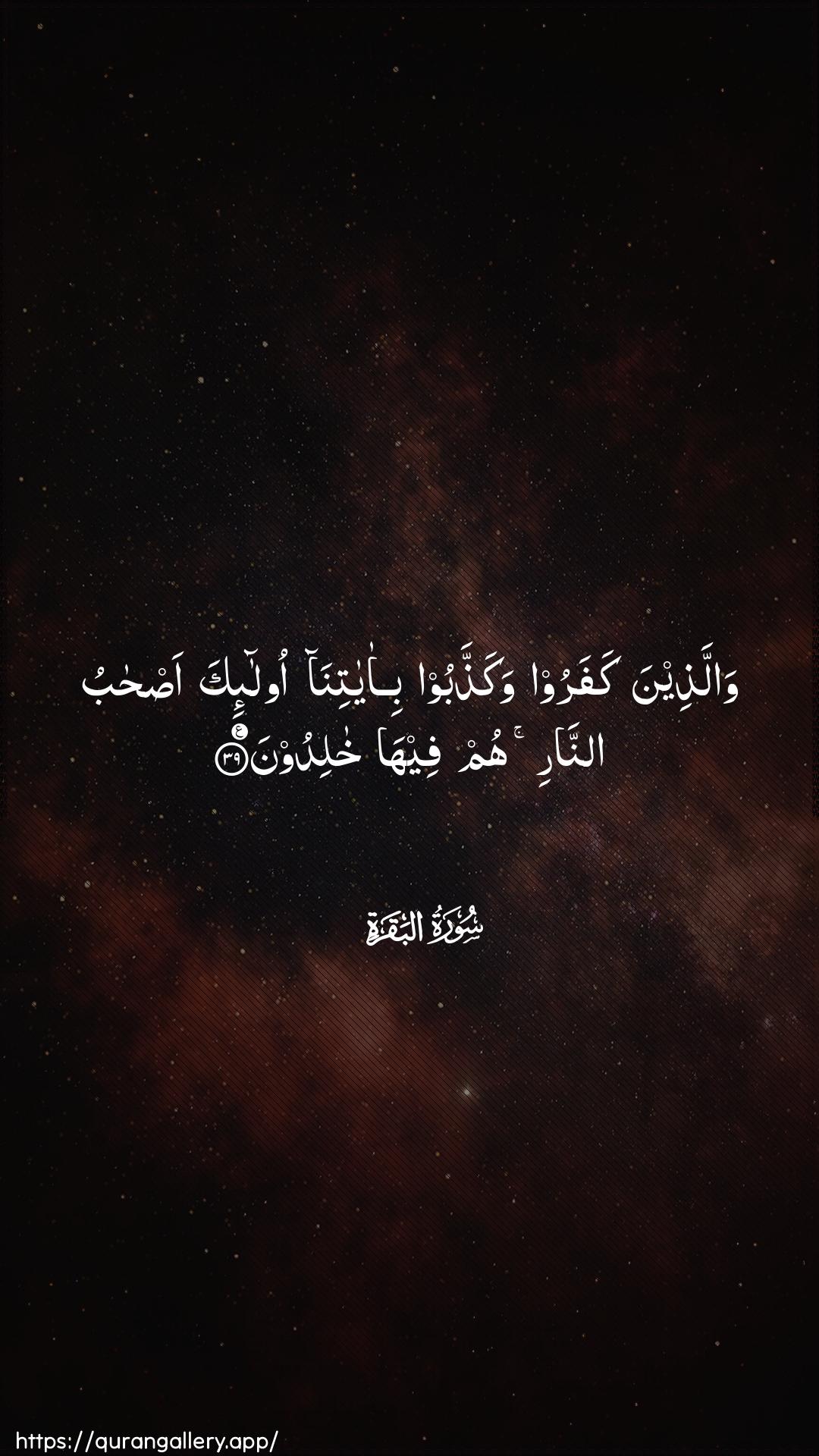
Arabic
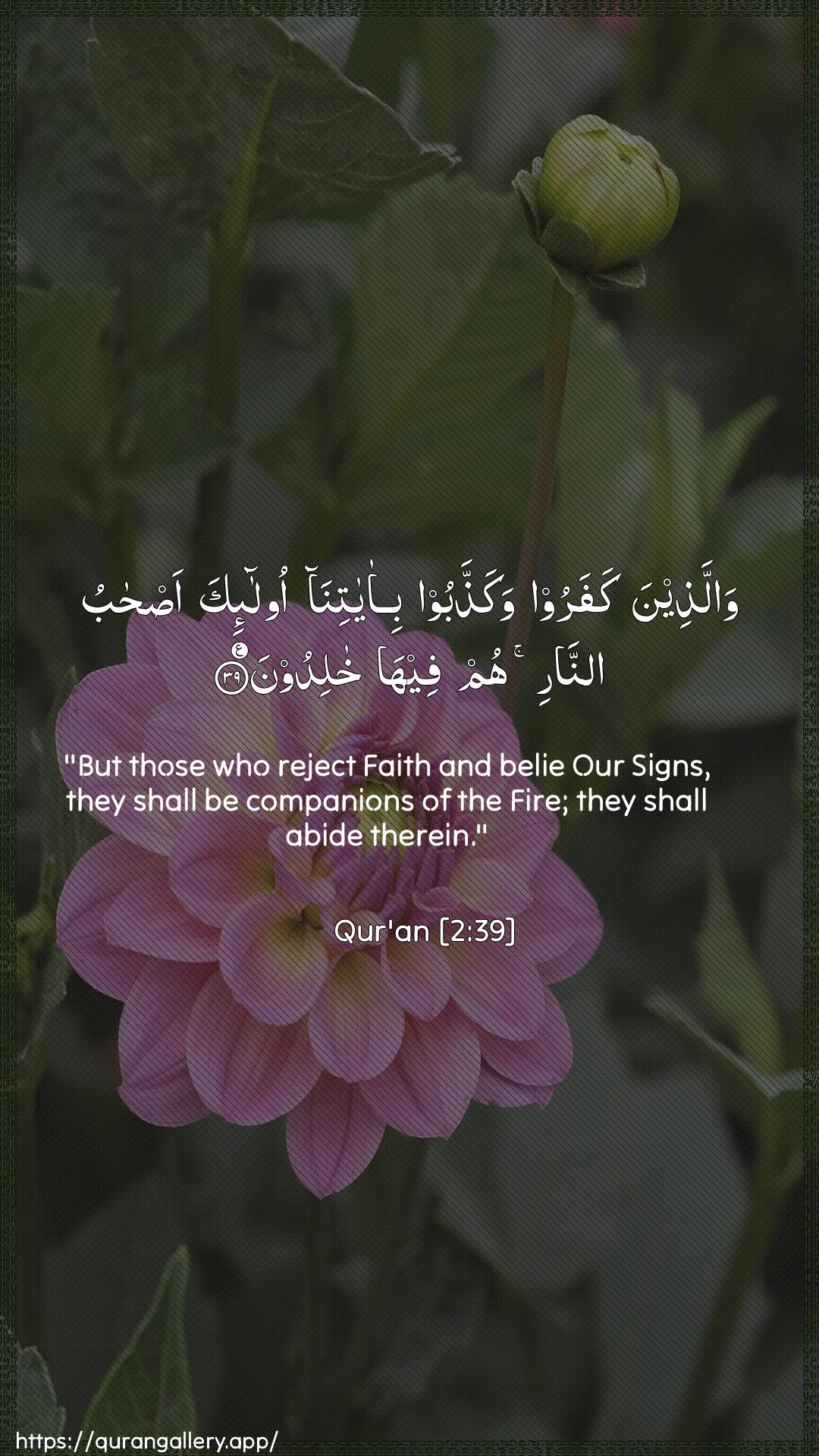
Arabic + English
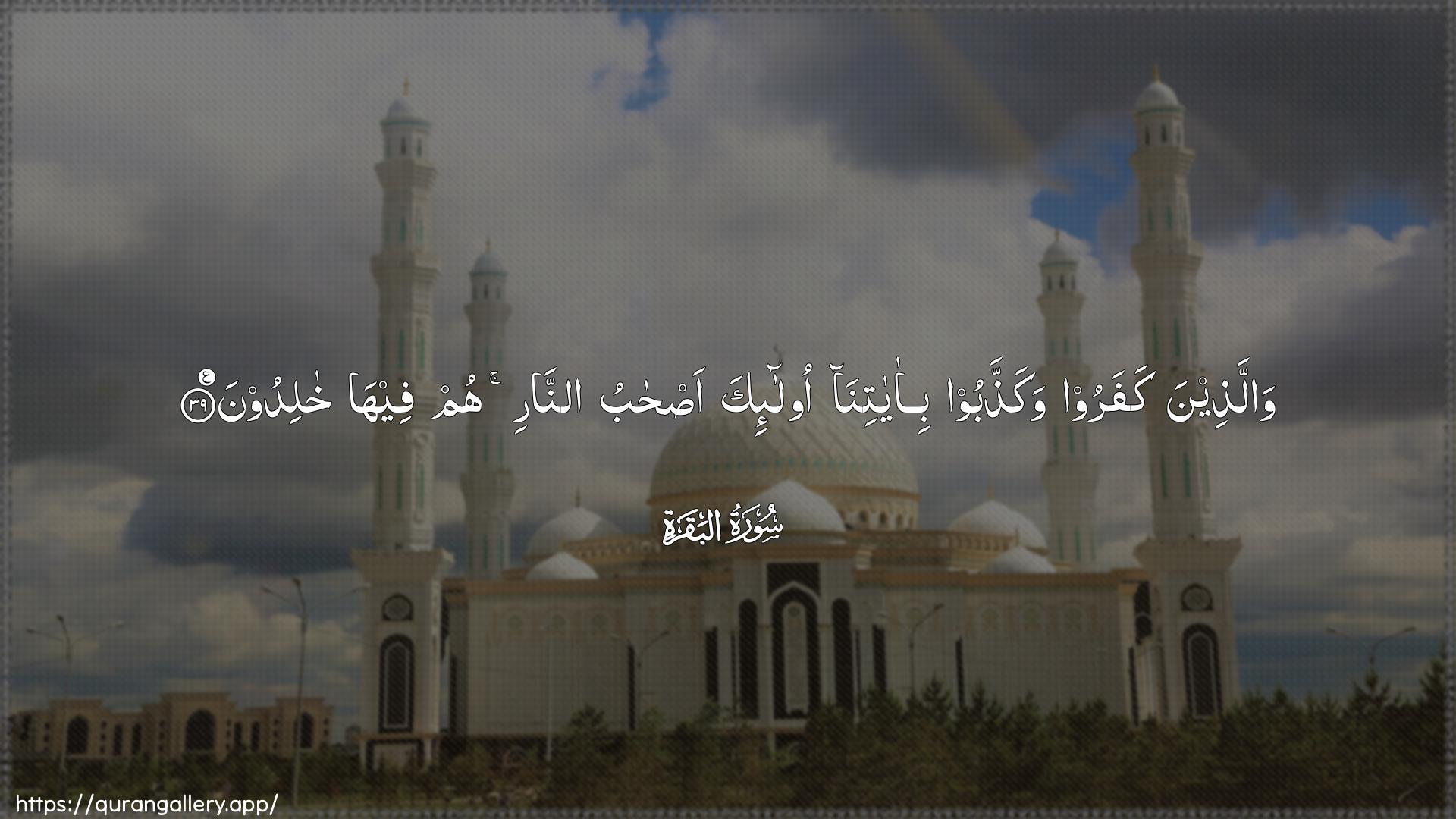
Arabic (Wide)
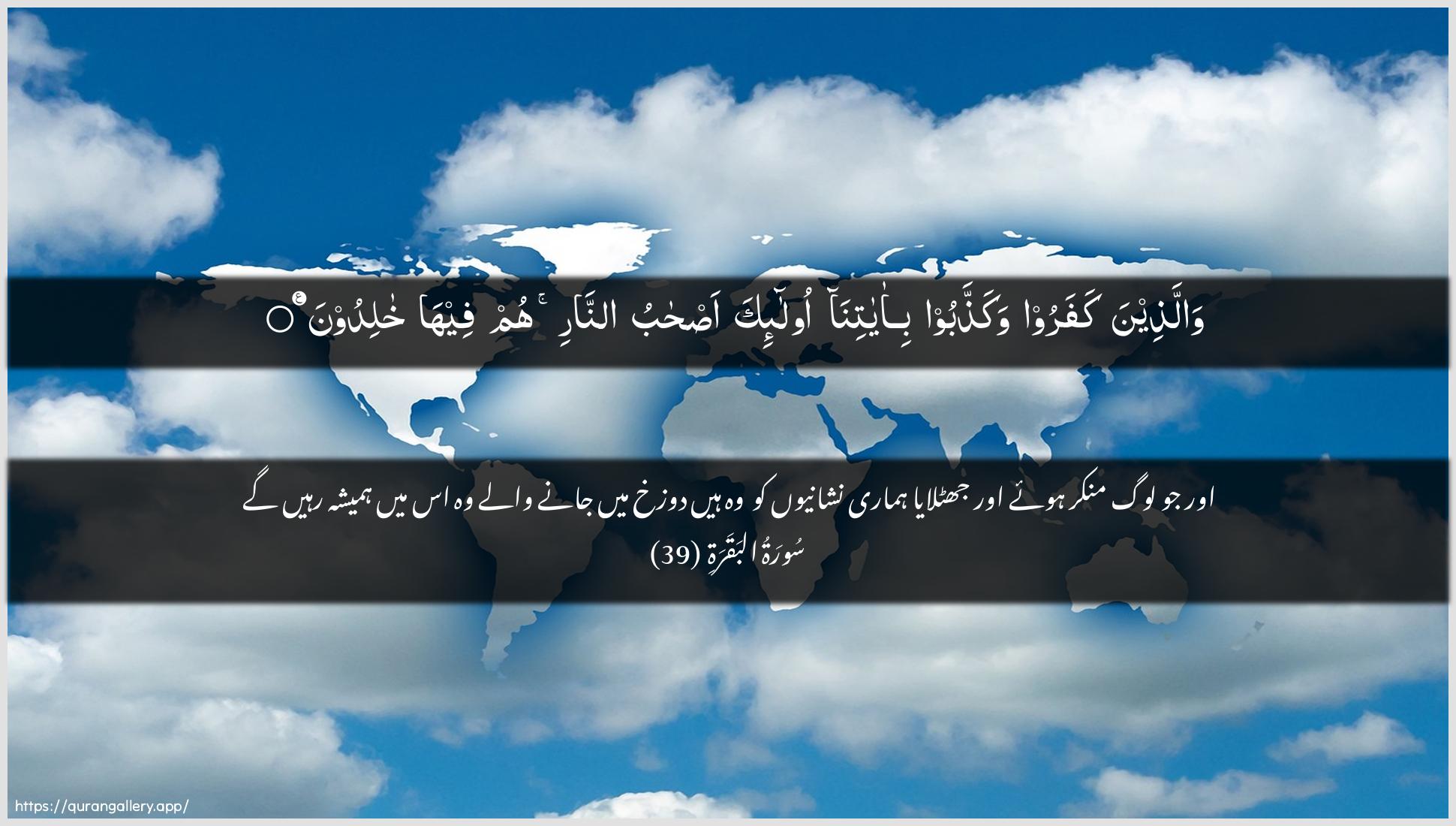
Arabic + Urdu
Free for personal & educational use with attribution
Quick Facts about this Verse
Surah
Al-Baqara
Revealed
Madani
Position
Juz 1,2,3
Explore this Verse
Verse Meaning
According to the classical tafsir of Imam Al-Tabari, Quran 2:39 delivers the definitive divine judgment for those who reject the guidance offered to humanity. It defines the path of loss in direct contrast to the path of salvation outlined in the previous verse. The verse specifies two actions that lead to this fate: *kufr* (disbelief or covering the truth) and *takdhib* (actively belying or denying Allah's signs). Imam Al-Qurtubi emphasizes that the term 'companions of the Fire' (*Ashab al-Nar*) signifies an inseparable and eternal ملازمة (companionship). This is powerfully confirmed by the word *khalidun* (abiding forever), establishing the permanence of this state. The synthesis of scholarly opinion, including a pivotal hadith cited by Ibn Kathir, clarifies that this eternal fate is specifically for those who die upon disbelief, distinguishing them from sinful believers who may be punished but not eternally. Thus, the verse serves as a stark and unambiguous warning about the ultimate consequence of rejecting divine revelation.
Questions for Reflection
personal
The verse speaks of those who 'disbelieve' (kafaru) and 'deny' (kadhdhabu). Reflect on the subtle forms these actions can take in one's own heart. Are there truths you avoid or divine signs you overlook because they challenge your lifestyle or desires? How can you cultivate a heart that is open and affirming of Allah's signs?
theological
Contemplate the term 'Ashab al-Nar' (Companions of the Fire). As Al-Qurtubi notes, this implies an inseparable ملازمة (companionship). How does this concept of becoming a 'companion' to one's punishment differ from simply 'entering' it? What does it teach about how our actions and beliefs shape our very essence and eternal reality?
Practical Applications
Cultivate an awareness of Allah's 'signs' (ayat) in daily life, from the Quran to the natural world, to fortify faith against doubt.
In an age of distraction, consciously pausing to reflect on the complexity of technology, nature, or human consciousness as signs of Allah.
Internalize the concept of eternal consequences to prioritize actions that align with faith over fleeting worldly desires.
When faced with a moral dilemma at work or in personal life, asking 'Which choice leads to a better eternal outcome?' rather than just 'What is the immediate benefit?'
Hidden Gem
The synthesis of the verse with the hadith from Abu Sa'id al-Khudri reveals a profound layer of divine justice. Contemplate this: the eternal fire is for those who become 'its people'—their essence becomes one with disbelief. For believers who sin, the fire is a purifier, not an eternal companion. This distinction is a deep ocean of both fear and hope, unique to the Islamic understanding of the afterlife.
Scroll to see more verses or use the dropdown in the breadcrumb to jump to any verse
Common Questions
1 more question available in the full page