
Al-Baqara - The Cow
Arabic Name: الْبَقَرَة
Urdu Name: گائے
Type: Madani
Serial Number: 2
Revelation Order: 87
Total Verses: 286
Parah: 1,2,3
Rukus: 40
Sajda: None
Share Verse Art
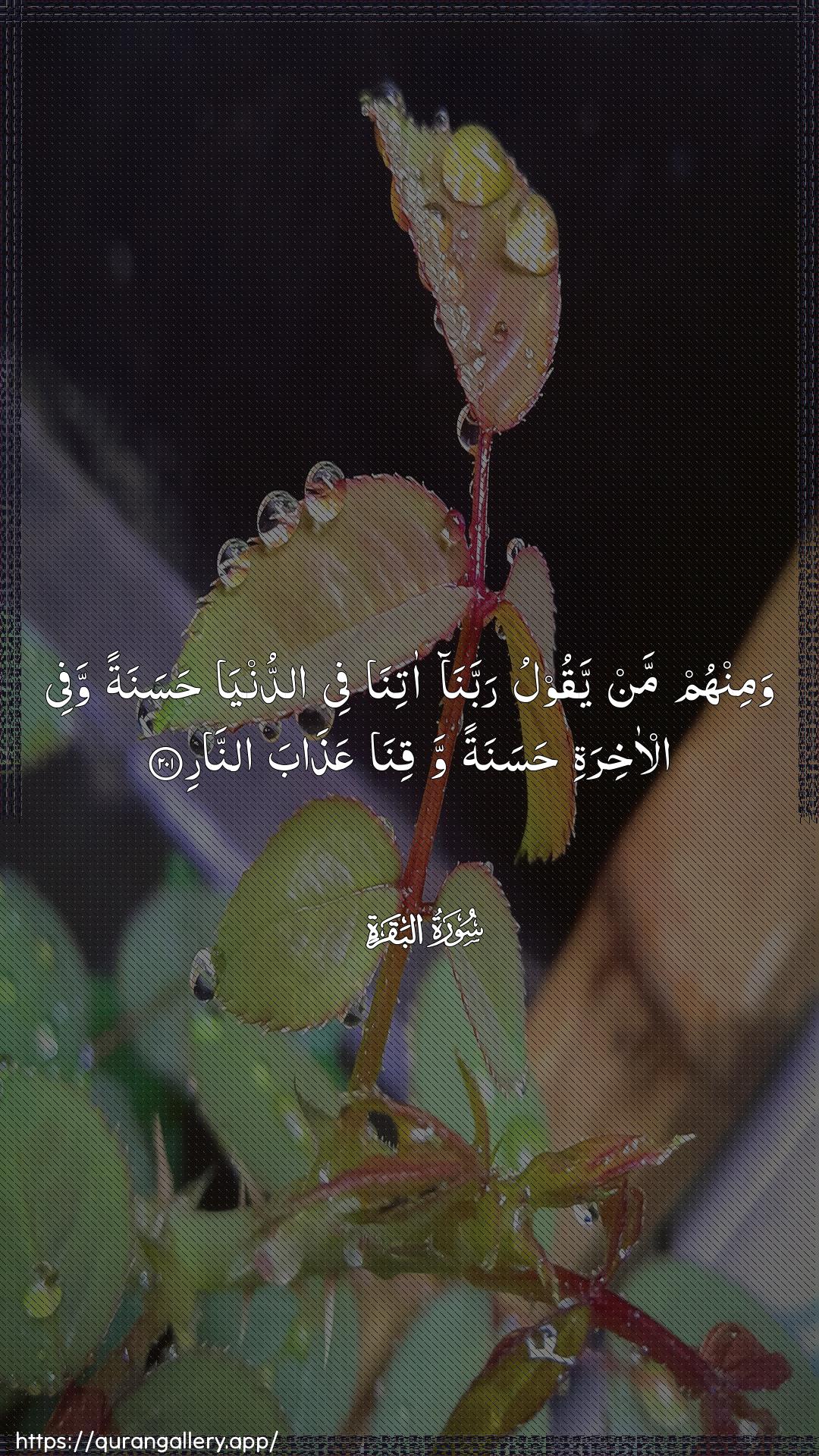
Arabic
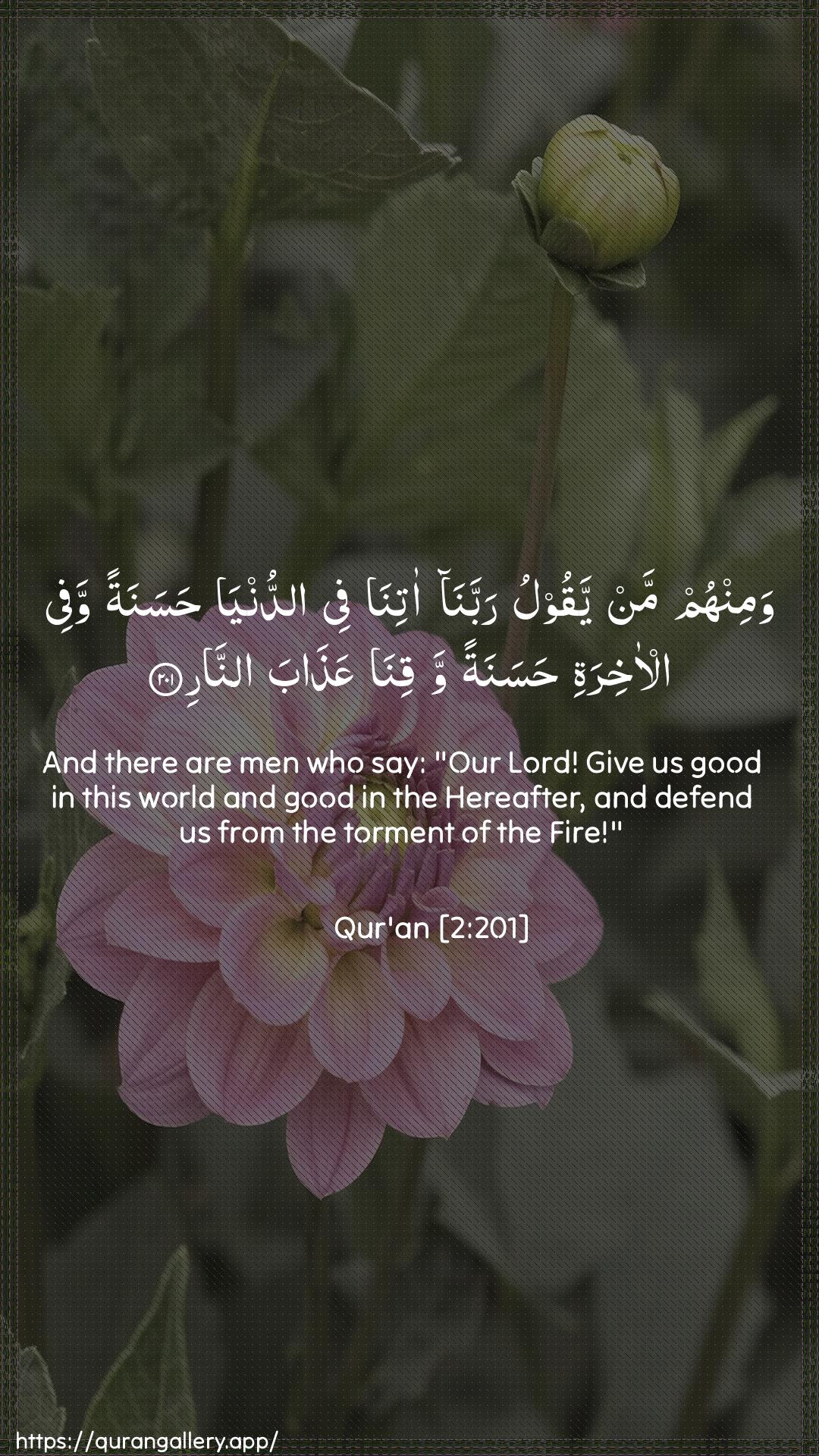
Arabic + English
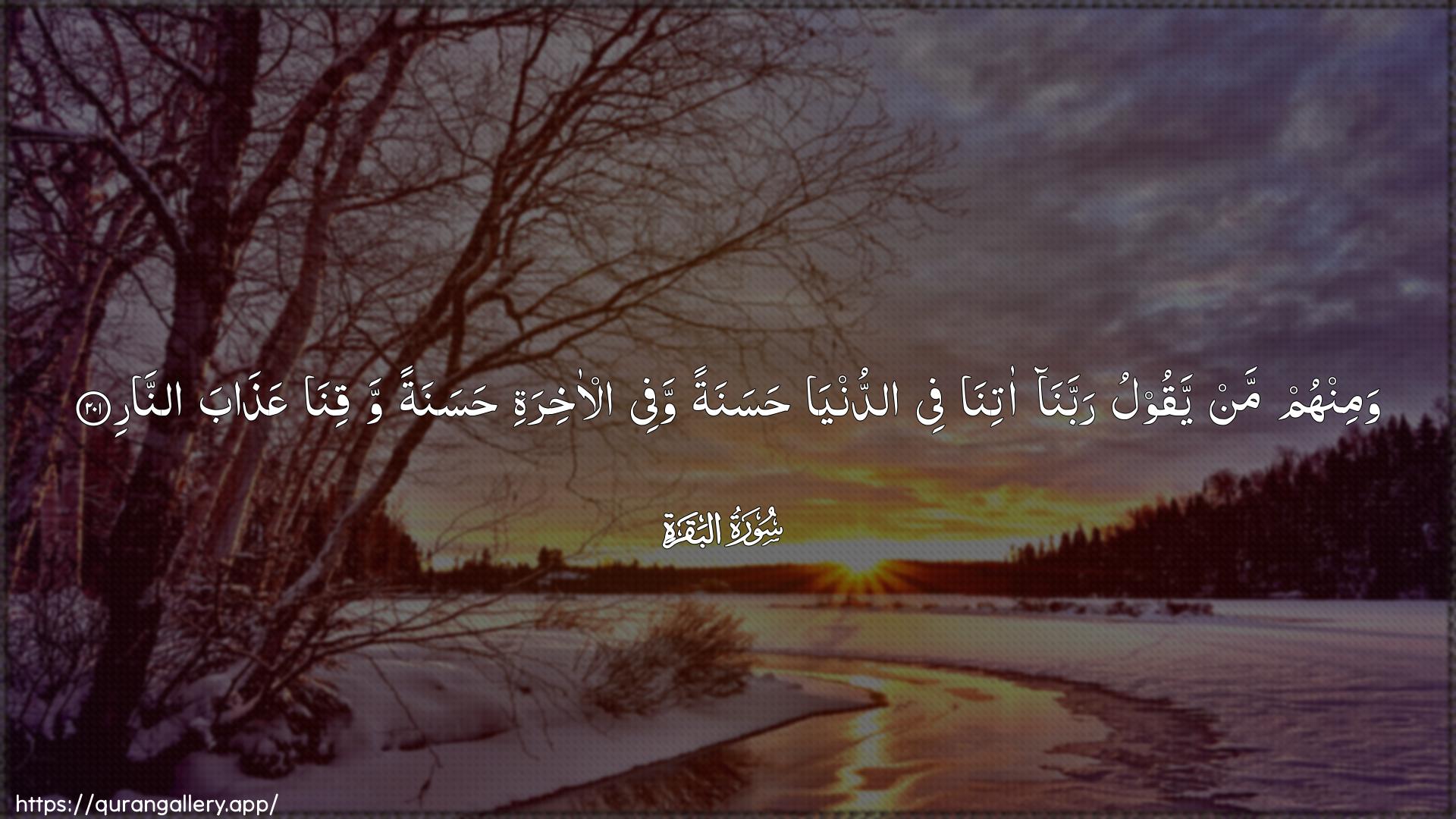
Arabic (Wide)
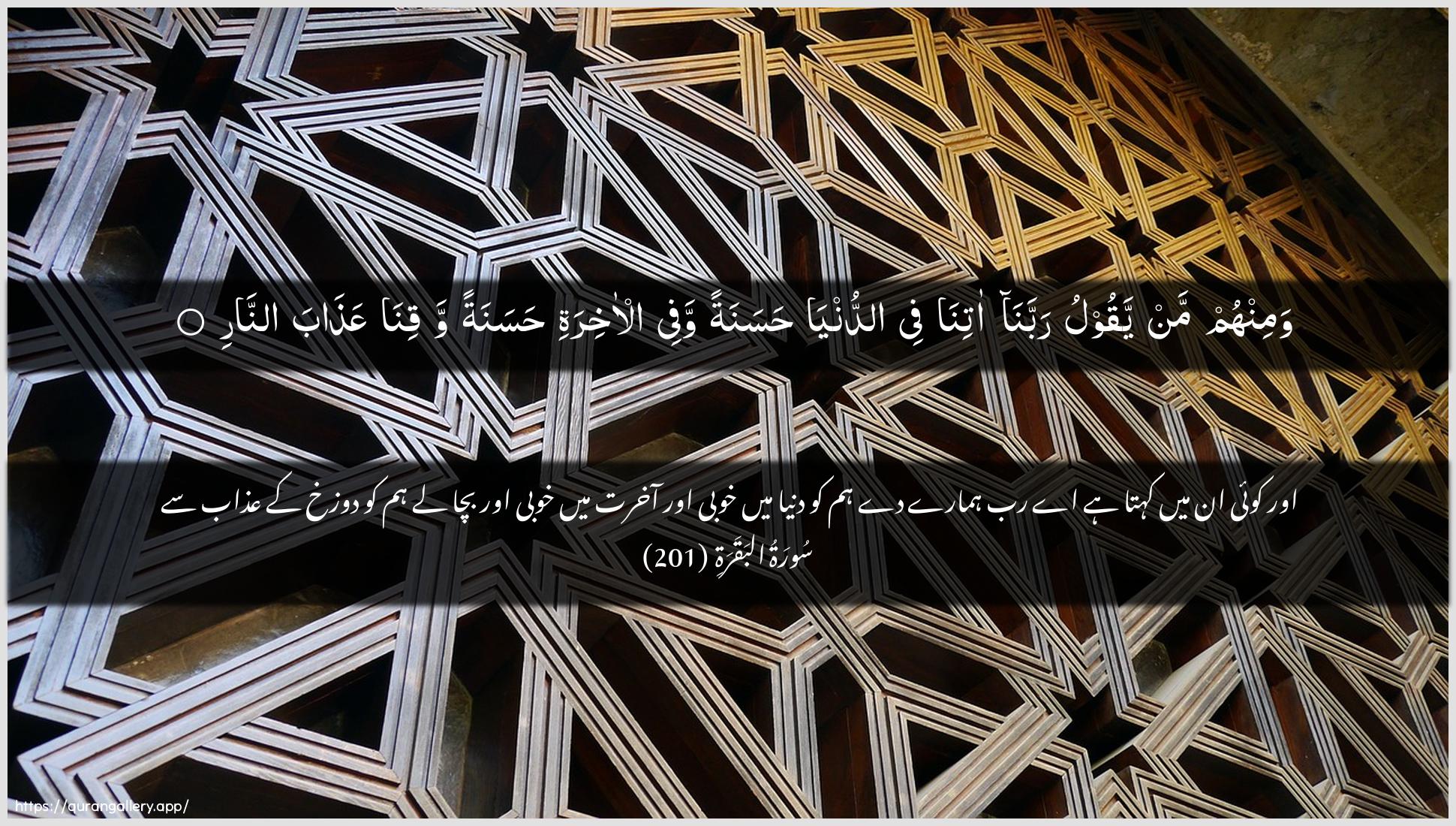
Arabic + Urdu
Free for personal & educational use with attribution
Quick Facts about this Verse
Surah
Al-Baqara
Revealed
Madani
Position
Juz 1,2,3
Explore this Verse
Verse Meaning
According to the esteemed exegete Ibn Kathir, the supplication in Quran 2:201, "Our Lord, give us in this world [that which is] good and in the Hereafter [that which is] good and protect us from the punishment of the Fire," stands as one of the most comprehensive and pivotal prayers in Islam. This dua, favored and frequently recited by Prophet Muhammad (ﷺ), encapsulates the complete worldview of a believer. The genius of the term 'Hasanah' (good), as Al-Tabari explains, lies in its all-encompassing nature; it includes every worldly blessing like health, a righteous spouse, ample provision, and beneficial knowledge, without specifying one over the other. The synthesis of classical interpretations reveals a profound truth: this is not merely a list of requests but a holistic spiritual framework. It teaches a believer to seek excellence in their worldly affairs as a means to achieve ultimate success in the Hereafter, which Al-Qurtubi notes is epitomized by attaining Jannah. The final plea, "protect us from the punishment of the Fire," grounds the entire supplication in a foundation of Taqwa (God-consciousness), making the pursuit of worldly good a path to salvation, not a distraction from it. This prayer is the ultimate expression of a balanced, hopeful, and conscious faith.
Questions for Reflection
Personal Sincerity
Al-Tabari notes 'Hasanah' can mean health, wealth, knowledge, or family. Contemplate your own heart: when you recite 'give us good in this world', what specific 'Hasanah' are you truly yearning for? Does this yearning align with what will bring you closer to the 'Hasanah' of the Hereafter?
Balancing Hope and Fear
This dua perfectly balances the request for blessings ('Hasanah' in both worlds) with the plea for protection ('save us from the punishment of the Fire'). Reflect on your own spiritual state: do you lean more towards hope in Allah's mercy or fear of His justice? How does this verse teach you to hold both in perfect, motivating equilibrium?
Prophetic Emulation
According to the hadith narrated by Anas and cited by all major commentators, this was the Prophet's (ﷺ) most frequent dua. Contemplate why, out of all possible supplications, this one was his constant companion. What does its comprehensiveness and balance teach us about the core priorities of the Messenger of Allah (ﷺ)?
Practical Applications
Integrate this dua into your daily prayers, especially after the final Tashahhud, to align your life's goals with the Prophet's (ﷺ) model.
In a world pulling towards extremes of materialism or complete asceticism, this dua centers you on a balanced Islamic path.
During Tawaf in Hajj or Umrah, make this the primary supplication between the Yemeni Corner and the Black Stone.
Replaces confusion about what to recite during Tawaf with a simple, powerful, and authenticated Prophetic practice.
Broaden your understanding of 'Hasanah' (good) to include non-material blessings like knowledge, patience, and a good reputation.
Counteracts the modern obsession with wealth and fame by focusing on more enduring forms of 'good' like character and wisdom.
Hidden Gem
A deeper synthesis reveals that the verse is not just a request, but a declaration of the purpose of life. By asking for 'good' in the world and the hereafter, the believer is implicitly stating that the purpose of worldly 'good' is to achieve the ultimate 'good' of the next life. It re-frames worldly success not as an end in itself, but as a vehicle for salvation, a profound insight derived from combining As-Sa'di's tafsir with the practical applications cited by Ibn Kathir.
Scroll to see more verses or use the dropdown in the breadcrumb to jump to any verse
Common Questions
1 more question available in the full page