
Al-Baqara - The Cow
Arabic Name: الْبَقَرَة
Urdu Name: گائے
Type: Madani
Serial Number: 2
Revelation Order: 87
Total Verses: 286
Parah: 1,2,3
Rukus: 40
Sajda: None
Share Verse Art

Arabic
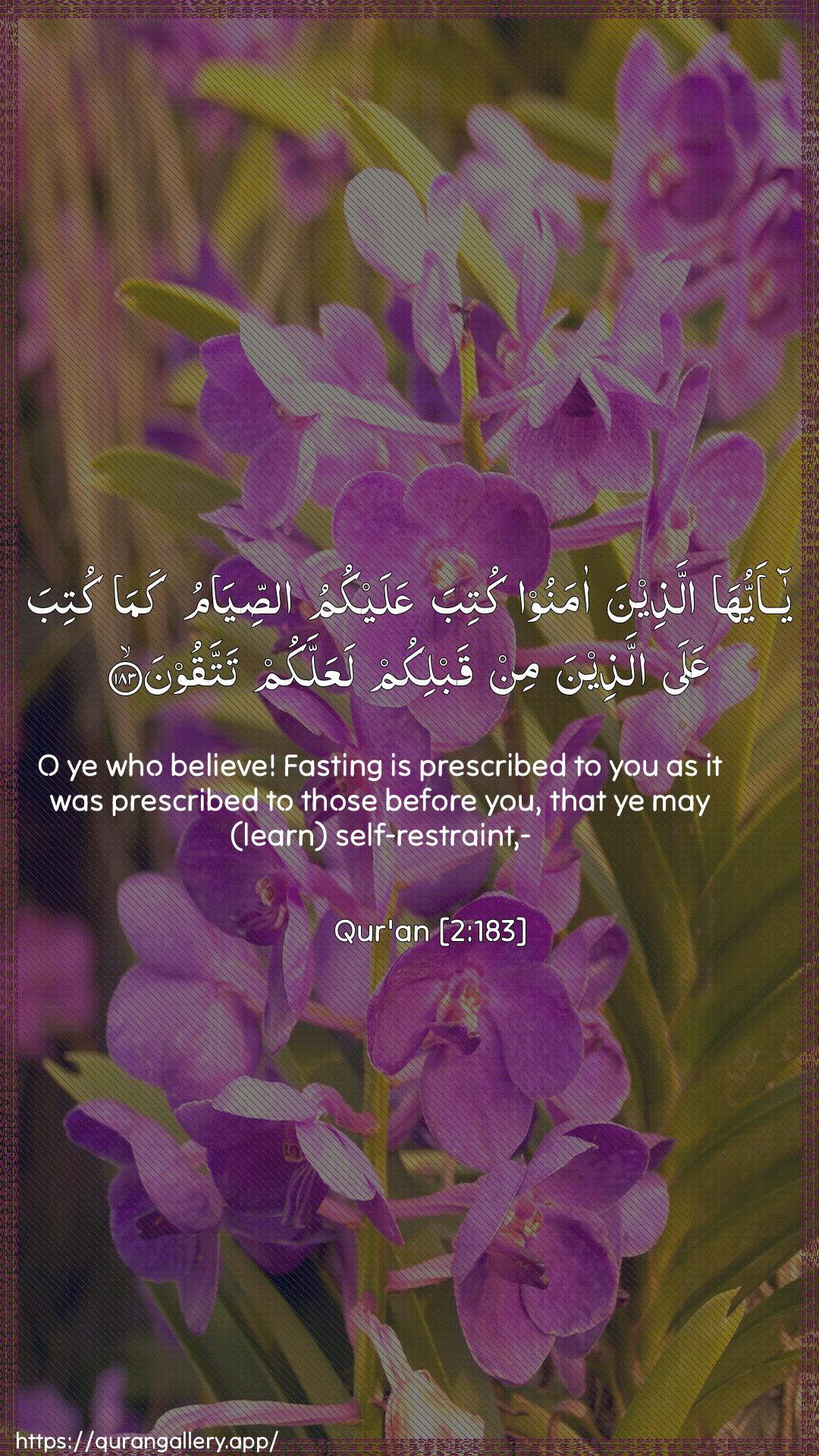
Arabic + English

Arabic (Wide)
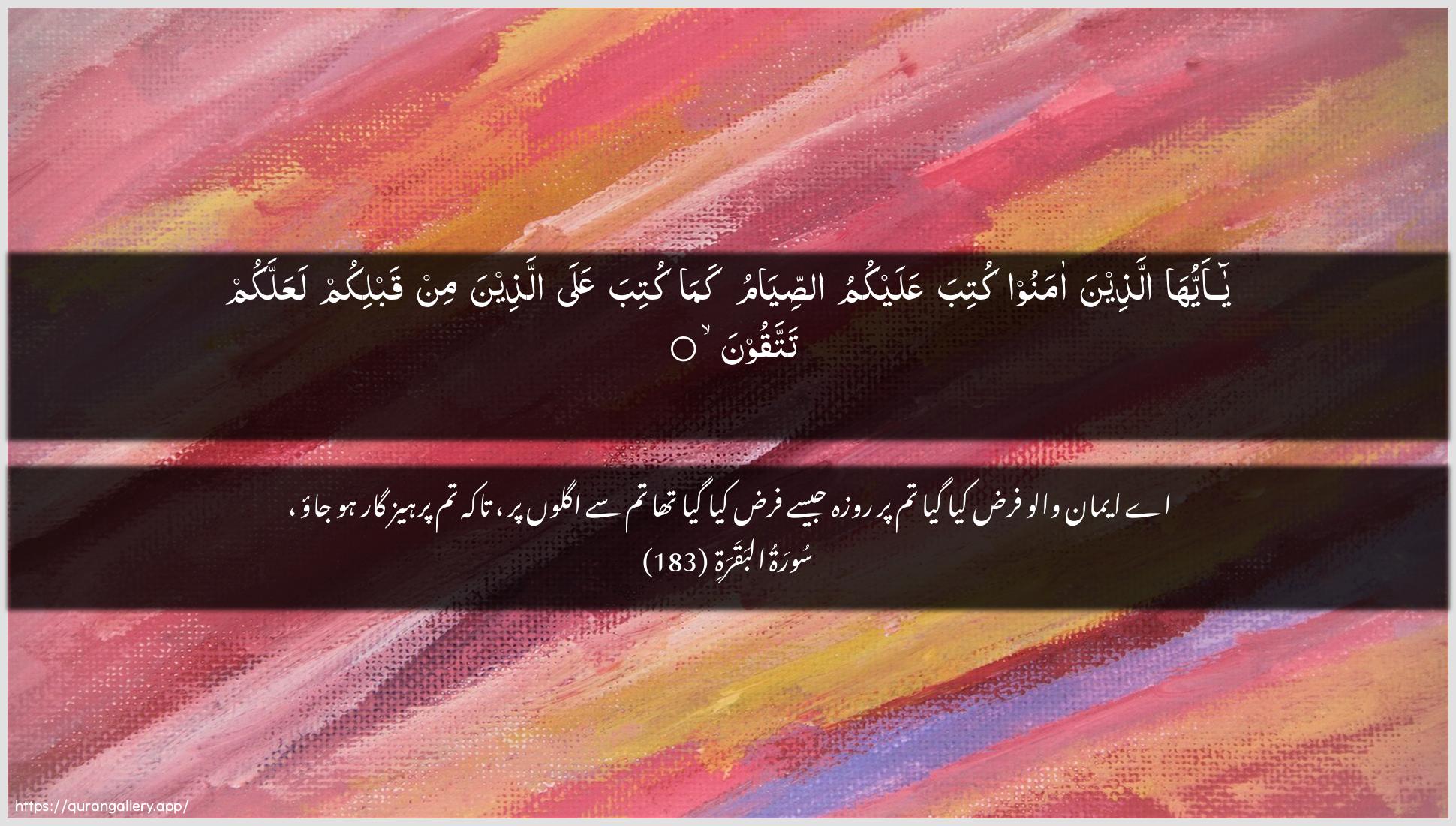
Arabic + Urdu
Free for personal & educational use with attribution
Quick Facts about this Verse
Surah
Al-Baqara
Revealed
Madani
Position
Juz 1,2,3
Explore this Verse
Verse Meaning
According to the classical scholar Ibn Kathir, Quran 2:183 is a divine address to the believers, prescribing fasting (As-Siyam) not as a new burden, but as a continuation of a sacred practice ordained for previous nations. A comprehensive review across tafsirs, including Al-Tabari and Al-Qurtubi, reveals a profound synthesis: the verse establishes a universal spiritual principle. The physical act of abstaining from food, drink, and intimacy is a means to a much higher end, encapsulated in the phrase 'la'allakum tattaqun'—'so that you may attain Taqwa.' This hidden gem of Taqwa (a state of God-consciousness, piety, and self-restraint) is the ultimate objective. Fasting, therefore, is presented as a time-honored spiritual technology designed to purify the soul, weaken the pathways of temptation, and cultivate a deep, abiding awareness of Allah's presence, thereby making believers more righteous and God-fearing. [2, 7] The connection to past communities serves to both honor the continuity of divine revelation and to motivate believers to excel in this shared act of devotion. [10]
Questions for Reflection
Personal Transformation
As-Sa'di explains that fasting is a primary cause of Taqwa. Reflect on a specific character flaw (e.g., impatience, anger, negative speech). How does the self-discipline of intentionally leaving food and drink for Allah's sake give you the strength and awareness to also leave this negative trait for His sake?
Historical Connection
Ibn Kathir and Al-Tabari detail the scholarly discussions about fasting in previous nations. Contemplate the feeling of being part of a continuous chain of believers throughout history who undertook this spiritual discipline. How does knowing that the followers of Moses and Jesus also fasted change your perception of this act from a purely Islamic ritual to a universal human act of devotion to the one God?
Theological Wisdom
The verse ends with 'la'allakum tattaqun' ('so that you may attain Taqwa'). This implies a cause-and-effect relationship. Contemplate the mechanics: how does weakening the body's physical desires through fasting necessarily lead to strengthening the soul's awareness of God? In what ways does the temporary absence of worldly sustenance increase your reliance and consciousness of your Divine Sustainer?
Practical Applications
Practice mindful abstinence by viewing each pang of hunger as a reminder of Allah's command and your obedience.
In a world of constant distraction and instant gratification, this builds spiritual focus and delayed gratification.
Extend the fast beyond the stomach; guard your tongue from gossip, your eyes from sin, and your mind from negative thoughts.
This is crucial for detoxing from the negativity prevalent in social media and public discourse.
Cultivate empathy by reflecting on the experience of hunger and thirst, and translate it into increased charity for the less fortunate.
This encourages proactive social responsibility and a tangible response to global poverty and hunger.
Hidden Gem
The synthesis of scholarly thought reveals a subtle gem: the word 'kutiba' (prescribed/written) implies a divine decree that is both an obligation and a form of medicine for the soul. Contemplate fasting not as a restriction, but as a divine prescription from the Healer (Ash-Shafi) to cure the spiritual ailments of heedlessness (ghaflah) and to instill the remedy of Taqwa.
Scroll to see more verses or use the dropdown in the breadcrumb to jump to any verse