
Al-Baqara - The Cow
Arabic Name: الْبَقَرَة
Urdu Name: گائے
Type: Madani
Serial Number: 2
Revelation Order: 87
Total Verses: 286
Parah: 1,2,3
Rukus: 40
Sajda: None
Share Verse Art
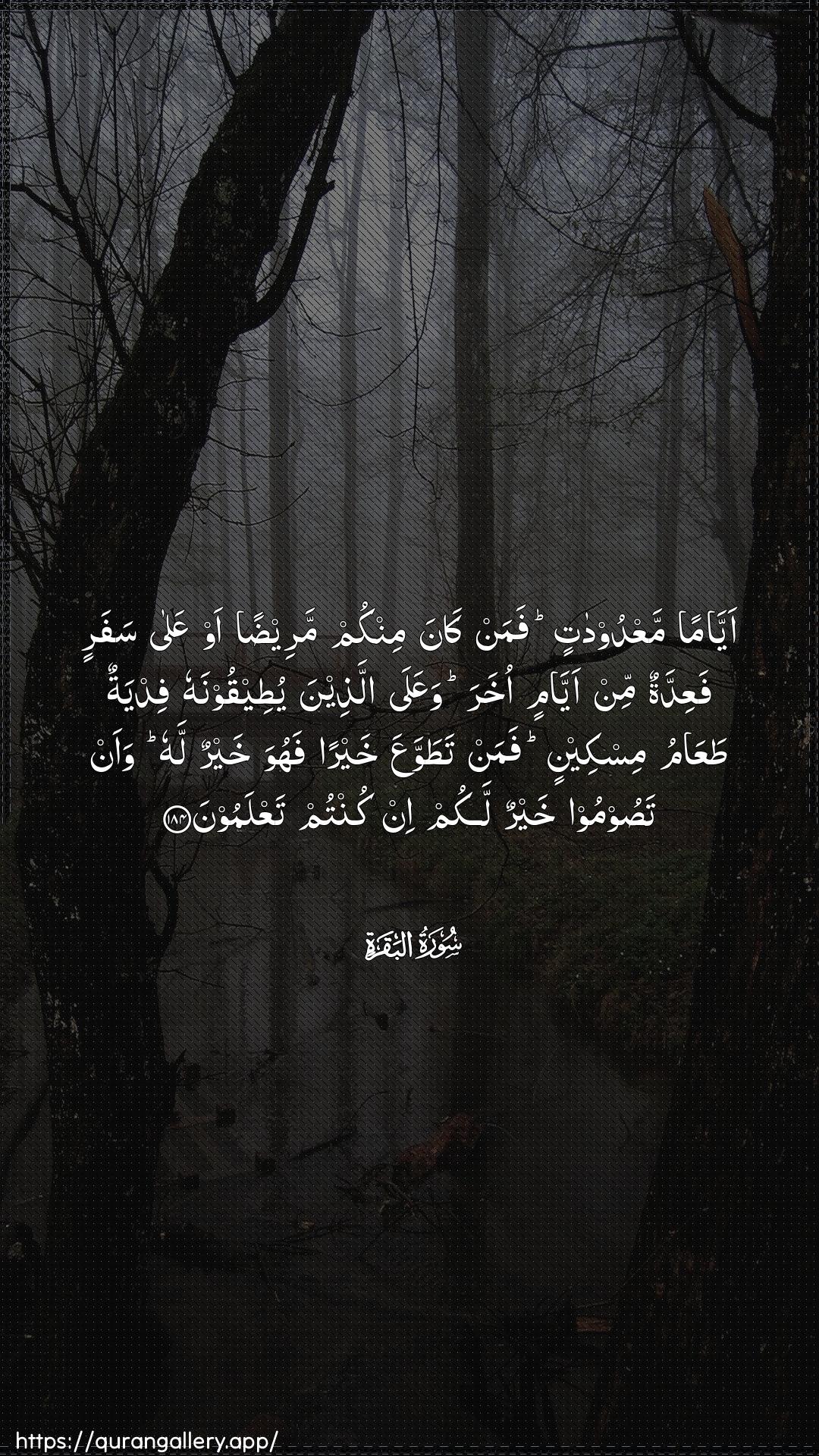
Arabic
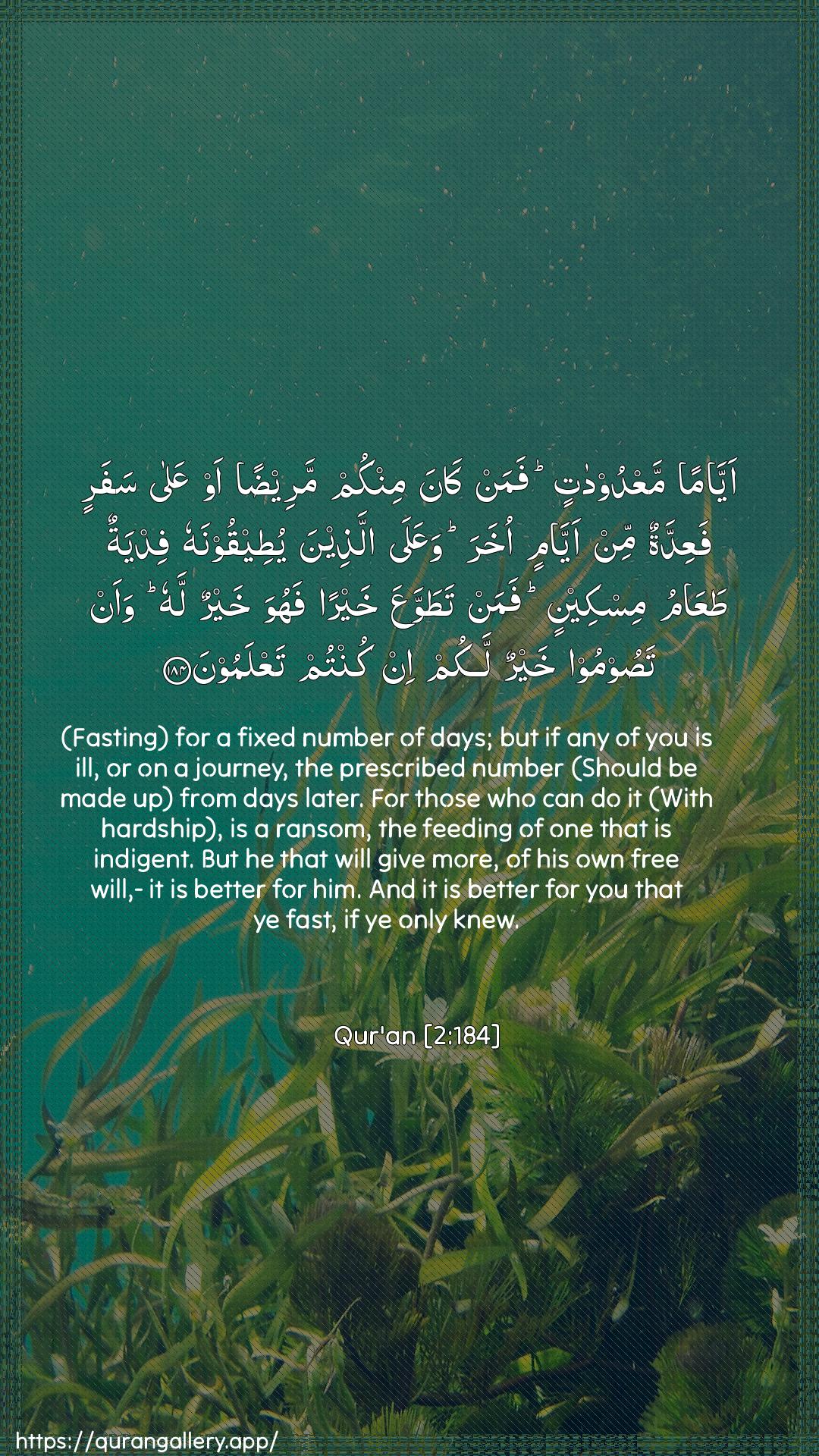
Arabic + English
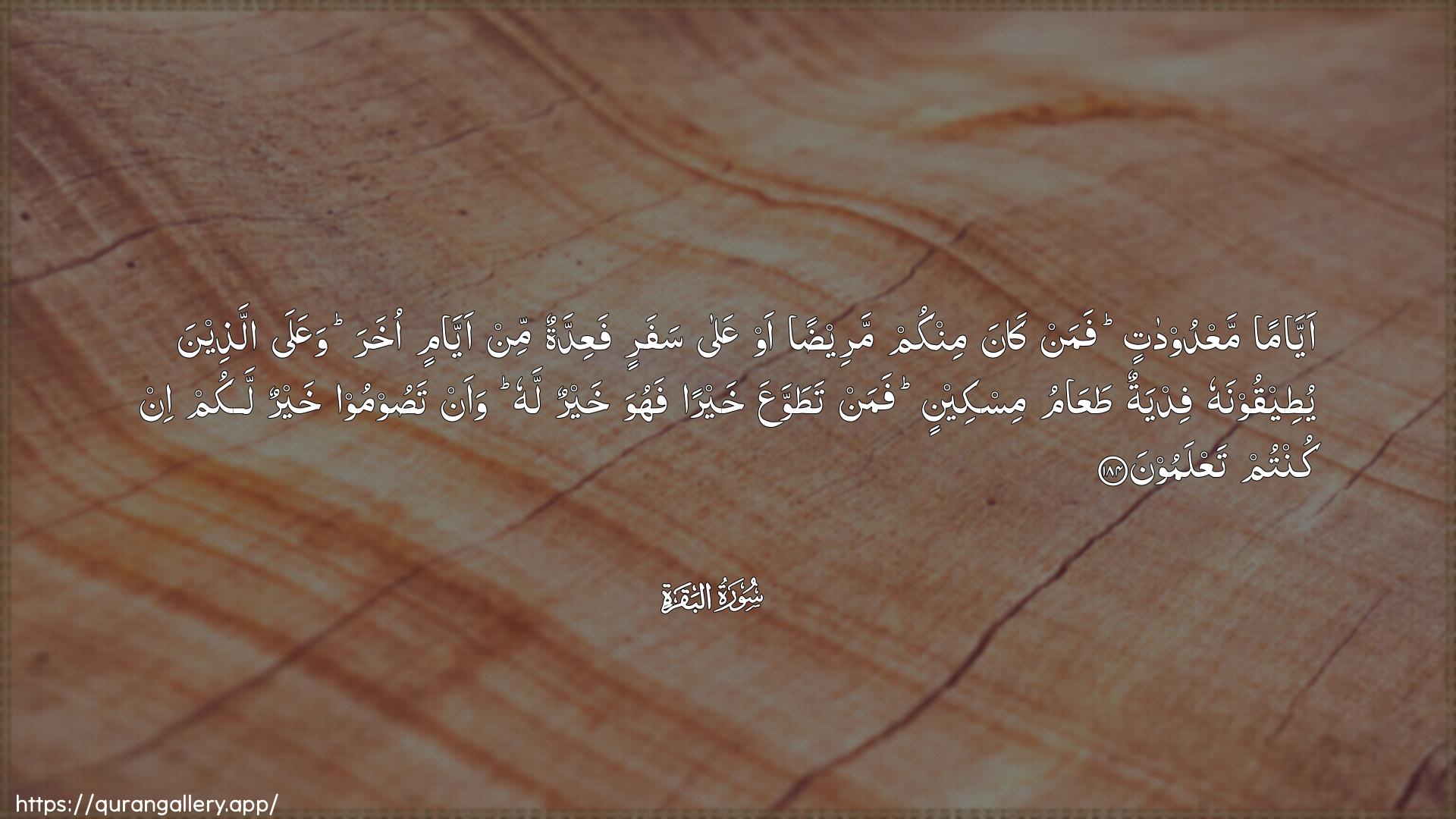
Arabic (Wide)
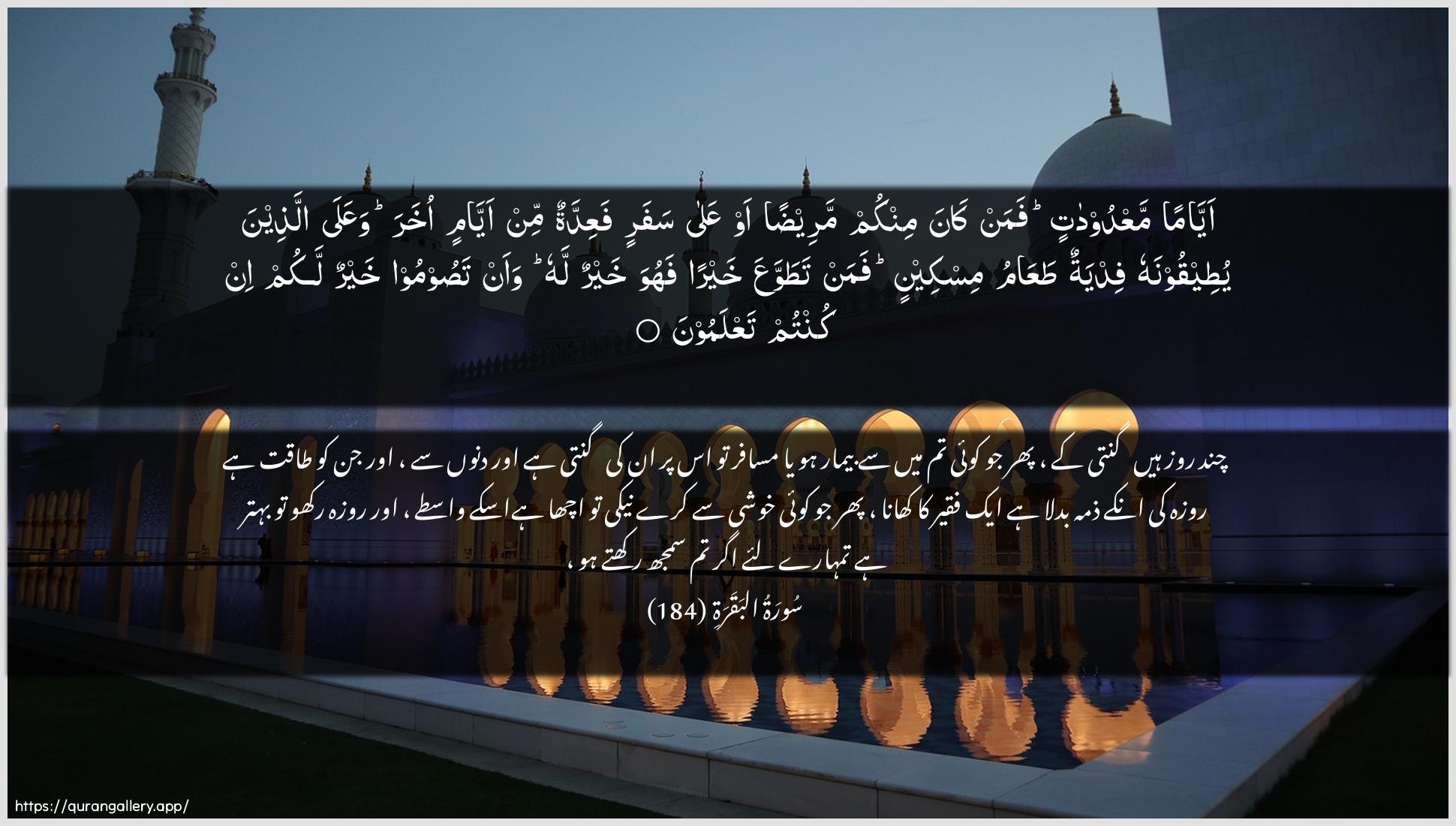
Arabic + Urdu
Free for personal & educational use with attribution
Quick Facts about this Verse
Surah
Al-Baqara
Revealed
Madani
Position
Juz 1,2,3
Explore this Verse
Verse Meaning
According to classical scholars like Ibn Kathir, verse 2:184 of Surah Al-Baqarah outlines the initial, lenient phase of the fasting obligation in Islam, providing crucial context for Allah's gradual legislative wisdom. This verse establishes the foundational concessions for those who are ill or traveling, allowing them to make up missed fasts later. The most significant scholarly discussion, detailed by authorities like Al-Tabari, revolves around the phrase 'wa 'ala alladheena yuteeqoonahu' (And upon those who are able it). This was an initial ruling that gave even healthy, resident Muslims a choice: to fast, or to not fast and instead pay a 'fidyah'—feeding a needy person for each day missed. This choice was a mercy for a community unaccustomed to fasting. The hidden gem revealed through a synthesis of tafsirs is that this initial flexibility was abrogated for the able-bodied by the subsequent verse (2:185), which made fasting in Ramadan a definitive obligation. However, the ruling of fidyah was not entirely cancelled; as Ibn Abbas clarified, it remains the valid concession for those who genuinely cannot fast due to a permanent hardship, such as old age or a chronic, incurable illness. This verse, therefore, serves as a powerful testament to the principle of ease (yusr) in Islamic law, showing how Allah considers human capacity and provides compassionate alternatives when an obligation becomes overwhelmingly difficult.
Questions for Reflection
Legislative Wisdom
Al-Tabari and Ibn Kathir detail how the early Muslim community was given a choice before fasting became obligatory. Contemplate the wisdom behind this gradualism. How does this teach you about Allah's attribute as Ar-Rabb (The Nurturer), who develops His creation step-by-step, rather than imposing hardship suddenly? How does this increase your trust in His commands?
Personal Capacity
The ruling for Fidyah, as explained by Ibn Abbas, applies to those who can only fast with extreme difficulty ('yuteeqoonahu'). Reflect on your own life. Where do you draw the line between a genuine inability and a simple lack of motivation or discipline? This verse teaches us to be honest with ourselves and with Allah about our true capacity, seeking His concessions only when truly needed.
Relational Mercy
As-Sa'di highlights that the ultimate conclusion of the verse is 'And to fast is better for you'. Allah provides merciful concessions but gently reminds us where the greater good lies. Contemplate your relationship with Allah. Do you see His commands as restrictions, or as opportunities for a greater good that He desires for you? How can this verse change your perspective on divine obligations?
Practical Applications
Assess genuine hardship before skipping a fast. The illness or travel should involve a level of difficulty that makes fasting a true burden, not a mere inconvenience.
For travel, this applies to journeys that are physically taxing. For illness, consult a trusted Muslim physician to determine if fasting would harm your health.
For permanent inability to fast (e.g., old age, chronic illness), fulfill the Fidyah by feeding one needy person for each missed fast.
Calculate the cost of an average local meal and donate that amount for each day missed, either directly to a poor person or through a reliable charity.
If you use a concession, make up the missed fasts as soon as you are able. Do not delay unnecessarily.
Keep a log of missed fasts and plan to make them up during shorter winter days or when your health and travel schedule permits.
Hidden Gem
The synthesis reveals a profound insight: the Fidyah is not just a payment, but a transfer of blessing. The one unable to perform the physical act of worship (fasting) is commanded to facilitate another essential act of goodness (feeding the poor). This transforms a personal inability into a communal benefit, ensuring that no one is entirely cut off from the ecosystem of Ramadan's blessings. It's a divine system where personal hardship is redirected to alleviate the hardship of another.
Scroll to see more verses or use the dropdown in the breadcrumb to jump to any verse