
Al-Baqara - The Cow
Arabic Name: الْبَقَرَة
Urdu Name: گائے
Type: Madani
Serial Number: 2
Revelation Order: 87
Total Verses: 286
Parah: 1,2,3
Rukus: 40
Sajda: None
Related Hadith
"The Prophet Muhammad (ﷺ) was asked, 'O Messenger of Allah, are there devils among mankind?' He replied, 'Yes.'"
This hadith authenticates the concept of human 'shayatin' (devils), directly supporting the scholarly interpretation of the verse.
Share Verse Art

Arabic
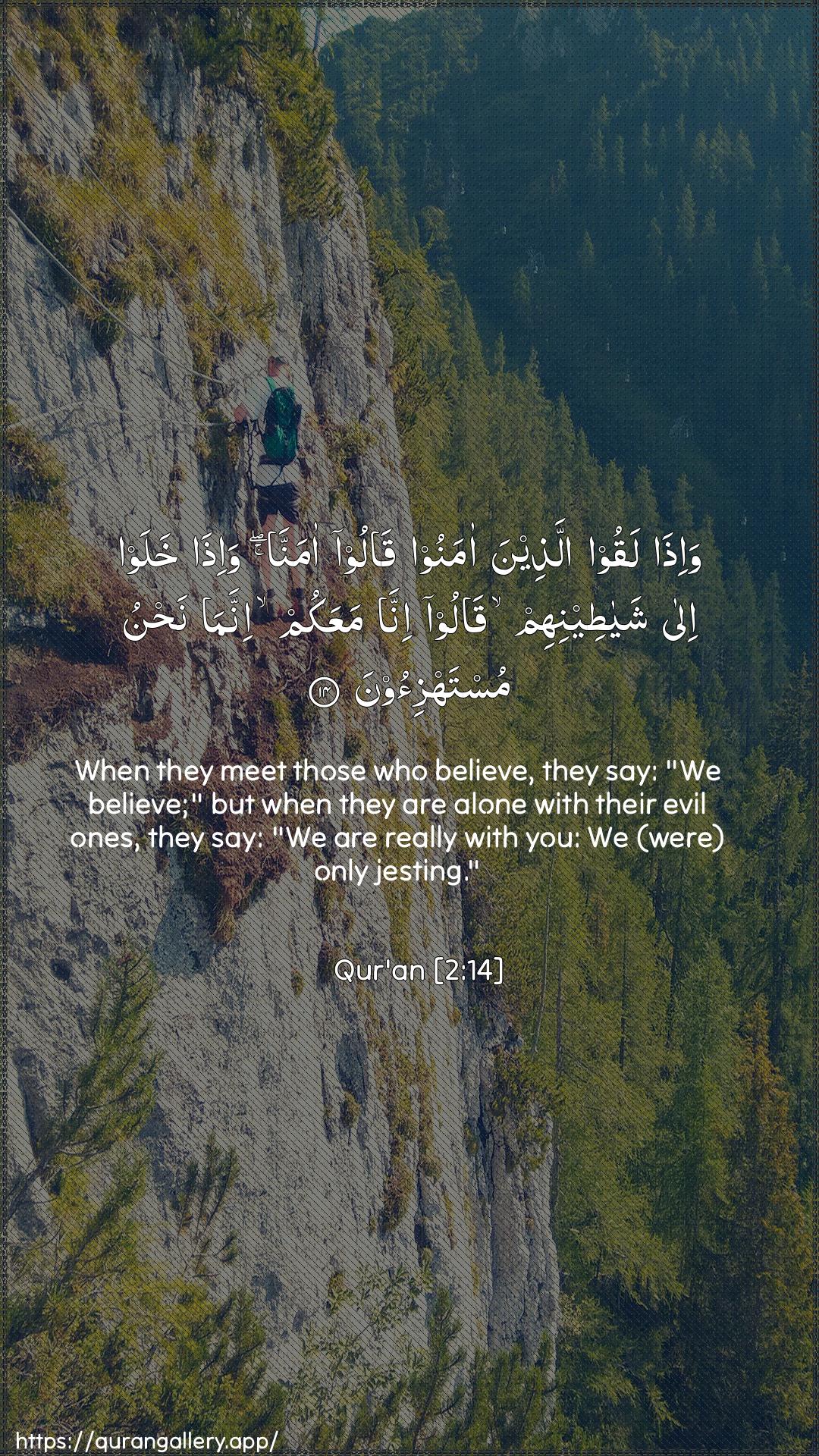
Arabic + English
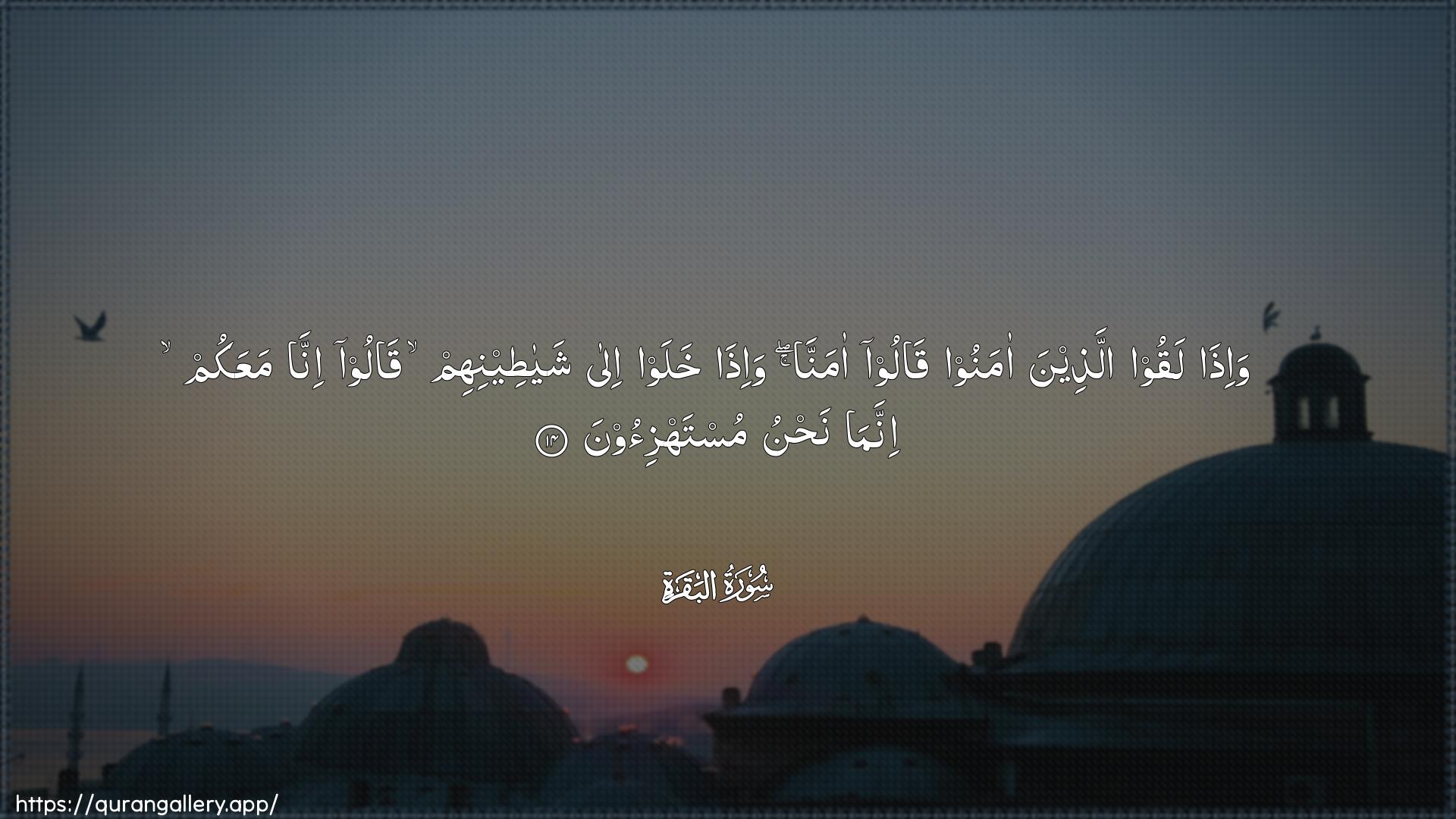
Arabic (Wide)
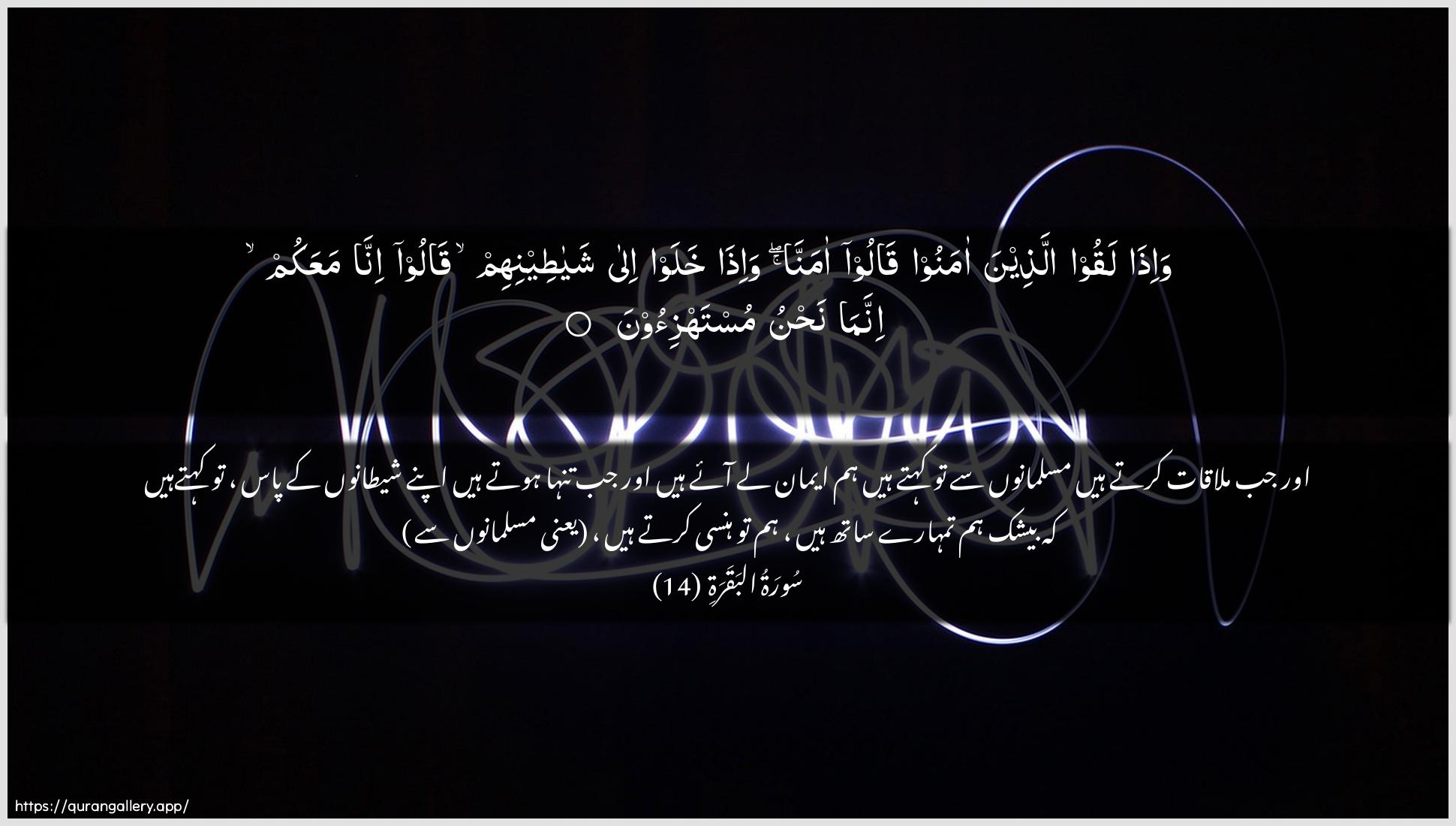
Arabic + Urdu
Free for personal & educational use with attribution
Quick Facts about this Verse
Surah
Al-Baqara
Revealed
Madani
Position
Juz 1,2,3
Explore this Verse
Verse Meaning
According to the comprehensive tafsir of Imam Al-Tabari, verse 2:14 of Surah Al-Baqarah masterfully captures the duplicitous nature of the Munafiqun (hypocrites). It describes their two-faced strategy: feigning belief when meeting Muslims, only to retreat to their 'Shayatin' (devils) and reaffirm their true allegiance, claiming they were only mocking. Classical scholars like Ibn Kathir and Qatada clarify that these 'Shayatin' were not literal demons, but their own leaders and masters in disbelief—be they the chiefs of the hypocrites, rabbis, or pagan heads who encouraged their deception. A profound linguistic insight highlighted by Al-Tabari and Al-Qurtubi is the use of 'khalaw ila' (retreated to), signifying a deliberate turning away from believers to seek refuge with their evil confederates, a much stronger statement of allegiance than merely being 'with' them. This verse, therefore, is not just a description but a divine exposition of spiritual treason, where outward conformity masks an inner alliance with forces hostile to faith.
Questions for Reflection
Personal Sincerity
The hypocrites said 'We believe' with their tongues but not their hearts. Reflect on an instance where your actions or words may not have perfectly matched your inner convictions. What forces were at play, and how does this verse encourage you to bridge that gap?
Relational Allegiance
The verse highlights a retreat 'to their Shayatin'. Who or what represents the 'Shayatin' in modern life—influences that encourage duplicity or mockery of faith? Consider your social, professional, and media consumption. To whom do you 'retreat' when you are away from the community of believers?
The Psychology of Mockery
The hypocrites claimed, 'We were only mocking.' Mockery is often a defense mechanism or a way to feel superior. Reflect on why they needed to frame their interaction with believers this way. What does this reveal about the insecurity inherent in hypocrisy and the strength found in sincere faith?
Practical Applications
Conduct a 'Sincerity Audit' by examining the consistency between your public statements of faith and your private thoughts and alliances.
Especially relevant in professional or social settings where one might be tempted to compromise principles for acceptance or gain.
Identify and create distance from the 'Shayatin' in your life—those companions or leaders who encourage mockery of faith and compromise of principles.
This applies to peer groups, influential figures, or even media that normalizes cynicism and mockery towards religious values.
Hidden Gem
The synthesis of tafsirs reveals that the hypocrites' fundamental error was a miscalculation of power. They believed power and safety resided with their 'shayatin' (leaders), necessitating their deception of the believers. Contemplating this helps us realize that true security and honor come only from Allah, making sincere allegiance to Him the only rational choice, regardless of social pressures.
Scroll to see more verses or use the dropdown in the breadcrumb to jump to any verse
Common Questions
3 more questions available in the full page