
Al-Baqara - The Cow
Arabic Name: الْبَقَرَة
Urdu Name: گائے
Type: Madani
Serial Number: 2
Revelation Order: 87
Total Verses: 286
Parah: 1,2,3
Rukus: 40
Sajda: None
Share Verse Art
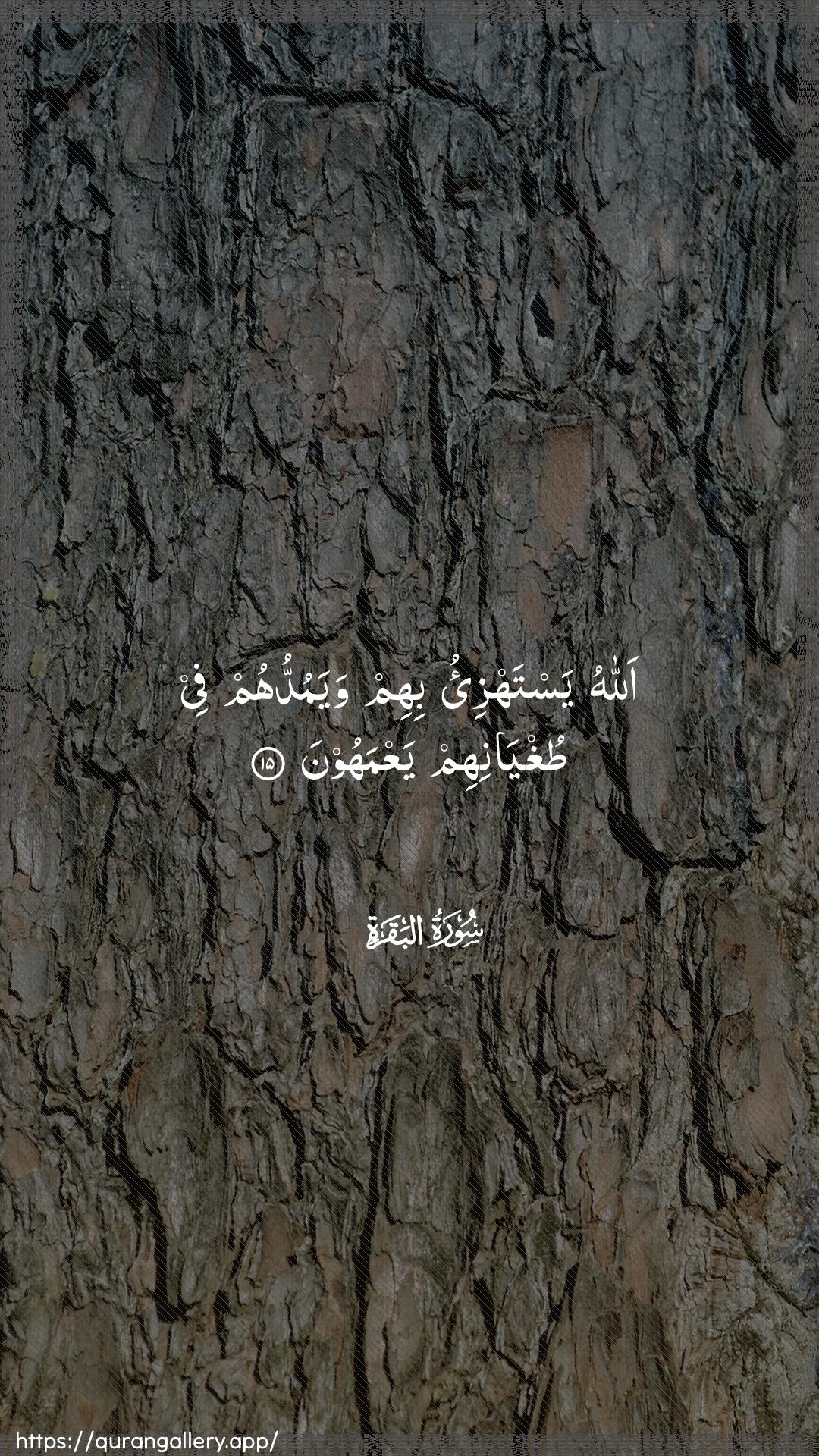
Arabic
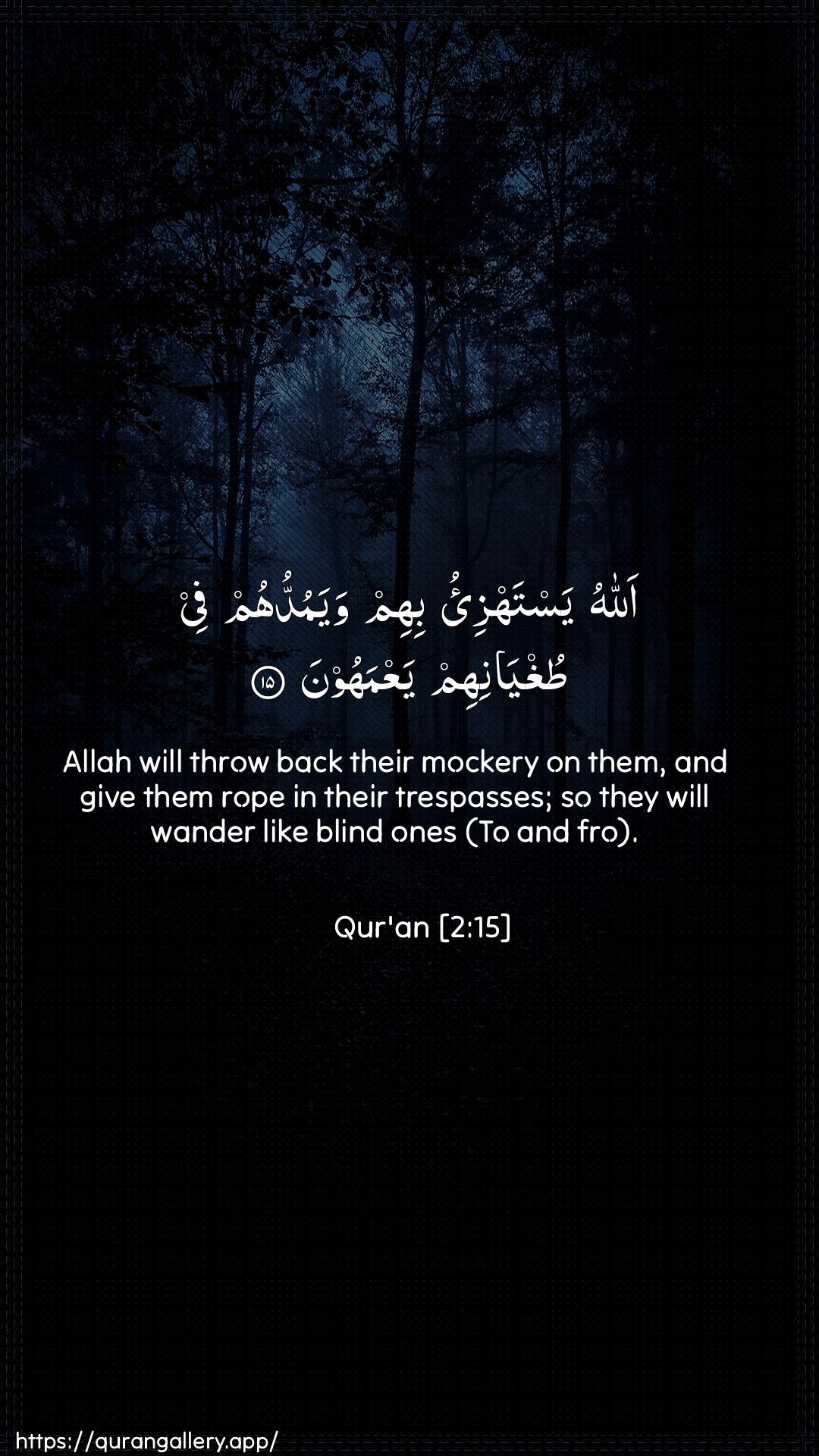
Arabic + English
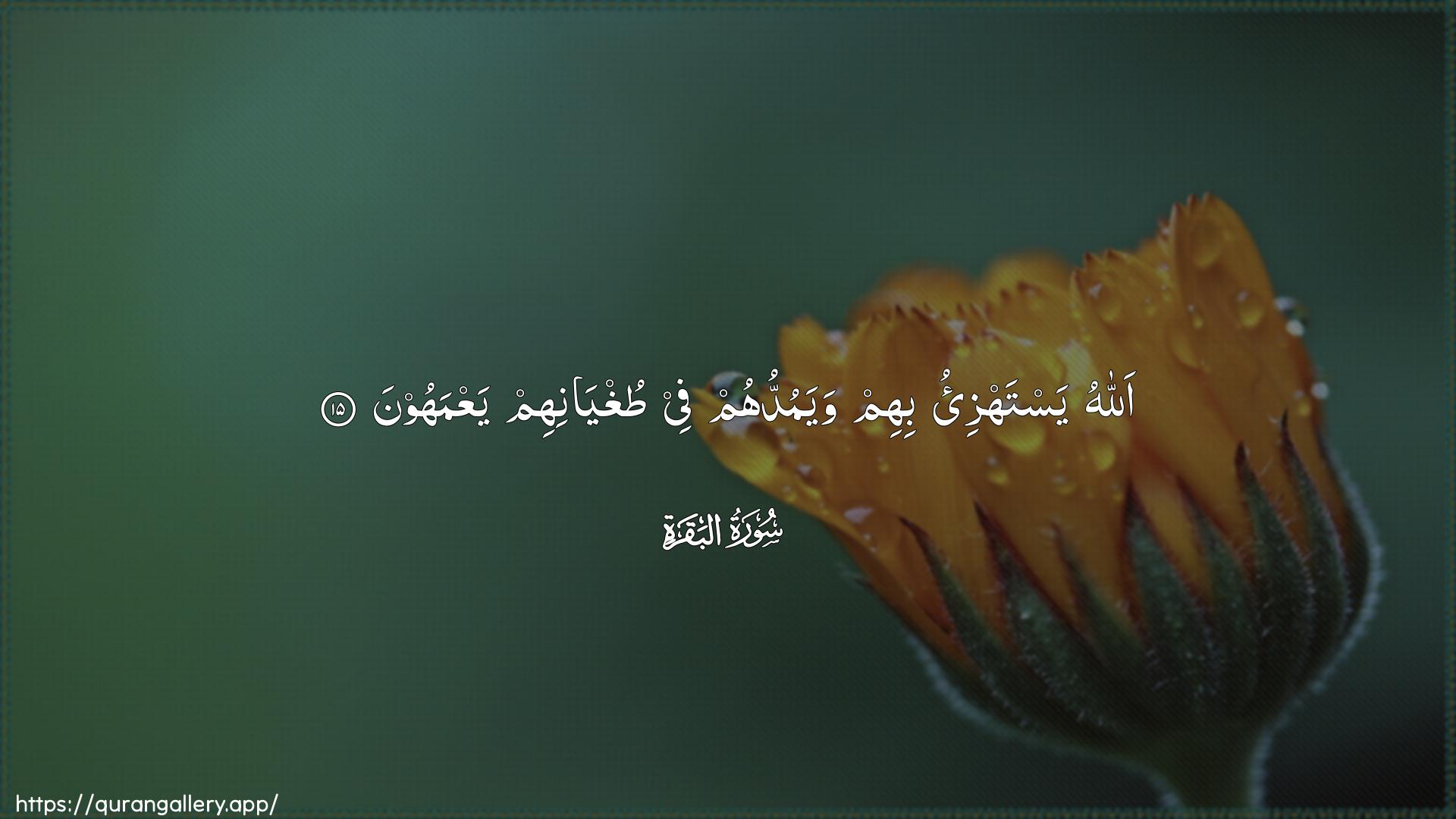
Arabic (Wide)
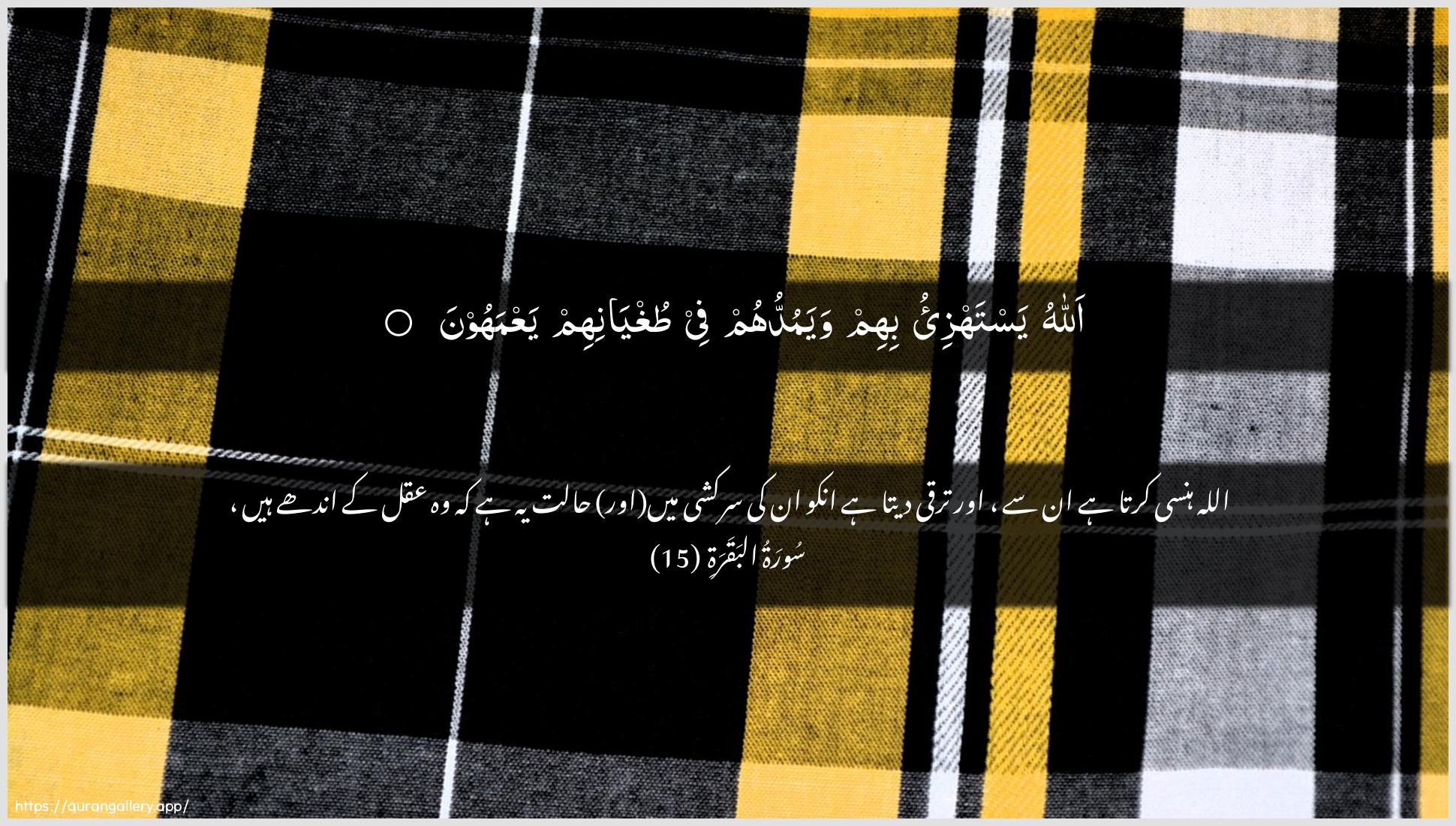
Arabic + Urdu
Free for personal & educational use with attribution
Quick Facts about this Verse
Surah
Al-Baqara
Revealed
Madani
Position
Juz 1,2,3
Explore this Verse
Verse Meaning
According to the comprehensive analysis of classical scholars like Al-Tabari, Quran 2:15 unveils a profound principle of divine justice in response to the hypocrites' mockery. The phrase 'Allahu yastahzi'u bihim' (Allah mocks them) is not to be understood in a human sense of scorn, but as a perfect requital for their actions. Ibn Kathir explains this is a form of 'mushakala' in Arabic rhetoric, where the punishment is described using the same term as the sin to denote perfect, fitting justice. This divine 'mockery' manifests as Allah leaving them to wander blindly in their transgression ('yamudduhum fi tughyanihim ya'mahoon'), a state where their own arrogance and deceit become their prison. Al-Qurtubi adds that this is a form of 'istidraj,' where they are given more rope, not as a favor, but to allow their hypocrisy to fully manifest, sealing their fate. The synthesis of these scholarly views reveals that the ultimate mockery is that the hypocrites believe they are deceiving others, while in reality, they are only deceiving themselves, becoming ever more lost in a spiritual blindness of their own making.
Questions for Reflection
Textual Contemplation
Al-Tabari distinguishes between 'ama' (physical blindness) and 'amah' (the heart's aimless wandering). Contemplate the feeling of being completely lost or confused about a major life decision. How does this verse's use of 'ya'mahoon' perfectly capture that internal state of directionless wandering, and how does it connect this feeling to the initial act of mockery?
Personal Transformation
Ibn Kathir clarifies that Allah 'gives them rope' or lets them continue. Reflect on an area in your life where you might be 'getting away with' a negative habit. Does this verse change your perspective from seeing it as a sign of success or cleverness to a potential sign of being 'prolonged' in a transgression? How does this shift your sense of urgency for tawbah (repentance)?
Relational Wisdom
Al-Qurtubi frames Allah's 'mockery' as perfect justice. When someone mocks you or your values, the natural human response is to feel anger or desire to mock back. How does contemplating that Allah Himself is the ultimate arbiter of justice for this act free you from the burden of carrying that anger and needing to retaliate? How does it change your relationship with both the mocker and with Allah?
Practical Applications
Practice 'Muhasabah' (Self-Accounting) on Your Intentions to Safeguard Against Hypocrisy.
Before posting online, engaging in debates, or giving advice, pause and ask: 'Is my intention to seek truth and help, or to feel superior?' This prevents falling into the trap of mockery.
Reframe Encounters with Mockery as a Test of Patience, Not an Invitation to Retaliate.
When faced with sarcasm or ridicule for your beliefs or practices, consciously make a silent dua for the person's guidance and remind yourself that Allah is the ultimate dispenser of justice.
Hidden Gem
The synthesis reveals that the verse is not just about hypocrites, but about the very nature of consciousness. Mockery is the act of placing oneself 'above' the truth. The divine response is to grant that wish—Allah removes the external checks and balances, and 'prolongs' them in their state of perceived superiority, which is the very definition of being lost. The hidden gem is that spiritual blindness isn't a punishment inflicted; it's the natural, inevitable result of a consciousness that chooses arrogance over humility.
Scroll to see more verses or use the dropdown in the breadcrumb to jump to any verse
Common Questions
2 more questions available in the full page