
Al-Baqara - The Cow
Arabic Name: الْبَقَرَة
Urdu Name: گائے
Type: Madani
Serial Number: 2
Revelation Order: 87
Total Verses: 286
Parah: 1,2,3
Rukus: 40
Sajda: None
Share Verse Art
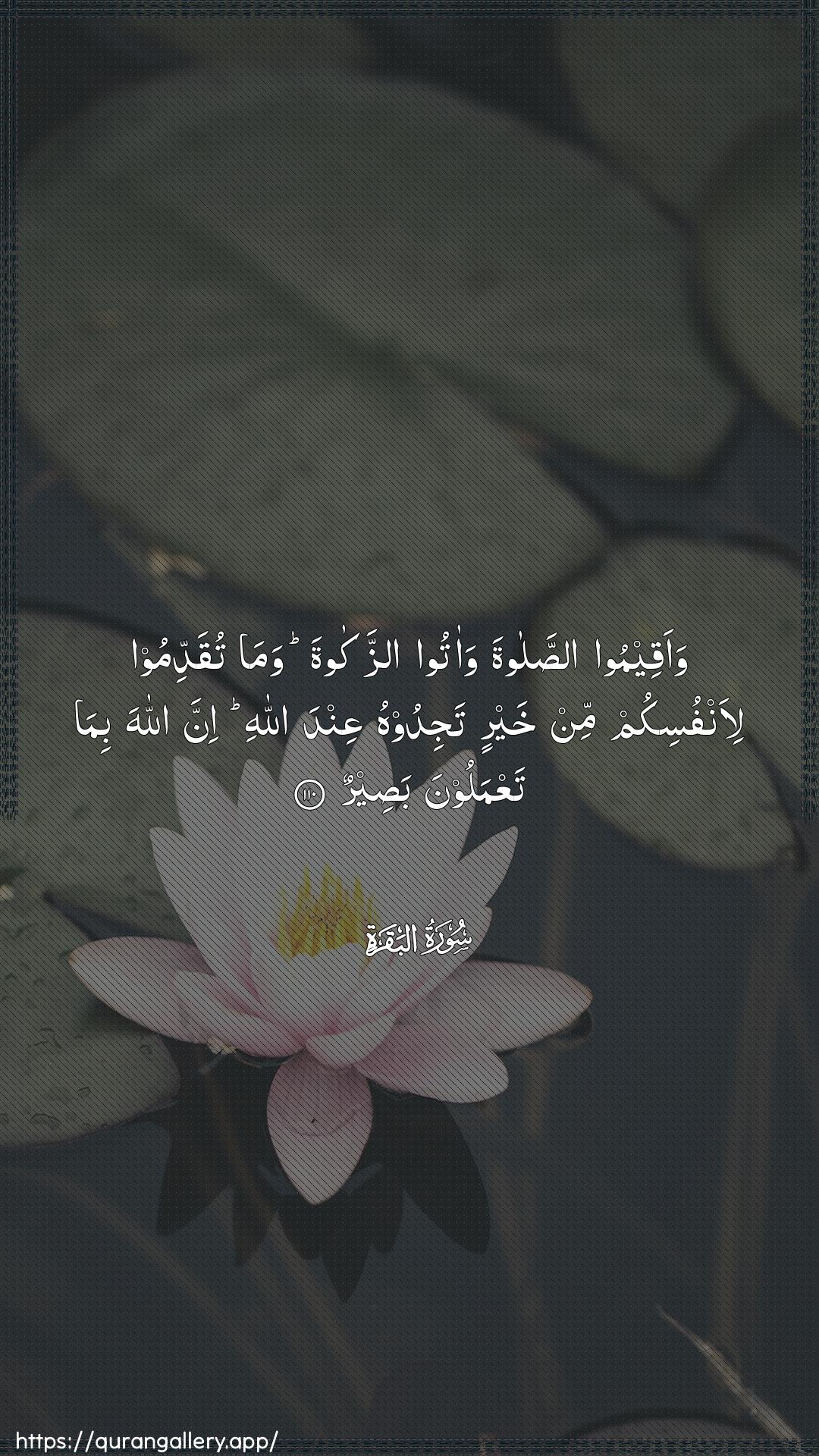
Arabic
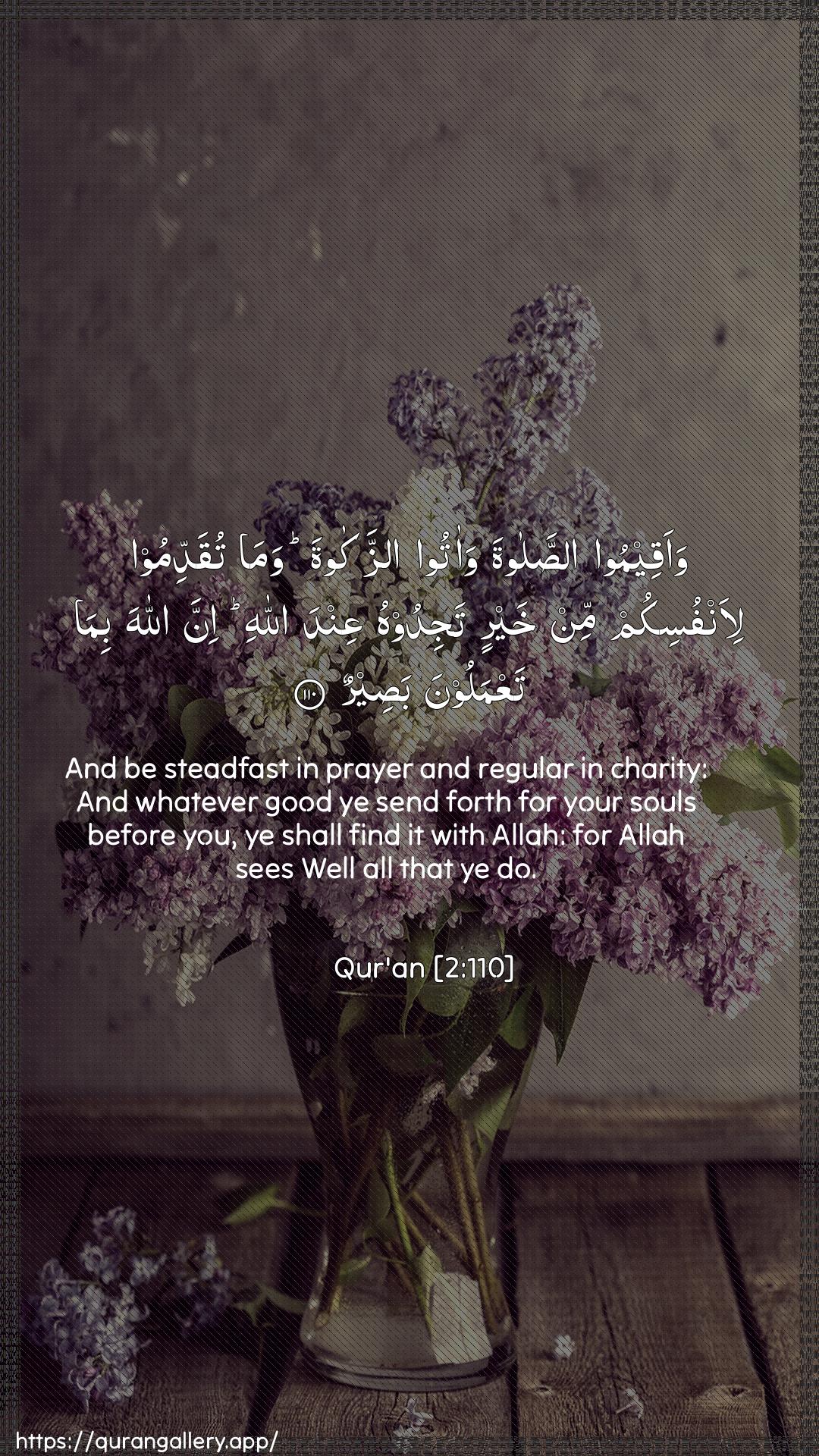
Arabic + English
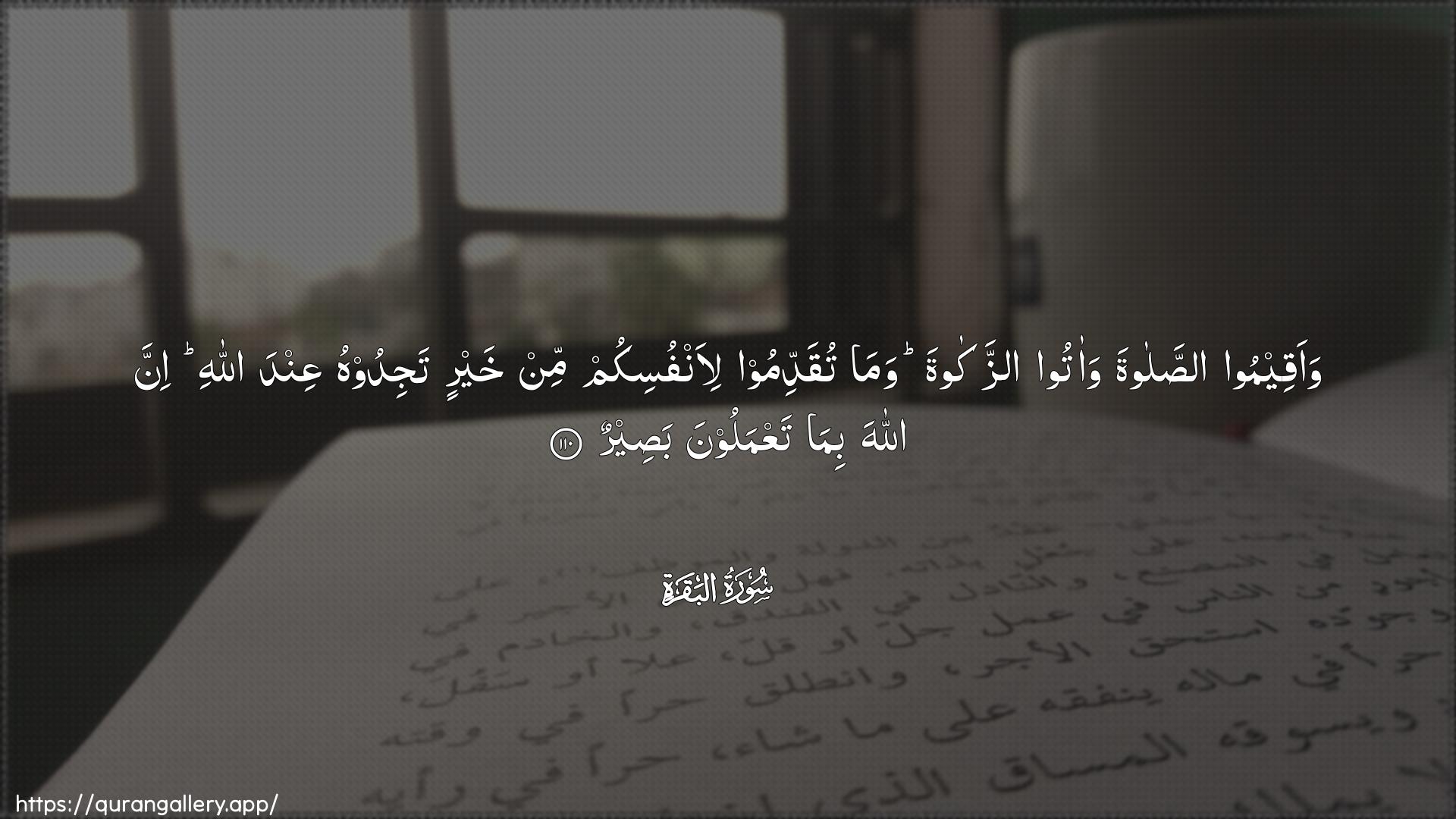
Arabic (Wide)
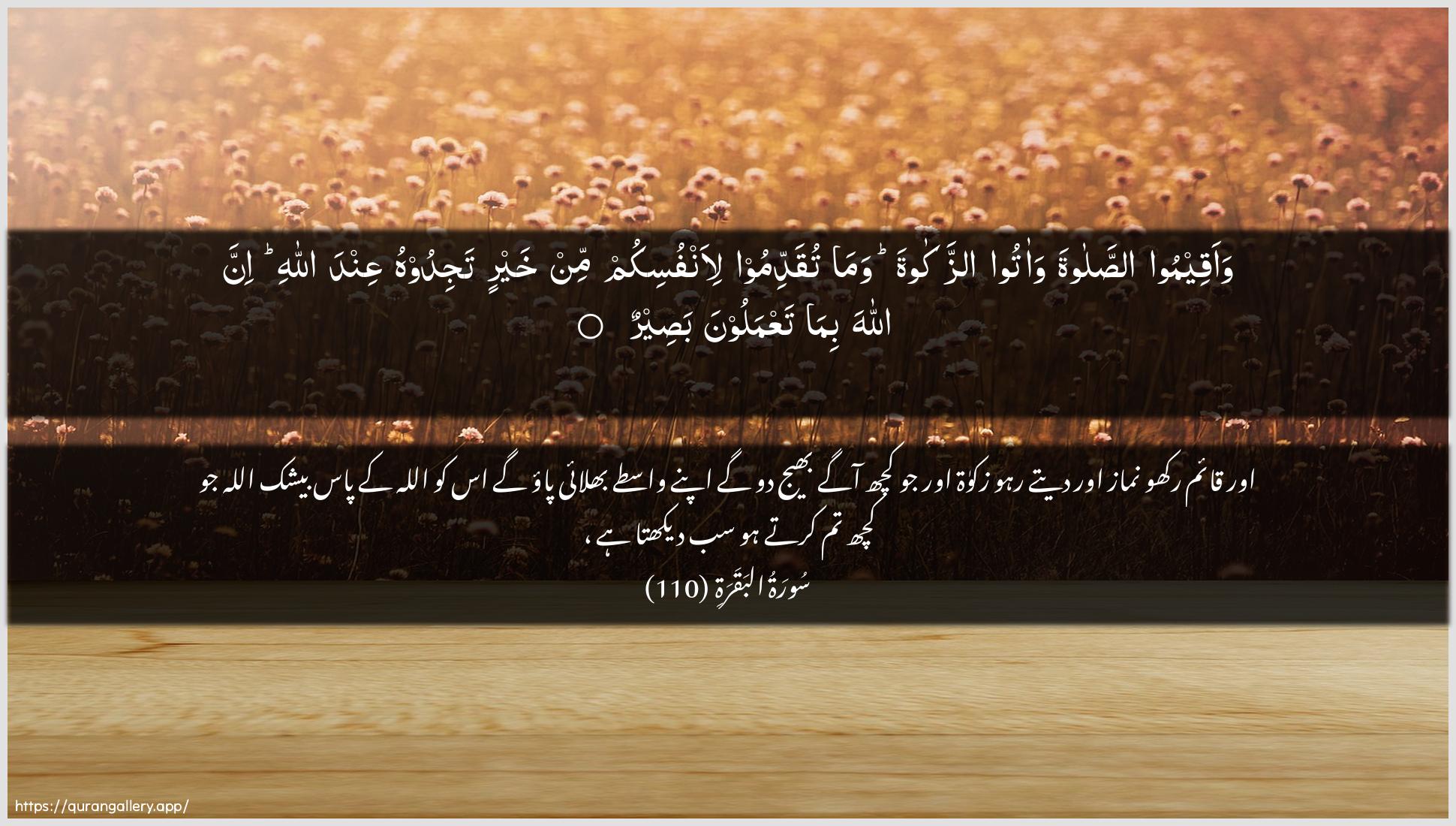
Arabic + Urdu
Free for personal & educational use with attribution
Quick Facts about this Verse
Surah
Al-Baqara
Revealed
Madani
Position
Juz 1,2,3
Explore this Verse
Verse Meaning
According to the classical commentator Imam Al-Tabari, Quran 2:110 serves as a foundational directive for the Muslim community, encapsulating the core principles of worship and social responsibility. The verse commands believers to 'Establish prayer (Salah) and give charity (Zakah),' linking the personal spiritual connection with God to the communal obligation of supporting the needy. Ibn Kathir emphasizes that this is not merely a suggestion but a divine encouragement for believers to invest in their own hereafter. He explains that the phrase 'whatever of good you send forth for yourselves... you will find it with Allah' is a divine promise that no act of righteousness, whether prayer, charity, or any other good deed, is ever wasted. [2] The synthesis of scholarly views, including those of As-Sa'di, reveals that this verse establishes a complete system of success: Salah purifies the soul and strengthens one's relationship with the Creator, while Zakah purifies wealth and strengthens the bonds of the community. The concluding phrase, 'Indeed, Allah is All-Seer of what you do,' serves, as Al-Qurtubi notes, as both a promise and a warning—a promise that every hidden act of good is seen and recorded, and a warning that no negligence is hidden from His sight, ensuring perfect and just recompense.
Questions for Reflection
Personal Accountability
The verse says 'for yourselves' (li-anfusikum). Reflect on a recent good deed you performed. Did you truly feel you were doing it for your own soul's benefit in the hereafter, or for worldly praise or temporary satisfaction? How can this verse shift your intention?
The Nature of Divine Sight
Contemplate the name 'Al-Basir' (The All-Seer). How does the reality that every single action—public or private, large or small—is perfectly seen by Allah change your perspective on 'unseen' acts of kindness or secret sins? Does it bring more comfort or more fear, and why?
The Concept of 'Finding' Your Deeds
The verse promises 'you will find it with Allah' (tajiduhu 'ind Allah). Imagine the Day of Judgment. What deeds would you be most overjoyed to 'find' waiting for you in your account with Allah? What does this tell you about your true priorities right now?
Practical Applications
Treat every prayer and charitable act as a direct investment for your soul's future.
In a world focused on financial planning, this provides a framework for 'spiritual retirement planning,' where good deeds are your eternal assets.
Internalize the reality that Allah's sight is perfect, motivating sincere actions even when no one is watching.
This counters the modern desire for public recognition (e.g., on social media) by focusing on the unseen, sincere actions that truly matter.
Hidden Gem
A subtle insight from the Arabic syntax is that 'khayr' (good) is unlimited. Scholars note this implies that Allah's promise isn't restricted to just Salah and Zakah, but any form of goodness. Contemplate the most unconventional or smallest act of 'khayr' you can do today, knowing it is part of this grand, divine promise.
Scroll to see more verses or use the dropdown in the breadcrumb to jump to any verse