
Al-Baqara - The Cow
Arabic Name: الْبَقَرَة
Urdu Name: گائے
Type: Madani
Serial Number: 2
Revelation Order: 87
Total Verses: 286
Parah: 1,2,3
Rukus: 40
Sajda: None
Share Verse Art
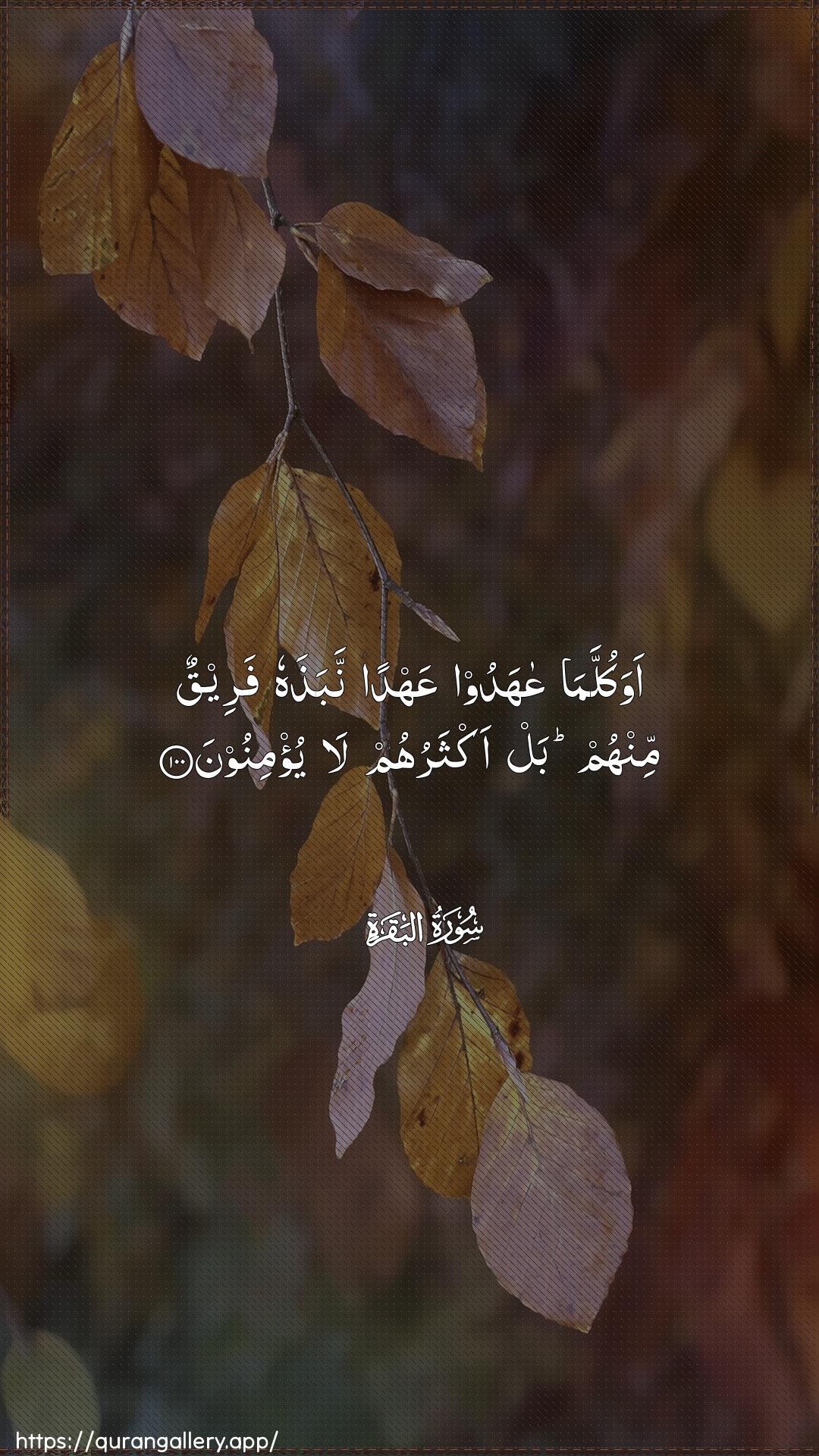
Arabic
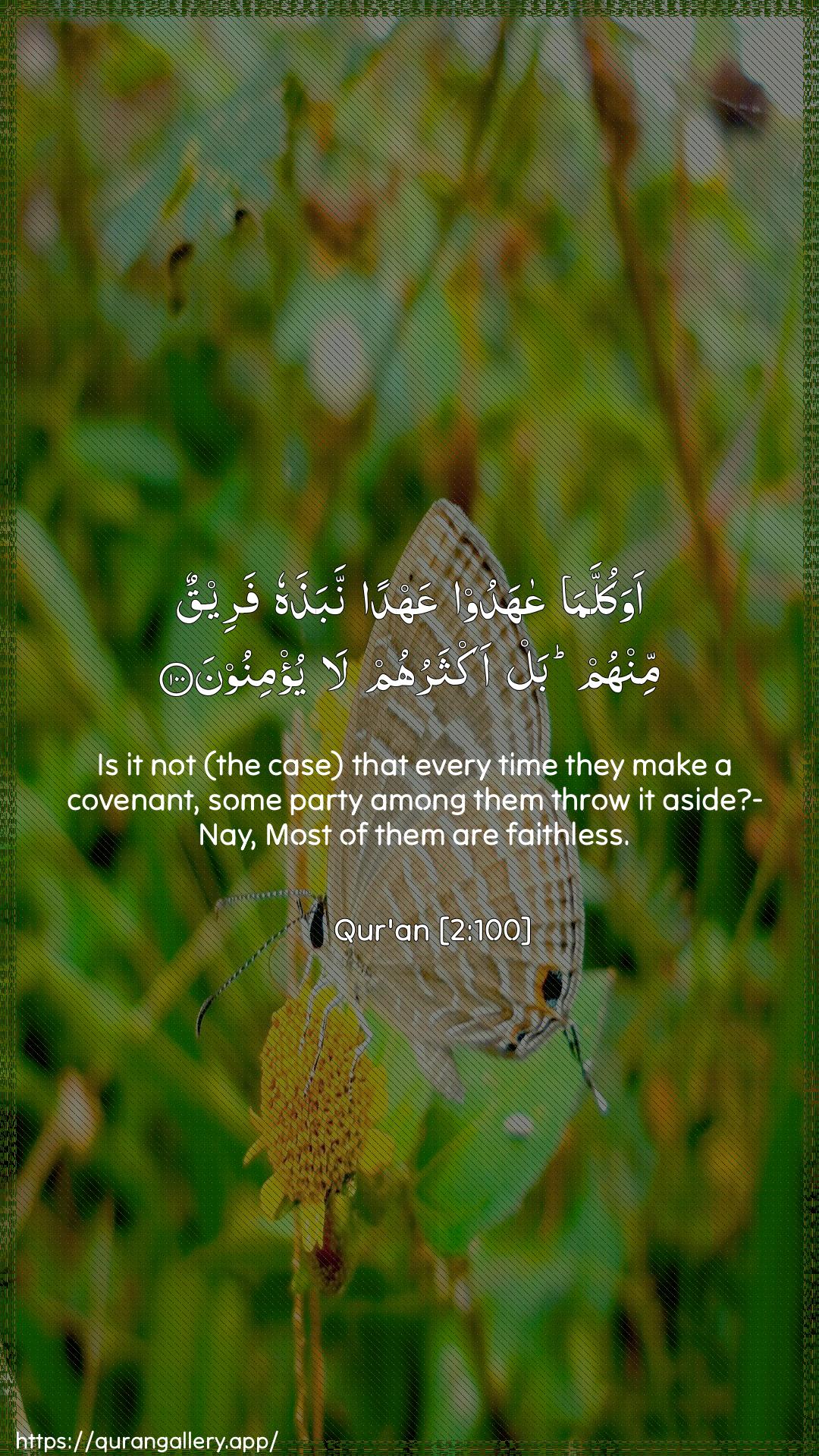
Arabic + English
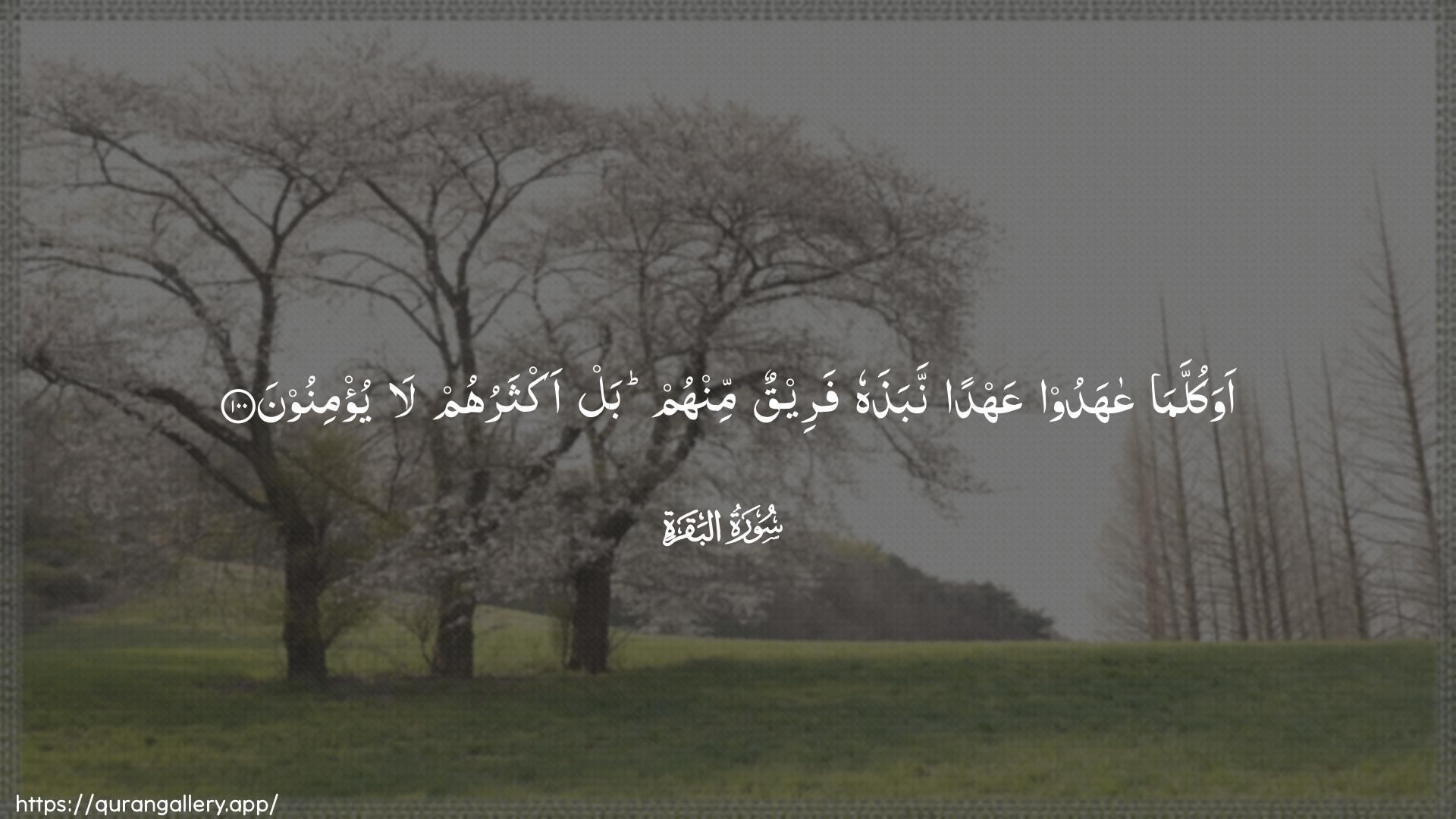
Arabic (Wide)
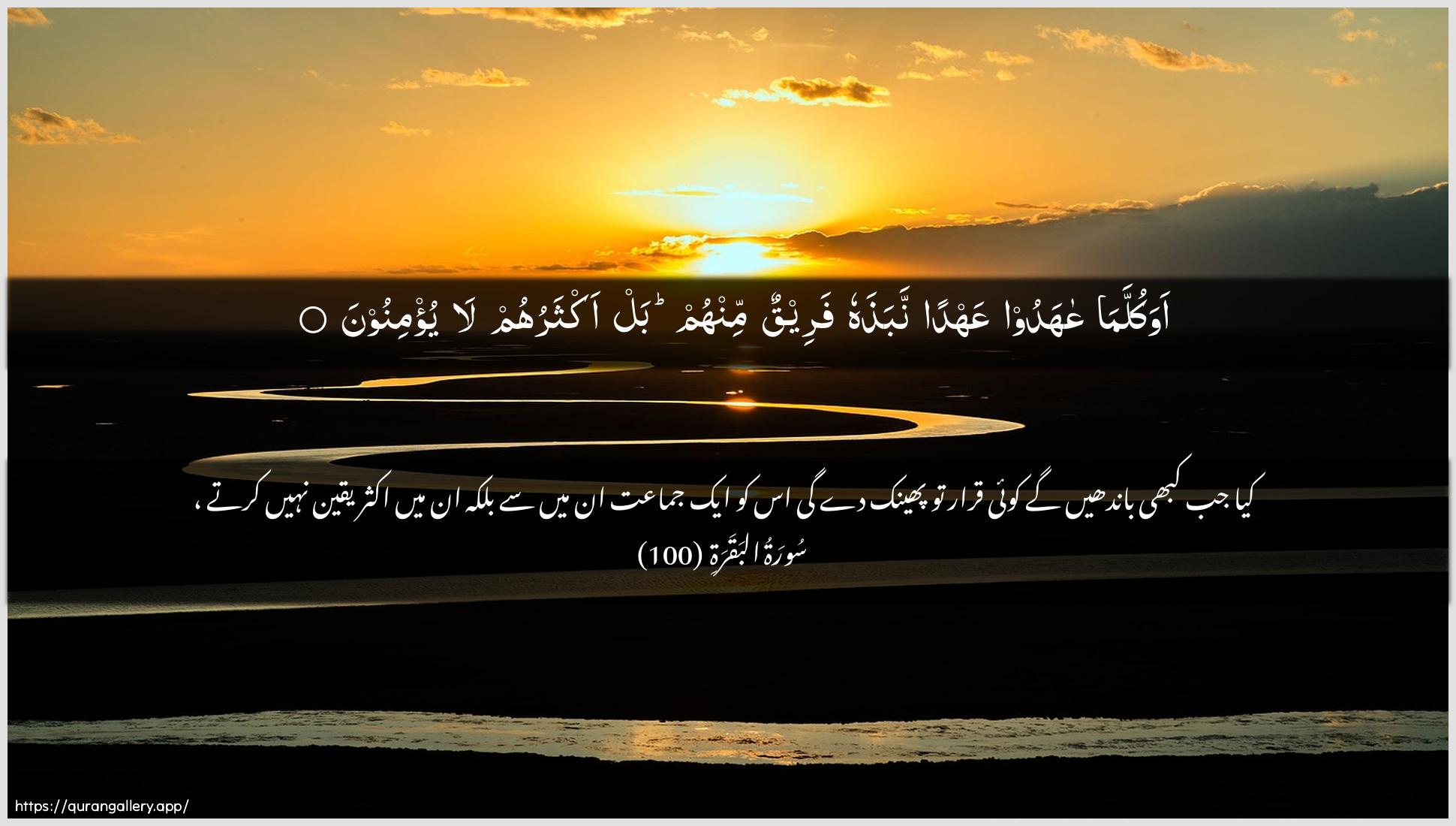
Arabic + Urdu
Free for personal & educational use with attribution
Quick Facts about this Verse
Surah
Al-Baqara
Revealed
Madani
Position
Juz 1,2,3
Explore this Verse
Verse Meaning
According to the classical tafsir of Al-Tabari, Quran 2:100 serves as a divine expression of astonishment and rebuke directed at the Children of Israel for their repetitive treachery. The verse questions rhetorically, 'Is it that every time they make a covenant, a party of them casts it aside?' Ibn Kathir specifies the historical context, citing the denial of Malik bin al-Sayf, who, when reminded of the covenant to believe in Prophet Muhammad ﷺ, feigned ignorance. This act of 'nabdh' (نبذ), as Al-Qurtubi explains, is not mere forgetting but a deliberate act of 'throwing away' or 'casting aside,' like discarding a worn-out shoe, signifying utter contempt for the pledge. The synthesis of these scholarly views reveals that this isn't an isolated incident but a chronic spiritual disease. The verse concludes, 'Rather, most of them do not believe,' linking this habitual betrayal directly to a fundamental lack of true faith (iman). It's a profound diagnosis: the inability to uphold a covenant is not a political or social failing, but a symptom of a deeper, spiritual void.
Questions for Reflection
Personal Integrity
The verse states a 'party of them' casts the covenant aside. Reflect on the 'parties' or aspects within your own self. Is there a part of you that values convenience over commitment? A part that makes promises your soul doesn't intend to keep? How does this internal division reflect the state of your iman?
Communal Trust
Allah points out the repetitive nature of this betrayal with 'kullama' (whenever). How does the repeated breaking of covenants by a few members erode the trust and spiritual integrity of an entire community or family? Contemplate the collective responsibility to uphold agreements to protect the community's relationship with Allah.
The Nature of Divine Covenants
Al-Tabari highlights that 'nabdh' means to throw away something worthless. The covenant they cast aside was with Allah Himself. What does it reveal about a person's perception of Allah when they can treat His covenant so contemptuously? How can you cultivate a reverence for your promises to Allah (like Salah) so they are cherished, not discarded?
Practical Applications
Conduct a 'covenant audit' of your life. Review all promises, big and small—to Allah, family, and in business—and renew your commitment to them.
Applicable to professional contracts, marital vows, personal promises, and even unspoken social commitments.
Before making any new promise, pause and reflect on this verse to internalize the spiritual weight and consequence of your words.
Crucial in today's world of casual agreements, from 'I'll call you back' to signing financial agreements.
When you witness betrayal or broken promises in the world, use this verse as a lens to diagnose the underlying issue as a crisis of faith, not just ethics.
Helps in understanding betrayals in personal relationships, politics, and international affairs through a spiritual framework.
Hidden Gem
The verse ends with 'بل أكثرهم لا يؤمنون' (Rather, most of them do not believe). The word 'bal' (rather) signifies a turn, suggesting the issue is even worse than it appears. It's not just that some break covenants; the deeper, more pervasive tragedy is that the majority lack the foundational belief that makes covenants meaningful in the first place. The broken promise is merely the visible symptom of a hidden, more widespread disease of the heart.
Scroll to see more verses or use the dropdown in the breadcrumb to jump to any verse
Common Questions
2 more questions available in the full page