
Al-Baqara - The Cow
Arabic Name: الْبَقَرَة
Urdu Name: گائے
Type: Madani
Serial Number: 2
Revelation Order: 87
Total Verses: 286
Parah: 1,2,3
Rukus: 40
Sajda: None
Share Verse Art
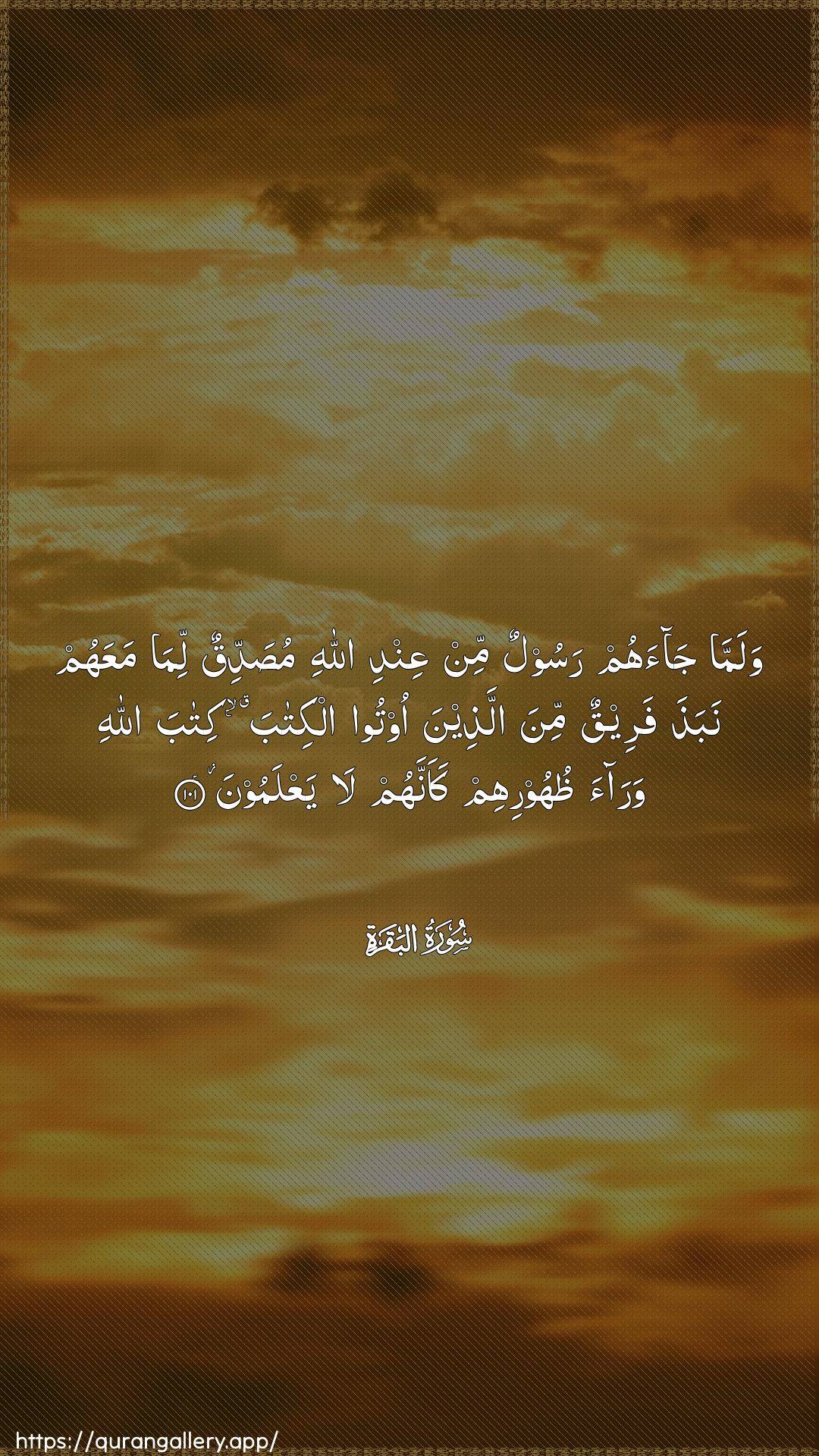
Arabic
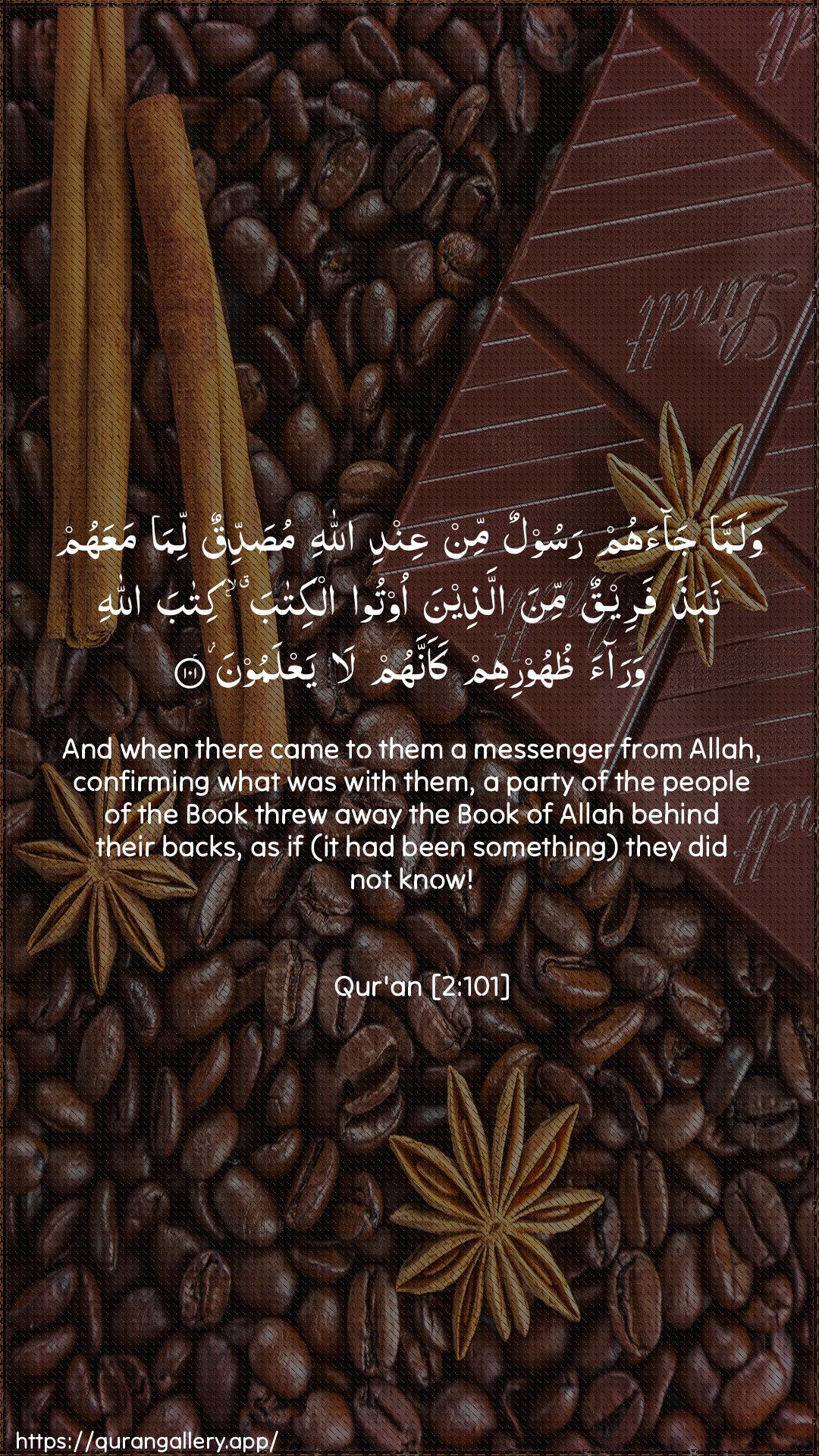
Arabic + English
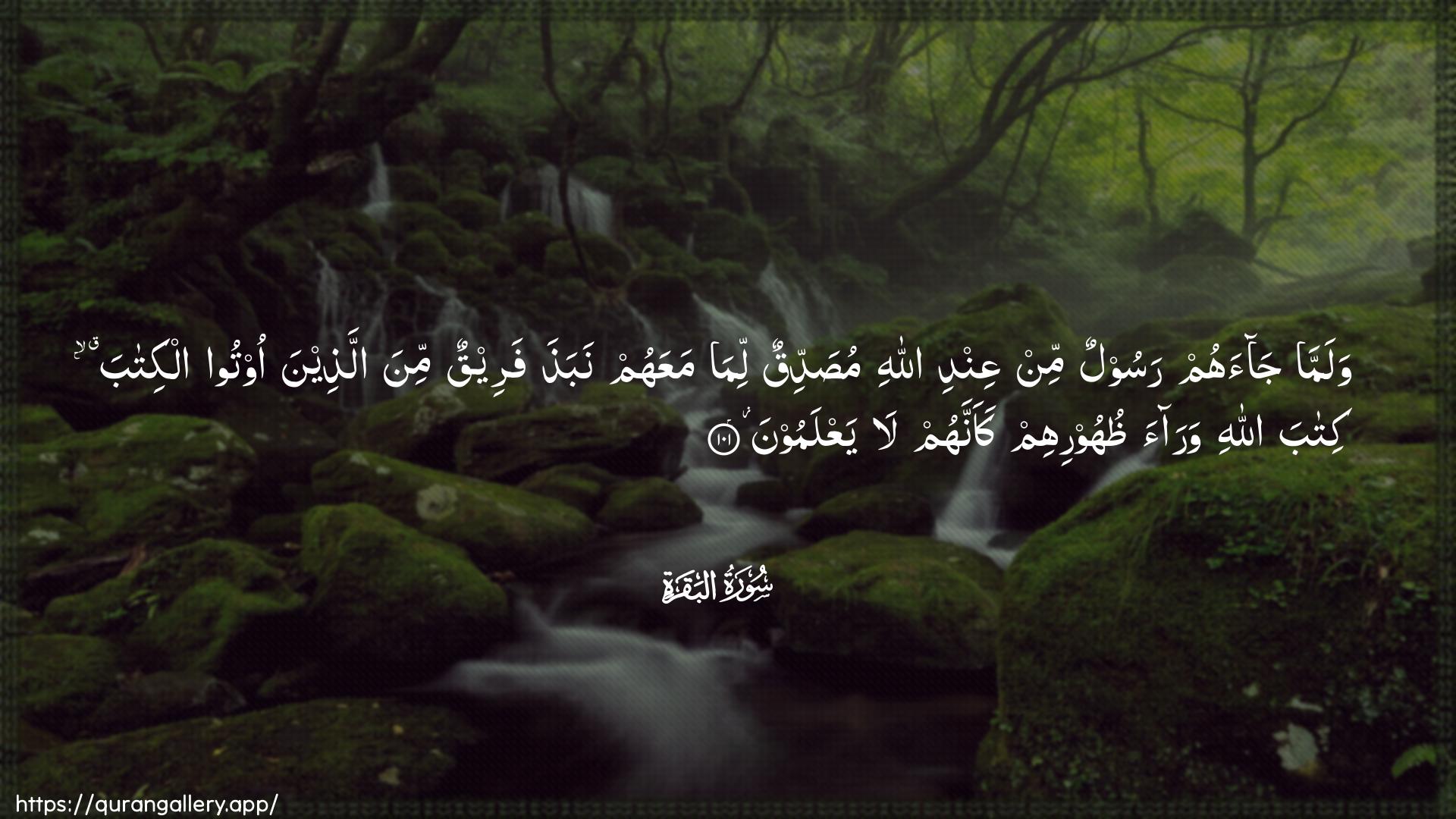
Arabic (Wide)
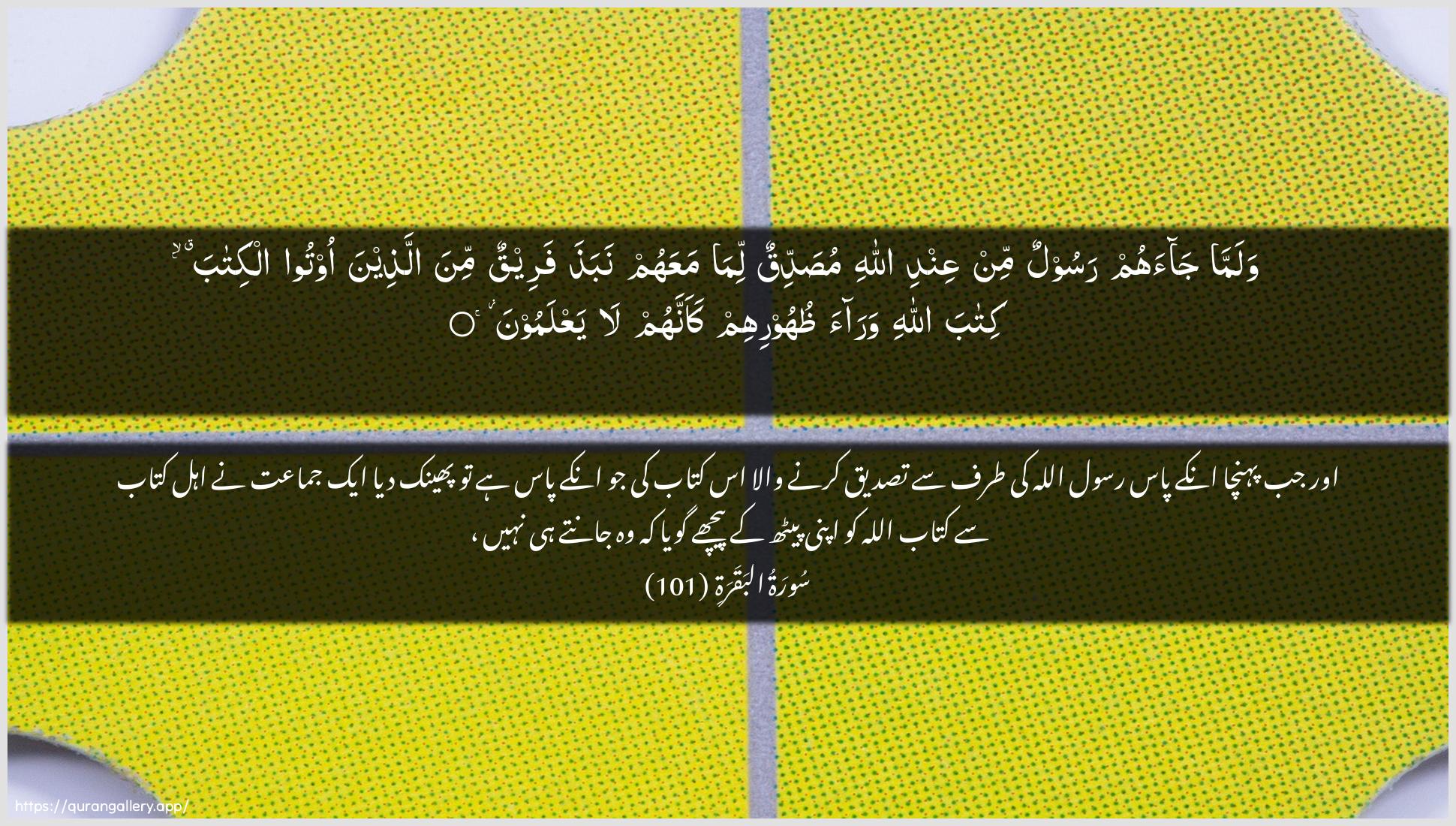
Arabic + Urdu
Free for personal & educational use with attribution
Quick Facts about this Verse
Surah
Al-Baqara
Revealed
Madani
Position
Juz 1,2,3
Explore this Verse
Verse Meaning
According to the classical exegete Imam Al-Tabari, Quran 2:101 powerfully depicts the wilful rejection of divine truth by a faction of the People of the Book. When the Prophet Muhammad ﷺ came, fulfilling the prophecies within their own scripture, the Torah, they consciously chose to ignore it. The verse uses the vivid metaphor 'nabadha... warāʾa ẓuhūrihim' (they cast it behind their backs) to signify an act of complete and utter disregard. Ibn Kathir clarifies that this 'Book of Allah' which they cast away was the Torah itself, which contained the good news (bisharah) of the coming Prophet ﷺ. They treated this divine knowledge as if they were ignorant, not out of a lack of information, but due to envy and arrogance. As-Sa'di synthesizes this by explaining that their rejection of the Prophet ﷺ necessitated a rejection of their own scriptures, as the two were in perfect agreement. This verse thus serves as a timeless warning against the danger of knowledge without sincerity, where possessing scripture becomes a proof against a person rather than a source of guidance.
Questions for Reflection
Personal Sincerity
The verse says 'as if they did not know' (ka'annahum la ya'lamun). Reflect on a time you possessed clear Islamic knowledge about a matter but acted contrary to it. What were the hidden reasons—convenience, desire, fear of judgment, pride? How does this verse force you to confront that internal hypocrisy?
Intellectual Humility
The messenger came 'confirming what was with them.' This means the new truth validated their existing truth. Contemplate your own reaction when a new piece of authentic knowledge reaches you. Is your first instinct to find ways it fits with what you know, or to find reasons to reject it because it's unfamiliar or challenges your comfort zone?
Communal Responsibility
The verse speaks of a 'fariqun' (a group/team) who rejected the book. This was a collective act. Reflect on the communities you belong to (family, social circles, local masjid). Are there unspoken 'truths' that the group collectively ignores or 'casts behind its back' for cultural or social convenience? What is your role in perpetuating or challenging this?
Practical Applications
Conduct a 'sincerity audit' on your religious knowledge. Identify one area where you know the right thing to do but fail to act upon it consistently.
Applicable to consuming Islamic lectures online without changing one's character, or knowing the sunnah but ignoring it for convenience.
When learning a new religious ruling or principle, immediately identify one small, concrete way to implement it within 24 hours.
After listening to a khutbah on kindness to neighbors, intentionally greet your neighbor or offer them a small gift that day.
Actively seek and welcome truths, even when they come from sources outside your immediate group, tribe, or preferred school of thought.
Listening to and considering valid points from a Muslim speaker of a different background or madhhab without prejudice.
Hidden Gem
The deepest gem from scholarly synthesis is that 'casting the Book of Allah behind their backs' was not a single event, but a continuous process. They had to keep re-affirming their rejection every time the truth was presented. Contemplate how our own sins and hypocrisies are not one-off mistakes, but choices we must actively maintain by continuously ignoring the truth within us.
Scroll to see more verses or use the dropdown in the breadcrumb to jump to any verse