
Hud - Hud
Arabic Name: هُوْد
Urdu Name: حود
Type: Makki
Serial Number: 11
Revelation Order: 52
Total Verses: 123
Parah: 12,11
Rukus: 10
Sajda: None
Share Verse Art
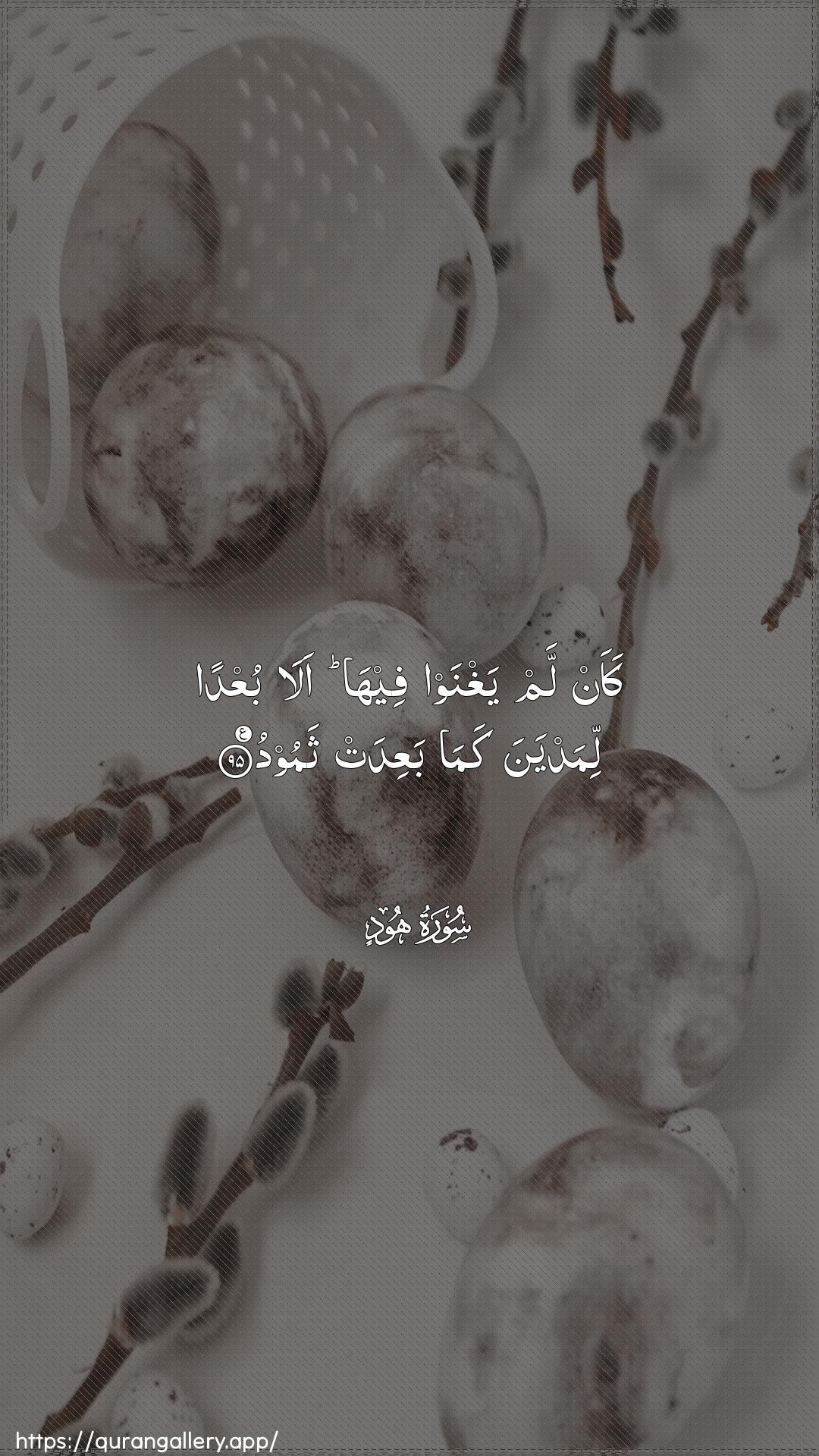
Arabic
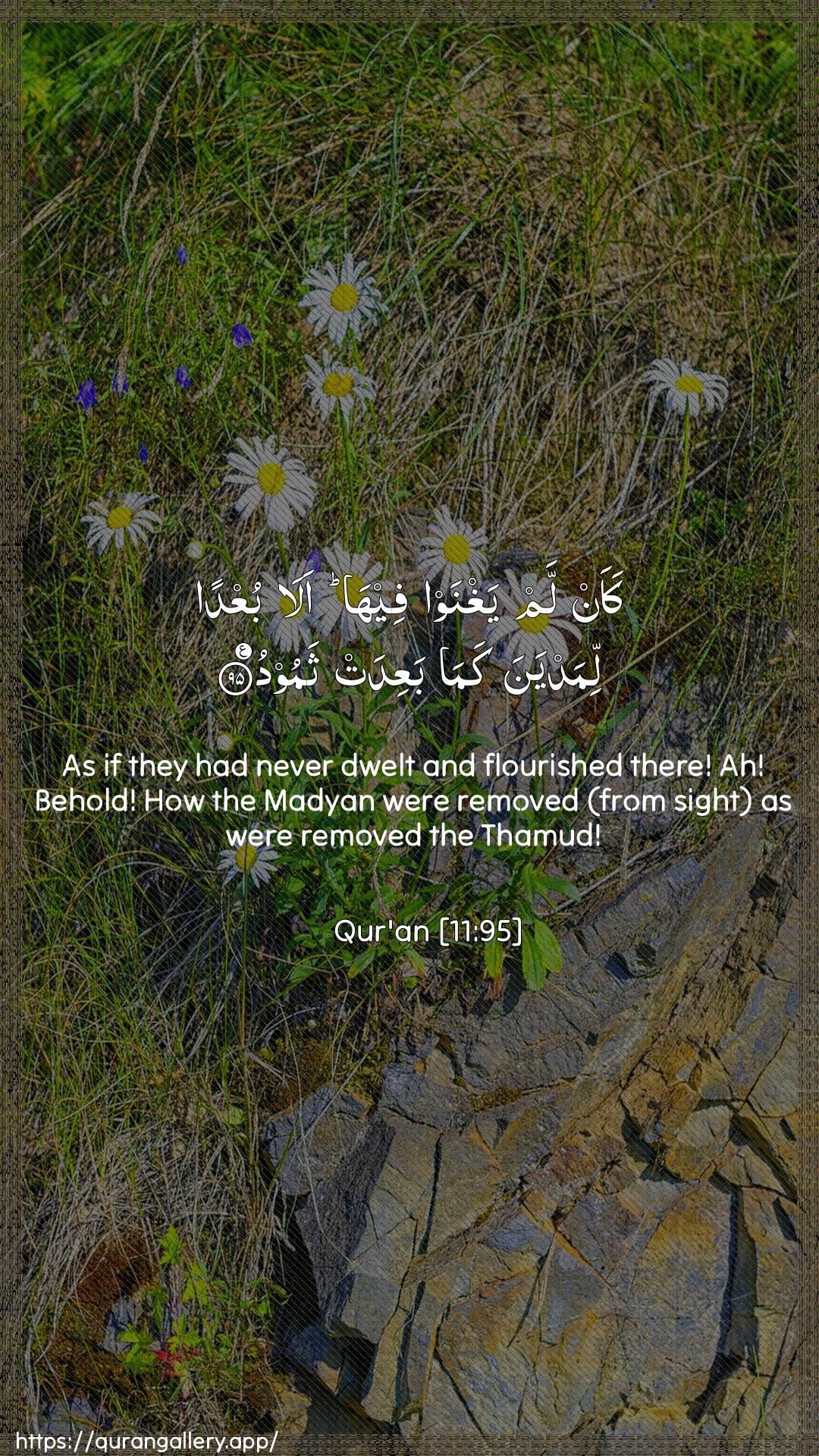
Arabic + English
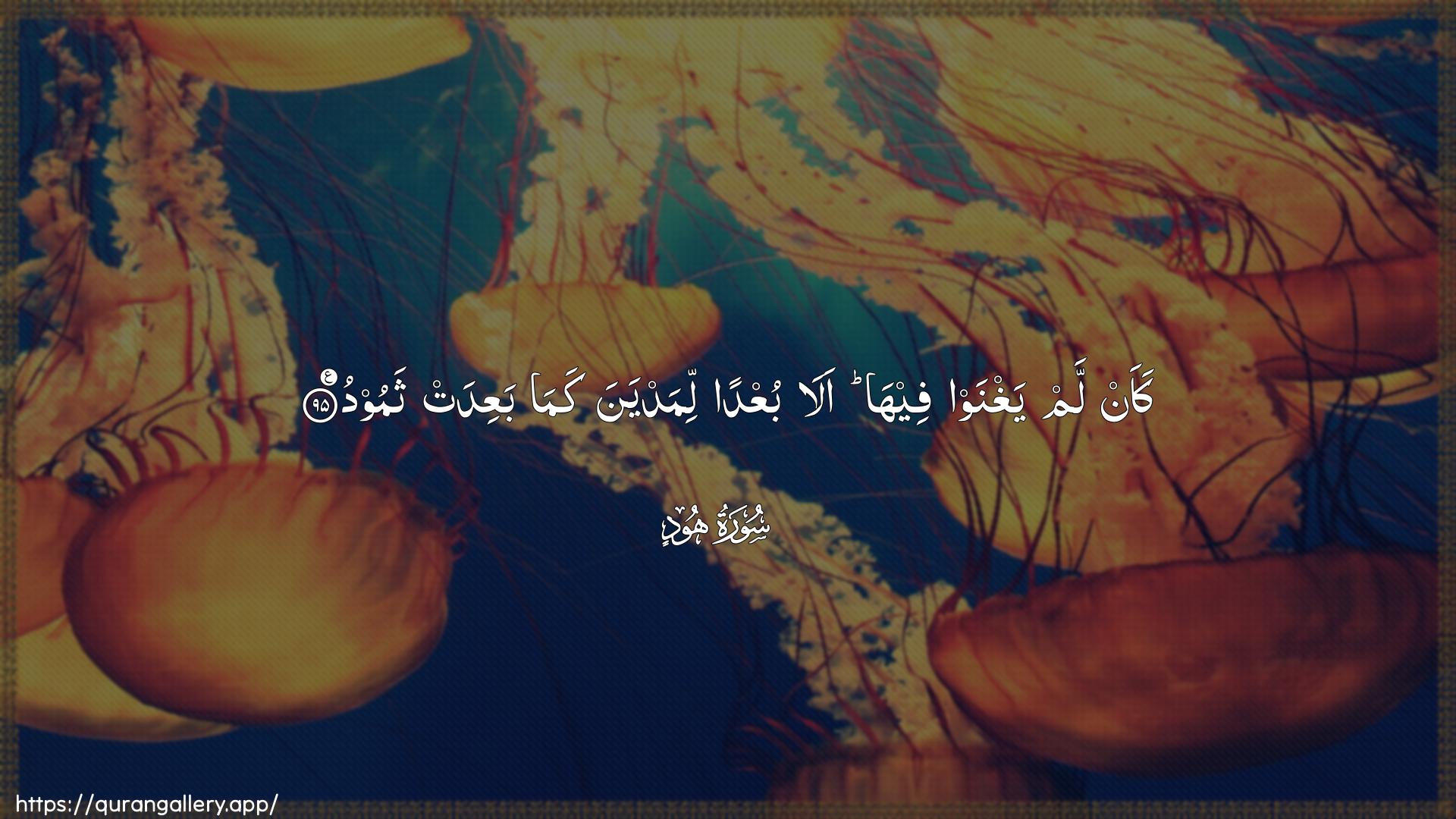
Arabic (Wide)
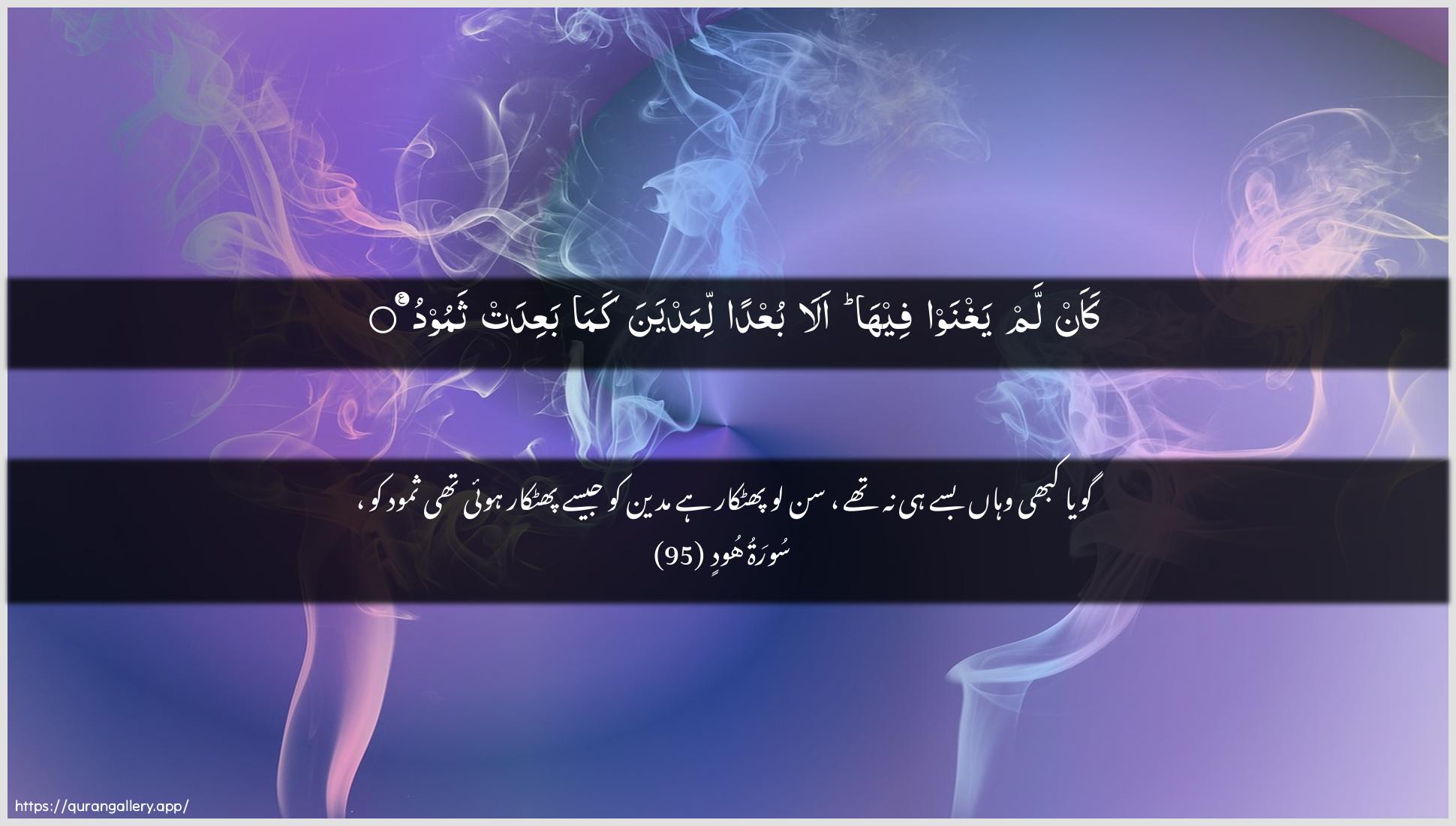
Arabic + Urdu
Free for personal & educational use with attribution
Quick Facts about this Verse
Surah
Hud
Revealed
Makki
Position
Juz 12,11
Explore this Verse
Verse Meaning
According to the classical commentary of Al-Tabari, Quran 11:95 delivers the final, haunting verdict on the people of Midian. The phrase 'As if they had never dwelt there' (كَأَن لَّمْ يَغْنَوْا فِيهَا) signifies a complete and total erasure from existence; their once-flourishing civilization was wiped out so thoroughly that no trace remained. Ibn Kathir adds that this destruction made it seem as though they had never lived or prospered in their homes at all. The verse then solidifies this judgment with a curse: 'So away with Midian,' directly paralleling their fate with that of a nation before them, 'as Thamud was away.' This comparison is significant, as Ibn Kathir notes, because Thamud were their neighbors, similar in their disbelief and corrupt practices. The synthesis of these scholarly views reveals the verse's function not merely as a historical account, but as a profound warning about the finality of divine retribution, where prosperity and existence are completely nullified by persistent wrongdoing, leaving behind only a lesson and a curse.
Questions for Reflection
The Nature of Existence
The verse states it was 'as if they had never dwelt there.' Contemplate a moment in your life when you felt great success or permanence. How does this verse challenge that feeling and reorient your understanding of what truly lasts?
Historical Repetition
Allah explicitly links the fate of Midian to Thamud. According to Ibn Kathir, this is because of their similar sins. What are the dominant, uncorrected sins of our time, and how does this verse serve as a direct warning to our own society?
The Weight of a Curse
The verse ends with 'Bu'dan' (a curse, or removal from mercy). What actions in your personal or professional life might place you far from Allah's mercy, and what steps can you take today to move closer to it, learning from Midian's example?
Practical Applications
Reflect on historical parallels in modern society to identify and warn against prevalent injustices, especially in economic and social spheres.
Analyzing current economic systems for dishonesty, advocating for fair trade, and speaking out against corruption in business and governance.
Internalize the concept that worldly existence and prosperity are transient and can be completely nullified by divine decree if not grounded in justice.
Practicing detachment from materialism, prioritizing ethical earnings over sheer profit, and maintaining gratitude for blessings as gifts from Allah, not entitlements.
Hidden Gem
The synthesis of scholarly thought reveals a profound spiritual insight: the comparison to Thamud is not just about similar sins, but about a shared state of being 'removed' or 'distanced' (ba'idat/bu'dan). Contemplation on this shared root (ب-ع-د) transforms the verse. The physical destruction was merely a manifestation of a pre-existing spiritual distance from Allah. This shifts the focus from fearing punishment to fearing the state of being far from God's mercy.
Scroll to see more verses or use the dropdown in the breadcrumb to jump to any verse
Common Questions
2 more questions available in the full page