
Hud - Hud
Arabic Name: هُوْد
Urdu Name: حود
Type: Makki
Serial Number: 11
Revelation Order: 52
Total Verses: 123
Parah: 12,11
Rukus: 10
Sajda: None
Related Hadith
"The Prophet (ﷺ) said, 'Surah Hud and its sisters have turned my hair white.'"
This hadith, mentioned by commentators like Al-Baghawi, highlights the immense spiritual and psychological weight of the message of Surah Hud, which this verse concludes.
Share Verse Art
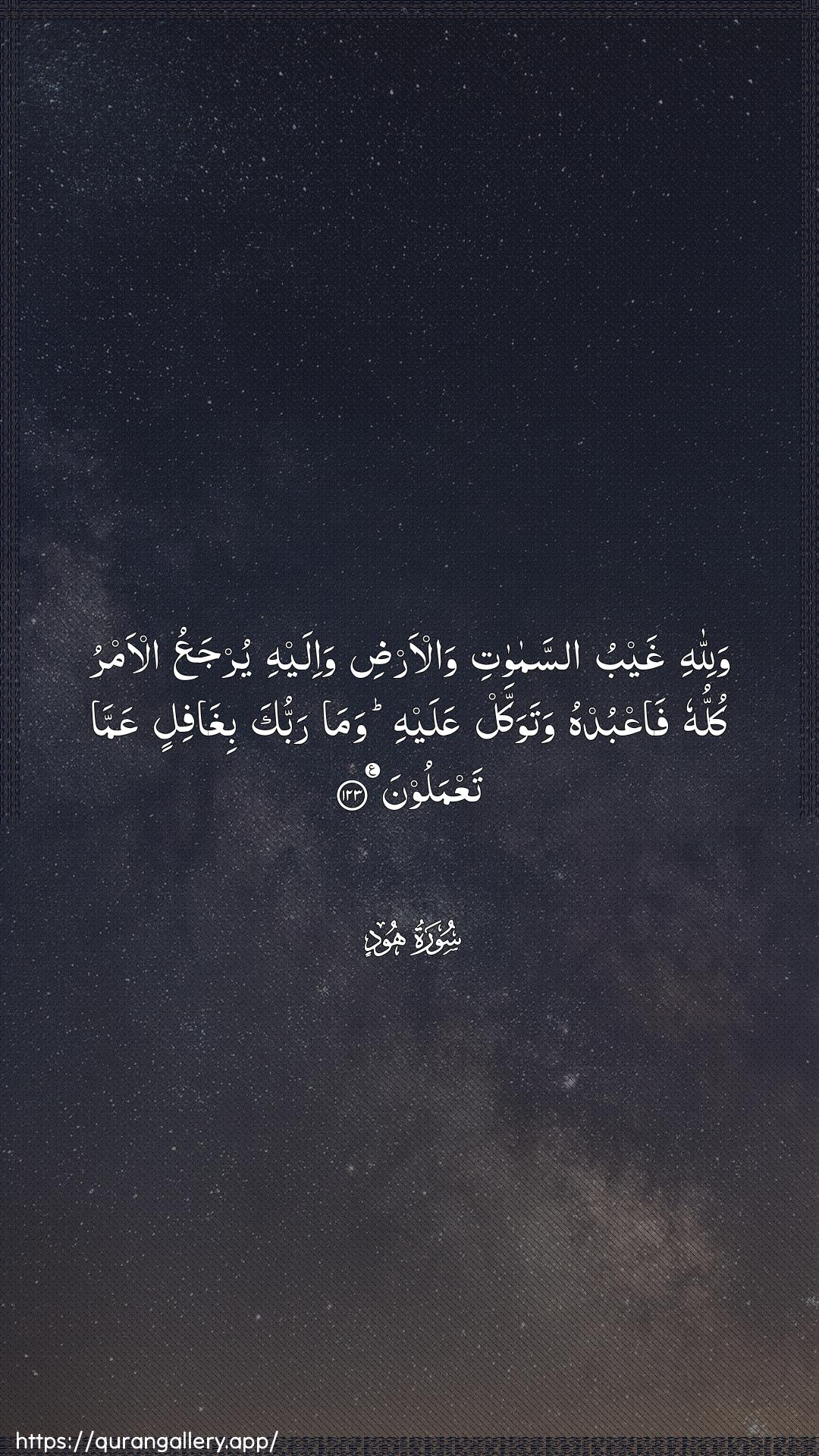
Arabic
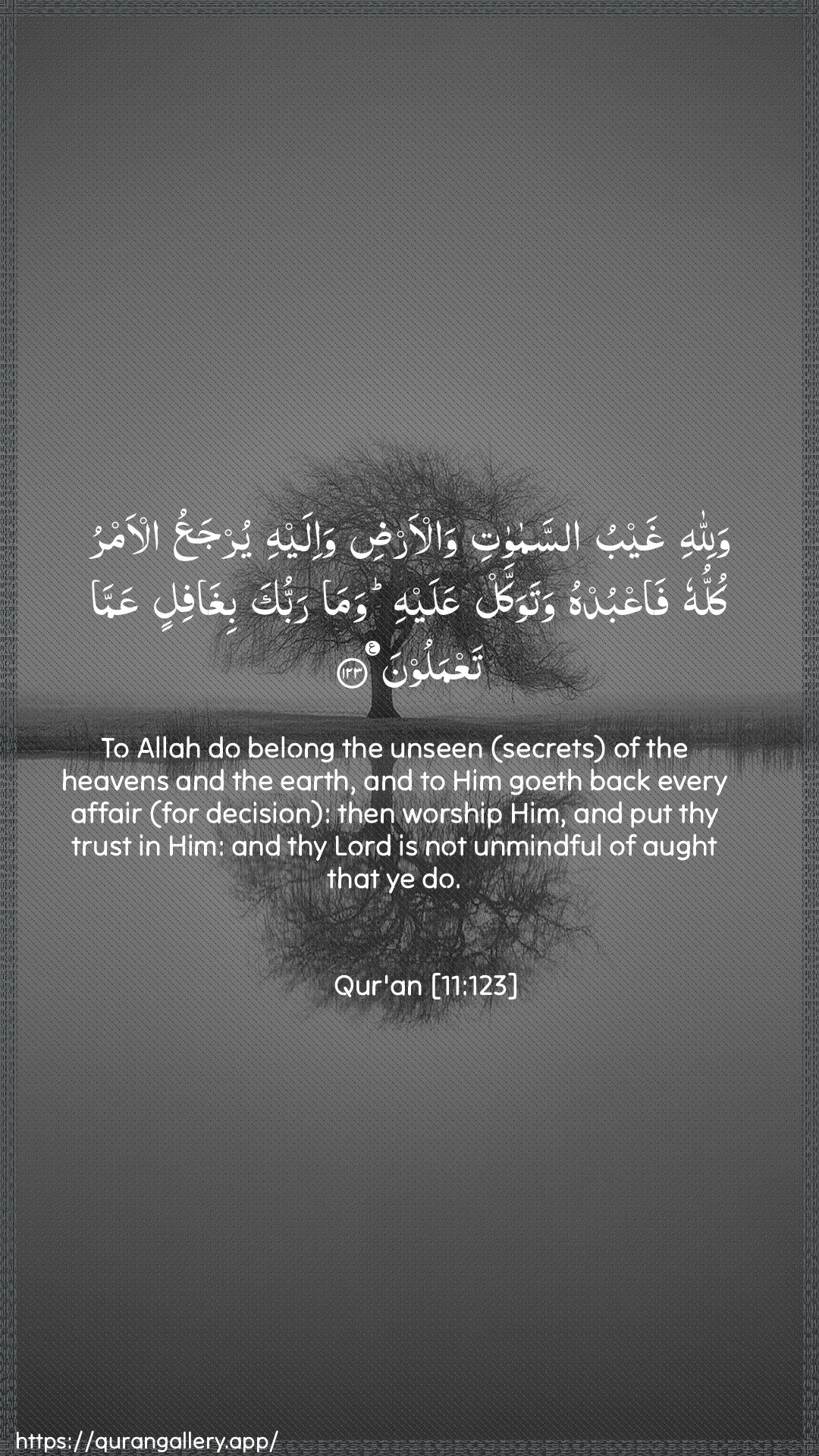
Arabic + English
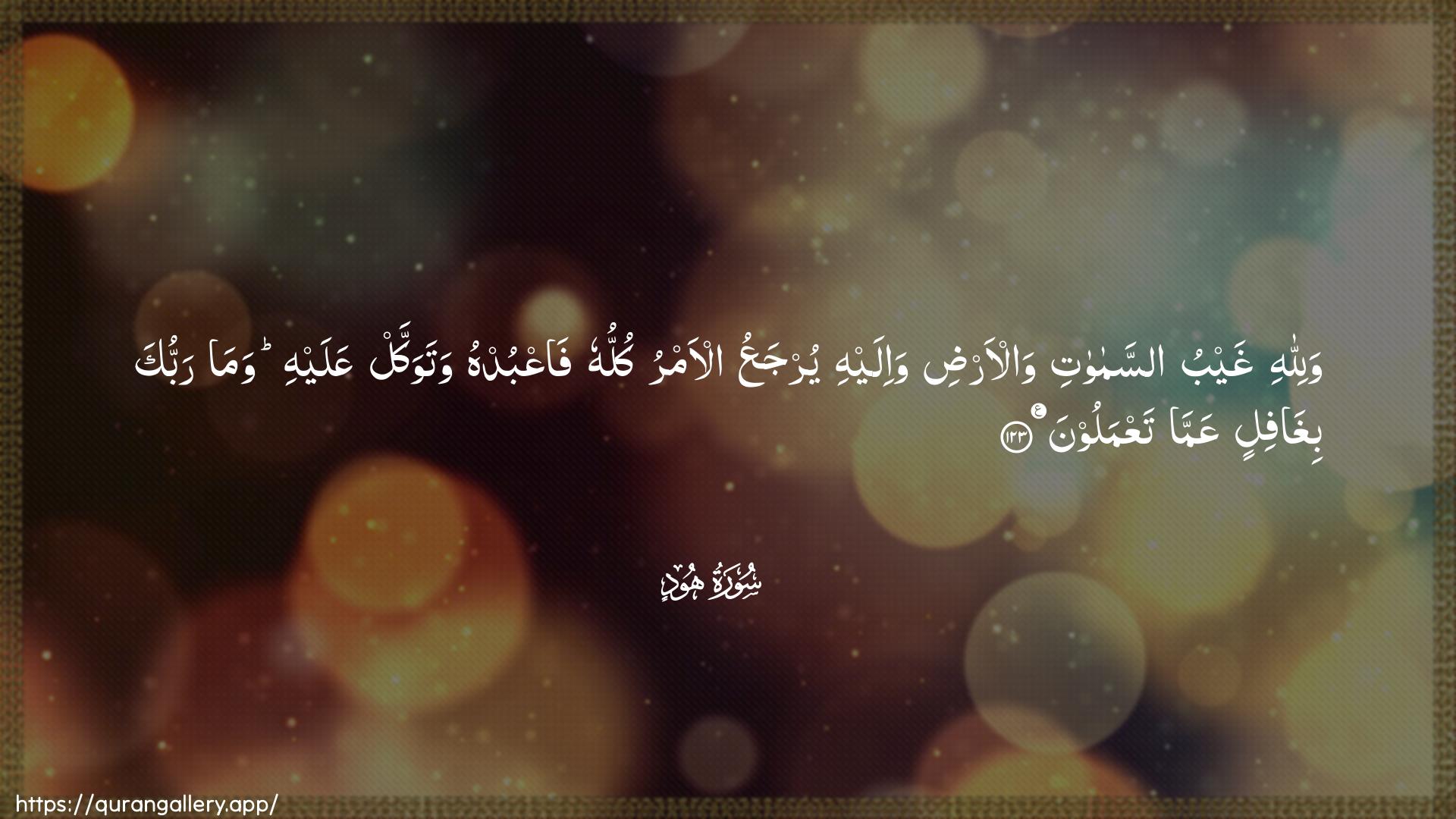
Arabic (Wide)
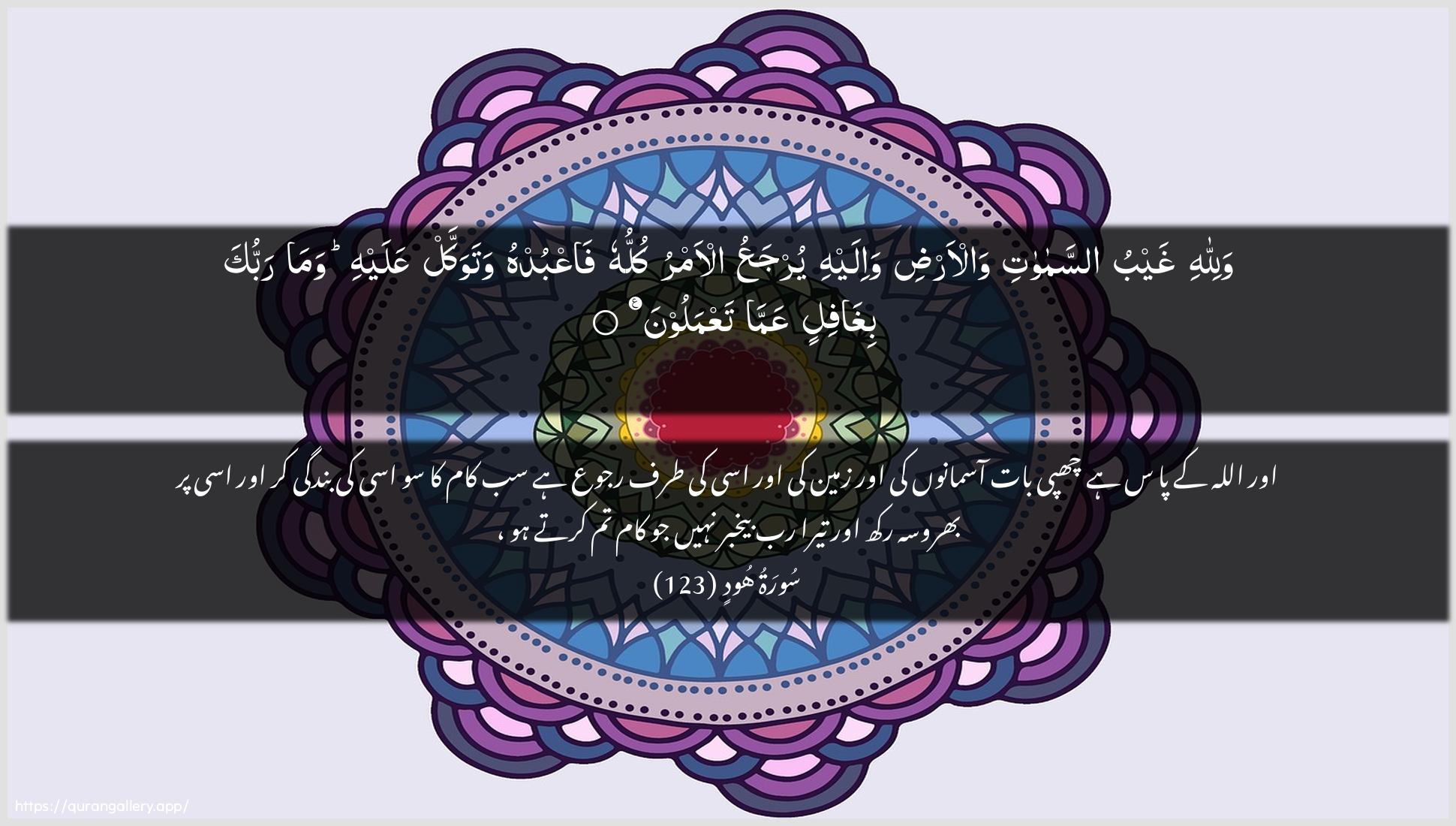
Arabic + Urdu
Free for personal & educational use with attribution
Quick Facts about this Verse
Surah
Hud
Revealed
Makki
Position
Juz 12,11
Explore this Verse
Verse Meaning
According to classical Islamic scholarship, Quran 11:123 serves as the powerful and comprehensive conclusion to Surah Hud, encapsulating the essence of faith and resilience. Imam Al-Tabari explains that this verse establishes two fundamental realities: first, that Allah alone possesses absolute knowledge of all that is unseen (`ghayb`) in the heavens and the earth, and second, that every single matter, without exception, ultimately returns to Him for judgment. This dual understanding leads to the verse's core directive. As Ibn Kathir elaborates, because all power and knowledge rest with Him, the only logical and spiritual response is the dual action: `fa'budhu` (so worship Him) and `wa tawakkal 'alayh` (and rely upon Him). This isn't a call for passive resignation but for a perfect balance of active, sincere worship and complete, unwavering trust in His divine plan. The verse concludes with a profound reassurance and a subtle warning: `wa ma rabbuka bi ghafilin 'amma ta'malun` (and your Lord is not unaware of what you do), confirming that no effort, struggle, or deed goes unnoticed, promising ultimate justice and accountability.
Questions for Reflection
Theological Contemplation
Reflect on the phrase 'To Him the entire matter is returned.' What specific anxieties, fears, or burdens in my life am I trying to control, when their ultimate return is to Allah alone?
Personal Role Contemplation
The verse commands 'So worship Him.' In the context of my current challenges, what is the 'worship' that Allah is asking of me? Is it patience, diligent work, speaking truth, or seeking knowledge?
Practical Trust Contemplation
After defining my act of 'worship,' how can I embody true 'Tawakkul' upon Him? What would my emotional state and actions look like if I had 100% trust that Allah would handle the outcome perfectly?
Practical Applications
Counteract anxiety about the future by consciously affirming, 'To Allah the entire matter is returned.'
Use this affirmation during moments of career uncertainty, before important exams, when facing health challenges, or in any situation where the outcome is beyond your control.
Structure your goals using the 'Worship and Trust' principle: dedicate yourself fully to the effort (worship), then consciously detach from the result (trust).
Apply this to job searches, starting a business, personal development goals, parenting, and even complex projects where success is not guaranteed.
Hidden Gem
A synthesis of the tafsirs reveals that the order of the verse is a divine psychological remedy. First, it addresses the intellect by establishing Allah's total control ('Ghayb', 'all matters return'). Second, it addresses the will by giving a clear command ('worship Him'). Third, it addresses the heart by offering a release ('rely upon Him'). This sequence systematically dismantles anxiety by first calming the rational mind, then directing the body's energy, and finally soothing the soul.
Scroll to see more verses or use the dropdown in the breadcrumb to jump to any verse
Common Questions
2 more questions available in the full page