
Hud - Hud
Arabic Name: هُوْد
Urdu Name: حود
Type: Makki
Serial Number: 11
Revelation Order: 52
Total Verses: 123
Parah: 12,11
Rukus: 10
Sajda: None
Related Hadith
"The argument between Paradise and Hell, where Allah decrees that He will fill both."
Directly illustrates the divine decree mentioned at the end of the verse, confirming the existence of two groups with different destinies.
Share Verse Art
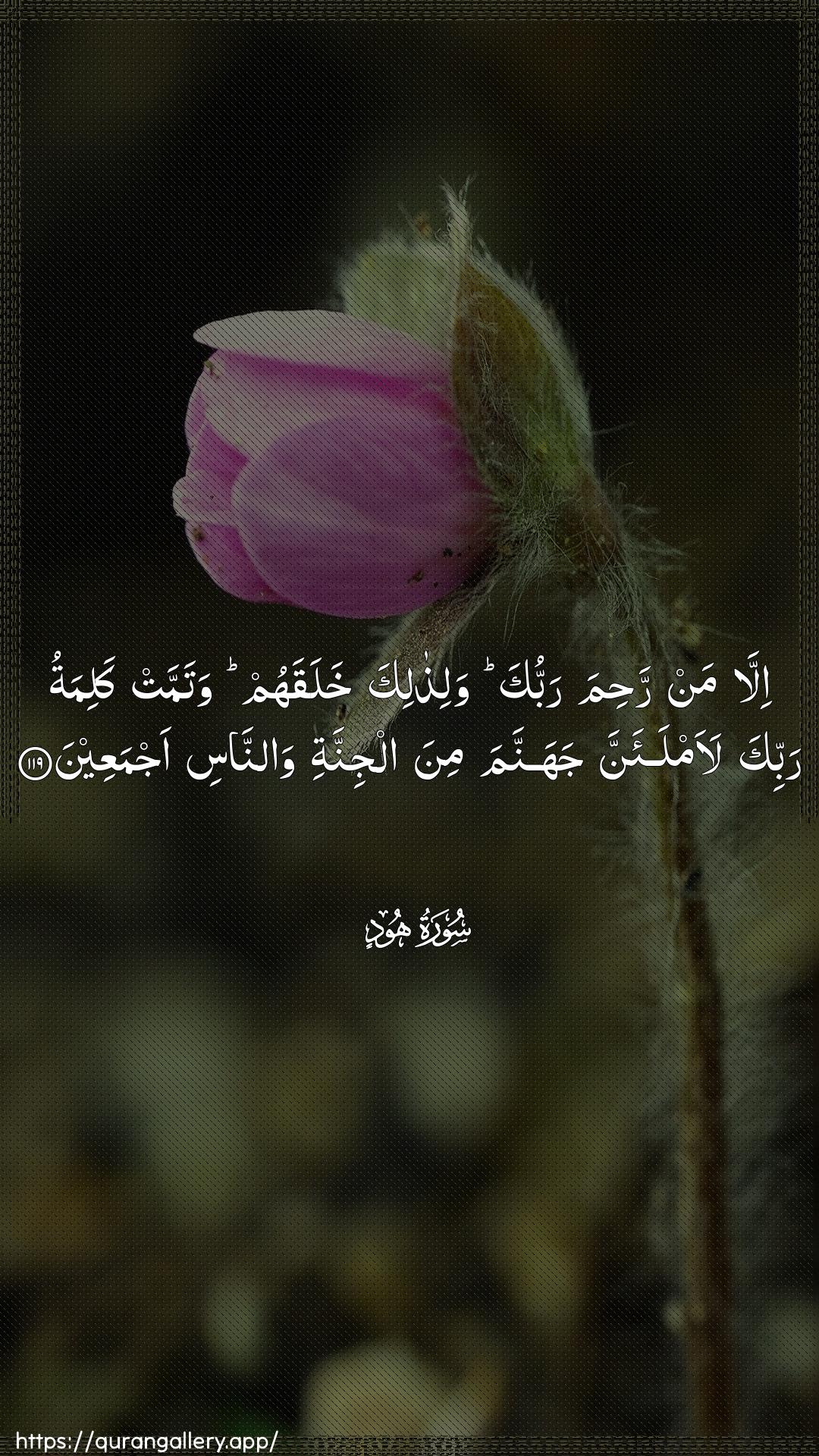
Arabic
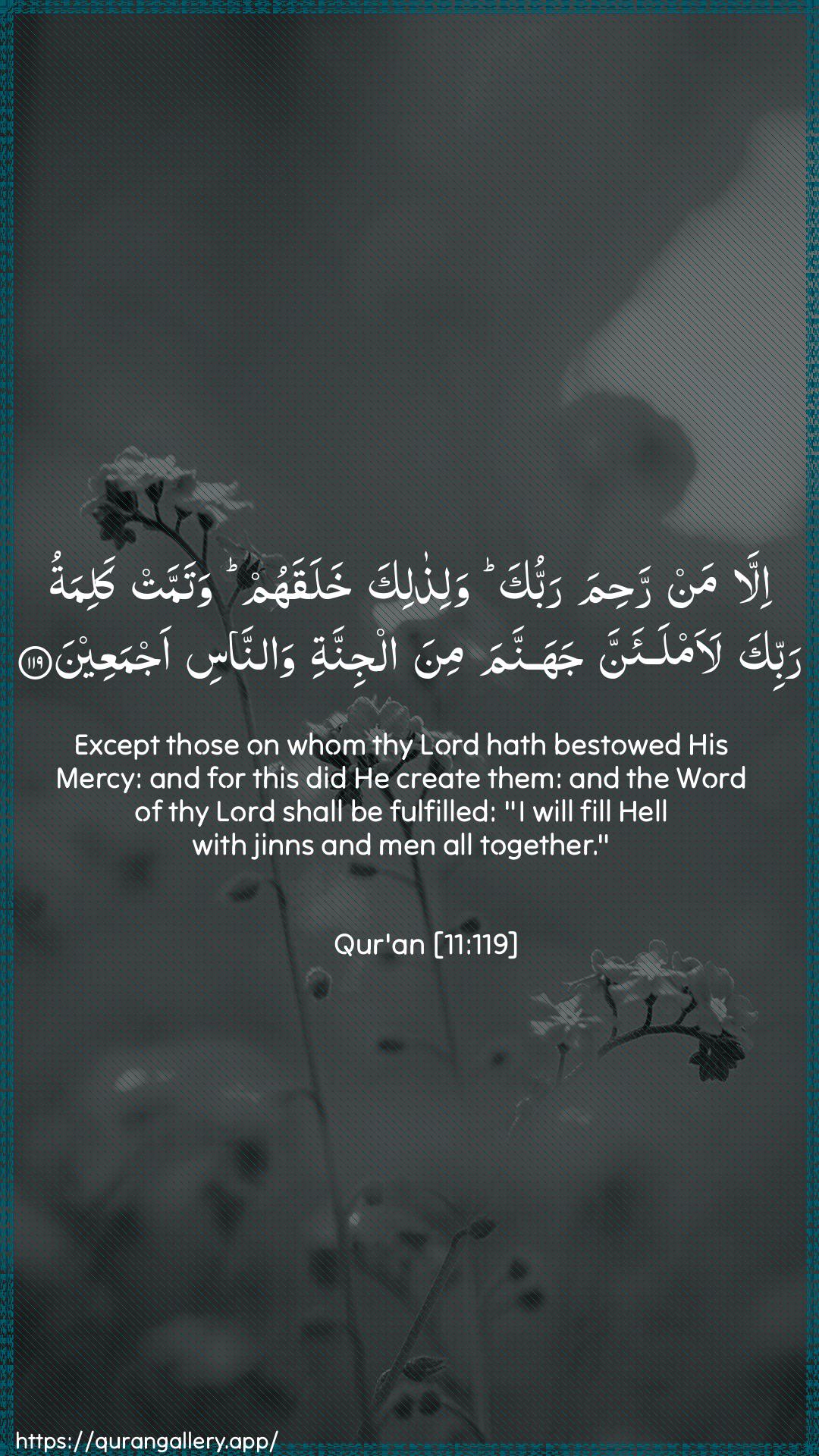
Arabic + English
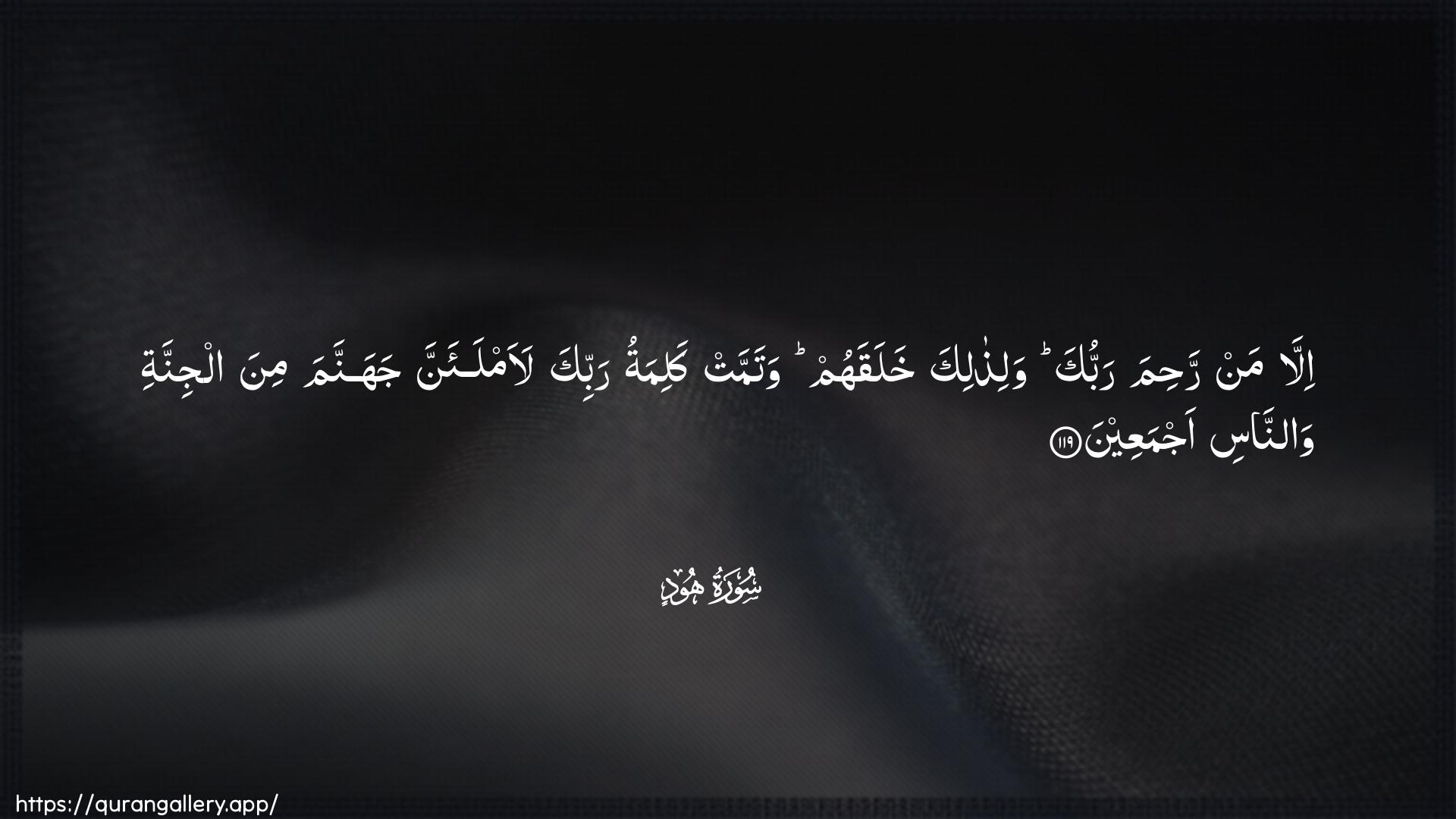
Arabic (Wide)
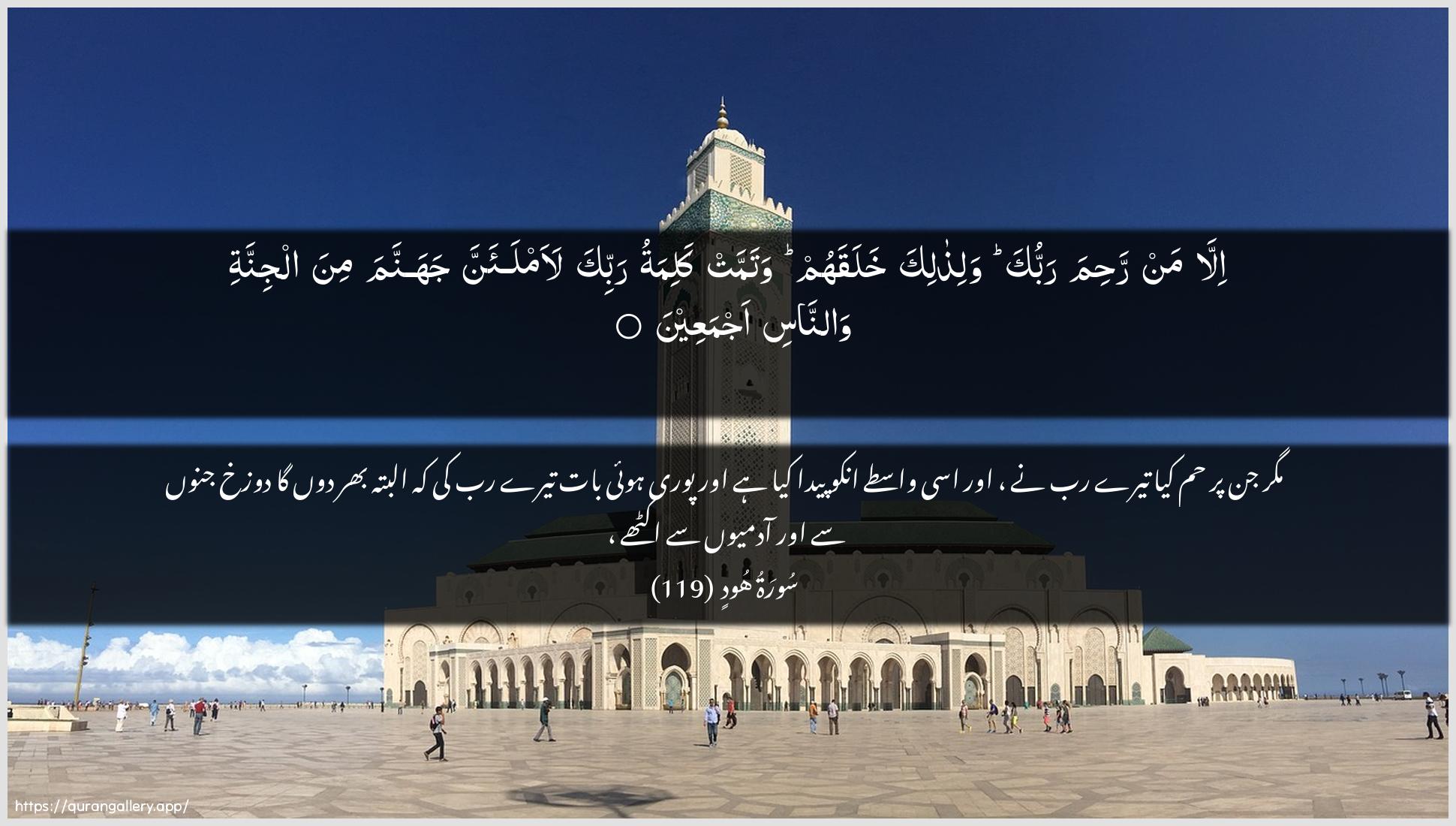
Arabic + Urdu
Free for personal & educational use with attribution
Quick Facts about this Verse
Surah
Hud
Revealed
Makki
Position
Juz 12,11
Explore this Verse
Verse Meaning
According to a comprehensive synthesis of classical tafsirs, Quran 11:119 provides a profound theological explanation for human diversity and destiny, articulating both the cause of discord and the path to salvation. The verse establishes that humanity will perpetually differ in their beliefs and paths, with the sole exception of those who receive Allah's mercy. The crux of scholarly debate, as detailed by Al-Tabari, centers on the phrase 'And for that He created them.' One group of scholars, including Al-Hasan al-Basri, interprets this to mean humanity was created *for the purpose of this difference*, as a test of free will. A second group, including Ibn Abbas and Mujahid, argues they were created *for the purpose of receiving mercy*, with difference being the context in which that mercy is earned and manifested. This synthesis reveals a powerful insight: human difference is the divine stage upon which the choice to accept or reject guidance is played out, ultimately leading to the fulfillment of God's word to fill Hell with those who persist in opposition, while His mercy embraces those who follow the truth.
Questions for Reflection
Theological Contemplation
Reflect on the two scholarly interpretations: being created for 'difference' (Al-Hasan) versus for 'mercy' (Ibn Abbas). How does holding both possibilities—that the test is difference, and the goal is mercy—shape your understanding of divine justice and wisdom?
Personal Transformation
The verse states the 'Word of your Lord was fulfilled: 'I will surely fill Hell...''. How does confronting the certainty of this divine decree impact your personal sense of urgency and accountability in seeking to be among those 'shown mercy'?
Relational Wisdom
Qatada stated that the 'people of mercy are a united community, even if their homes and bodies are separate.' In a world defined by 'difference,' how can you apply this principle to foster unity and mercy with other believers, transcending physical and ideological distances?
Practical Applications
Cultivate spiritual resilience by internalizing that disagreement is part of the divine test, not a sign of failure.
Apply this mindset when encountering ideological, political, or religious disagreements online and in person to maintain inner peace.
Focus your spiritual efforts on actions and beliefs that attract divine mercy, making it your primary goal.
In any debate or discussion, prioritize compassionate conduct and adherence to truth over the desire to dominate the conversation.
Hidden Gem
The synthesis of the scholarly debate reveals a profound spiritual reality: 'Difference' is the raw material of creation, while 'Mercy' is the divine alchemy that transforms that raw material into something noble. Contemplation on this insight, derived from the contrast between Al-Hasan and Ibn Abbas, shifts the focus from avoiding difference to seeking the transformative power of mercy within it.
Scroll to see more verses or use the dropdown in the breadcrumb to jump to any verse
Common Questions
2 more questions available in the full page