
Hud - Hud
Arabic Name: هُوْد
Urdu Name: حود
Type: Makki
Serial Number: 11
Revelation Order: 52
Total Verses: 123
Parah: 12,11
Rukus: 10
Sajda: None
Share Verse Art

Arabic
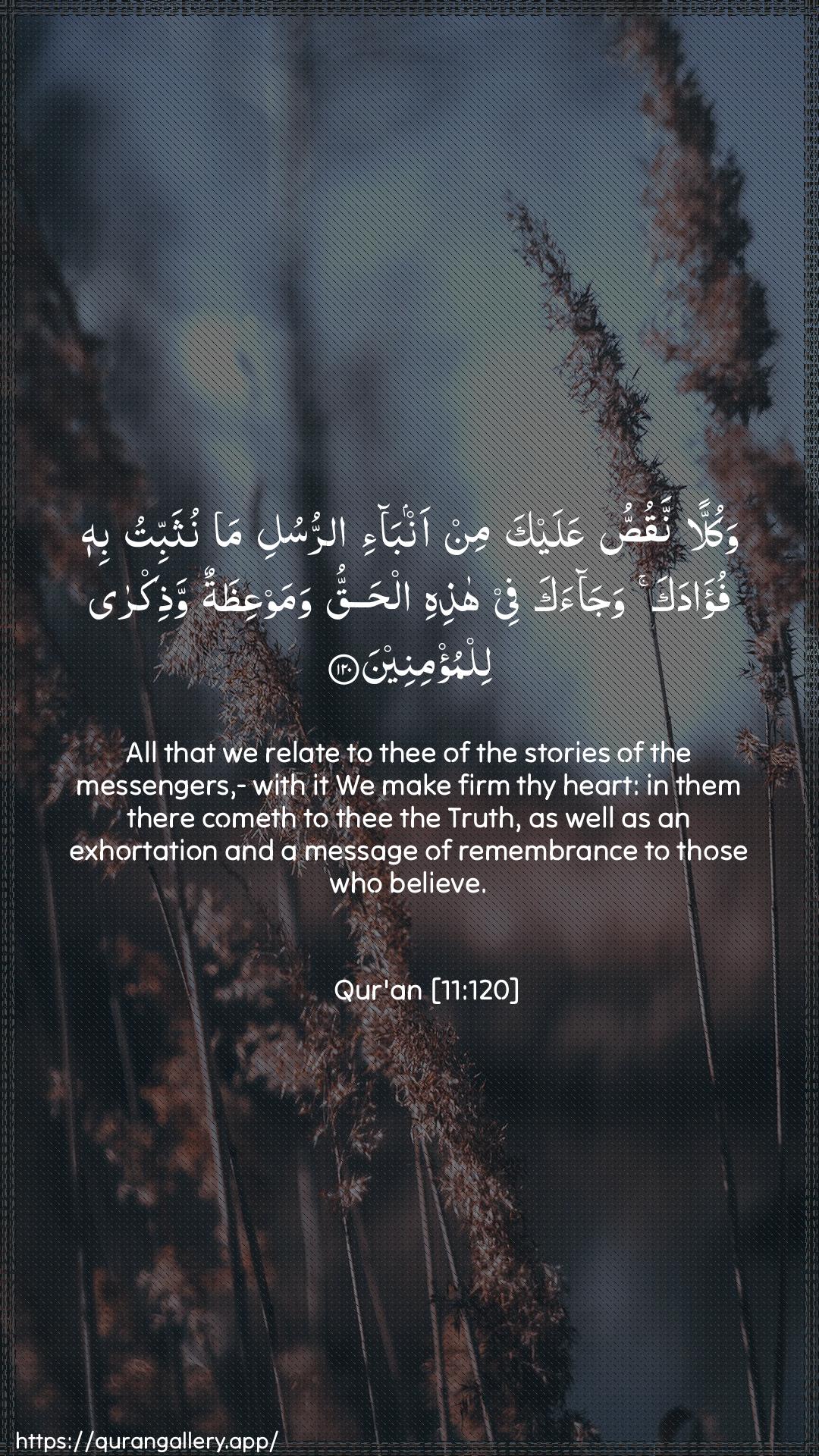
Arabic + English

Arabic (Wide)
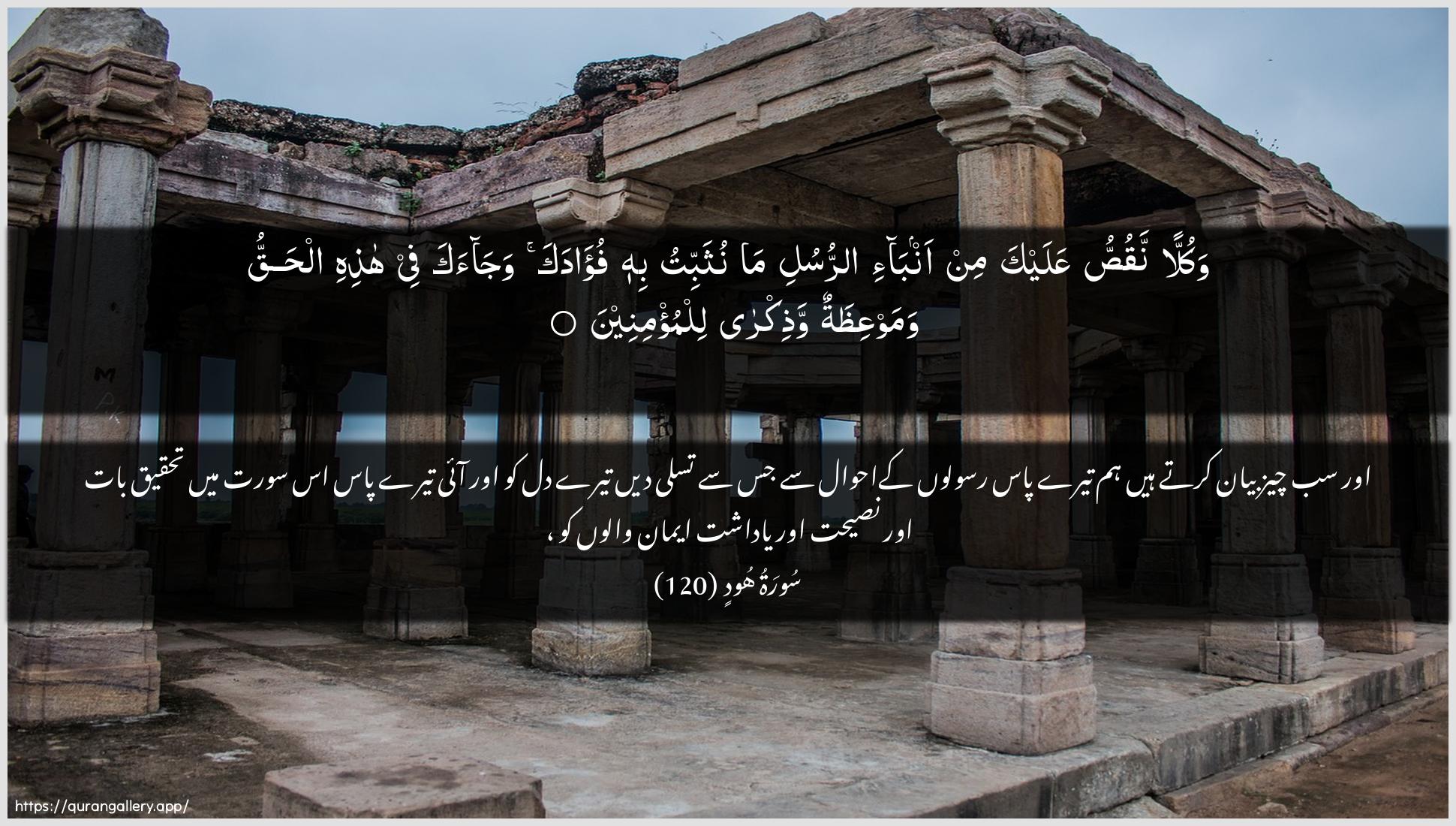
Arabic + Urdu
Free for personal & educational use with attribution
Quick Facts about this Verse
Surah
Hud
Revealed
Makki
Position
Juz 12,11
Explore this Verse
Verse Meaning
According to the classical exegete Imam Al-Tabari, verse 11:120 reveals the divine methodology for providing spiritual and psychological support to the Prophet Muhammad ﷺ during periods of intense difficulty. A comprehensive review of tafsirs shows this verse outlines a threefold purpose for narrating the stories of past messengers. Ibn Kathir explains that these accounts make the Prophet's heart firm by providing him with the powerful example (uswa) of his predecessors who endured similar trials. Al-Sa'di adds a profound psychological insight, noting that souls naturally find comfort and motivation in following the examples of others. The synthesis of scholarly opinion is that these divinely-narrated stories are not mere history, but a spiritual technology for building resilience. The verse culminates by defining the function of these narratives: they bring the unshakeable **Truth** (Al-Haqq), a potent **admonition** (Maw'idah) to deter wrongdoing, and a beneficial **reminder** (Dhikra) that awakens and nourishes the faith of believers. A point of scholarly discussion, meticulously detailed by Al-Tabari, is the phrase 'in this' (fi hadhihi), with the overwhelming consensus of early scholars like Ibn Abbas and Mujahid confirming it refers specifically to this Surah (Hud), which Al-Qurtubi describes as a special honor for it. Thus, the verse serves as a key to understanding the entire narrative structure of the Quran as a source of strength, certainty, and guidance.
Questions for Reflection
Personal Resilience
This verse states the stories 'make firm your heart' (nuthabbitu bihi fu'adaka). As Al-Sa'di notes, souls find comfort in shared experiences. Reflect on a current personal struggle. Which prophet's story speaks directly to this struggle, and how does knowing they endured and triumphed reinforce your own resolve and trust in Allah's plan?
The Nature of Truth
The verse says 'the Truth has come to you in this.' Ibn Kathir emphasizes these stories are pure truth, unlike fallible human histories. Contemplate the certainty this provides. How does grounding your worldview in divinely-narrated history, rather than ever-changing human narratives, affect your confidence and stability in your faith?
Admonition vs. Reminder
Al-Tabari and Al-Qurtubi distinguish between 'Maw'idah' (admonition) and 'Dhikra' (reminder). An admonition deters, while a reminder encourages. Contemplate the story of Prophet Lut's people. What specific actions serve as a powerful admonition for you to avoid? And what aspects of Prophet Lut's own faith and perseverance serve as a reminder to strengthen your own character?
Practical Applications
During personal trials, actively study the story of a prophet who faced a similar challenge to strengthen your heart.
When facing career setbacks, study the perseverance of Prophet Nuh. In times of social pressure, reflect on Prophet Ibrahim's stand against his people.
Use the stories of destroyed nations as an 'admonition' (Maw'idah) to audit your own actions and community standards.
Reflect on the arrogance of Pharaoh's people when tempted by pride, or the injustice of the people of Madyan when dealing in business.
When faith feels stagnant, engage with the stories of prophets as a 'reminder' (Dhikra) to revive your connection with Allah.
Read the story of Prophet Yunus to be reminded of the power of repentance, or the story of Prophet Musa to be reminded of Allah's triumph over tyranny.
Hidden Gem
A synthesis of tafsirs reveals a profound insight: the 'Fu'ad' (heart) is mentioned specifically because it is the seat of both courage and certainty. The stories, by providing historical proof of Allah's support (Truth), cautionary tales (Admonition), and spiritual nourishment (Reminder), address the complete needs of the heart. Contemplating this shows that the Quran provides a holistic, divine remedy for the heart's ailments of fear, doubt, and heedlessness.
Scroll to see more verses or use the dropdown in the breadcrumb to jump to any verse
Common Questions
2 more questions available in the full page