
Yunus - Jonas
Arabic Name: يُوْنـُس
Urdu Name: یونس
Type: Makki
Serial Number: 10
Revelation Order: 51
Total Verses: 109
Parah: 11
Rukus: 11
Sajda: None
Share Verse Art
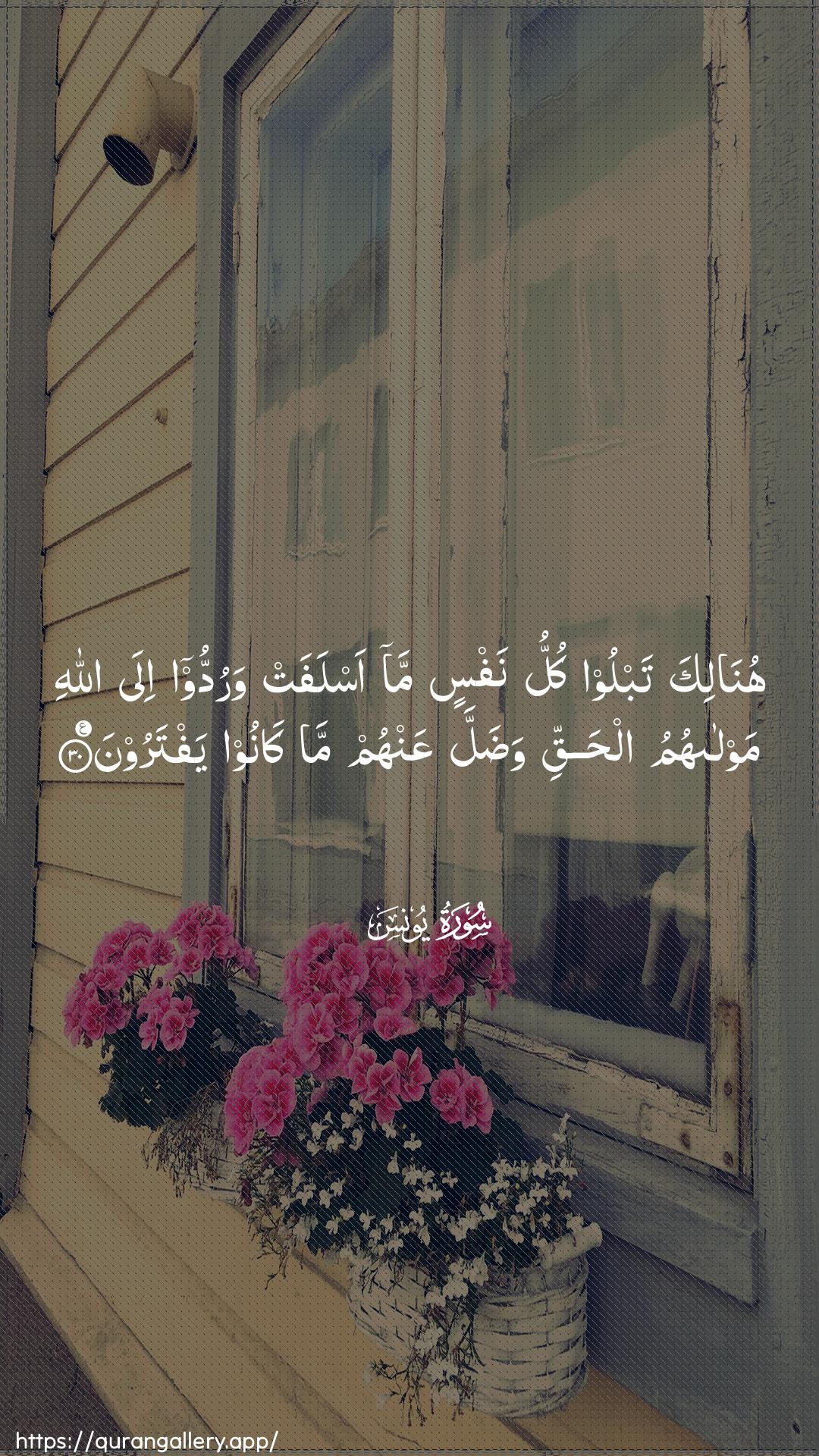
Arabic
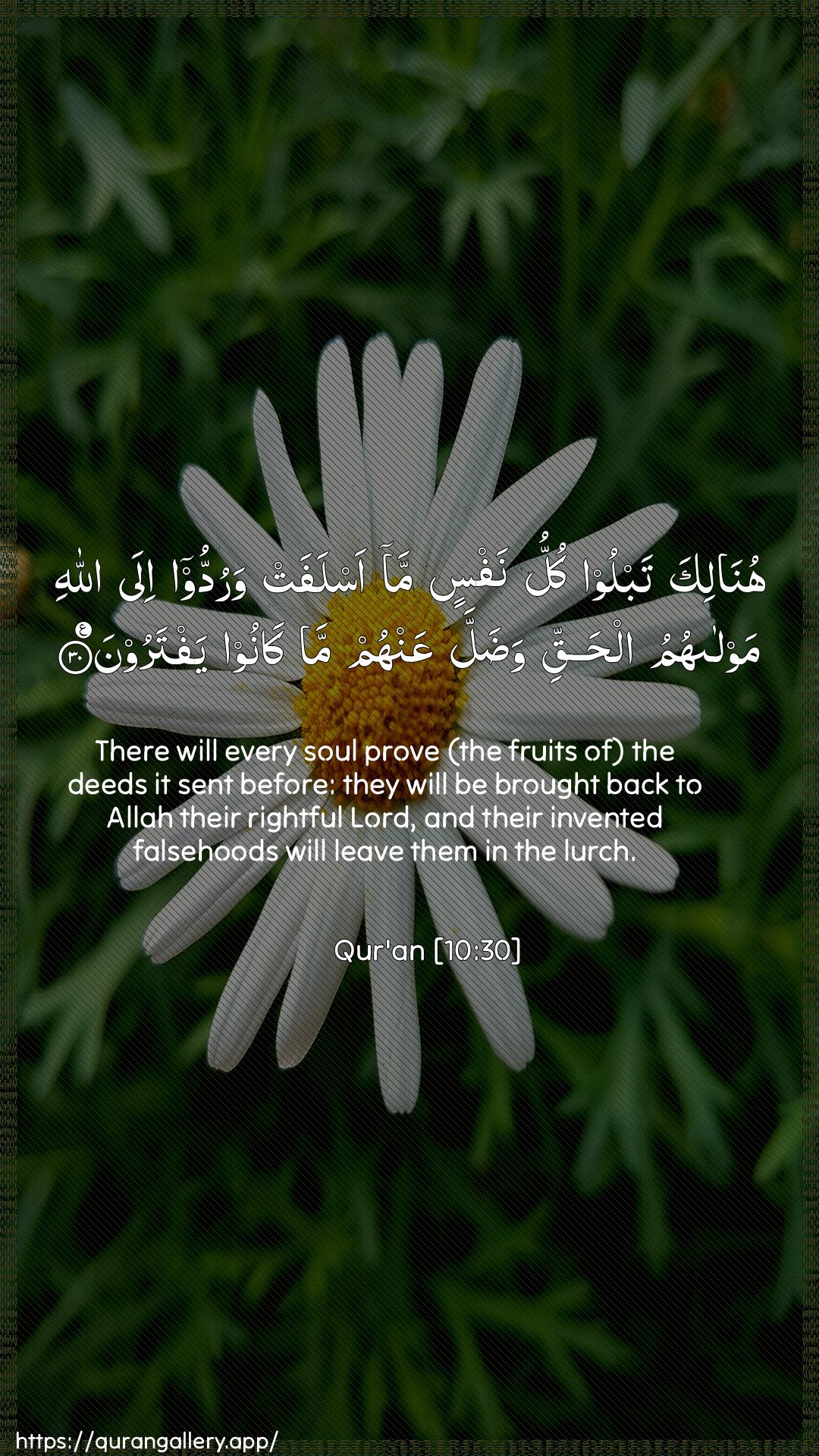
Arabic + English
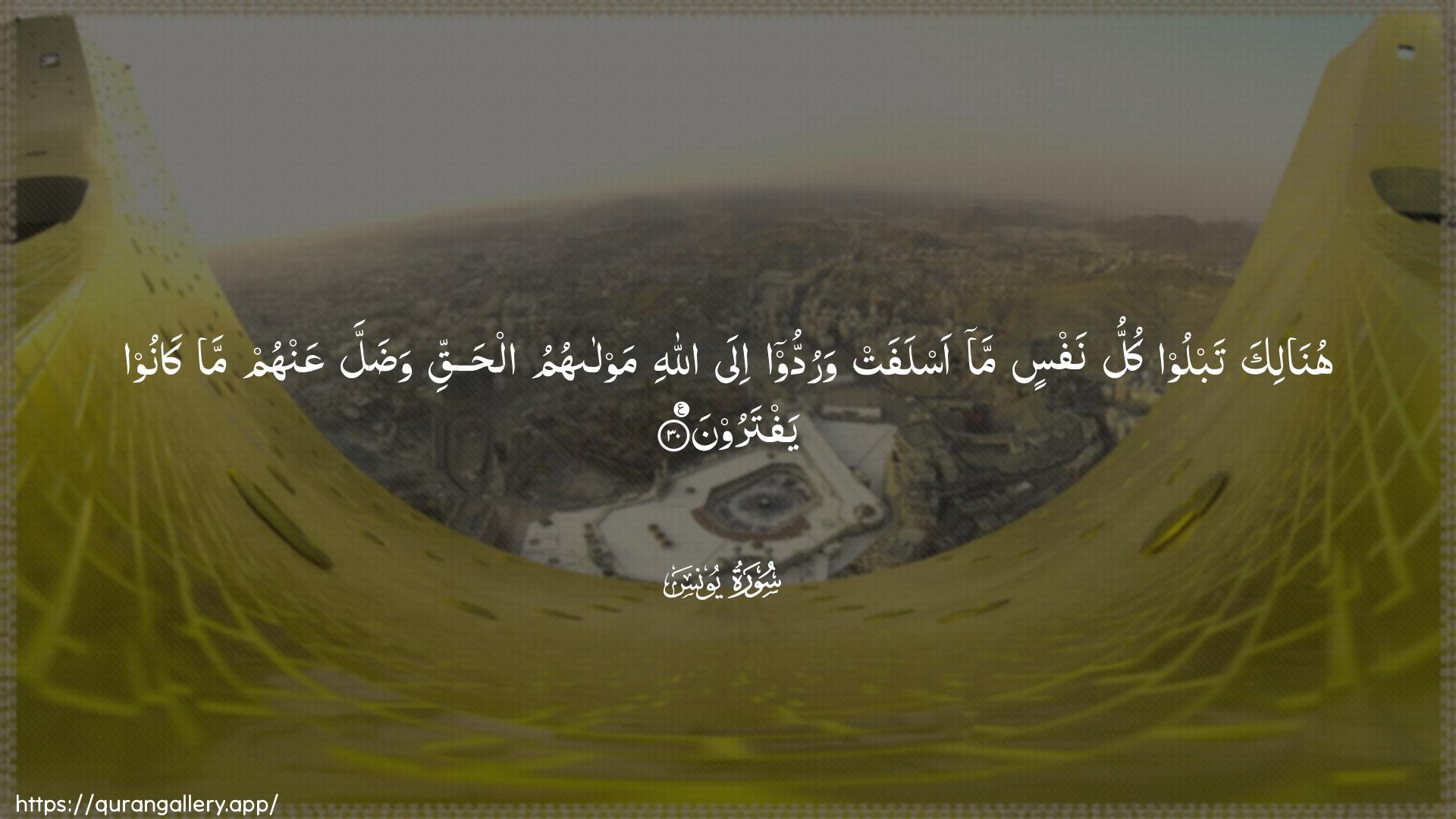
Arabic (Wide)
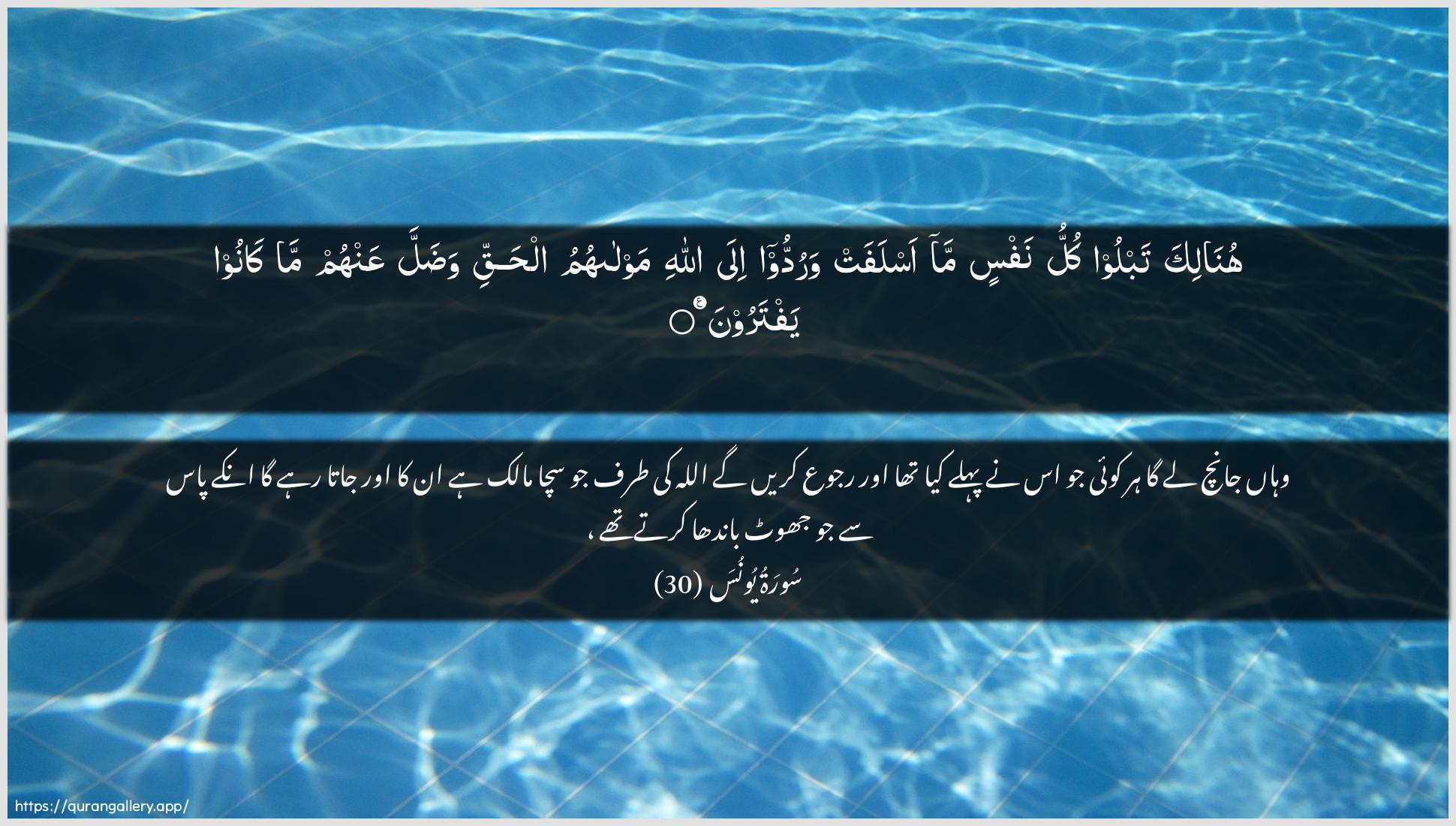
Arabic + Urdu
Free for personal & educational use with attribution
Quick Facts about this Verse
Surah
Yunus
Revealed
Makki
Position
Juz 11
Explore this Verse
Verse Meaning
According to the classical exegete Imam Al-Tabari, Quran 10:30 describes the moment of ultimate accountability on the Day of Judgment, where every soul will confront the reality of its deeds. [1] This confrontation is captured through two authentic readings of the verse. The first, 'tablu' (to test or experience), as Ibn Kathir notes, signifies that each soul will taste the consequences of its actions. [3, 4] The second, 'tatlu' (to follow or read), highlights that each soul will follow its deeds to their final destination or read from its own record, a concept confirmed in other Quranic passages. [2, 3] This scholarly synthesis reveals a multi-faceted event: an undeniable test, a personal accounting, and an unavoidable consequence. The verse culminates in the soul's return to 'Allah, their True Master,' where, as Al-Qurtubi explains, all false claims to authority vanish. The idols and intercessors they fabricated ('ma kanu yaftarun') will completely abandon them, leaving them to face the absolute truth of divine justice alone. [1] This establishes the verse as a powerful declaration of individual responsibility and the ultimate futility of shirk (polytheism).
Questions for Reflection
Personal Accountability
Reflect on the phrase 'every soul will be tested by what it sent forth.' What actions am I 'sending forth' today? If I were to 'test' or 'experience' them tomorrow, what would that taste like – sweetness or regret?
The True Master
The verse states we will be 'returned to Allah, their True Master.' In what areas of my life have I appointed 'temporary masters' – my career, wealth, reputation, or desires? How can I practice 'returning' to my True Master in my daily choices?
Vanishing Falsehoods
Consider the things you rely on for security or validation. Which of these are 'fabricated' falsehoods that will 'vanish' on that Day? What would my life look like if I detached from them now and attached myself only to The Truth (Al-Haqq)?
Practical Applications
Practice a daily 'deed review' before sleep, consciously reflecting on actions as if preparing for the moment of 'tablu' (testing).
Use a journal or app to briefly list daily actions and seek forgiveness, aligning personal conduct with the ultimate reality of accountability.
In moments of difficulty, consciously redirect reliance from worldly means to Allah, recognizing Him as the 'True Master' (Mawla al-Haqq).
During career uncertainty, health challenges, or relationship issues, make a specific du'a: 'O Allah, my True Master, all else will vanish, so I turn to You alone.'
Hidden Gem
The synthesis of 'returned to Allah' and 'lost from them' reveals a profound spiritual dynamic: the more you return to the Real (Al-Haqq), the more the unreal (fabricated things) loses its hold on you, not just in the Hereafter, but in the here-and-now. Contemplation on this verse is a tool for spiritual liberation from falsehood today.
Scroll to see more verses or use the dropdown in the breadcrumb to jump to any verse
Common Questions
2 more questions available in the full page